
MGF
Mechano Growth Factor
Research summary · not a validated human regimen
Open dosage chart
Long R3 IGF-I · engineered insulin-like growth factor-1 analogue
The reference-site example lists 20 mcg once daily for weeks 1–2, 40 mcg for weeks 3–4 and 50 mcg for weeks 5–8. Peak specifies 1 mL of 0.6% acetic acid for a 1 mg/mL research stock, so 20 mcg calculates to 2 U-100 units (0.02 mL). Peak supplies this vial for in-vitro research only.
Reviewed 25 Oct 2026 · Education only, not medical advice
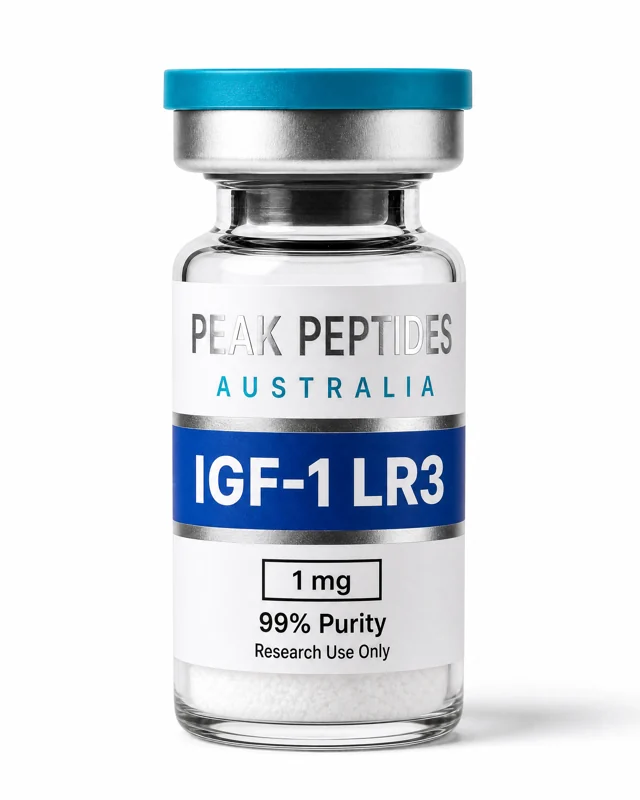
Source-attributed daily example · 1 mg vial + 1 mL acetic acid
Peak specifies 1 mL of 0.6% acetic acid, not BAC water, for a 1 mg/mL manufacturer reference stock.
This product is mixed with 0.6% acetic acid, not bacteriostatic water. Why acidic diluents are used
| Week | Daily dose | Syringe units | Syringe fill |
|---|---|---|---|
| Weeks 1–2Start | 20 mcg | 2 units0.02 mL | |
| Weeks 3–4 | 40 mcg | 4 units0.04 mL | |
| Weeks 5–8Maintenance | 50 mcg | 5 units0.05 mL |
Once daily · source-attributed subcutaneous example
This is the reference site's eight-week 20 → 40 → 50 mcg example, reproduced as an attributed educational schedule.
The source mentions morning or post-workout timing with food; no human IGF-1 LR3 evidence validates that timing or this schedule.
Peak's 1 mL 0.6% acetic-acid research-stock instruction conflicts with the source page's 3 mL BAC-water injection example.
Reference-site educational amounts only — IGF-1 LR3 has no approved or clinically established human dose, and Peak supplies this vial for in-vitro research only. Education only, not medical advice. Dose amounts adapted from IGF-1 LR3 1 mg vial dosage protocol (PeptideDosages.com); units are recalculated for the vial and mix selected above.
Using a 1 mL (100-unit) insulin syringe, one full draw of 0.6% acetic acid gives 1 mg/mL.
Use 0.6% acetic acid for this product, not bacteriostatic water — the steps below are the same apart from the liquid. Read the acidic-diluent guide.
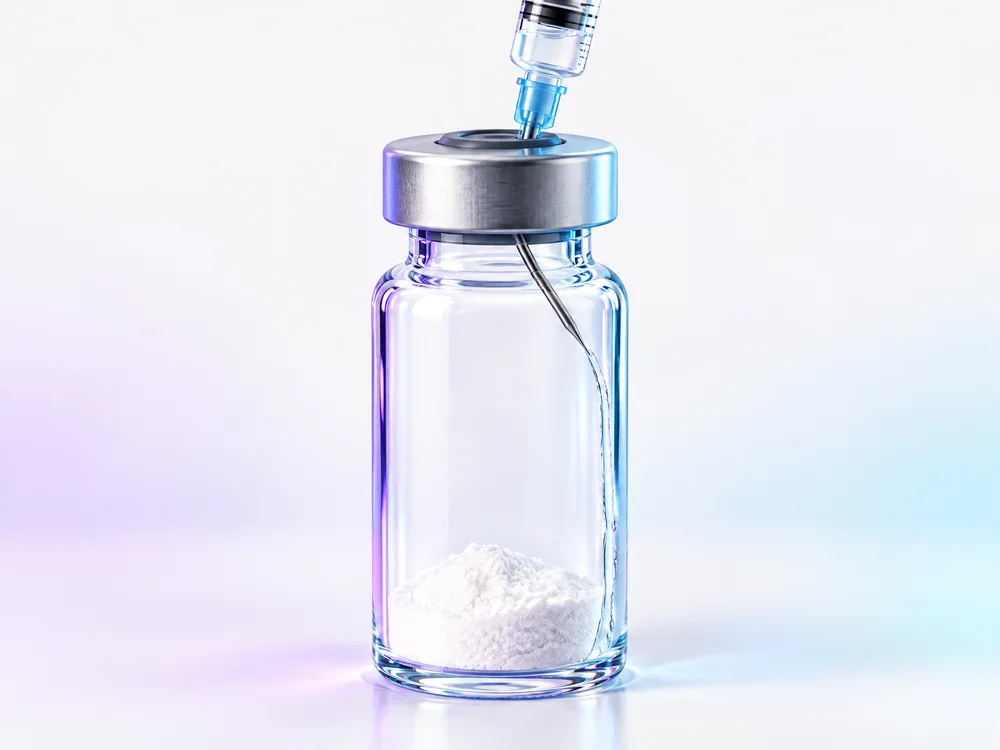 1
Wipe both rubber stoppers with an alcohol swab and let them dry. Draw 1 mL of 0.6% acetic acid and let it run slowly down the inside of the vial wall — not straight onto the powder.
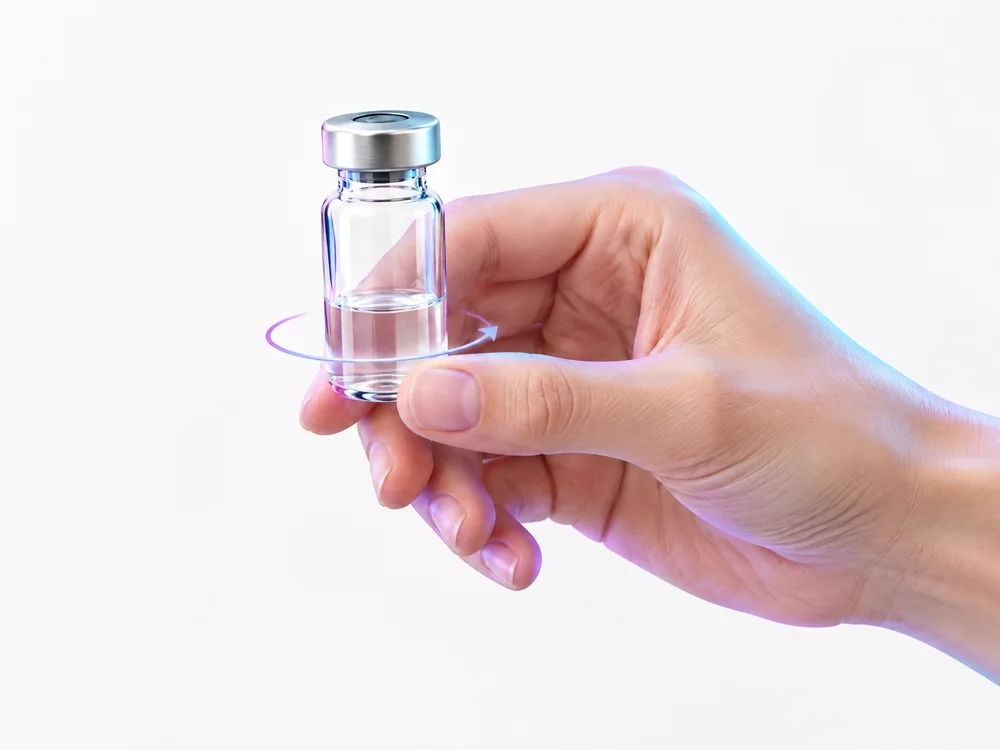 2
Swirl or roll the vial gently until the powder has dissolved. Give it a few minutes to settle if needed.
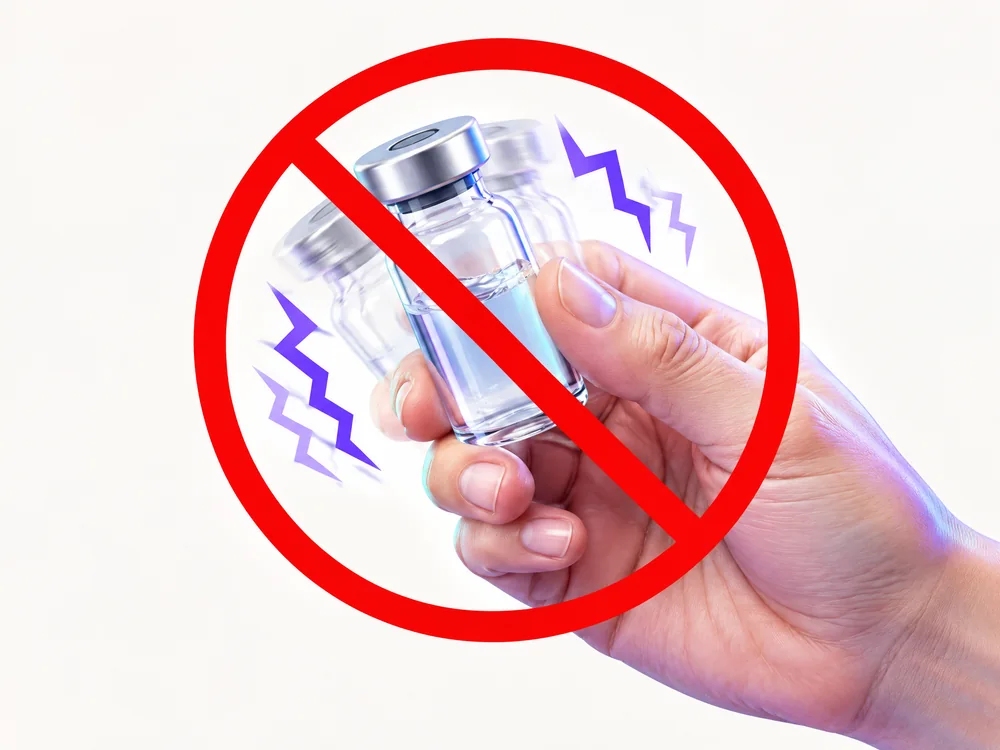 3
Shaking can damage the peptide and cause foaming. Gentle swirling only.
 4
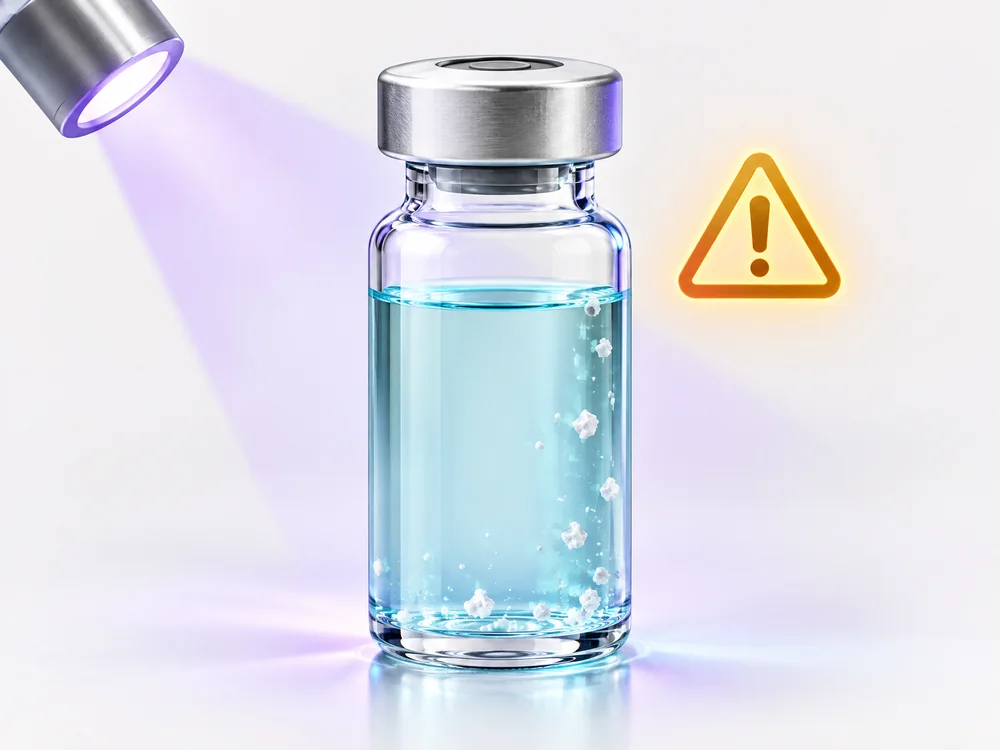
Only use it once it is fully clear with no particles. Label the vial with the date and 1 mg/mL, then store it in the fridge at 2–8 °C.
Counts follow the dosage chart above at the highest amount in each step, using a 1 mg vial mixed with 1 mL.
Plus an approved sharps container. Syringes and swabs are sold by Australian pharmacies. Peak supplies the acetic acid for this product.
Enter your vial, water and dose to see the matching syringe units.
Concentration
1.00 mg/mL
(1000 mcg/mL)
Calculated Liquid Volume
0.020 mL
Equivalent U-100 volume scale position
Illustration of a U-100 volume scale, not preparation or injection guidance
IGF-1 LR3, also called Long R3 IGF-I, is an engineered IGF-1 analogue with an N-terminal extension and an arginine substitution at position 3. It was developed as a research reagent to alter interactions with IGF-binding proteins.
In cell systems that secreted IGF-binding proteins, Long Arg3 IGF-I showed greater activity than native IGF-I for protein and DNA synthesis. In chicken embryo fibroblasts without detectable secreted binding proteins, it was less potent, showing that the effect depends on the model rather than establishing a human benefit.
What other websites report
The cited 1 mg educational protocol describes 20 mcg/day in weeks 1–2, 40 mcg/day in weeks 3–4, then 50 mcg/day in weeks 5–8. It mentions morning or post-workout use with food. These are that website’s reported examples, not dose groups from a human IGF-1 LR3 trial, and they do not establish a regimen for Peak’s pictured research vial.
The site assumes 1 mg of powder in a final 3 mL volume. As arithmetic only, 1,000 mcg ÷ 3 mL ≈ 333 mcg/mL. Its 20, 40 and 50 mcg examples then correspond to 0.06, 0.12 and 0.15 mL respectively—6, 12 and 15 U-100 volume markings. Those markings measure liquid volume, not biological International Units or a verified injection amount.
This calculation does not verify bacteriostatic-water compatibility, the achievable final volume, sterility or storage for Peak’s particular 1 mg vial. No mixing recipe or syringe setting for that product is established here.
The same site’s research review says there is no approved IGF-1 LR3 human dose and that cell and animal findings cannot prove muscle-growth or recovery benefits in people. It does not cite a human trial showing that 50 mcg or post-training timing is safer or more effective than another amount or time.
IGF-like signalling can affect glucose and tissue growth. The protocol’s food-timing source describes mecasermin, a different approved medicine; that warning is relevant to risk, but its dosing and administration directions do not transfer to IGF-1 LR3.
For receptor biology, human-evidence limits and further linked studies, read the illustrated IGF-1 LR3 evidence review .
Guidance: World Health Organization · National Diabetes Services Scheme (NDSS)
With Peak's specified 1 mL in a 1 mg vial, the concentration is 1 mg/mL. 20 mcg calculates to 2 U-100 units, or 0.02 mL. This is concentration arithmetic only; Peak supplies this material for in-vitro research.
With 1 mL in a 1 mg vial, 50 mcg calculates to 5 U-100 units, or 0.05 mL, at 1 mg/mL. This does not validate the attributed human-use example for the Peak research vial.
Peak states that manufacturer-grade Long R3 instructions specify 1 mL of 0.6% acetic acid, not BAC water, to make a 1 mg/mL research stock. At that concentration, each U-100 unit contains 10 mcg by calculation.
The source schedule totals 2.24 mg over 8 weeks: 0.28 mg in weeks 1–2, 0.56 mg in weeks 3–4 and 1.40 mg in weeks 5–8. That calculates to 3 nominal 1 mg vials.
Mechano Growth Factor
PEGylated Mechano Growth Factor
 View on Peak SINGLEDosage chart
Human Growth Hormone (191 Amino Acid)
Also 32 IU/vial · 320 IU kit · currently out of stock