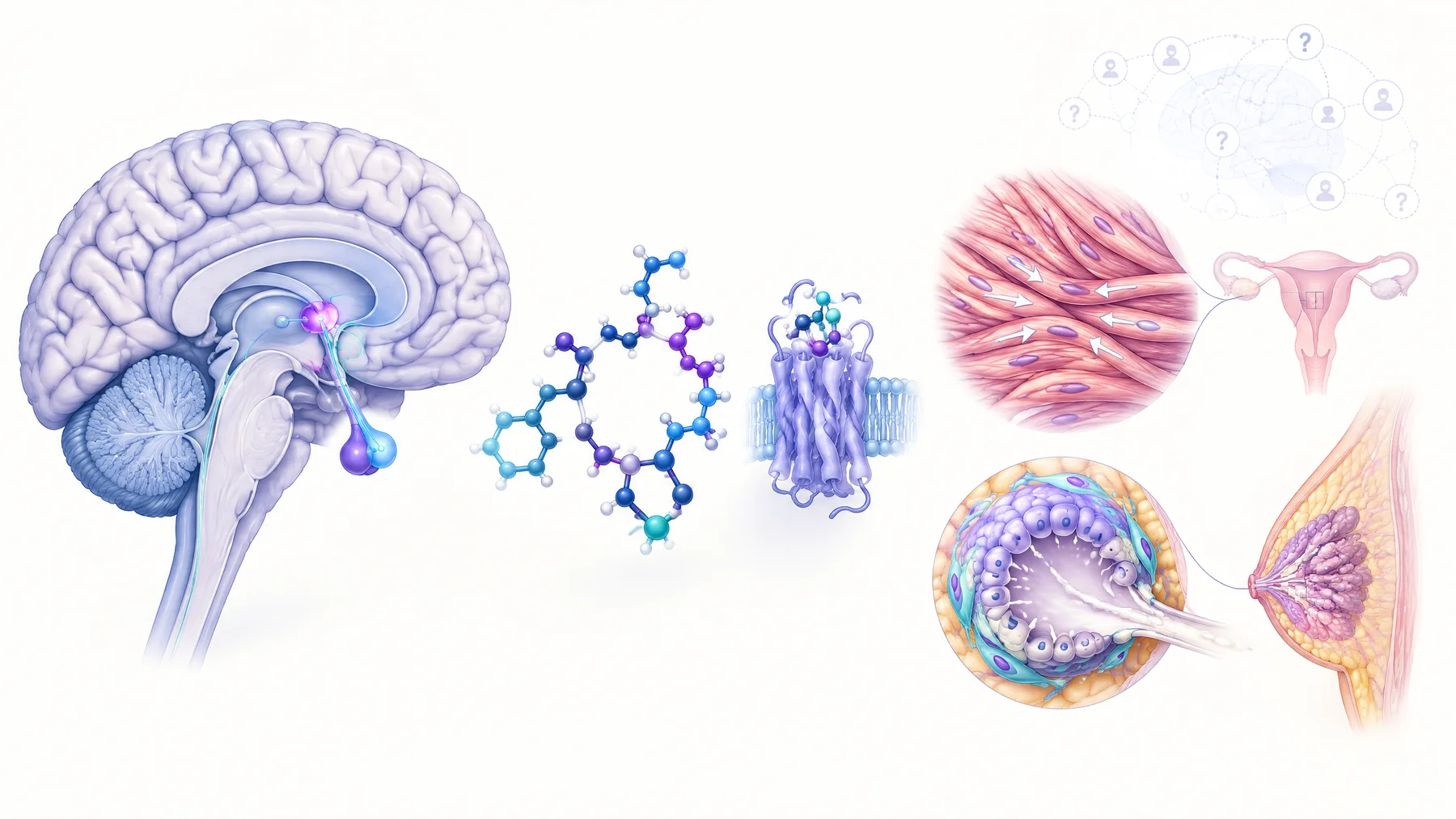

What is IGF-1 LR3 (Long R3 IGF-I)?
An engineered recombinant peptide/protein analogue of human IGF-1; a preclinical and cell-culture research substance, not an approved LR3 medicine. Long R3 IGF-I Long-[Arg3] IGF-I LR3IGF-I Long-[Arg3] IGF-I has a Glu3-to-Arg substitution and a 13-amino-acid N-terminal extension relative to the IGF-I domain; it is commonly described as an 83-amino-acid analogue. The Australian registered product Increlex contains mecasermin (recombinant human IGF-1), not IGF-1 LR3. A supplier's LONG R3 IGF-I material is expressly presented as a cell-culture supplement; that is not evidence of a registered human formulation, a clinical indication, or an administration protocol.
IGF-1 LR3 is an engineered IGF-1 analogue designed to bind IGF-binding proteins less strongly than native IGF-1. Its evidence base is chiefly structural, cell-culture and animal research, with outcomes that vary by model: controlled sheep and pig work documented metabolic/endocrine changes and no simple growth benefit, while a recent male 5XFAD mouse study found cortical plaque remodelling without cognitive preservation. This is not a human treatment protocol. Australia has an approved mecasermin product, but that registered medicine is not IGF-1 LR3.
1. Identity: an engineered IGF-1 analogue, not a generic ‘peptide vial’
IGF-1 LR3 means long-[Arg3] insulin-like growth factor-I. It is an engineered analogue of IGF-1: the third residue is changed from glutamic acid to arginine and a 13-residue extension is added at the N-terminus. Structural work describes these as deliberate modifications of the IGF-I molecule, rather than a different endogenous hormone. It is therefore accurately described as a recombinant peptide/protein growth-factor analogue, not a small molecule, topical cosmetic ingredient, or mixture. [1] [12]
The ‘LR3’ name is meaningful biologically. The altered N-terminus and Arg3 substitution were developed to reduce interaction with IGF-binding proteins (IGFBPs), proteins that normally modulate IGF availability. In a bovine-embryo research system, competition assays and Western ligand blots found LR3 affinity for IGFBPs was at least three orders of magnitude lower than IGF-I. This is a molecular and experimental property; it does not by itself establish a longer clinical effect or a human benefit. [1] [2]
2. Molecular pathway: what can be said without overextending it
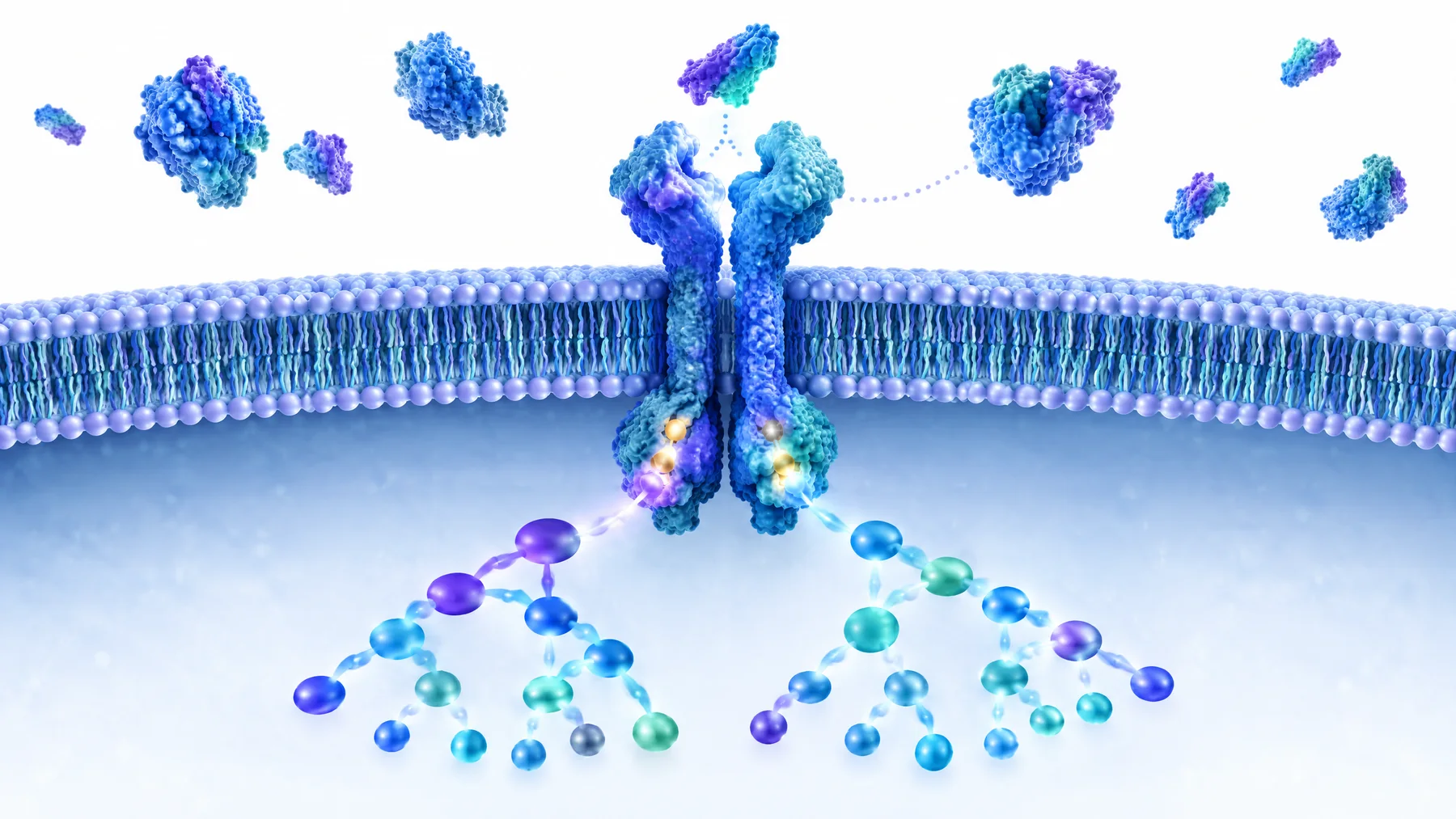
The broad IGF system includes IGF ligands, IGFBPs and the type 1 IGF receptor (IGF-1R). The bovine-embryo study identifies IGF-1R as important for transmission of many IGF effects, while the Australian regulator describes IGF-1 receptor activation by mecasermin as triggering intracellular signalling involved in growth and nutrient uptake. LR3 has been engineered to be less constrained by IGFBPs, so it is reasonable to discuss greater free-ligand exposure in experimental settings—but not to assume a uniform effect across tissues, species or people. [2] [7]
In cell culture, the commercial LONG R3 IGF-I product is positioned to activate IGF-1R and support mammalian cell growth and viability. That is an industrial cell-culture use-case, not a clinical efficacy claim. The same supplier specifically identifies CHO, HEK293, Vero, MDCK and fibroblast culture applications, underscoring why laboratory performance should not be translated into a personal health claim. [12]
3. What model-specific findings actually show
In vitro-produced bovine embryos cultured with LR3, IGF-I or no added IGF, LR3 was most efficient at stimulating early cleavage and produced the highest blastocyst total cell count; later development was more strongly supported by IGF-I. The authors also observed different IGFBP and IGF-1R mRNA patterns. This is carefully controlled embryo-culture evidence, but it is not evidence about adult human muscle, recovery, body composition or fertility treatment. [2]
A 1997 finisher-pig study found that four days of LR3 infusion reduced average daily gain and food intake, and reduced circulating GH, IGFBP-3, endogenous IGF-I and insulin. Co-administration of porcine GH did not restore the growth-performance outcome. This directly counters a simplistic assumption that more IGF-1R signalling necessarily means more growth in every living organism. [3]
In a controlled local-infusion study in castrated Romney sheep, LR3 produced early increases in skin blood flow, oxygen uptake and amino-acid uptake, alongside reductions in circulating amino acids and, after 24 hours, glucose and blood oxygen. Those metabolic changes returned to pre-infusion values by 48 hours, and after 21 days there was no effect on wool-follicle mitosis, bulb diameter or wool production. The design supports short-term local metabolic effects in sheep skin only; it cannot establish a durable human tissue-building effect. [4]
4. Recent disease-model studies: useful signals, not clinical answers
In late-gestation growth-restricted fetal sheep, seven fetuses receiving LR3 for one week and seven vehicle-treated fetuses showed no between-group improvement in fetal body weight, insulin, glucose, oxygen or glucose-stimulated insulin secretion. Total amino acids fell in the LR3 group. The authors proposed that nutrient, insulin, glucose or oxygen conditions might constrain growth in this placental-insufficiency model; that proposal is a hypothesis for further research, not a treatment recommendation. [5]
A 2025 study treated male 5XFAD Alzheimer’s-model mice intranasally from 3 to 10 months of age. LR3 improved body-composition measures and shifted several cortical amyloid measures, including fewer filamentous plaques and lower low-molecular-weight Aβ oligomers, but did not significantly improve cognitive symptoms across multiple assays. The authors concluded that the findings did not support LR3 as monotherapy. Mouse genotype, sex, delivery approach and pathology model are all major boundaries on interpretation. [6]
5. Human evidence: the key gap
This record found no verified human outcome trial of IGF-1 LR3. Exact-term ClinicalTrials.gov API searches for ‘long R3 IGF-I’ and ‘IGF-1 LR3’ returned empty study arrays. That is a transparent search result rather than proof that no human exposure has ever occurred: registry terminology can vary, older studies may be incompletely indexed, and unpublished work is not captured. It does mean that no human dosing, route, efficacy, pharmacokinetic or safety schedule should be inferred from the animal and cell studies above. [13] [14]
Human evidence for recombinant native IGF-1 must also be kept separate from LR3. The approved product mecasermin has a defined paediatric indication and an evidence package assessed for that distinct active ingredient and formulation. Its approval cannot validate a modified 83-residue LR3 analogue, whose binding-protein interaction is deliberately different. [1] [7] [8] [10]
6. Risks and uncertainty: do not borrow a label or dismiss the pathway
LR3-specific human adverse-event rates, contraindications and safe-use conditions have not been established in the sources reviewed. However, animal experiments recorded metabolic and endocrine perturbations: the pig study reported suppressed insulin and GH-related measures, and the sheep-skin study recorded a transient fall in plasma glucose alongside changes in amino-acid and oxygen handling. These observations warrant caution, but they are not a quantified forecast of human risk. [3] [4] [13] [14]
The approved mecasermin label provides relevant pathway context, not an LR3 safety label. It warns of severe hypoglycaemia including seizures, hypersensitivity/anaphylaxis, intracranial hypertension, lymphoid tissue hypertrophy, skeletal complications and observed malignant neoplasia cases in treated paediatric patients. Because mecasermin is native recombinant IGF-1 in a regulated formulation and LR3 is structurally altered with much lower IGFBP affinity, those warnings must not be copied across as proven LR3 frequencies or instructions. Conversely, the difference is not a reason to presume LR3 safer. [1] [2] [10]
7. Australian regulatory context: distinguish LR3 from Increlex
Australia’s TGA records Increlex as an approved prescription medicine containing mecasermin, 10 mg/mL solution for injection (ARTG 308494). The TGA decision summary states that Increlex was approved for long-term treatment of growth failure in children and adolescents with severe primary IGF-1 deficiency, subject to its specified criteria. This is a registered mecasermin product—not an approval of IGF-1 LR3. [7] [8]
The TGA explains that prescription medicines on the ARTG are assessed for quality, safety and efficacy. Goods not on the ARTG are unapproved and have not been assessed by the TGA for safety, quality or effectiveness; specific practitioner-led access pathways may exist in defined circumstances, but access under such a pathway is not product approval. A cell-culture supplier vial should therefore never be represented as interchangeable with an Australian registered injectable medicine. [9] [12]
For athletes, the 2026 World Anti-Doping Agency Prohibited List places IGF-1 (including mecasermin) and its analogues under S2.3 growth factors and growth-factor modulators, prohibited at all times. Eligibility, testing and therapeutic-use questions should be addressed through the relevant sporting body rather than by extrapolating from marketing language. [11]
8. How to read claims about LR3
First ask which exact substance was studied. ‘IGF-1’, mecasermin, des(1-3)IGF-I and LR3 are not interchangeable names. Next ask whether the evidence is a binding assay, a cell-culture outcome, a disease-model result or a human controlled trial. The LR3 literature here contains credible experiments, but their endpoints range from bovine embryo cell numbers to sheep skin fluxes, pig growth performance and 5XFAD mouse pathology—none is a validated clinical protocol. [1] [2] [3] [4] [5] [6]
Product descriptors such as ‘research grade’, lyophilised, or ‘cell culture supplement’ do not establish identity, sterility, potency in humans, route, dilution, storage after handling, or safety. Repligen’s LONG R3 product information explicitly frames the material around mammalian cell-culture performance. No universal LR3 administration, reconstitution or storage schedule is supported by the human evidence reviewed here. [12] [13] [14]
Questions readers ask
Is IGF-1 LR3 an approved medicine in Australia?
Not as the LR3 analogue in the evidence and regulator records reviewed here. The TGA-approved IGF-1-related medicine is Increlex, whose active ingredient is mecasermin. Its approval and ARTG entry do not apply to IGF-1 LR3. [7] [8]
Is IGF-1 LR3 actually a peptide?
Yes. It is an engineered IGF-1 peptide/protein analogue with a Glu3-to-Arg substitution and an added 13-residue N-terminal extension; it is not a small molecule or a blend. [1] [12]
Does reduced IGFBP binding prove that LR3 works better in people?
No. Reduced IGFBP affinity was directly measured in experimental work, but clinical benefit, duration of effect and safety depend on the tissue, exposure and person. The available findings are in vitro and animal-model results, not validating human trials. [2] [3] [4] [5] [6] [13] [14]
Can the Increlex label be used as an LR3 dosage or safety guide?
No. Increlex is a regulated mecasermin formulation with a specific paediatric indication and label. LR3 is structurally modified and has different IGFBP interaction; neither the Increlex regimen nor its listed risks can be converted into an LR3 protocol or risk rate. [1] [2] [7] [10]
What is the strongest recent LR3 result?
‘Strongest’ depends on the question. A recent male 5XFAD mouse study found cortical amyloid-plaque remodelling but no preservation of cognitive function, while a recent fetal-sheep study found no growth benefit in its growth-restriction model. Both are informative precisely because they show that a mechanistic signal is not equivalent to a therapeutic outcome. [5] [6]
What remains uncertain
The central limitation is translational: the directly relevant evidence is structural, in vitro and animal research, not human LR3 trials. Effects differ across embryo culture, sheep skin, pigs, fetal sheep and 5XFAD mice, so no unified clinical efficacy claim follows. [1] [2] [3] [4] [5] [6]
The ClinicalTrials.gov results are exact-term searches, not a systematic review across every synonym, database, language, unpublished dataset or historical registry. They support a candid ‘no verified human evidence located’ statement, not an absolute claim that no exposure or study has ever existed. [13] [14]
Mecasermin regulatory information is included solely to prevent a common identity error. It cannot supply an LR3 dose, dilution, storage instruction, route, contraindication, adverse-event rate or efficacy claim. [1] [2] [7] [8] [10]
References and further reading
- [1] Solution structure and backbone dynamics of long-[Arg3] insulin-like growth factor-I. Solution NMR and restrained molecular-dynamics structural analysis of Long-[Arg3] IGF-I.
- [2] Insulin-like growth factor I (IGF-I) and long R(3)IGF-I differently affect development and messenger ribonucleic acid abundance for IGF-binding proteins and type I IGF receptors in in vitro produced bovine embryos. Chemically defined culture of in-vitro-produced bovine embryos with recombinant IGF-I, LR3 or no IGF; IGFBP binding assays and mRNA analysis.
- [3] Long [R3] insulin-like growth factor-I reduces growth, plasma growth hormone, IGF binding protein-3 and endogenous IGF-I concentrations in pigs. Four-day LR3, IGF-I and/or porcine-GH infusion experiment in finisher pigs.
- [4] Metabolic response of sheep skin to a chronic infusion of a variant of insulin-like growth factor I. 21-day bilateral arteriovenous local skin infusion of LR3 versus saline in Romney sheep, with a separate saline-control group.
- [5] IGF-1 LR3 does not promote growth in late-gestation growth-restricted fetal sheep. One-week LR3 versus vehicle study in late-gestation fetal sheep with growth restriction (n=7 per group).
- [6] Intranasal long R3 insulin-like growth factor-1 treatment promotes amyloid plaque remodeling in cerebral cortex but fails to preserve cognitive function in male 5XFAD mice. Seven-month intranasal LR3 versus vehicle experiment in male wild-type and 5XFAD mice, with behavioural, imaging, pathology and supportive BV-2 cell studies.
- [7] Increlex. TGA Australian prescription medicine decision summary for a new biological entity.
- [8] INCRELEX mecasermin 10 mg/mL solution for injection vial (ARTG 308494). ARTG product record.
- [9] Unapproved therapeutic goods. TGA regulatory guidance page.
- [10] INCRELEX (mecasermin) injection, solution: Full Prescribing Information. FDA-regulated human prescription-drug label, updated 2025.
- [11] 2026 Prohibited List. World Anti-Doping Agency prohibited-substances list.
- [12] LONG R3 IGF-I Cell Culture Supplement. Manufacturer description of cell-culture supplement and formats.
- [13] ClinicalTrials.gov API exact-term search: long R3 IGF-I. Exact-name ClinicalTrials.gov API query, returning an empty studies array.
- [14] ClinicalTrials.gov API exact-term search: IGF-1 LR3. Exact-name ClinicalTrials.gov API query, returning an empty studies array.