Quick Answer: Acetic Acid Is Not a Universal Peptide Diluent
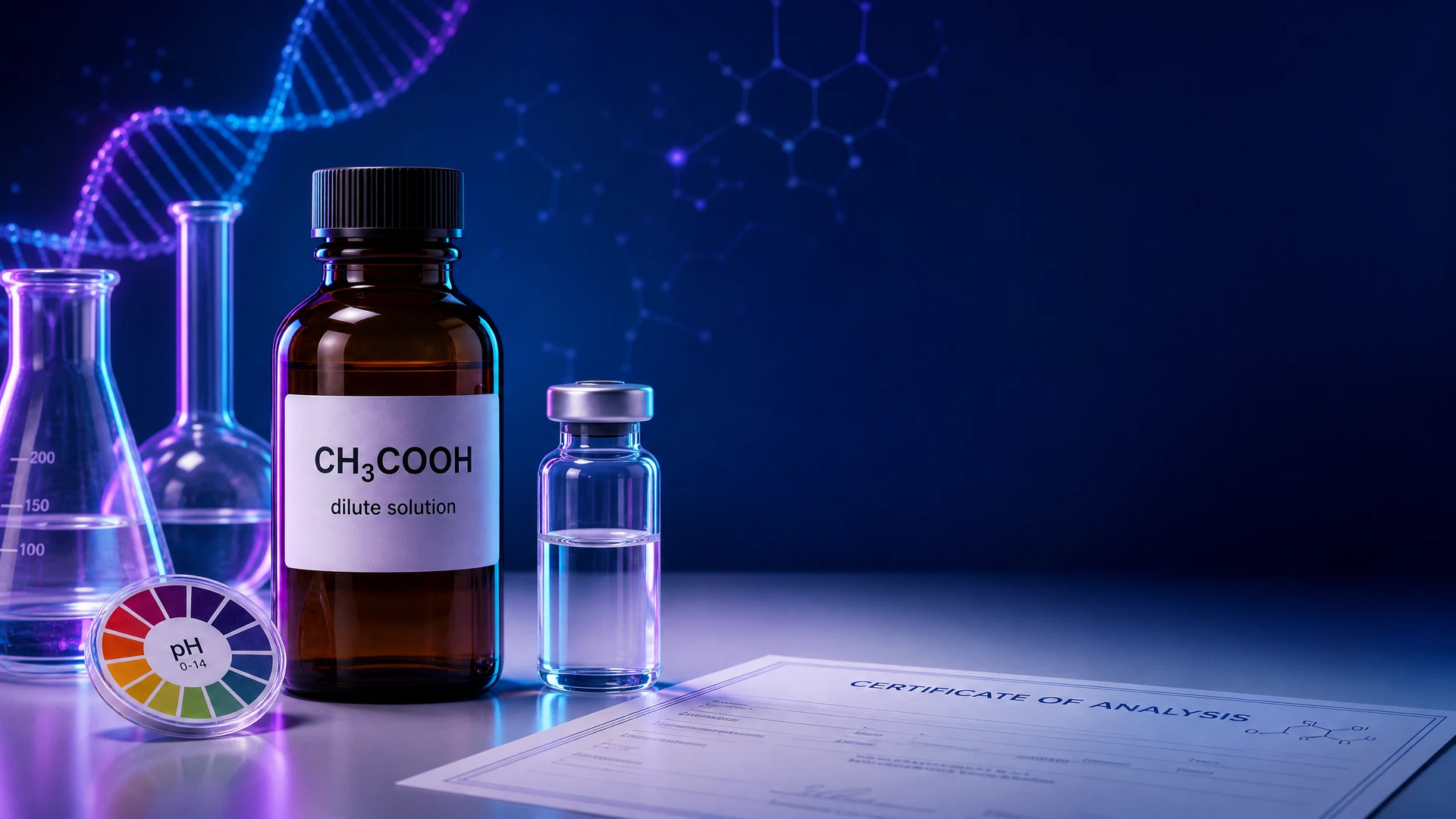
The correct term is dilute acetic-acid solution. It is a laboratory solvent option for selected peptides under validated, product-specific conditions; it is not a universal replacement for bacteriostatic water, sterile water, saline, or a manufacturer-supplied diluent.
Peptide solubility depends on amino-acid sequence, net charge, concentration, counterions, formulation excipients, and the individual lot. Bachem and GenScript therefore recommend following the product's lot-specific analytical sheet, solubility report, certificate of analysis (COA), or supplied instructions before using general sequence-based rules. [1] [2]
Why an Acidic Solvent Can Change Peptide Solubility
Peptides contain acidic, basic, polar, and hydrophobic amino acids. Changing pH can change the molecule's net charge and reduce self-association. In general laboratory workflows, an overall basic peptide may dissolve more readily in a small amount of acidic solvent, while an acidic peptide may require a basic solvent. Hydrophobic or neutral peptides can require entirely different solvent systems. [1]
This is a solubility principle, not a dosing or administration rule. The same acid level that helps one laboratory peptide may be unnecessary, incompatible, or destabilising for another formulation. Sigma-Aldrich notes that a suitable solvent must dissolve the peptide, remain compatible with the intended application, and not react with or promote degradation of the peptide. [3]
Product-by-Product Evidence: Tesamorelin, AOD-9604 and IGF-1 LR3
| Peptide or product | Best-supported diluent guidance | What this means |
|---|---|---|
| Tesamorelin (EGRIFTA WR) | The FDA-approved formulation specifies only the supplied Bacteriostatic Water for Injection. Earlier EGRIFTA SV packaging specified supplied Sterile Water for Injection. | Do not present acetic acid as the standard tesamorelin diluent. The exact marketed formulation and supplied instructions control. [4] |
| Tesamorelin research vial | The site's mandated protocol source uses bacteriostatic water for its 10 mg research-vial protocol. | Acetic acid is not part of that source protocol. [5] |
| AOD-9604 | The site's mandated protocol source specifies bacteriostatic water for the 5 mg vial. | No reliable product-specific evidence was found to justify telling all users that AOD-9604 requires acetic acid. Follow the exact product COA if it differs. [6] |
| IGF-1 LR3 | The site's mandated protocol source specifies bacteriostatic water for its 1 mg vial. Some laboratory-reagent datasheets use acidic buffers for IGF-family proteins, but formulations vary. | Do not treat a forum recipe or another supplier's solvent as universal. Use the lot-specific datasheet or COA. [7] |
For the full preparation sequence, see the illustrated reconstitution guide. If a vial is already abnormal, use the cloudy or clumped solution guide instead of experimenting with another solvent.
Which Other Peptides May Need an Acidic Solvent?
There is no scientifically defensible, brand-independent list that says “always use acetic acid” for a fixed group of peptide names. The relevant category is usually basic or difficult-to-solubilise research peptides whose own documentation specifies an acidic solvent. Examples sometimes discussed in laboratory contexts include certain IGF-family reagents, kisspeptin or ghrelin-related research reagents, and other highly basic custom peptides. However, the sequence, salt form, purity, concentration and excipients can change the correct solvent.
For that reason, this site uses a decision rule rather than a universal name list:
- Use the diluent supplied with an approved medicine exactly as labelled.
- For a research reagent, follow the exact lot's COA or technical datasheet.
- If the documentation names water or bacteriostatic water and the vial dissolves as expected, do not add acid “just in case.”
- If the documentation names an acidic solvent, use only the specified sterile formulation and concentration in an appropriate laboratory setting.
- If the documentation is silent and the product does not dissolve, stop and contact the supplier rather than experimenting on the full vial.
Bacteriostatic Water and Acetic Acid Do Different Jobs
| Feature | Bacteriostatic water | Dilute acetic-acid solution |
|---|---|---|
| Primary role | Sterile aqueous diluent with benzyl alcohol preservative for compatible multi-dose products. | pH adjustment and solubilisation for selected, documented laboratory reagents. |
| Preservative function | Contains a preservative, but this does not make poor technique safe. | Do not assume it provides the same antimicrobial preservation. |
| Universal compatibility | No. Some products specify a different diluent. | No. It is product- and concentration-specific. |
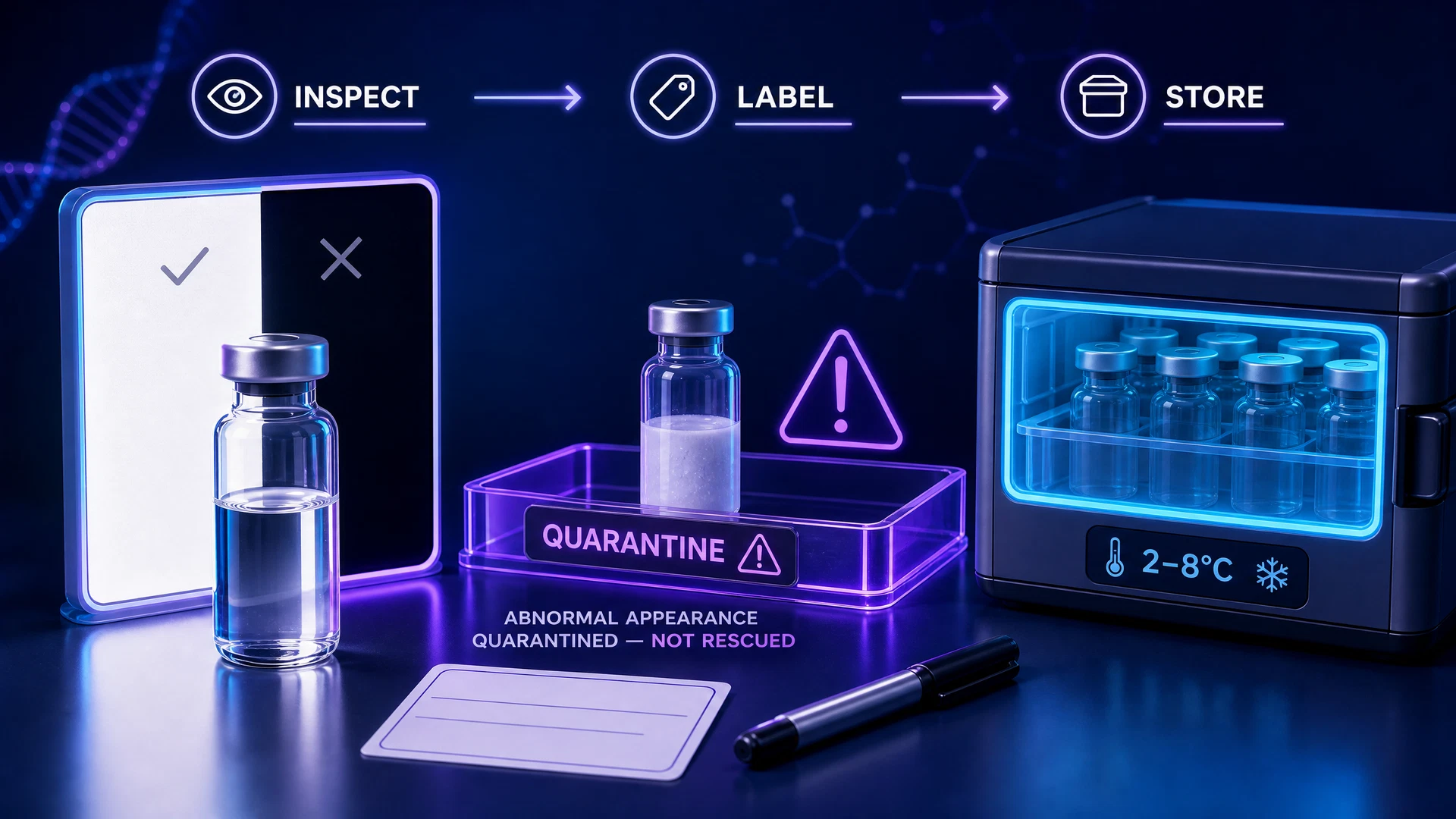
| Can it rescue a cloudy vial? | No. | No. A persistent abnormal solution should be quarantined, not “fixed” and used. |
Decision Checklist Before Selecting Any Diluent
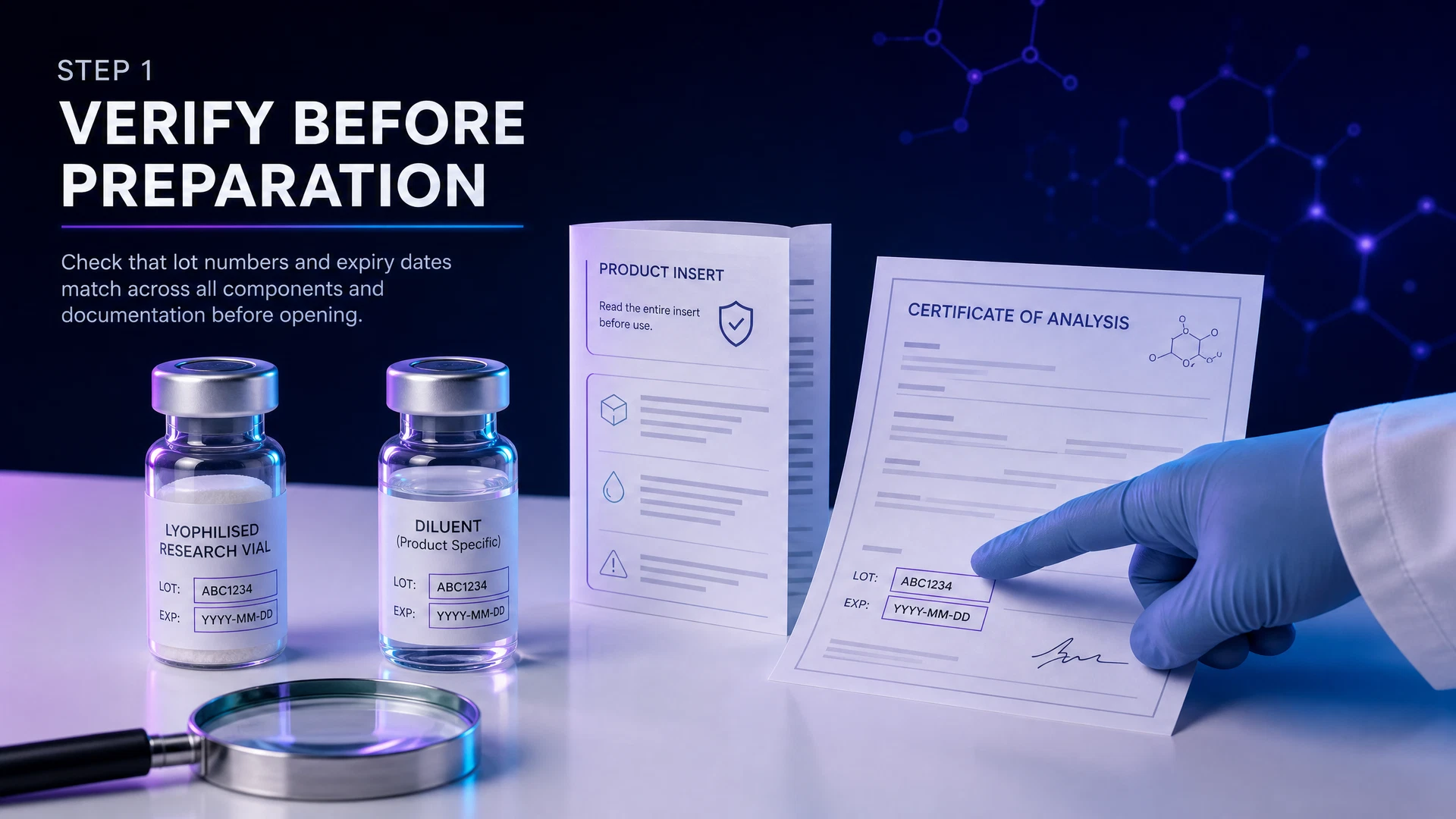
- Read the vial and packaging. Confirm product name, strength, salt form, batch and expiry.
- Find the exact instructions. Use the supplied insert, lot-specific COA, analytical data sheet or manufacturer technical sheet.
- Confirm the intended application. A solvent suitable for an in-vitro assay may not be suitable for any other use.
- Confirm concentration and sterility. “Acetic acid” without a validated concentration and sterility specification is incomplete information.
- Inspect the final solution. If the intended clear solution remains cloudy, gelled, discoloured or visibly particulate, do not use it.