Skip to content
Dosage guide · 20 mg vial

Testagen Dosage Protocol

Lys-Glu-Asp-Gly (KEDG) · experimental tetrapeptide bioregulator

Reference-site schedule is once-daily subcutaneous: 100 mcg for weeks 1–2, 150 mcg for weeks 3–4 and 200 mcg for weeks 5–8. The optional weeks 9–12 range is 250–300 mcg daily. With 4 mL in a 20 mg vial, concentration is 5 mg/mL and 100 mcg is 2 U-100 units (0.02 mL).

How oftenOnce daily
Starting dose100 mcg
Start = units2 units
Mix4 mL BAC water

Reviewed 25 Oct 2026 · Education only, not medical advice

Testagen 20 mg vial

Not currently stocked by Peak Peptides Australia

No product photo — this strength isn't stocked by Peak

01 · DOSAGE CHART

Testagen dosage chart

Gradual daily approach · 20 mg vial + 4 mL BAC water

BAC water added
Concentration5 mg/mL
1 unit (U-100)50 mcg= 0.01 mL
How oftenOnce dailySubcutaneous injection

4 mL gives 5 mg/mL, so the source's 100 mcg starting amount is a measurable 2 U-100 units.

Testagen dosage chart for a 20 mg vial mixed with 4 mL of bacteriostatic water
WeekDaily doseSyringe units
Weeks 1–2Start100 mcg2 units0.02 mL
Weeks 3–4150 mcg3 units0.03 mL
Weeks 5–8200 mcg4 units0.04 mL
Weeks 9–12 (optional)Maintenance250–300 mcg5–6 units0.05–0.06 mL

Once daily · any consistent time · subcutaneous injection

The reference protocol steps up by 50 mcg every 2 weeks through week 5, then gives an optional 250–300 mcg daily range for weeks 9–12.

The source describes an 8–12 week course, with an optional extension to 16 weeks, but does not specify a separate week 13–16 amount.

Its 3 mL mix would make the 100 mcg starting amount 1.5 units; this guide uses 4 mL so every chart amount is at least 2 units.

Reference-site amounts only — Testagen has no identified clinically established human dose or TGA approval. Education only, not medical advice. Dose amounts adapted from Testagen 20 mg vial dosage protocol (PeptideDosages.com); units are recalculated for the vial and mix selected above.

02 · HOW TO MIX

Mixing a 20 mg vial with 4 mL of BAC water

Using a 1 mL (100-unit) insulin syringe, 4 full draws of bacteriostatic water gives 5 mg/mL.
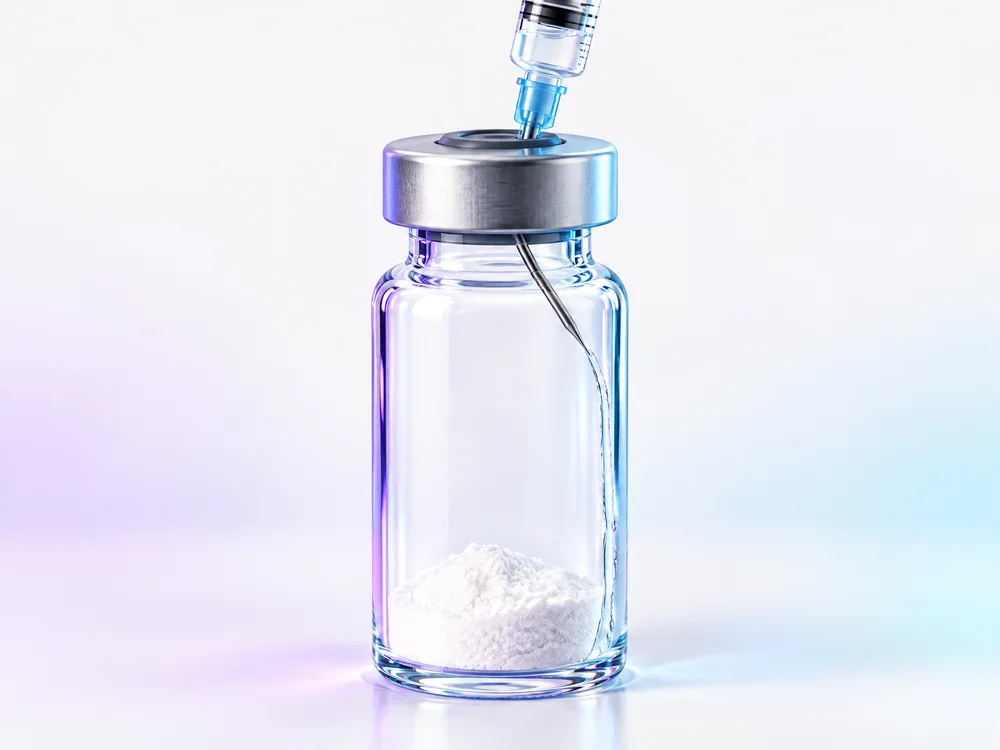
  1. Bacteriostatic water running slowly down the inside wall of a peptide vial1

    Add the water slowly

    Wipe both rubber stoppers with an alcohol swab and let them dry. Draw 4 mL of bacteriostatic water and let it run slowly down the inside of the vial wall — not straight onto the powder.
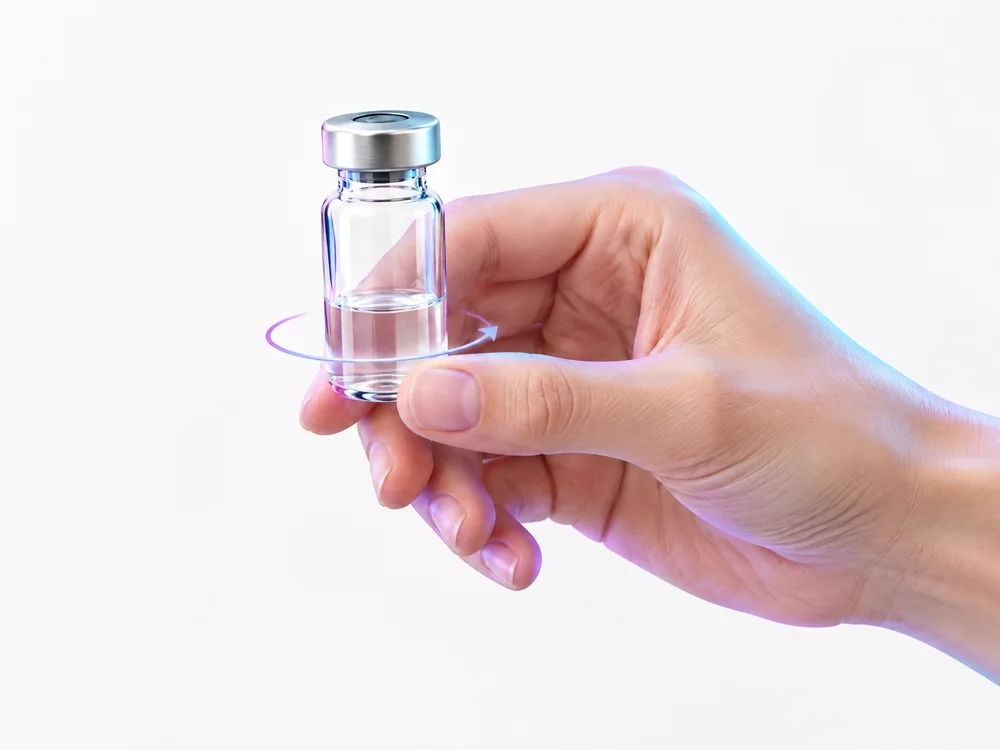
  2. Hand gently swirling an upright vial in a small circle2

    Swirl gently

    Swirl or roll the vial gently until the powder has dissolved. Give it a few minutes to settle if needed.
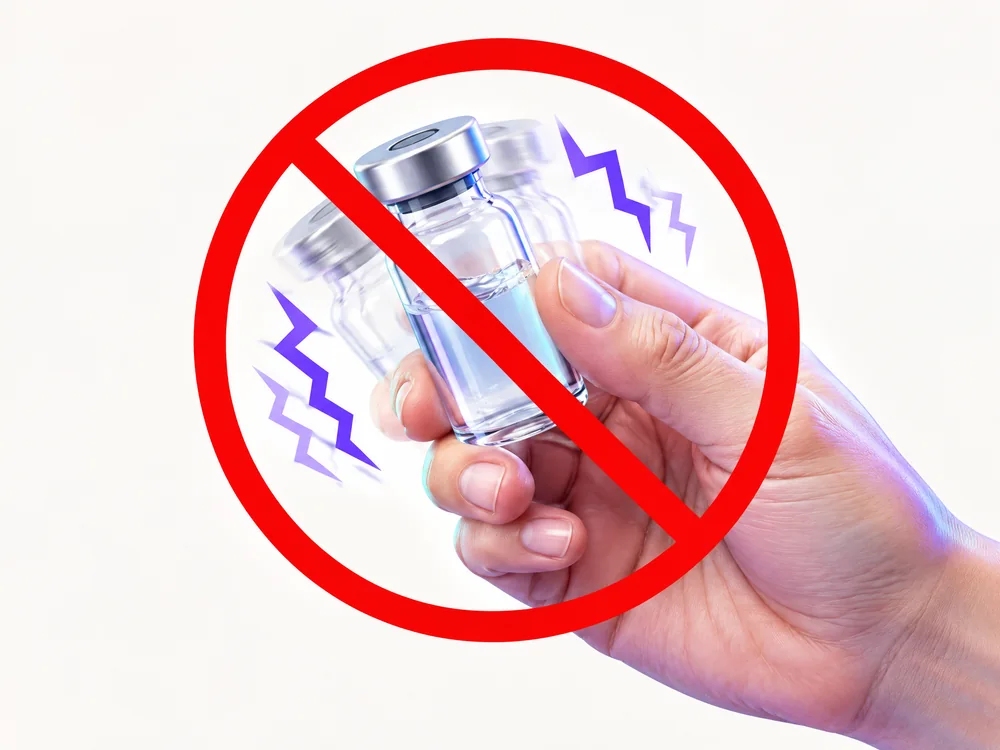
  3. A vial being shaken with a red cross through it3

    Don't shake it

    Shaking can damage the peptide and cause foaming. Gentle swirling only.
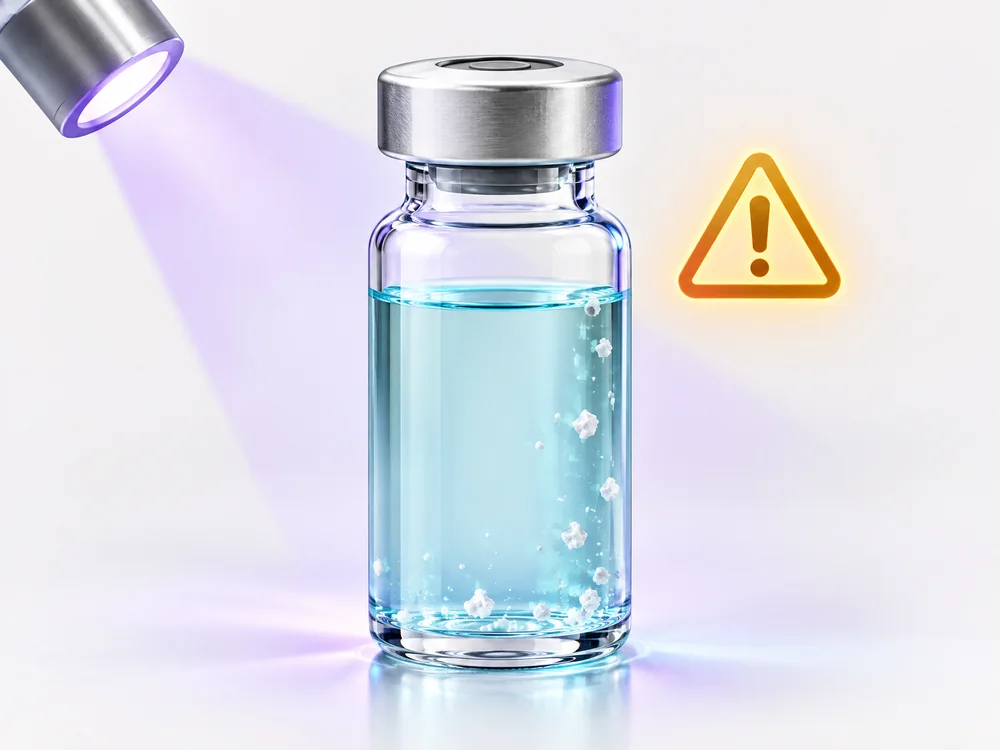
  4. Close-up of a vial with small undissolved particles and a caution symbol4

    Check it's fully clear

    Only use it once it is fully clear with no particles. Label the vial with the date and 5 mg/mL, then store it in the fridge at 2–8 °C.

Full illustrated reconstitution guide
03 · SUPPLIES NEEDED

What you'll need

Counts follow the dosage chart above at the highest amount in each step, using a 20 mg vial mixed with 4 mL.

Length of protocol
1Testagen 20 mg vial9.1 mg needed in total
571 mL insulin syringesU-100, 27–31G · one per draw + one per vial mixed
1BAC water 10 mL bottle4 mL used for mixing
114Alcohol swabsSkin + stopper, every time

Plus an approved sharps container. Syringes and swabs are sold by Australian pharmacies — Peak Peptides and Pure Performance supply the bacteriostatic water.

04 · CALCULATOR

Check a different amount

Enter your vial, water and dose to see the matching syringe units.

Concentration Calculator
mg
4 mL
mcg

Concentration

5.00 mg/mL

(5000 mcg/mL)

Calculated Liquid Volume

0.020 mL

Equivalent U-100 volume scale position

2markings (not biological IU)
01020304050607080901002 marks

Illustration of a U-100 volume scale, not preparation or injection guidance

05 · PROTOCOL DETAILS

About Testagen

Protocol overview

Starting dose
100 mcg once daily for weeks 1–2
How it increases
150 mcg in weeks 3–4, 200 mcg in weeks 5–8, then optional 250–300 mcg in weeks 9–12
Frequency
Once daily
When to take it
Any consistent time of day
Course length
8–12 weeks; the source mentions an optional extension to 16 weeks without a separate amount
Common mix
4 mL bacteriostatic water → 5 mg/mL → 2 units = 100 mcg

Storage

Before mixing
The reference protocol states to keep the lyophilised vial at −20 °C in dry, dark conditions.
After mixing
The reference protocol states to refrigerate at 2–8 °C and protect from light.
Never
Avoid repeated freeze–thaw cycles or use of a mixed vial that is cloudy or has particles.

How it works

Testagen is the tetrapeptide Lys-Glu-Asp-Gly, abbreviated KEDG. Its claimed endocrine uses are not established in people.

Published KEDG work includes hypophysectomised chicken models, where the peptide was studied for thyroid, immune, haemostatic and thymus changes. These animal findings cannot establish an effect on testosterone, fertility or any condition in people.

A review of short peptides discusses possible gene-expression and cell-differentiation effects, but this is mechanistic background rather than proof of a human Testagen benefit.

Illustrated mechanism explainer

What the research shows

  • A 2010 PubMed-indexed report in neonatally hypophysectomised chickens and one-year-old birds found that Lys-Glu-Asp-Gly and a comparison peptide prevented reported thyroid atrophy and normalised reported immune and haemostatic measures; it was an animal experiment, not a human study.
  • A 2011 chicken and old-bird report found that Lys-Glu-Asp-Gly and a comparison peptide increased reported TSH, T3 and T4 after hypophysectomy; restoration was reported as greater in one-year-old chickens than in five-year-old birds.
  • A 2013 animal report found Lys-Glu-Asp-Gly promoted recovery of thymus morphology in hypophysectomised birds and reported a greater effect than Ala-Glu-Asp-Gly; it does not establish human efficacy or safety.
  • The 2025 Testagen paper indexed in PubMed tested KEDG on copper in saline, not people, and reported about 86% corrosion-inhibition efficiency in electrochemical measurements; it supplies chemical identity, not medical evidence.
  • No human KEDG efficacy or safety data were identified in the opened KEDG PubMed records. The ClinicalTrials.gov search result named Testagen concerns a topical testosterone product, not KEDG.
  • No TGA or FDA approval source for KEDG Testagen was identified in this review. TGA states that peptide products not included in the ARTG are unapproved and have not been assessed for quality, safety or effectiveness.

Reported side effects

  • There is no established human adverse-effect profile or clinically established human dose for KEDG Testagen in the sources reviewed.
  • The animal literature reports changes in thyroid-related hormones, immune or haemostatic measures after KEDG in hypophysectomised birds. Whether these findings predict effects or risks in people is unknown.
  • TGA warns that unapproved peptide products may come from unknown or unregulated sources, with no assurance of correct labelling, sterility, quality, safety or effectiveness.

Important notes

  • Testagen is not an identified TGA-approved medicine. Do not use an experimental peptide to self-treat low testosterone, infertility, thyroid disease or another medical condition.
  • For competitive sport, WADA S0 prohibits at all times any pharmacological substance with no current approval by a governmental regulatory health authority for human therapeutic use. On that basis, Testagen should be treated as prohibited unless an anti-doping authority confirms otherwise.
  • The reference-site schedule is not a clinical dosing recommendation and the human safety, efficacy and product quality of KEDG are unestablished.
  • Do not assume a product sold as Testagen contains KEDG or the stated amount; unapproved products may be incorrectly labelled or non-sterile.
  • Never use a mixed vial that is cloudy or has particles in it.

Injection basics

  • Use a new sterile 1 mL (100-unit) U-100 insulin syringe, 27–31G, every time — never reuse or share.
  • Wipe the vial stopper and the skin with an alcohol swab and let both dry first.
  • Inject under the skin (subcutaneously) of the abdomen, thigh or upper arm, and rotate sites.
  • Put used syringes straight into an approved sharps container — the NDSS lists Australian disposal options.

Guidance: World Health Organization · National Diabetes Services Scheme (NDSS)

06 · QUICK ANSWERS

Testagen questions

How many units is 100 mcg of Testagen?

With the default 4 mL in a 20 mg vial, concentration is 5 mg/mL. A 100 mcg amount is 2 U-100 units, which is 0.02 mL.

How much bacteriostatic water for a 20 mg Testagen vial?

This guide uses 4 mL, producing 5 mg/mL. At that concentration, 1 mg is 20 U-100 units and the 100 mcg starting amount is 2 units.

How long does a 20 mg Testagen vial last?

By peptide content alone, a 20 mg vial contains 200 daily 100 mcg amounts, 133.3 daily 150 mcg amounts, 100 daily 200 mcg amounts, 80 daily 250 mcg amounts or 66.7 daily 300 mcg amounts. Storage limits and product instructions may require earlier disposal.

How many units is 300 mcg of Testagen?

With the default 20 mg vial plus 4 mL mix, 300 mcg is 6 U-100 units, or 0.06 mL.

07 · SOURCES

References

Related dosage guides

All dosages