
 View on Peak SINGLEDosage chart
Selank
Tuftsin Analog
Research summary · not a validated human regimen
Open dosage chart
Delta sleep-inducing peptide · emideltide nonapeptide
The reference protocol lists 100 mcg nightly in week 1, then 150 mcg in week 2, 200 mcg in week 3 and 250–300 mcg for weeks 4–8. With 3 mL of bacteriostatic water, a 10 mg vial is 3.33 mg/mL, so the 100 mcg starting amount is 3 units on a U-100 syringe.
Reviewed 25 Oct 2026 · Education only, not medical advice
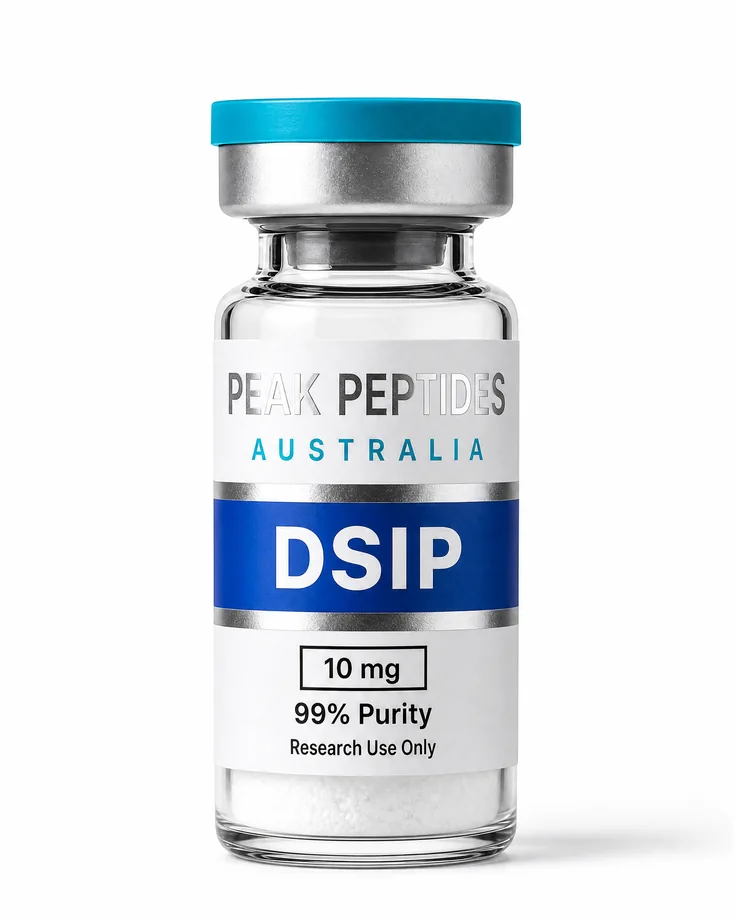
DSIP 10 mg vial
View on Peak Peptides Also at Pure PerformanceExact Peak Peptides Australia product photo
Gradual nightly approach · 10 mg vial + 3 mL BAC water
3 mL is the mix shown on Peak's DSIP page and the reference protocol; Pure's page instead lists 2 mL.
| Week | Daily dose | Syringe units | Syringe fill |
|---|---|---|---|
| Week 1Start | 100 mcg | 3 units0.03 mL | |
| Week 2 | 150 mcg | 4.5 units0.045 mL | |
| Week 3 | 200 mcg | 6 units0.06 mL | |
| Weeks 4–8Maintenance | 250–300 mcg | 7.5–9 units0.075–0.09 mL |
Once daily · evening · subcutaneous injection
The reference chart places the once-daily amount in the evening, about 30–60 minutes before bedtime.
No amount beyond week 8 is shown in the reference protocol.
The reference site describes this as a community-reported measurement schedule, not a clinically validated regimen.
Community-reported amounts — DSIP has no approved or clinically established subcutaneous dose. Education only, not medical advice. Dose amounts adapted from DSIP 10 mg vial dosage protocol (PeptideDosages.com); units are recalculated for the vial and mix selected above.
Using a 1 mL (100-unit) insulin syringe, 3 full draws of bacteriostatic water gives 3.33 mg/mL.
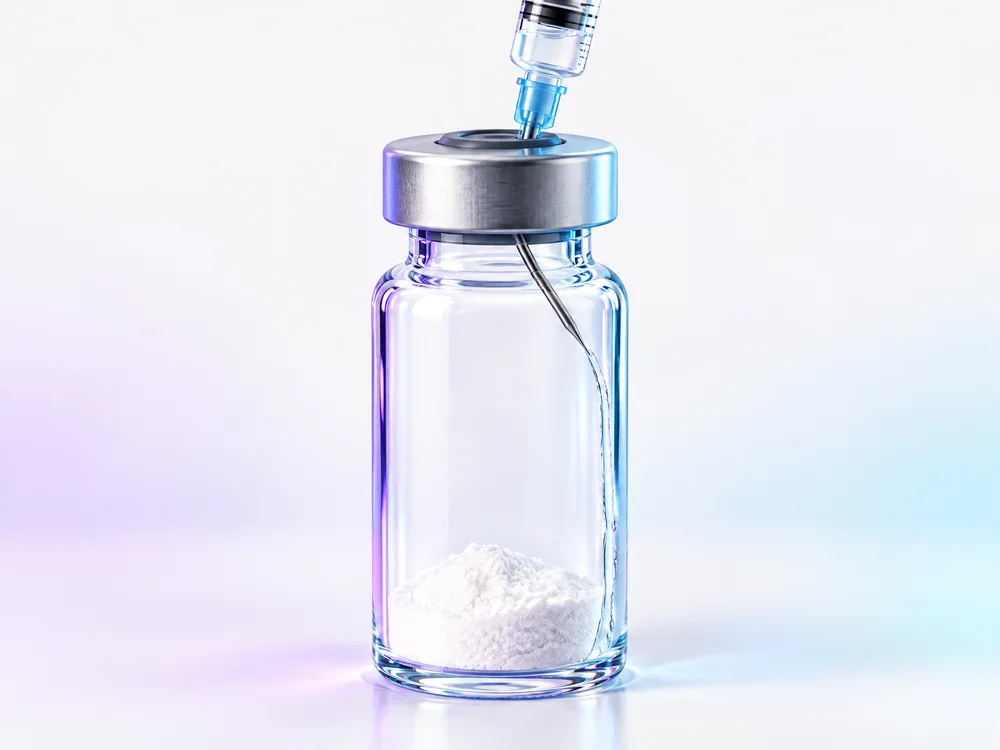 1
Wipe both rubber stoppers with an alcohol swab and let them dry. Draw 3 mL of bacteriostatic water and let it run slowly down the inside of the vial wall — not straight onto the powder.
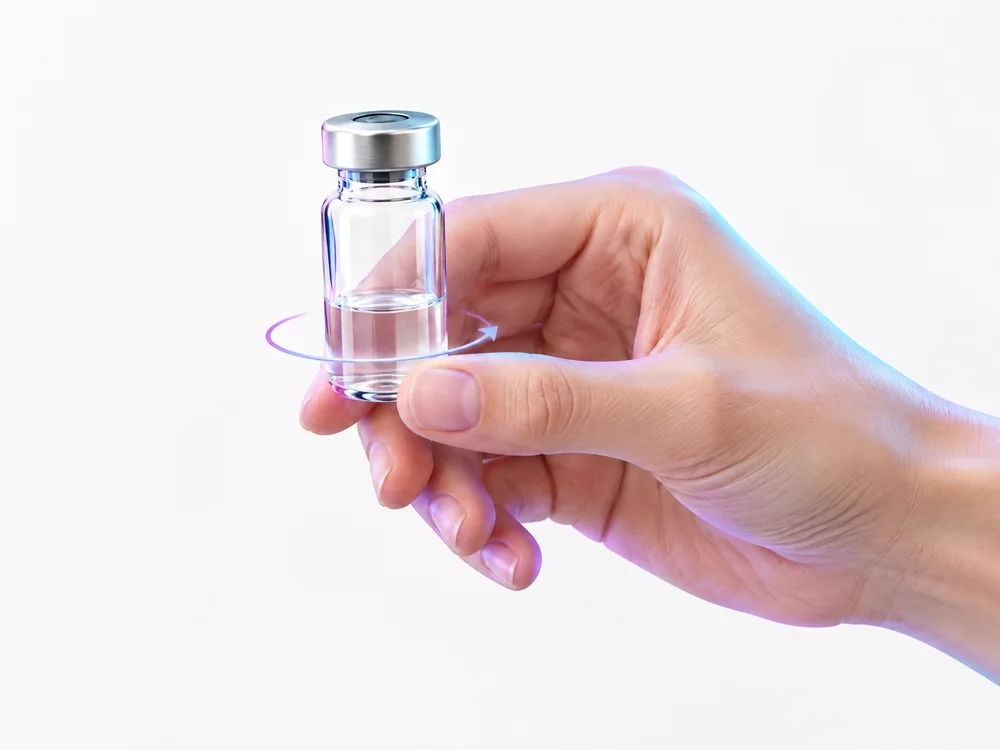 2
Swirl or roll the vial gently until the powder has dissolved. Give it a few minutes to settle if needed.
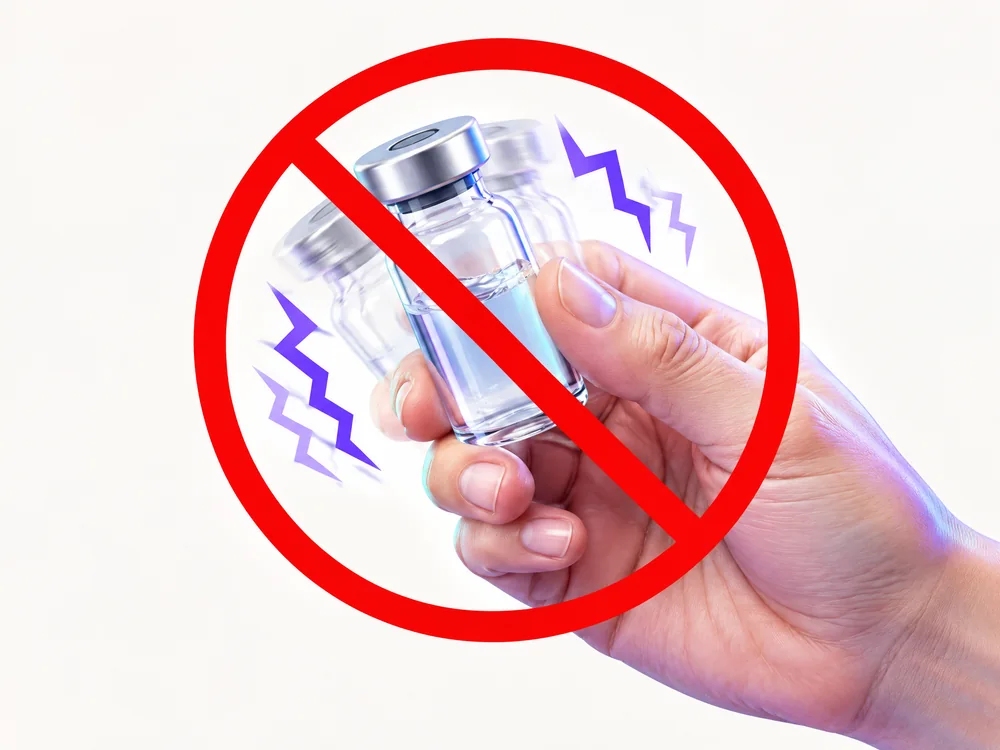 3
Shaking can damage the peptide and cause foaming. Gentle swirling only.
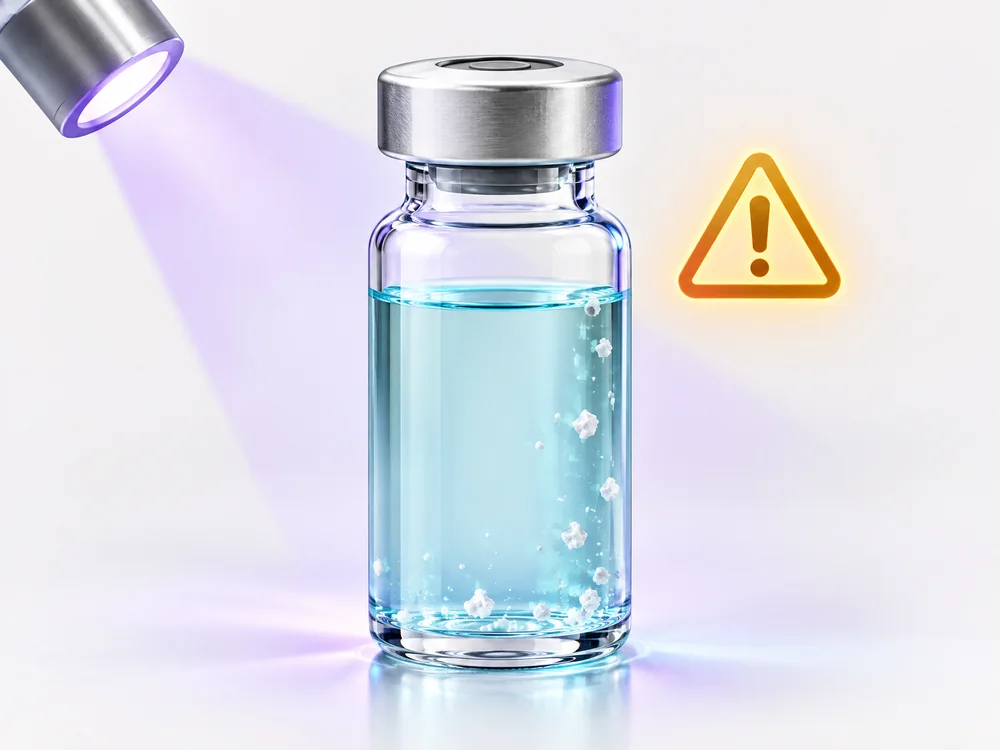 4
Only use it once it is fully clear with no particles. Label the vial with the date and 3.33 mg/mL, then store it in the fridge at 2–8 °C.
Counts follow the dosage chart above at the highest amount in each step, using a 10 mg vial mixed with 3 mL.
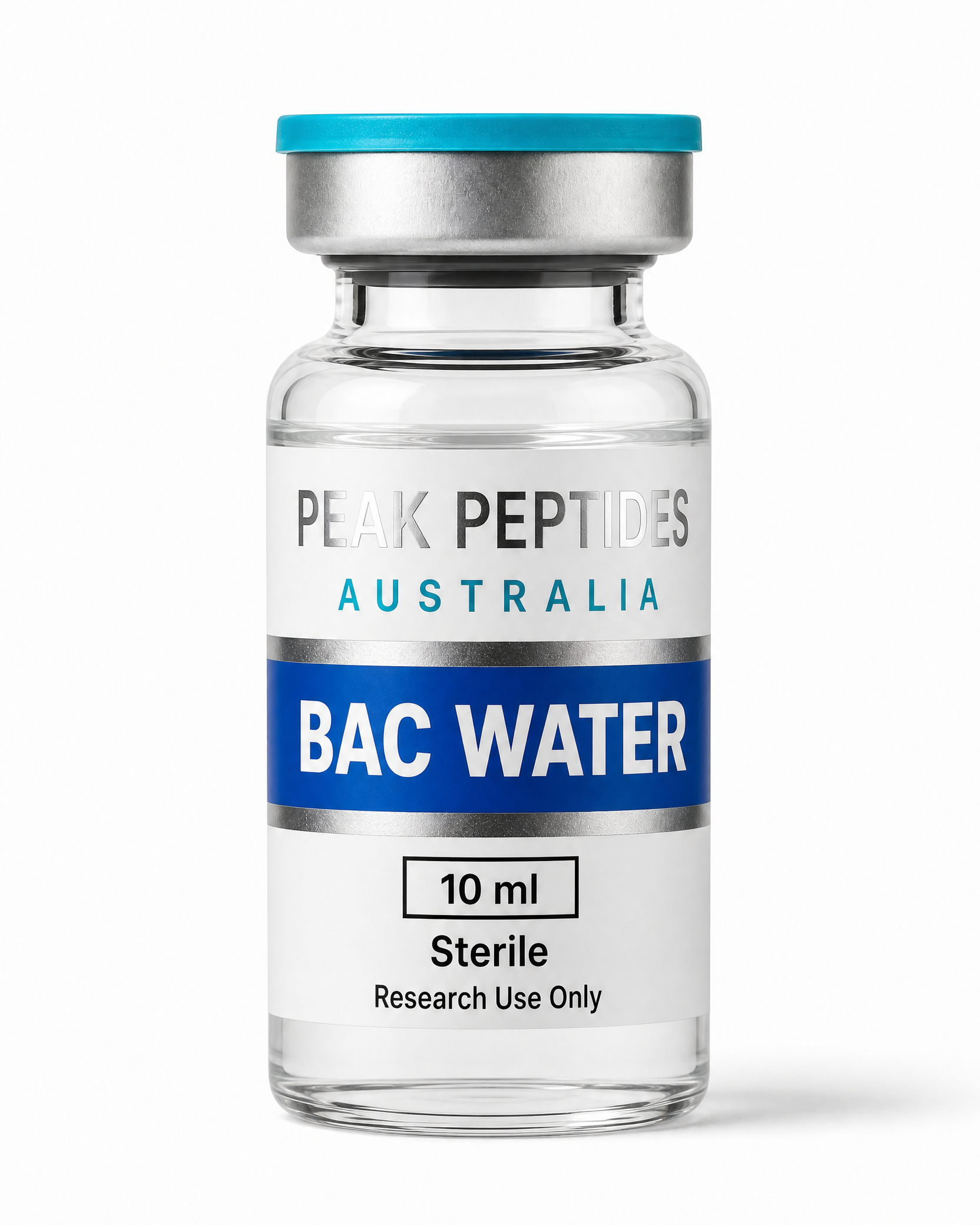
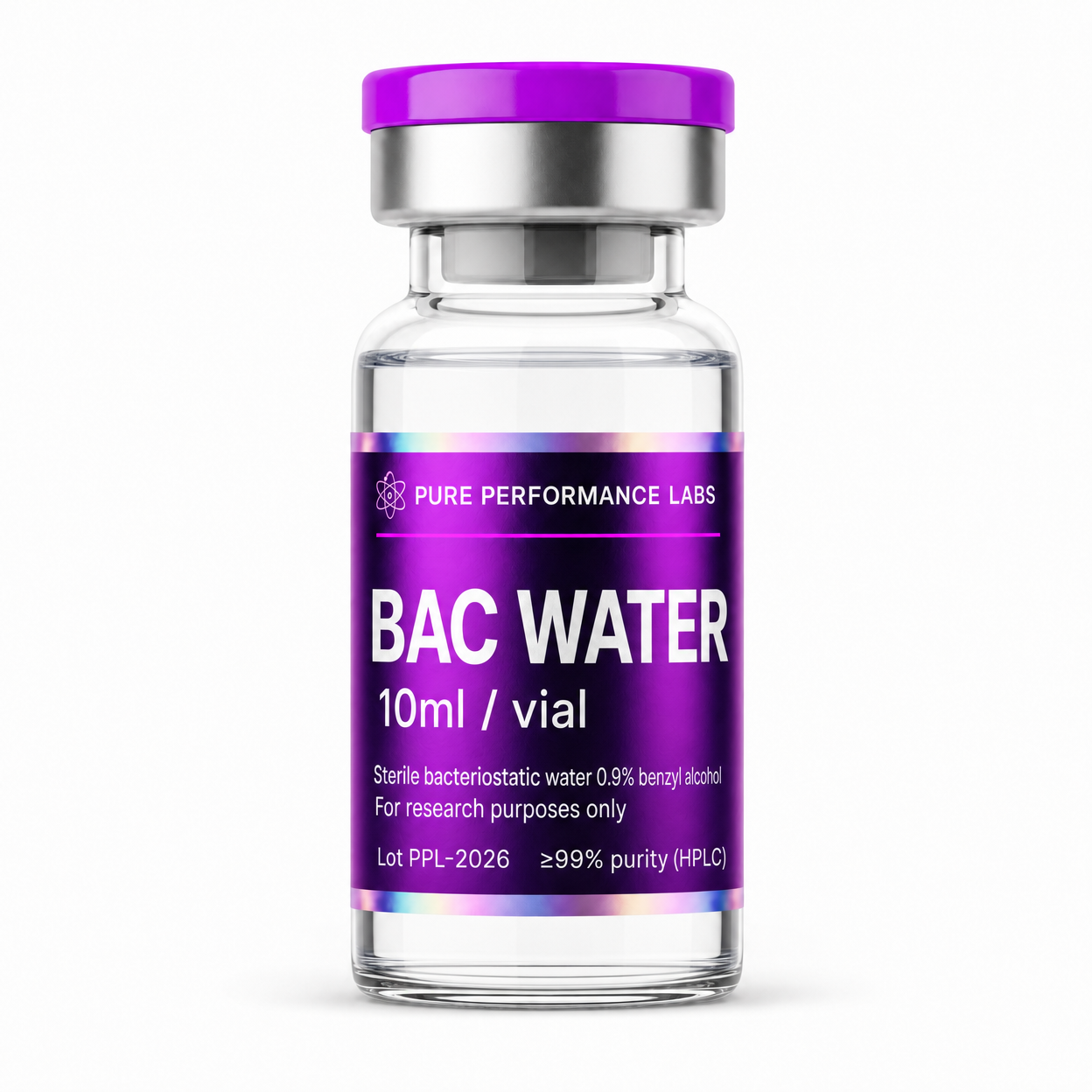
Plus an approved sharps container. Syringes and swabs are sold by Australian pharmacies — Peak Peptides and Pure Performance supply the bacteriostatic water.
Enter your vial, water and dose to see the matching syringe units.
Concentration
3.33 mg/mL
(3333 mcg/mL)
Calculated Liquid Volume
0.030 mL
Equivalent U-100 volume scale position
Illustration of a U-100 volume scale, not preparation or injection guidance
DSIP, also called emideltide, is a nine-amino-acid peptide historically investigated in sleep physiology and neuroendocrine research. Its name reflects early animal work rather than an established treatment effect.
The proposed biology remains unresolved. A 2006 review found that the DSIP gene, precursor protein and possible related receptor had not been isolated, and described the sleep-factor hypothesis as weakly documented.
Guidance: World Health Organization · National Diabetes Services Scheme (NDSS)
With the default 3 mL mix in a nominal 10 mg vial, the concentration is 3.33 mg/mL. A 100 mcg amount is 3 units on a U-100 syringe, or 0.03 mL.
With the default 10 mg plus 3 mL mix, 250 mcg is 7.5 units on a U-100 syringe, which is 0.075 mL.
The default mix is 3 mL because Peak's DSIP page and the attributed reference protocol use that volume. It produces 3.33 mg/mL, where 30 U-100 units equals 1 mg or 0.30 mL.
A nominal 10 mg vial contains 100 amounts of 100 mcg, 50 amounts of 200 mcg, or about 33 amounts of 300 mcg. The number of days depends on the attributed step-up schedule and any material lost during preparation.
View on Peak SINGLEDosage chartTuftsin Analog
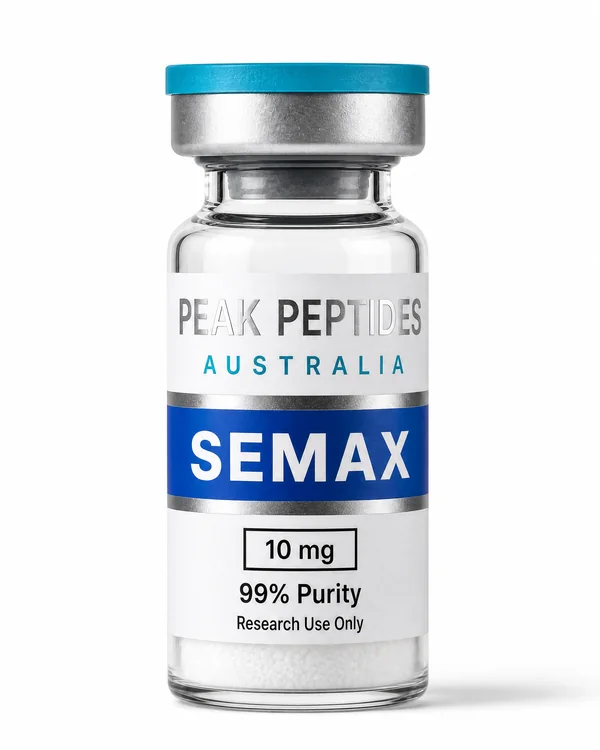 View on Peak SINGLEDosage chart
Heptapeptide Analog of ACTH
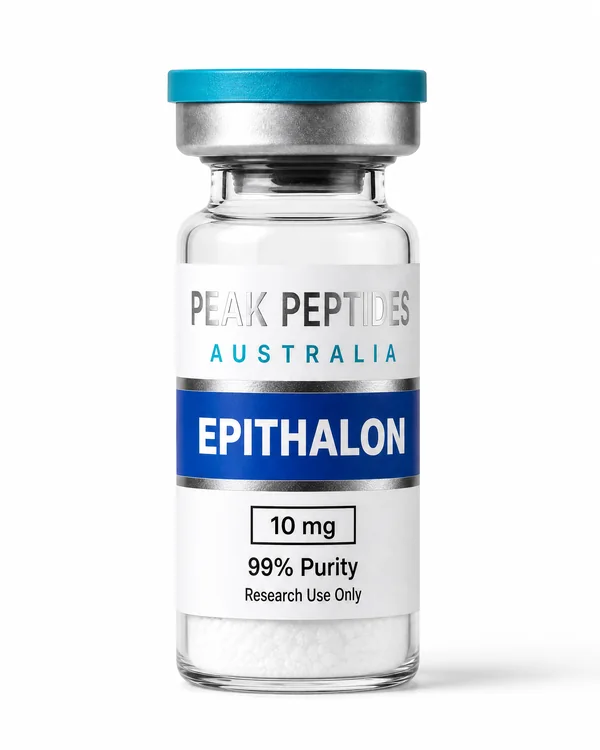 View on Peak SINGLEDosage chart
Epithalamin Synthetic Analog