What is Wolverine Stack (BPC-157 + TB-500)?
A non-proprietary marketing name for a two-substance mixture, not a single peptide, approved formulation, or defined clinical protocol. The TGA explicitly describes the Wolverine Stack as the combination of BPC-157 and TB-500. BPC-157 is a 15-amino-acid (pentadecapeptide) research peptide; TB-500 is the synthetic thymosin-beta-4 fragment LKKTETQ. The stack is therefore a mixture of two peptide research substances, not a hormone or a small molecule.
“Wolverine Stack” is an online label for combining BPC-157 with TB-500, not the name of a standardised medicine. The most directly relevant published experiment is a small 2026 study in surgically repaired Achilles tendons of young male rats. It found a statistically significant load-to-failure difference for TB-500 versus control, while the combination did not outperform either single treatment. Cell and animal findings can generate hypotheses about tissue repair but do not establish recovery, safety, dose, route, or benefit in people. Full-length thymosin beta-4—not TB-500—has been studied in a small healthy-volunteer intravenous safety study; that cannot validate the stack. Australian regulator records identify BPC-157 and TB-500 products as unapproved peptides and warn that online or poorly labelled vials have unverified identity, sterility, quality and safety.
What the name actually describes
Wolverine Stack is a promotional nickname rather than a pharmacological entity. In an August 2026 enforcement release, the Therapeutic Goods Administration (TGA) defined it as the combination of BPC-157 and TB-500. That matters because a name for a pair does not specify the molecular form, amount, purity, excipients, route, manufacturing standard or clinical indication of any product carrying the label. [3]
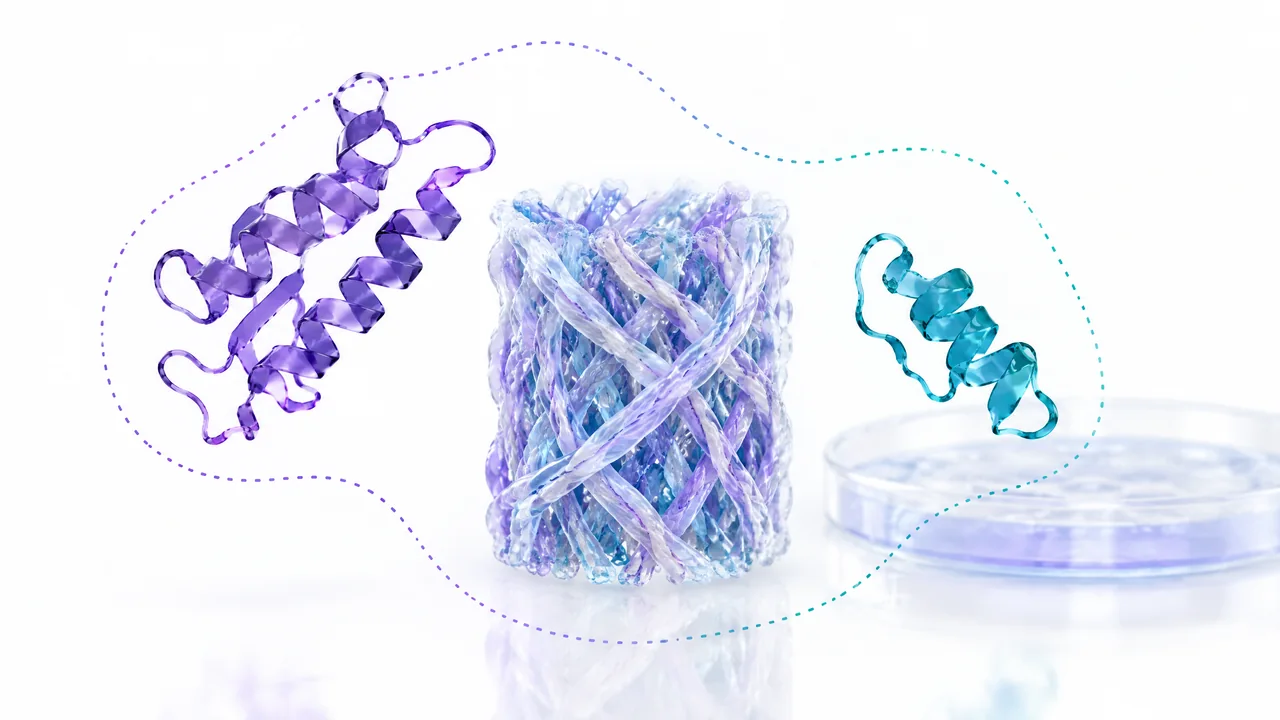
The components should not be blurred together. BPC-157 is a 15-amino-acid peptide (sequence reported as GEPPPGKPADDAGLV in a rat-tendon cell study). TB-500 is commonly described by the FDA as the thymosin-beta-4 fragment LKKTETQ, whereas naturally occurring thymosin beta-4 (Tβ4) is a 43-amino-acid polypeptide. Evidence for full-length Tβ4 is not automatically evidence for the seven-residue TB-500 fragment. [4] [5] [8]
Molecular and cell-model signals
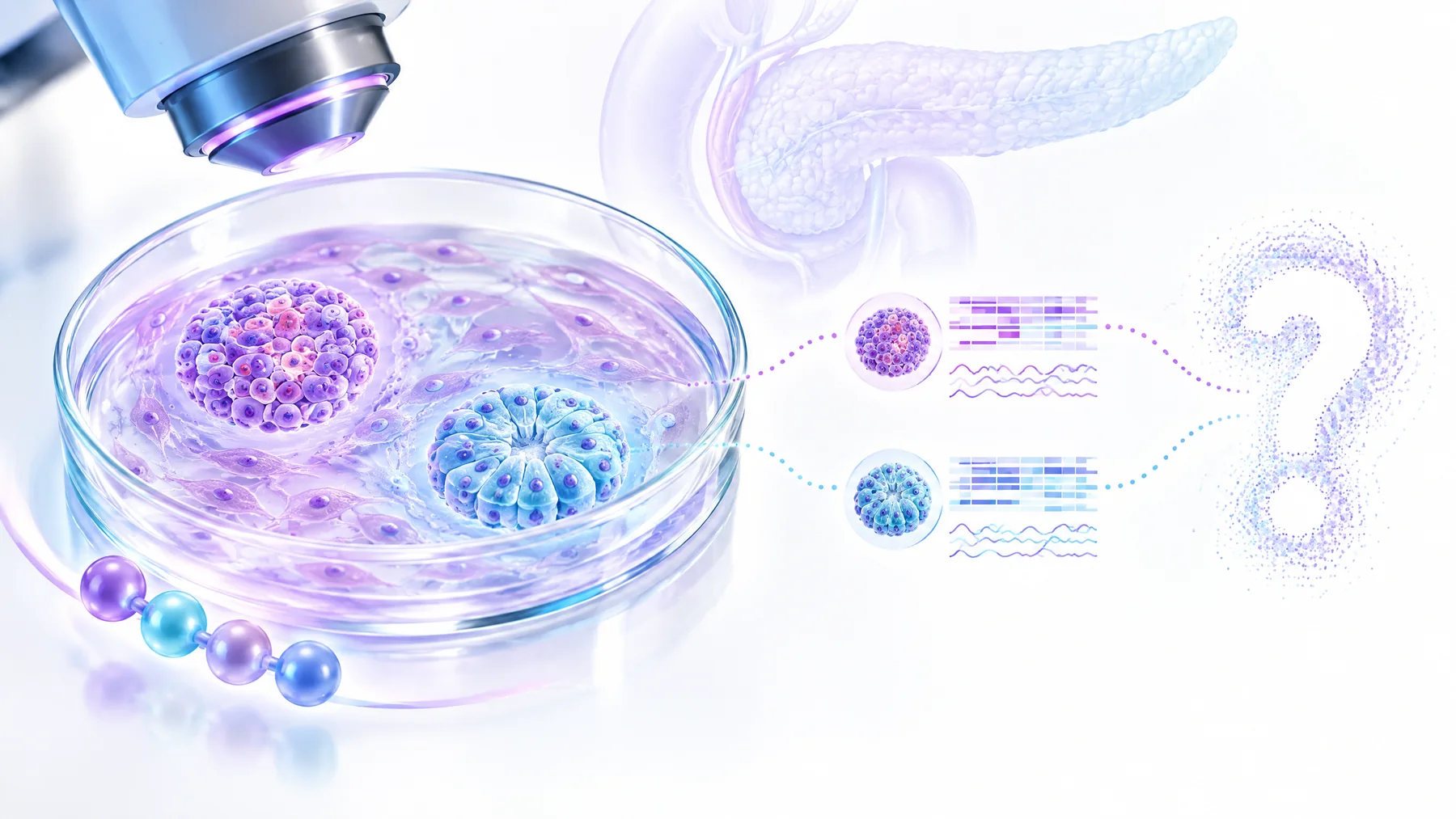
BPC-157 has a laboratory signal in tendon-derived cells, but it is not a demonstrated human mechanism. Chang and colleagues cultured explants and primary fibroblasts from male Sprague-Dawley rat Achilles tendons. BPC-157 increased explant outgrowth, fibroblast migration and spreading, and cell survival during hydrogen-peroxide stress; it did not directly increase proliferation in their MTT assay. The same experiments observed more F-actin formation and dose-dependent phosphorylation of FAK and paxillin. These are model-specific cellular findings, not proof that an injected product repairs a human tendon. [4]
The biological rationale attached to TB-500 comes partly from Tβ4 biology. In human umbilical-vein endothelial-cell migration/adhesion and tubule assays, plus chick aortic-ring sprouting assays, full-length Tβ4 and its seven-amino-acid actin-binding motif showed near-identical activity at about 50 nM; peptides missing part of that motif were inactive. Soluble actin inhibited adhesion and sprouting in those systems. This supports an actin-related angiogenesis observation in experimental models, not a clinical tissue-healing claim for TB-500. [5]
The direct combination study: repaired Achilles tendons in rats
The closest published test of the named combination is Biçer et al. (2026), an exploratory animal experiment. Thirty-two healthy young male Sprague-Dawley rats had an Achilles tendon transection followed by primary Kessler repair. They were randomised to control, BPC-157, TB-500 or the two together; outcomes at four weeks included load to failure and histology. This is a surgically repaired rat-tendon model, not an exercise injury study or a human trial. [6]
For biomechanics, the only statistically significant pairwise result after correction was higher maximum load to failure for the TB-500 group than control (adjusted p=0.0406; n=4 tendons per group for this endpoint). The BPC-157 group and the combination group were not significantly different from control for that comparison. Histology scores and collagen-organisation measures showed selected group differences, but the combined treatment did not show an additional benefit over either substance alone. This result directly challenges any assertion that combining the two has proven synergy. [6]
How far the animal result can travel
The authors identify substantial boundaries: a single four-week assessment, healthy young male rats, no functional testing, no molecular mechanism testing, no tendon-specific TB-500 dose optimisation, and small histology groups of four. Load to failure alone also cannot describe stiffness, energy to failure, ultimate tensile stress or how repair performs over time. The study is appropriately hypothesis-generating; it does not supply a human administration schedule or establish clinical effectiveness. [6]
A useful reading rule is to separate a measured outcome from the story placed around it. In this study, “higher maximum load to failure in a small rat subgroup at four weeks” is measured. “Regeneration,” “rapid recovery,” prevention of re-injury and a useful combined regimen are not measured clinical outcomes. A mixture also needs its own interaction, pharmacokinetic, dose-ranging and safety evidence; results from its individual components cannot substitute for those tests. [6]
What human evidence does—and does not—show
No human efficacy study of the BPC-157 plus TB-500 combination was located in the primary literature reviewed here. The rat combination paper itself states that no clinical data exist for either agent in tendon-specific applications. That absence means there is no evidence-grounded basis for a combined human dose, cycle, route, dilution, storage rule or expected recovery timeline. [6]
One often-confused source is a 2010 randomised, placebo-controlled study of synthetic full-length Tβ4, not TB-500. It involved four cohorts of ten healthy volunteers and assessed single and repeated intravenous doses for safety and pharmacokinetics. Adverse events were reported as infrequent and mild or moderate, with no dose-limiting toxicity in that small short study. It did not test BPC-157, TB-500, the Wolverine Stack, tendon repair or clinical athletic recovery. [7]
Safety, quality and mixture uncertainty
The absence of a known benefit is not the absence of risk. The TGA says unapproved peptide products have not been evaluated by it for safety, quality or effectiveness, and identifies uncertainty about manufacture, sterility, pharmacology, adverse effects and actual contents. It specifically notes infection, contamination, local tissue damage, misleading labels and interactions as concerns for unapproved products, especially injectables. [1]
The FDA separately records BPC-157 as carrying potential immunogenicity and peptide-impurity/API-characterisation concerns for compounded products, with insufficient safety information for proposed routes. For TB-500 (thymosin-beta-4 fragment LKKTETQ), the FDA says it has not identified human exposure data for drug products containing the fragment and lacks information needed to know whether it would cause harm in humans. These regulator assessments do not establish that either substance causes a particular outcome; they explain why safety cannot be assumed. [8]
Australian regulatory context and research-vial claims
In Australia, peptide products are therapeutic goods. The TGA lists BPC-157 and TB-500 among examples of unapproved peptide products, often supplied as injectables, and states that unapproved goods are not included in the Australian Register of Therapeutic Goods (ARTG). Approved peptide medicines do exist in Australia, but that fact does not approve these components or their combination. The ARTG is the public register for checking product name, formulation and sponsor details. [1] [9]
A supplier vial labelled “research use only” is not an approved formulation and the label does not turn its supply into lawful therapeutic use. The TGA says this disclaimer does not change a product’s regulatory status, permit importation or remove advertising and supply obligations. It also warns that unlabelled or unclearly labelled peptide products cannot be assessed for lawful personal importation and will not be considered for release. [1]
For tested athletes, there is a second issue independent of medical claims. The 2026 World Anti-Doping Agency list names BPC-157 under S0 (non-approved substances) and lists thymosin-beta-4 and its derivatives, including TB-500, among prohibited growth factors or modulators. The List is updated at least annually, so athlete-specific status should be checked with the relevant anti-doping organisation. [10]
A balanced comparison with related substances
BPC-157 and TB-500 are not interchangeable versions of one “healing peptide.” The BPC-157 evidence highlighted here is mainly rat tendon-cell work and a small rat surgical-repair experiment. For the Tβ4 side, there is experimental evidence that an actin-binding motif can reproduce selected full-length Tβ4 effects in endothelial and chick-tissue assays, while the limited healthy-volunteer study used synthetic full-length Tβ4 rather than TB-500. Each step away from the exact molecule, model and outcome increases uncertainty. [4] [5] [6] [7]
The plain-language conclusion is not that repair biology is unimportant; it is that the Wolverine Stack label is ahead of the evidence. It is a research-oriented mixture with interesting preclinical observations, no demonstrated human combination benefit and no validated combined protocol. Claims should be anchored to the exact model that produced them, with the distinction between a regulator-reviewed medicine and an unapproved supplier product kept clear. [1] [3] [6]
Questions readers ask
Is Wolverine Stack an approved medicine in Australia?
No. It is a name for a combination of BPC-157 and TB-500. The TGA identifies products containing those substances as examples of unapproved peptide products, meaning they have not been included in the ARTG or evaluated by the TGA for safety, quality and effectiveness. [1] [3]
Is there proof that combining BPC-157 and TB-500 works better than either one alone?
No. In the directly relevant 2026 rat Achilles-repair experiment, the combination did not demonstrate an additional biomechanical or histopathological benefit over the individual treatments. That small animal result cannot determine whether a combination is useful or safe in people. [6]
Does the human thymosin beta-4 study prove TB-500 is safe or effective?
No. The study was of synthetic full-length Tβ4 in 40 healthy volunteers and evaluated short-term intravenous safety and pharmacokinetics. TB-500 is the LKKTETQ fragment, and the study did not test TB-500, BPC-157, the mixture, tendon healing or efficacy. [7] [8]
Can a “research use only” vial be treated as a clinical formulation?
No. The TGA states that this wording does not alter regulatory status or make supply lawful, and warns that inaccurate labels and unverified manufacture, sterility and contents are central risks with unapproved peptide products. [1]
Is the stack relevant to anti-doping rules?
Yes. WADA’s 2026 List names BPC-157 in S0 and lists thymosin-beta-4 and derivatives such as TB-500 as prohibited at all times. Athletes should obtain current, sport-specific advice from their anti-doping organisation. [10]
What remains uncertain
The record is limited by the identity and evidence base of the topic itself: “Wolverine Stack” is a marketing label rather than a standardised investigational product. The directly relevant combination evidence is one small, short, young-male-rat Achilles-repair experiment with endpoint subgroups of four; it did not establish synergy. BPC-157 cellular findings come from rat tendon explants and fibroblasts. Full-length Tβ4 and the TB-500 fragment must not be treated as interchangeable, and the cited healthy-volunteer study did not test the fragment, BPC-157, the mixture or tendon outcomes. No source here validates a human combined dose, route, dilution, storage condition, efficacy expectation, long-term safety profile or approved formulation. Online/research-labelled products introduce an additional identity, sterility and quality uncertainty.
References and further reading
- [1] Understanding your responsibilities when importing, compounding and supplying unapproved peptide products. TGA regulatory and consumer-safety guidance
- [2] Concerns regarding the public health risks associated with unapproved peptide products. TGA/CMO public-health statement
- [3] TGA flexes its muscle against illegal peptides and steroids. TGA enforcement media release
- [4] The promoting effect of pentadecapeptide BPC 157 on tendon healing involves tendon outgrowth, cell survival, and cell migration. Ex vivo tendon explants and in vitro primary fibroblasts from male Sprague-Dawley rat Achilles tendon
- [5] The actin binding site on thymosin β4 promotes angiogenesis. Human umbilical-vein endothelial-cell assays and chick aortic-ring sprouting assays comparing Tβ4, fragments and synthetic peptides
- [6] Effects of BPC-157 and TB-500 on Achilles tendon healing in rats: A histopathological and biomechanical study. Randomised exploratory study in 32 young adult male Sprague-Dawley rats with surgically transected and repaired Achilles tendons; four treatment groups; four-week endpoint
- [7] A randomized, placebo-controlled, single and multiple dose study of intravenous thymosin β4 in healthy volunteers. Randomised placebo-controlled single- and multiple-dose safety and pharmacokinetic study in four cohorts of ten healthy volunteers
- [8] Certain Bulk Drug Substances for Use in Compounding that May Present Significant Safety Risks. FDA Category 2/withdrawn-nomination safety assessment for compounding bulk substances
- [9] Australian Register of Therapeutic Goods (ARTG). ARTG search resource
- [10] The Prohibited List. 2026 World Anti-Doping Agency Prohibited List