What is Tirzepatide?
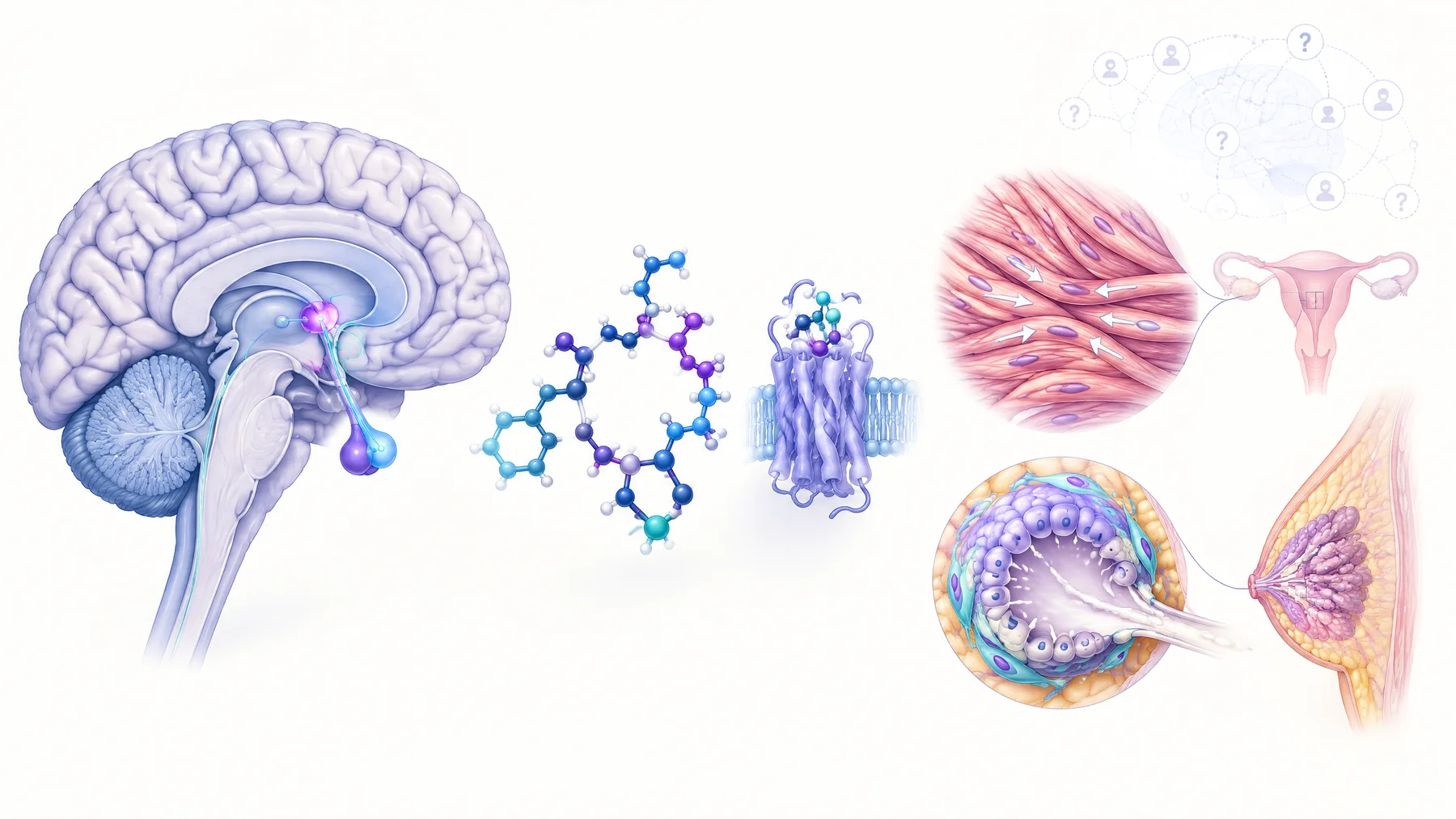
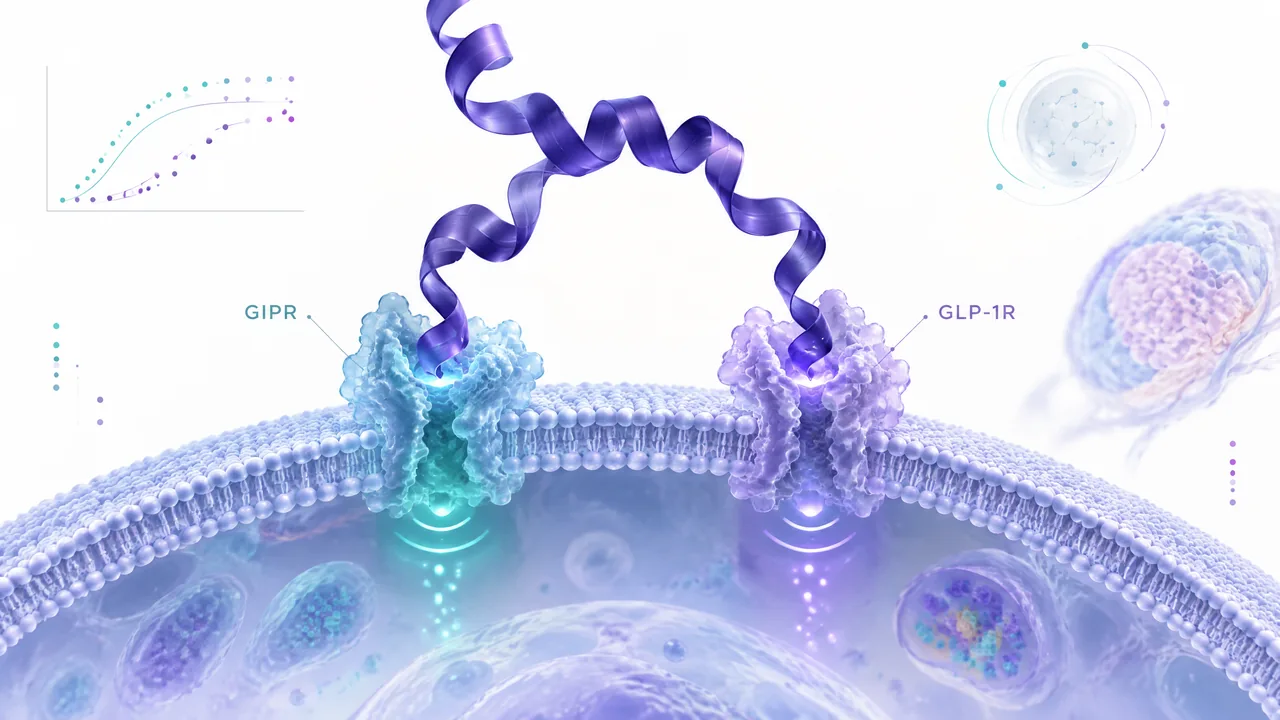
Tirzepatide is a synthetic 39-amino-acid peptide medicine with a C20 fatty-diacid moiety. It is a long-acting dual glucose-dependent insulinotropic polypeptide (GIP) and glucagon-like peptide-1 (GLP-1) receptor agonist—not a supplement, a topical ingredient, or a generic ‘research peptide’ category.
Evidence-grounded Australian educational material distinguishing the registered tirzepatide medicine from unregulated products, with primary clinical-trial results, safety context, and clear boundaries on what the evidence can and cannot establish.
Identity: what tirzepatide is—and what it is not
Tirzepatide is a purpose-designed peptide drug, not a naturally occurring hormone supplied unchanged and not a small molecule. The Australian Product Information (PI) describes a 39-amino-acid peptide modified with a C20 fatty-diacid moiety that promotes albumin binding and contributes to a roughly five-day half-life. Its pharmacological identity is dual GIP/GLP-1 receptor agonism: it engages two incretin-receptor systems rather than GLP-1 alone. [1]
In Australia, the relevant approved medicine is Mounjaro (tirzepatide), a prescription medicine. The current PI lists adult treatment of insufficiently controlled type 2 diabetes as an adjunct to diet and exercise, and chronic weight management as an adjunct to a reduced-calorie diet and increased physical activity for adults meeting the labelled BMI and comorbidity criteria. That approval applies to the evaluated medicine and its labelled presentations—not to an online ‘peptide’ vial merely claiming to contain tirzepatide. [1] [2]
Molecular pathway: a dual incretin approach
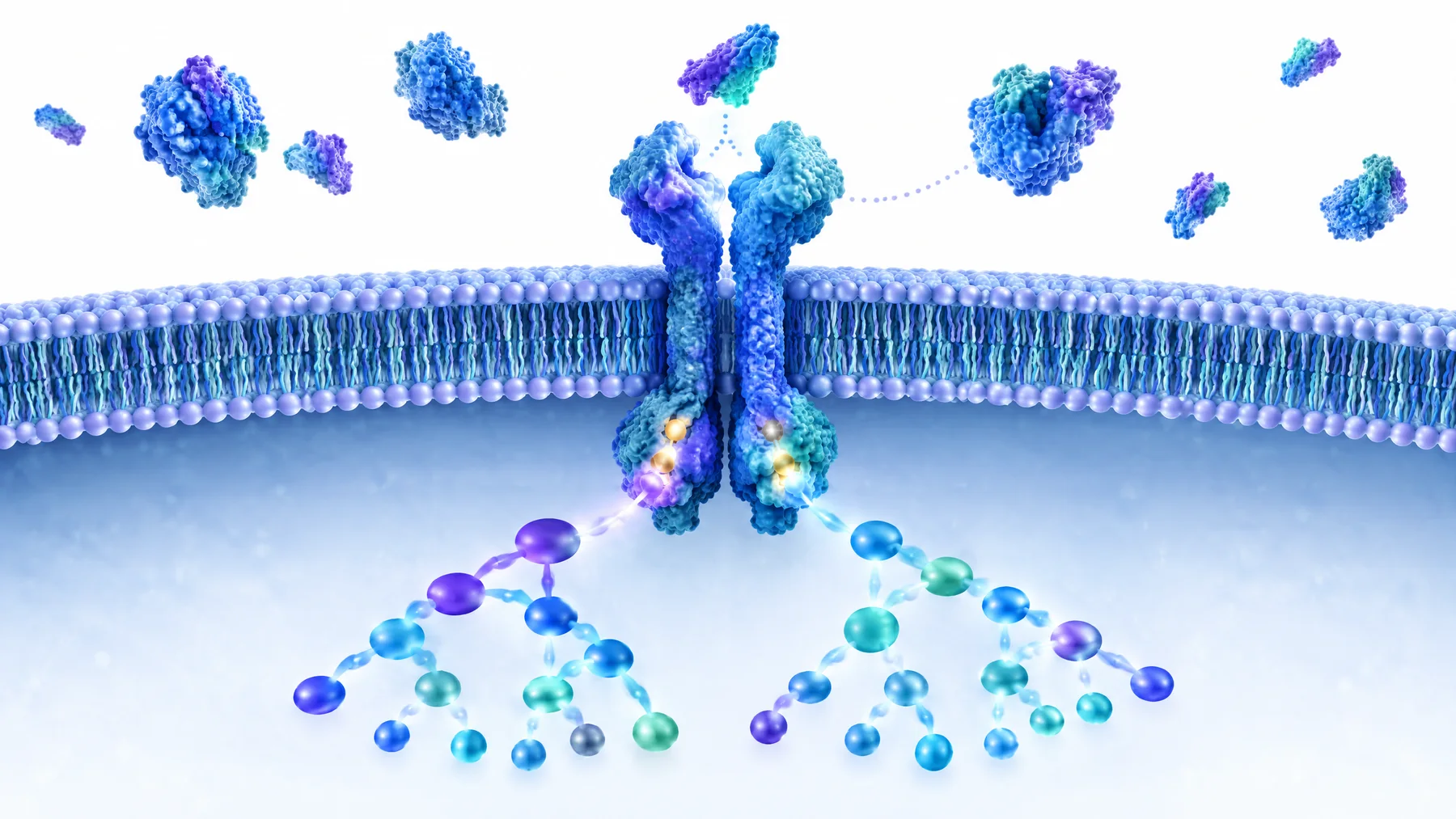
GIP and GLP-1 are incretin pathways involved in meal-related metabolic signalling. The PI states that tirzepatide is selective for human GIP and GLP-1 receptors and that the receptors occur in pancreatic endocrine cells as well as several other tissues. In people with type 2 diabetes, the labelled pharmacodynamic description attributes lower fasting and post-meal glucose to several mechanisms, including glucose-dependent enhancement of insulin secretion and improved insulin sensitivity. ‘Glucose-dependent’ matters: insulin secretion is not described as being raised regardless of glucose concentration. [1]
The clinical effect should not be reduced to a single arrow from a receptor to body weight. The PI reports reduced food intake and says that observed weight reduction is mostly from fat mass, but human trials do not isolate the proportion of weight or glucose benefit caused by GIP signalling versus GLP-1 signalling. A head-to-head result against one dose of semaglutide is clinically informative, yet it does not by itself prove that the difference is solely the GIP component. [1] [4]
Human evidence in obesity or overweight without diabetes: SURMOUNT-1
SURMOUNT-1 was a phase 3, multicentre, double-blind, randomised, placebo-controlled trial of 2,539 adults with obesity, or overweight plus at least one weight-related complication; diabetes was excluded. Alongside lifestyle intervention, participants received once-weekly tirzepatide targeted to 5 mg, 10 mg or 15 mg, or placebo, for 72 weeks. The prespecified co-primary outcomes were percentage weight change and the proportion achieving at least 5% weight reduction. [3]
For the trial’s treatment-regimen estimand—which includes outcomes regardless of treatment discontinuation—mean weight change at week 72 was −15.0%, −19.5% and −20.9% in the 5 mg, 10 mg and 15 mg groups, respectively, versus −3.1% with placebo. At least 5% weight reduction occurred in 85%, 89% and 91% of the respective tirzepatide groups and 35% of placebo participants. These are group averages and threshold proportions in a selected trial population receiving structured lifestyle support; they are not an individual forecast. [3]
This result is strong evidence for the specific 72-week setting, but it is not evidence that every person with a given BMI will have the average response. Mean baseline BMI was 38.0, 94.5% of participants had BMI of at least 30, diabetes was excluded, and adverse-event discontinuation was more frequent with tirzepatide (4.3% to 7.1% across doses) than placebo (2.6%). Those features matter when translating a trial headline into a clinical conversation. [3]
Human evidence in type 2 diabetes: SURPASS-2
SURPASS-2 tested a different clinical model: 1,879 adults with type 2 diabetes insufficiently controlled on metformin. It was a 40-week, open-label, randomised phase 3 comparison of tirzepatide 5 mg, 10 mg or 15 mg with semaglutide 1 mg. Its primary endpoint was change in HbA1c, not weight management in people without diabetes. [4]
Mean HbA1c change was −2.01, −2.24 and −2.30 percentage points with the three tirzepatide doses versus −1.86 percentage points with semaglutide 1 mg; all three tirzepatide groups met the study’s noninferiority and superiority analyses. Body-weight reductions were also greater, with estimated between-group differences of −1.9 kg, −3.6 kg and −5.5 kg. Because the trial was open-label, lasted 40 weeks and compared against a particular semaglutide dose, it should not be read as a universal ranking of all incretin medicines or all treatment contexts. [4]
What maintenance evidence adds
SURMOUNT-4 addressed a different question: what happened after an initial response when treatment was continued or withdrawn. All 783 participants first received open-label tirzepatide for 36 weeks; the 670 who reached randomisation had lost a mean 20.9%. They were then randomised to continue tirzepatide at their maximum tolerated 10 mg or 15 mg dose, or switch to placebo, for 52 weeks. [5]
From week 36 to week 88, mean body-weight change was −5.5% with continued tirzepatide and +14.0% after switch to placebo; 89.5% versus 16.6% maintained at least 80% of lead-in weight loss. This randomised-withdrawal design supports the conclusion that stopping treatment in this responder-enriched group was associated with substantial regain. It does not establish one inevitable stopping trajectory for every patient, nor does it settle the best long-term plan for people not represented in the trial. [5]
Risks, interactions and uncertainty
Gastrointestinal effects are central to the safety picture, not a footnote. The Australian PI identifies nausea, vomiting and diarrhoea and warns that fluid loss may worsen renal function, including acute renal failure. It also warns about acute pancreatitis, increased hypoglycaemia risk when tirzepatide is used with insulin or an insulin secretagogue, and caution in severe gastrointestinal disease including severe gastroparesis. Serious hypersensitivity is a contraindication. [1]
Delayed gastric emptying has practical consequences beyond appetite. The TGA required a class warning about residual gastric contents and pulmonary aspiration during general anaesthesia or deep sedation, even when usual fasting had been followed. People taking tirzepatide should make their treating team and anaesthetist aware before a procedure; peri-procedural decisions belong with those clinicians. [6]
A medicine label is a risk-management document, not a guarantee that a listed event will occur or that unlisted risks are absent. Trial participants were monitored and had eligibility criteria, while some populations had limited evidence: the PI says safety and efficacy have not been established in people younger than 18 years and advises caution because experience is limited in severe renal or hepatic impairment and in people with a history of pancreatitis. [1]
Australian regulatory context and product integrity
The TGA registration record for Mounjaro lists tirzepatide as the active ingredient and records the chronic-weight-management indication, with registration dated 10 September 2024. The accompanying Australian PI specifies the labelled dose strengths and presentations, including single-dose and multiple-dose products. Any change in dose is a prescriber decision: the PI states that escalation steps occur only after a minimum of four weeks on the current dose. This is a labelled minimum interval, not a do-it-yourself dosing protocol. [1] [2]
Research-supplier vials, online ‘GLP-1 peptide’ liquids and unregistered imports cannot be assumed to be equivalent to approved Mounjaro. The TGA warns that unregistered online products may be fake, contain incorrect or undisclosed ingredients, or fail to meet Australian quality, safety and efficacy standards; it also states that there is no evidence of medical efficacy for the unregistered GLP-1-claim products addressed in its advisory. No validated combined protocol can be inferred by mixing tirzepatide with another peptide or drug outside formal clinical care. [7]
How to read a tirzepatide study responsibly
First identify the population and comparator. SURMOUNT-1 studied obesity or overweight without diabetes against placebo, whereas SURPASS-2 studied metformin-treated type 2 diabetes against semaglutide 1 mg. A number from one model should not be transplanted into the other. Check whether the result is a mean change, a responder threshold, a difference from comparator, and whether it uses an intention-to-treat-style treatment-regimen analysis or an on-treatment estimate. [3] [4]
Second, look for duration, discontinuation and sponsorship. SURMOUNT-1 ran for 72 weeks and was supported by Eli Lilly; SURPASS-2 was 40 weeks, open-label and funded by Eli Lilly; SURMOUNT-4 used an open-label lead-in before its blinded withdrawal phase and included authors with industry employment or disclosures. These facts do not invalidate the results, but they are part of assessing external validity, follow-up and potential bias. Evidence is meaningful when its scope is kept intact. [3] [4] [5]
Questions readers ask
Is tirzepatide actually a peptide?
Yes. It is a synthetic 39-amino-acid peptide modified with a C20 fatty-diacid moiety, and it acts as a dual GIP/GLP-1 receptor agonist. It is not a small molecule or a topical cosmetic ingredient. [1]
Is tirzepatide approved in Australia?
Yes, as the prescription medicine Mounjaro. The Australian PI includes adult type 2 diabetes and chronic weight management under specified BMI and comorbidity criteria; the TGA registration record documents the chronic-weight-management indication. Approval does not extend automatically to unregistered products marketed online or as research peptides. [1] [2] [7]
Do the trials prove that everyone will lose 20% of body weight?
No. In SURMOUNT-1, mean weight change at 72 weeks differed by assigned dose and the trial population excluded diabetes. Means and responder percentages describe groups under trial conditions; responses, tolerability, discontinuation and suitability vary between individuals. [3]
What does the evidence say about stopping tirzepatide?
In SURMOUNT-4, participants who switched to placebo after a 36-week tirzepatide lead-in regained weight on average over the following 52 weeks, while those who continued treatment maintained and further increased weight reduction. That finding is important but is not a personalised prediction or a substitute for a clinician-led plan. [5]
Why is a ‘research-use’ tirzepatide vial not interchangeable with Mounjaro?
The approved formulation is a defined prescription medicine evaluated and regulated as Mounjaro. The TGA cautions that unregistered GLP-1-claim products purchased online may be counterfeit, have undeclared or wrong ingredients, and lack the quality, safety and efficacy standards required for Australian supply. [1] [7]
What remains uncertain
The strongest efficacy figures come from defined trial populations, comparators and durations. SURMOUNT-1 excluded diabetes; SURPASS-2 enrolled people with metformin-treated type 2 diabetes; and SURMOUNT-4 randomised people after an open-label lead-in and therefore addresses continuation versus withdrawal in that selected group rather than every possible treatment course. [3] [4] [5]
The cited pivotal trials were funded by Eli Lilly, and trial reports include sponsor involvement and/or author industry employment or disclosures. This requires transparent reading, but does not erase randomisation, blinding where used, or the reported results. [3] [4] [5]
This record intentionally does not provide individual prescribing, reconstitution, storage, injection technique, combination or off-label protocols. Those cannot be safely inferred from study summaries or applied to unregistered supplier products; the approved Australian PI and a clinician or pharmacist are the appropriate sources for product-specific care. [1] [7]
References and further reading
- [1] Australian Product Information – Mounjaro (tirzepatide) solution for injection (vD5.2_Aug2024). TGA-approved prescribing information accompanying a 2024 extension-of-indication assessment
- [2] MOUNJARO (Eli Lilly Australia Pty Ltd). TGA prescription-medicine registration entry for chronic weight management
- [3] Tirzepatide Once Weekly for the Treatment of Obesity. SURMOUNT-1: phase 3, multicentre, double-blind, randomised, placebo-controlled trial; 2,539 adults with obesity or overweight plus complication, without diabetes; 72 weeks
- [4] Tirzepatide versus Semaglutide Once Weekly in Patients with Type 2 Diabetes. SURPASS-2: 40-week, open-label, randomised, active-controlled phase 3 trial; 1,879 adults with metformin-treated type 2 diabetes
- [5] Continued Treatment With Tirzepatide for Maintenance of Weight Reduction in Adults With Obesity: The SURMOUNT-4 Randomized Clinical Trial. SURMOUNT-4: phase 3 randomised-withdrawal trial with a 36-week open-label tirzepatide lead-in followed by a 52-week double-blind placebo-controlled period; 670 randomised participants
- [6] Medicines containing GLP-1 and dual GIP/GLP-1 receptor agonists. TGA Medicines Safety Update describing class-wide PI warning changes
- [7] Imported unregistered GLP-1 weight-loss products. TGA consumer and health-professional safety advisory on unregistered GLP-1-claim products