Skip to content
Dosage guide · 10 mg vial

Tirzepatide Dosage Protocol

Dual GIP and GLP-1 receptor agonist

The official Mounjaro label starts at 2.5 mg once weekly for 4 weeks, then moves to 5 mg; later 2.5 mg increases need at least 4 weeks at the current dose. With 2 mL in Peak's 10 mg vial, the concentration is 5 mg/mL, so the 2.5 mg starting amount is 50 U-100 units (0.5 mL).

How oftenOnce weekly
Starting dose2.5 mg
Start = units50 units
Mix2 mL BAC water

Reviewed 25 Oct 2026 · Education only, not medical advice
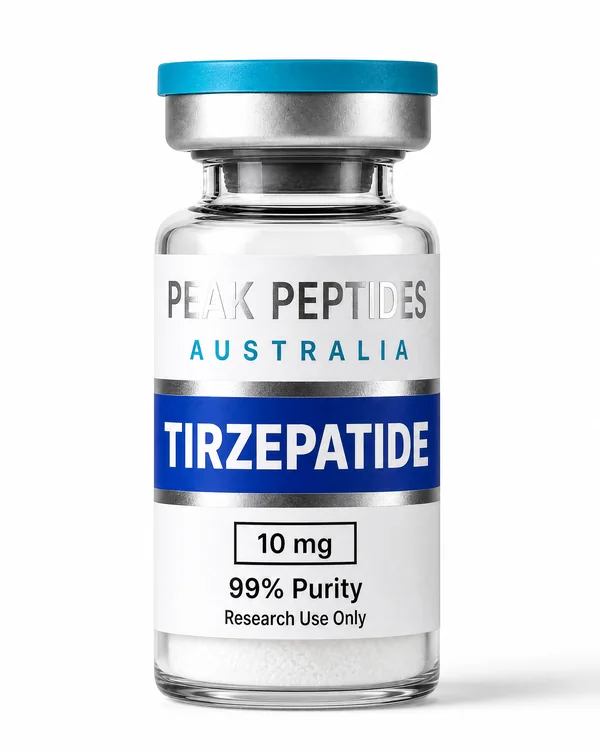
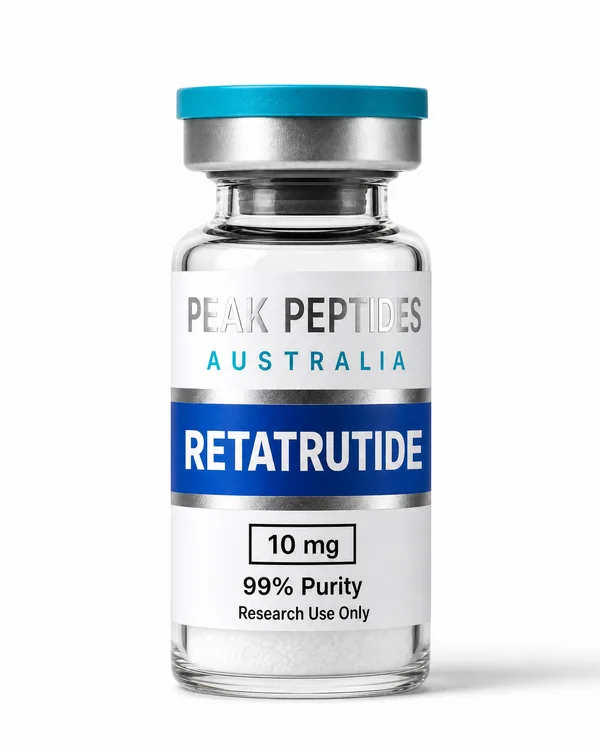
Peak Peptides Australia Tirzepatide 10 mg vial

Tirzepatide 10 mg vial

View on Peak

Exact Peak Peptides Australia product photo

01 · DOSAGE CHART

Tirzepatide dosage chart

Official weekly step-up · 10 mg vial + 2 mL BAC water

BAC water added
Concentration5 mg/mL
1 unit (U-100)50 mcg= 0.01 mL
How oftenOnce weeklySubcutaneous injection

Peak's 10 mg listing highlights a 2 mL final volume, giving 5 mg/mL and 20 U-100 units per 1 mg.

Tirzepatide dosage chart for a 10 mg vial mixed with 2 mL of bacteriostatic water
WeekWeekly doseSyringe units
Weeks 1–4Start2.5 mg50 units0.5 mL
Weeks 5–8Maintenance5 mg100 units1 mL
Weeks 9–127.5 mg150 units1.5 mL · 2 syringe draws
Weeks 13–16Maintenance10 mg200 units2 mL · 2 syringe draws
Weeks 17–2012.5 mg250 units2.5 mL · 3 syringe drawsMore than one 10 mg vial
Week 21 onwardsMax15 mg300 units3 mL · 3 syringe drawsMore than one 10 mg vial

Once weekly · same day each week · subcutaneous injection

After week 4, only increase by 2.5 mg after at least 4 weeks at the current amount when prescribed.

The Australian PI lists 5 mg, 10 mg and 15 mg as maintenance amounts; 2.5 mg, 7.5 mg and 12.5 mg are not maintenance amounts.

This chart follows the approved Mounjaro label for tirzepatide; Peak's 10 mg research vial is not a branded regulated medicine. Education only, not medical advice. Dose amounts follow Mounjaro prescribing information: recommended dosage and escalation (DailyMed / Eli Lilly); units are recalculated for the vial and mix selected above.

02 · HOW TO MIX

Mixing a 10 mg vial with 2 mL of BAC water

Using a 1 mL (100-unit) insulin syringe, 2 full draws of bacteriostatic water gives 5 mg/mL.
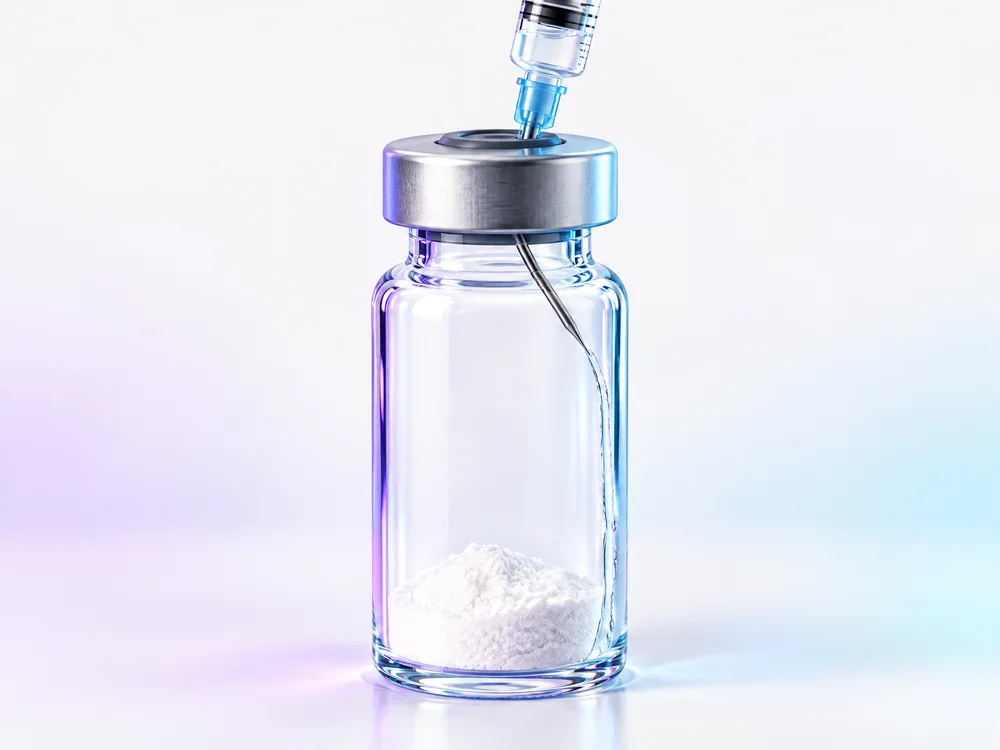
  1. Bacteriostatic water running slowly down the inside wall of a peptide vial1

    Add the water slowly

    Wipe both rubber stoppers with an alcohol swab and let them dry. Draw 2 mL of bacteriostatic water and let it run slowly down the inside of the vial wall — not straight onto the powder.
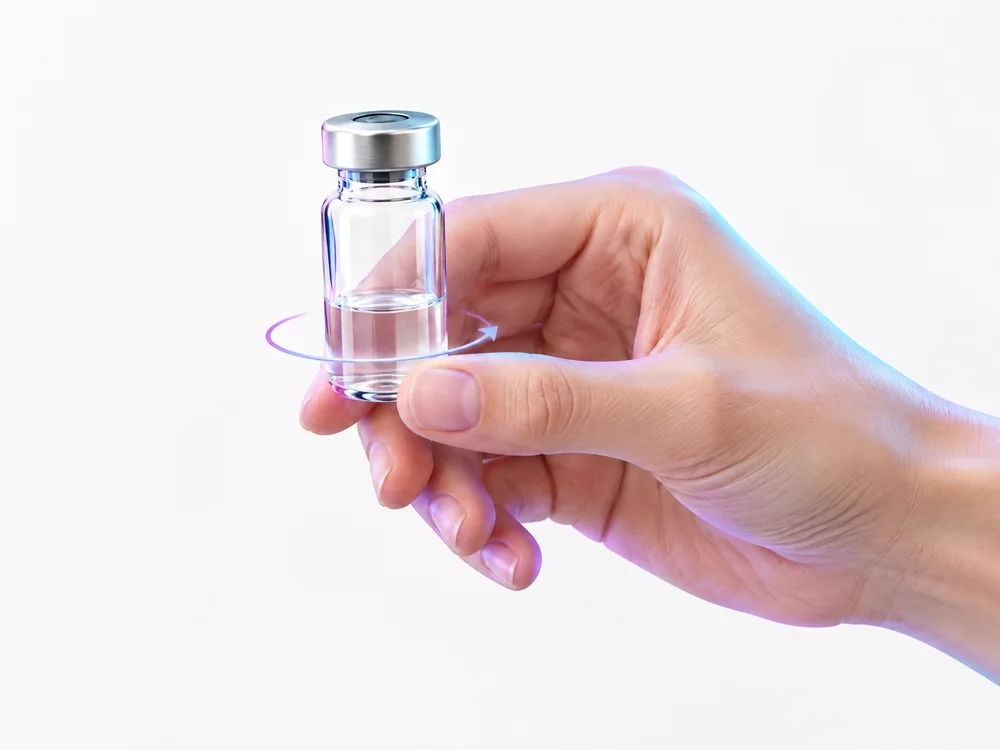
  2. Hand gently swirling an upright vial in a small circle2

    Swirl gently

    Swirl or roll the vial gently until the powder has dissolved. Give it a few minutes to settle if needed.
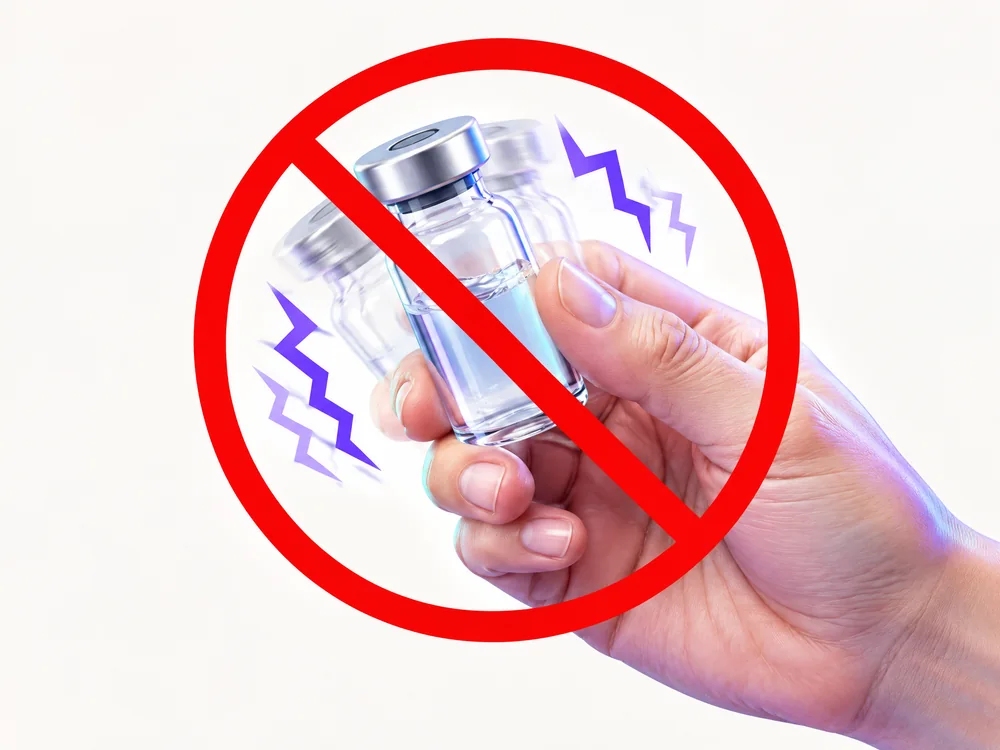
  3. A vial being shaken with a red cross through it3

    Don't shake it

    Shaking can damage the peptide and cause foaming. Gentle swirling only.
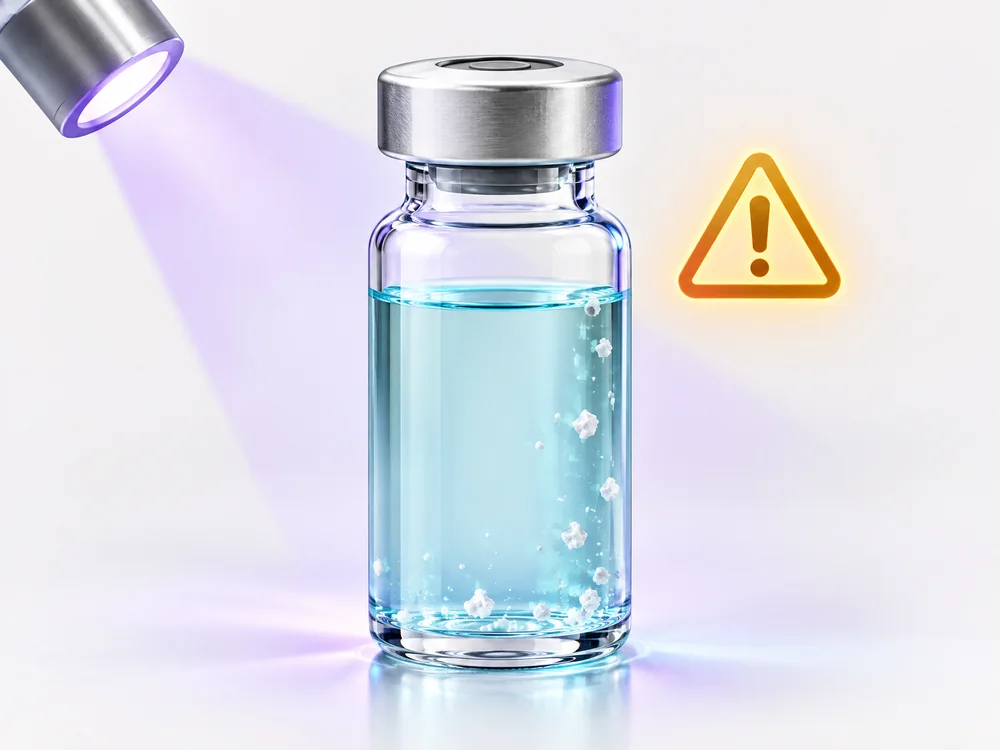
  4. Close-up of a vial with small undissolved particles and a caution symbol4

    Check it's fully clear

    Only use it once it is fully clear with no particles. Label the vial with the date and 5 mg/mL, then store it in the fridge at 2–8 °C.

Full illustrated reconstitution guide
03 · SUPPLIES NEEDED

What you'll need

Counts follow the dosage chart above at the highest amount in each step, using a 10 mg vial mixed with 2 mL.

Length of protocol
1Tirzepatide 10 mg vial10 mg needed in total
51 mL insulin syringesU-100, 27–31G · one per draw + one per vial mixed
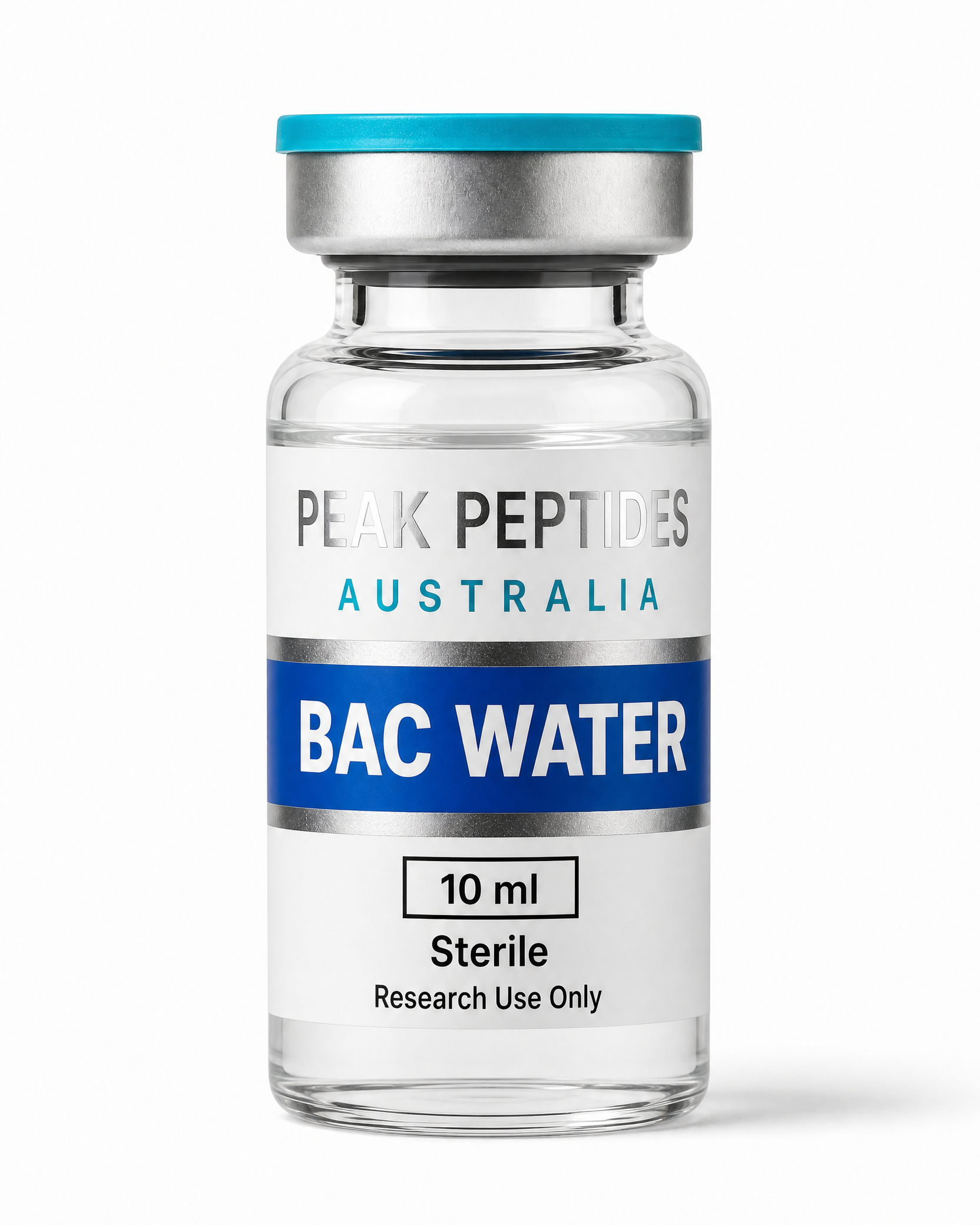
1BAC water 10 mL bottle2 mL used for mixing
10Alcohol swabsSkin + stopper, every time

Plus an approved sharps container. Syringes and swabs are sold by Australian pharmacies — Peak Peptides and Pure Performance supply the bacteriostatic water.

04 · CALCULATOR

Check a different amount

Enter your vial, water and dose to see the matching syringe units.

Concentration Calculator
mg
2 mL
mg

Concentration

5.00 mg/mL

(5000 mcg/mL)

Calculated Liquid Volume

0.500 mL

Equivalent U-100 volume scale position

50markings (not biological IU)
010203040506070809010050 marks

Illustration of a U-100 volume scale, not preparation or injection guidance

05 · PROTOCOL DETAILS

About Tirzepatide

Protocol overview

Starting amount
2.5 mg once weekly for weeks 1–4
How it increases
5 mg after 4 weeks, then optional 2.5 mg increases after at least 4 weeks at the current amount
Frequency
Once weekly
When to take it
Any time of day, with or without meals
Maintenance amounts
5 mg, 10 mg or 15 mg once weekly; the adult maximum is 15 mg
Common mix
2 mL BAC water → 5 mg/mL; 2.5 mg = 50 U-100 units (0.5 mL)

Storage

Before mixing
Protect the dry research vial from light and follow the product documentation supplied for the actual material.
After mixing
Peak's BAC-water handling guide says to keep the vial upright, dark and refrigerated at 2–8 °C for about 4 weeks.
Never
Do not freeze a mixed vial or use a solution that is cloudy or contains visible particles.

How it works

Tirzepatide is a dual GIP and GLP-1 receptor agonist. Its C20 fatty-diacid side chain enables albumin binding, which prolongs its half-life.

The Mounjaro label says tirzepatide enhances first- and second-phase insulin secretion and reduces glucagon in a glucose-dependent way. It also delays gastric emptying, lowers food intake and reduces fasting and post-meal glucose concentrations.

Illustrated mechanism explainer

What the research shows

  • In Australia, the TGA says Mounjaro, which contains tirzepatide, has approval for type 2 diabetes and chronic weight management.
  • The official adult Mounjaro label starts at 2.5 mg subcutaneously once weekly and permits 2.5 mg increases after at least 4 weeks on the current amount, up to 15 mg once weekly.
  • In SURMOUNT-1, 2,539 adults without diabetes received tirzepatide 5 mg, 10 mg or 15 mg weekly or placebo for 72 weeks. Mean body-weight change was −15.0%, −19.5% and −20.9% with tirzepatide versus −3.1% with placebo.
  • In that 72-week trial, 50% of the 10 mg group and 57% of the 15 mg group achieved at least 20% body-weight reduction, compared with 3% of the placebo group.

Reported side effects

  • The Mounjaro label lists nausea, diarrhoea, decreased appetite, vomiting, constipation, dyspepsia and abdominal pain as common adverse reactions reported in at least 5% of treated patients.
  • Acute pancreatitis has been observed with Mounjaro and other GLP-1 receptor agonists; the Australian PI also warns that gastrointestinal effects can lead to dehydration and worsening kidney function.
  • In adult placebo-controlled Mounjaro trials, acute gallbladder disease was reported in 0.6% of Mounjaro-treated patients and 0% of placebo-treated patients.
  • In SURMOUNT-1, gastrointestinal events were the most common adverse events, mostly mild to moderate and occurring mainly during dose escalation.

Important notes

  • Mounjaro is a TGA-approved tirzepatide medicine for type 2 diabetes and chronic weight management. Peak's 10 mg listing is in-vitro research material, not a branded regulated medicine.
  • The Mounjaro label has a boxed warning for thyroid C-cell tumours observed in rats; human relevance is unknown. It is contraindicated with a personal or family history of medullary thyroid carcinoma or MEN 2.
  • For sport, WADA's 2026 Monitoring Program says its substances are not on the Prohibited List and includes markers of tirzepatide for monitoring in and out of competition.
  • Never use a mixed vial that is cloudy or has particles in it.

Injection basics

  • Use a new sterile 1 mL (100-unit) U-100 insulin syringe, 27–31G, every time — never reuse or share.
  • Wipe the vial stopper and the skin with an alcohol swab and let both dry first.
  • Inject under the skin (subcutaneously) of the abdomen, thigh or upper arm, and rotate sites.
  • Put used syringes straight into an approved sharps container — the NDSS lists Australian disposal options.

Guidance: World Health Organization · National Diabetes Services Scheme (NDSS)

06 · QUICK ANSWERS

Tirzepatide questions

How many units is 2.5 mg of tirzepatide in a 10 mg vial?

With the default 2 mL mix, the 10 mg vial is 5 mg/mL. A 2.5 mg amount is 0.5 mL, which is 50 units on a U-100 syringe.

How much BAC water is used for Peak's tirzepatide 10 mg vial?

Peak's listing highlights a 2 mL final-volume option. For a 10 mg vial, 10 mg ÷ 2 mL = 5 mg/mL; at that concentration, 1 mg is 0.2 mL or 20 U-100 units.

Why do higher tirzepatide amounts need more than one syringe draw?

At 5 mg/mL, 5 mg is 1 mL or 100 U-100 units. The 7.5 mg, 10 mg, 12.5 mg and 15 mg chart amounts equal 1.5 mL, 2 mL, 2.5 mL and 3 mL, or 150, 200, 250 and 300 U-100 units total.

How long does a 10 mg tirzepatide vial last?

A 10 mg vial contains four 2.5 mg weekly amounts, so it lasts 4 weeks at the starting amount. It contains two 5 mg weekly amounts, so it lasts 2 weeks at 5 mg; 7.5 mg leaves 2.5 mg after one full amount, while 10 mg uses one full vial.

07 · SOURCES

References

Related dosage guides

All dosages