
What is Thymosin-alpha-1?
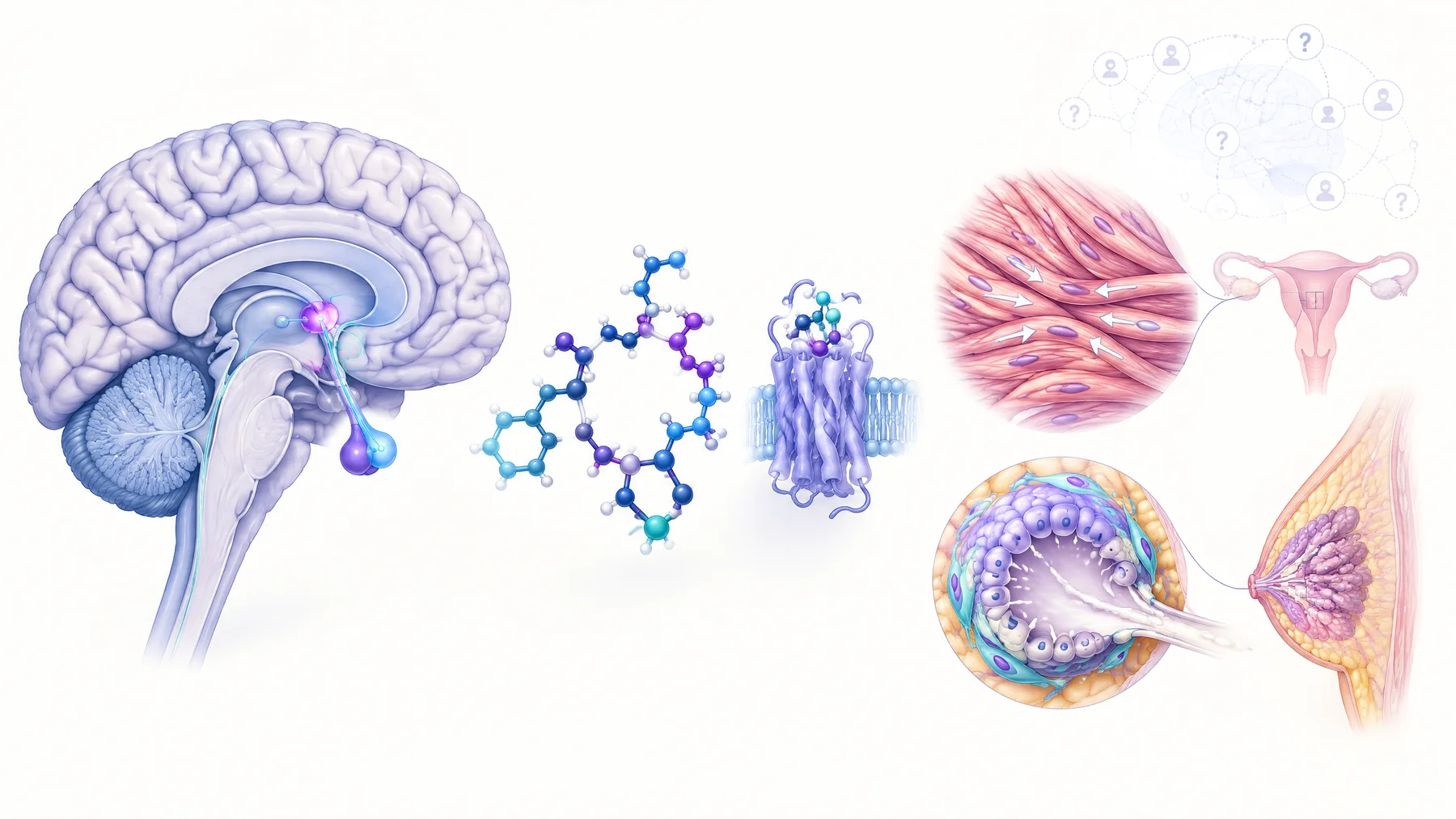
Thymosin-alpha-1 (Tα1; thymalfasin) is a 28-amino-acid peptide, not a glycoprotein hormone and not a non-peptide small molecule. It corresponds to the first 28 residues of prothymosin-alpha; a primary biochemical study detected it as a natural processing product in mammalian tissue. The peptide identity does not establish that every vial bearing its name is the same as a clinically studied or regulator-reviewed formulation. Thymalfasin is the name used for synthetic Tα1 in clinical studies.
A cautious, source-led overview of thymosin-alpha-1: what the peptide is, what laboratory and chronic-hepatitis-B studies found, and why product quality, safety and Australian regulatory status cannot be inferred from a supplier vial.
What thymosin-alpha-1 is — and is not
Thymosin-alpha-1 (Tα1) is genuinely a peptide. It is the 28-residue N-terminal fragment of prothymosin-alpha, rather than a ‘thymus hormone’ in the glycoprotein-hormone sense. In a primary processing study, mammalian legumain cleaved prothymosin-alpha at the relevant site in vitro, and Tα1 was detected in vivo as the principal corresponding fragment. [1]
Names can obscure that identity. Clinical papers use thymalfasin for synthetic Tα1, while ‘thymosin’ by itself can refer to a family or historical tissue-extract terminology. Tα1 should not be casually treated as interchangeable with thymosin-beta-4 or other peptides: a human dendritic-cell experiment tested Tα1, Tβ4 and Tβ10 as distinct compounds and reported different results. [2] [4] [5]
What molecular and cell studies show
The clearest mechanistic evidence is model-specific. Yao and colleagues cultured dendritic cells made from human CD14-positive blood monocytes. In that system, Tα1 alone did not make immature dendritic cells phenotypically mature; with tumour necrosis factor-alpha (TNF-α), it was associated with higher expression of CD40, CD80, MHC class I and MHC class II than TNF-α maturation alone. [2]
That is useful evidence of an immune-cell effect under defined laboratory conditions, not proof that Tα1 corrects immunity, prevents infection, improves recovery or treats cancer in people. The experiment used synthetic peptide at 50 ng/mL in cultured cells and reported marker and functional assays, not clinical outcomes. Translating a dendritic-cell phenotype into patient benefit requires separate human evidence. [2]
Model-specific findings need their own boundaries
The biological processing result and the dendritic-cell result answer different questions. The former supports the peptide’s natural molecular identity. The latter shows an observed effect in ex-vivo human-cell culture. Neither experiment identifies a universal receptor-to-clinical-benefit pathway, nor does either validate a dose, route, storage condition or protocol for personal use. [1] [2]
This distinction is especially important for ‘immune-modulator’ marketing. An immune signal can be desirable in one disease context and problematic in another. The FDA’s 2024 compounding briefing specifically identified potential concerns in deliberately immunosuppressed people, including possible graft-versus-host disease or engraftment failure in haematopoietic stem-cell transplant settings. [6]
What the chronic hepatitis B trials found
Human evidence exists, but it is narrow and mostly older chronic hepatitis B research. In a randomised controlled trial of 98 people with clinicopathologically proven chronic hepatitis B, Chien and colleagues compared two Tα1 treatment durations with no specific treatment. At 18 months after entry, the complete virological-response composite (HBV DNA and HBeAg clearance) was 40.6%, 26.5% and 9.4% across the two Tα1 groups and control, respectively; no responder cleared hepatitis B surface antigen. [3]
A separate 1996 randomised trial enrolled 33 people with anti-HBe-positive, HBV-DNA-positive chronic hepatitis B and compared Tα1 with interferon-alfa. At six months after treatment, complete response was recorded in 7 of 17 in the Tα1 group and 4 of 16 in the interferon group; the between-group comparison was not significant. The authors themselves said long-term inhibition of viral replication needed confirmation. [4]
In a larger Japanese randomised study, 316 chronic hepatitis B participants received one of two Tα1 dose levels for 24 weeks and were observed to week 72. At the higher tested dose, the abstract reports 36.4% ALT normalisation, 30% HBV-DNA clearance by branched-DNA testing, and 22.8% HBe-antigen clearance. Because both groups received Tα1, this study compared dose levels rather than establishing benefit against placebo, no treatment or a contemporary standard antiviral. [5]
Why these findings do not create a general-use claim
The trials above studied defined hepatitis B populations and older laboratory endpoints. They do not demonstrate that Tα1 benefits people seeking broad ‘immune support’, athletic recovery, fatigue, COVID-19 prevention, cancer treatment or routine infection prevention. The FDA’s review of hepatitis-B monotherapy studies described mixed results and highlighted small samples, frequent lack of blinding, insensitive older HBV-DNA assays and composite endpoints that complicate interpretation. [3] [4] [5] [6]
They also do not provide a universal administration schedule. A study’s intervention is a historical research condition, not a personalised prescription. Disease activity, current antiviral options, other medicines, immune status and product quality all change the benefit–risk question. [3] [4] [5] [6]
Safety, formulation and research-vial uncertainty
In the Japanese hepatitis B trial, reported adverse drug reactions were mild and largely involved liver-enzyme fluctuations; this cannot establish safety for every population, indication or product. The FDA briefing notes that clinical studies most often reported local injection-site irritation, redness or discomfort, while also identifying reports or concerns including liver-enzyme flares, thyroid-stimulating-hormone abnormalities in hepatitis C research, and serious transplant-setting concerns. [5] [6]
A supplier or compounded vial is not an approved formulation simply because its label says ‘thymosin-alpha-1’. In its assessment of nominated bulk Tα1 free base and acetate, the FDA found missing critical characterisation information such as impurity, aggregate, bioburden and endotoxin data. It warned that peptide impurities and aggregation in an injectable product may increase immunogenicity risk, and stated that no FDA-approved drug product contains Tα1. [6]
Those US findings are not an assessment of every product sold internationally, but they show why concentration, salt form, sterility, purity and stability cannot be assumed from a peptide name or a certificate presented by a seller. They are also why this article does not offer dilution, storage or self-administration instructions. [6]
Australian regulatory context
Australian approval is product-specific, not conferred by a peptide’s appearance in overseas studies or supplier catalogues. The TGA describes the Australian Register of Therapeutic Goods (ARTG) as the public database of therapeutic goods that can be legally supplied in Australia, and says the public search can be used by product name, sponsor, active ingredient or ARTG identifier. Unless exempt, goods not in the ARTG cannot be supplied in Australia. [8]
The current ARTG record should therefore be checked at the time of any proposed supply; do not infer local approval from this article or from a foreign brand. In a 2020 enforcement release, the TGA alleged that a website had advertised Tα1 and thymosin-beta-4 as COVID-19 prevention and that the goods were neither ARTG-included nor exempt at that time. The TGA also stated it had not registered any product as preventive treatment for COVID-19. [7] [8]
That historical enforcement action does not decide the status of every future product. It does demonstrate the regulatory and safety importance of checking an actual ARTG entry and avoiding disease-prevention claims that have not been approved. The TGA notes that pathways for unapproved goods exist in special circumstances, but they cannot be used to facilitate commercial supply. [7] [8]
A practical way to read a thymosin-alpha-1 claim
First ask what was studied: purified synthetic Tα1 in a cell model, a named trial formulation in people with chronic hepatitis B, or a particular registered product. Then check the comparison group, endpoint and follow-up. A higher immune-cell marker is not the same outcome as preventing illness; an older HBV-DNA assay is not the same as durable clinical benefit; and a vial name is not evidence of product quality. [2] [3] [4] [5] [6]
For a health decision, discuss the exact condition and product with an appropriately qualified clinician and use the ARTG record, Product Information and Consumer Medicine Information where available. Be particularly cautious where there is autoimmune disease, pregnancy or breastfeeding, deliberate immunosuppression, transplant history, active liver disease or concurrent treatment, because available evidence does not establish a one-size-fits-all risk profile. [6] [8]
Questions readers ask
Is thymosin-alpha-1 actually a peptide?
Yes. Tα1 is a 28-amino-acid peptide corresponding to the N-terminal part of prothymosin-alpha. A primary biochemical study found evidence that it is naturally generated by legumain-mediated processing, as well as being available in synthetic form for research and clinical studies. [1]
Is thymosin-alpha-1 an approved medicine in Australia?
Approval and lawful supply in Australia are determined product by product through the ARTG, not by the compound name alone. Check the current ARTG entry and product documents rather than relying on a supplier’s claim. The TGA’s ARTG guidance says that, unless exempt, therapeutic goods not in the ARTG cannot be supplied in Australia. [8]
Does the hepatitis B research prove it works for general immunity or COVID-19 prevention?
No. The human trials cited here were in chronic hepatitis B, with older designs and endpoints. They do not establish benefits for general immune support or COVID-19 prevention. The TGA stated in 2020 that it had not registered any product as a preventive treatment for COVID-19. [3] [4] [5] [6] [7]
Are online or research vials equivalent to a medicine used in a study?
Not necessarily. The FDA identified characterisation and potential immunogenicity concerns for nominated Tα1 bulk substances, including missing data on impurities, aggregates, bioburden and endotoxin. A compound name cannot establish formulation quality, sterility or regulatory status. [6]
What adverse effects have been reported?
Reports in the clinical literature and FDA briefing include injection-site irritation, redness or discomfort; hepatitis-B studies also reported liver-enzyme fluctuations. These observations do not prove safety in every group, and the FDA identified particular uncertainty for immunosuppressed and transplant populations. [5] [6]
What remains uncertain
The clinical trials cited are predominantly older chronic-hepatitis-B studies; they do not establish outcomes for wellness, sport, fatigue, COVID-19 prevention, cancer treatment or other marketed uses. [3] [4] [5] [6]
The FDA identified small samples, lack of blinding in several studies, older less-sensitive HBV-DNA assays and composite endpoints as material limitations in the hepatitis-B evidence base. [6]
The human dendritic-cell experiment is an ex-vivo model. Its marker changes cannot be converted into a clinical dosing, efficacy or safety conclusion. [2]
ARTG entries and access pathways can change. This record explains how to verify Australian product status but is not a substitute for checking the live ARTG or obtaining professional advice about a named product. [8]
References and further reading
- [1] Prothymosin alpha is processed to thymosin alpha 1 and thymosin alpha 11 by a lysosomal asparaginyl endopeptidase. Biochemical and cell/molecular processing experiments; analysis of prothymosin-alpha cleavage and in-vivo fragment detection.
- [2] Thymosin-α1 modulates dendritic cell differentiation and functional maturation from human peripheral blood CD14+ monocytes. Ex-vivo human CD14-positive monocyte-derived dendritic-cell culture; synthetic Tα1, Tβ4 and Tβ10 comparisons with surface-marker and functional assays.
- [3] Efficacy of thymosin alpha1 in patients with chronic hepatitis B: a randomized, controlled trial. Randomised controlled chronic hepatitis B trial, 98 participants; two Tα1 treatment-duration groups versus no specific treatment, with 18-month assessment.
- [4] A randomized controlled trial of thymosin-alpha1 versus interferon alfa treatment in patients with hepatitis B e antigen antibody--and hepatitis B virus DNA--positive chronic hepatitis B. Randomised comparative trial in 33 anti-HBe-positive, HBV-DNA-positive chronic hepatitis B participants; Tα1 versus interferon-alfa and six-month follow-up.
- [5] The efficacy and safety of thymosin alpha-1 in Japanese patients with chronic hepatitis B; results from a randomized clinical trial. Randomised, multicentre dose-comparison trial in 316 Japanese chronic hepatitis B participants; two Tα1 monotherapy dose levels, 24-week treatment and 72-week observation.
- [6] Thymosin Alpha-1 (Ta1) Related Bulk Drug Substances — Pharmacy Compounding Advisory Committee Meeting. FDA scientific and regulatory review of nominated Tα1 free-base and acetate bulk drug substances for potential compounding uses, December 2024.
- [7] SGC Products fined $63,000 for alleged unlawful advertising on ‘Dr. Ageless’ website in relation to COVID-19. TGA media release describing 2020 alleged advertising contraventions and infringement notices.
- [8] About the Australian Register of Therapeutic Goods (ARTG). TGA public guidance on the ARTG, current as stated on page 28 November 2024.