What is Survodutide (BI 456906)?
A synthetic, long-acting 29-amino-acid peptide engineered from the glucagon sequence; it is acylated with a C18 fatty di-acid to extend exposure. BI 456906 Investigational dual glucagon receptor (GCGR) and glucagon-like peptide-1 receptor (GLP-1R) agonist; it is a peptide, not a small molecule, topical ingredient, mixture, or naturally occurring hormone preparation. The published studies concern sponsor-controlled investigational products. This research found no Australian ARTG listing, Australian Product Information, or Consumer Medicine Information for survodutide in the public register search; it should not be presented as a TGA-approved medicine or as having an approved Australian formulation.
Survodutide (BI 456906) is an investigational, long-acting dual GCGR/GLP-1R peptide—not an approved Australian medicine. In phase 2 trials it reduced body weight versus placebo in adults without diabetes and improved a biopsy-based MASH endpoint, but gastrointestinal adverse events were frequent and longer-term clinical outcomes remain unproven. Results apply to the trial products and selected participants, not to seller-labelled research vials or self-directed use.
Identity: a dual-receptor research peptide, not a retail treatment
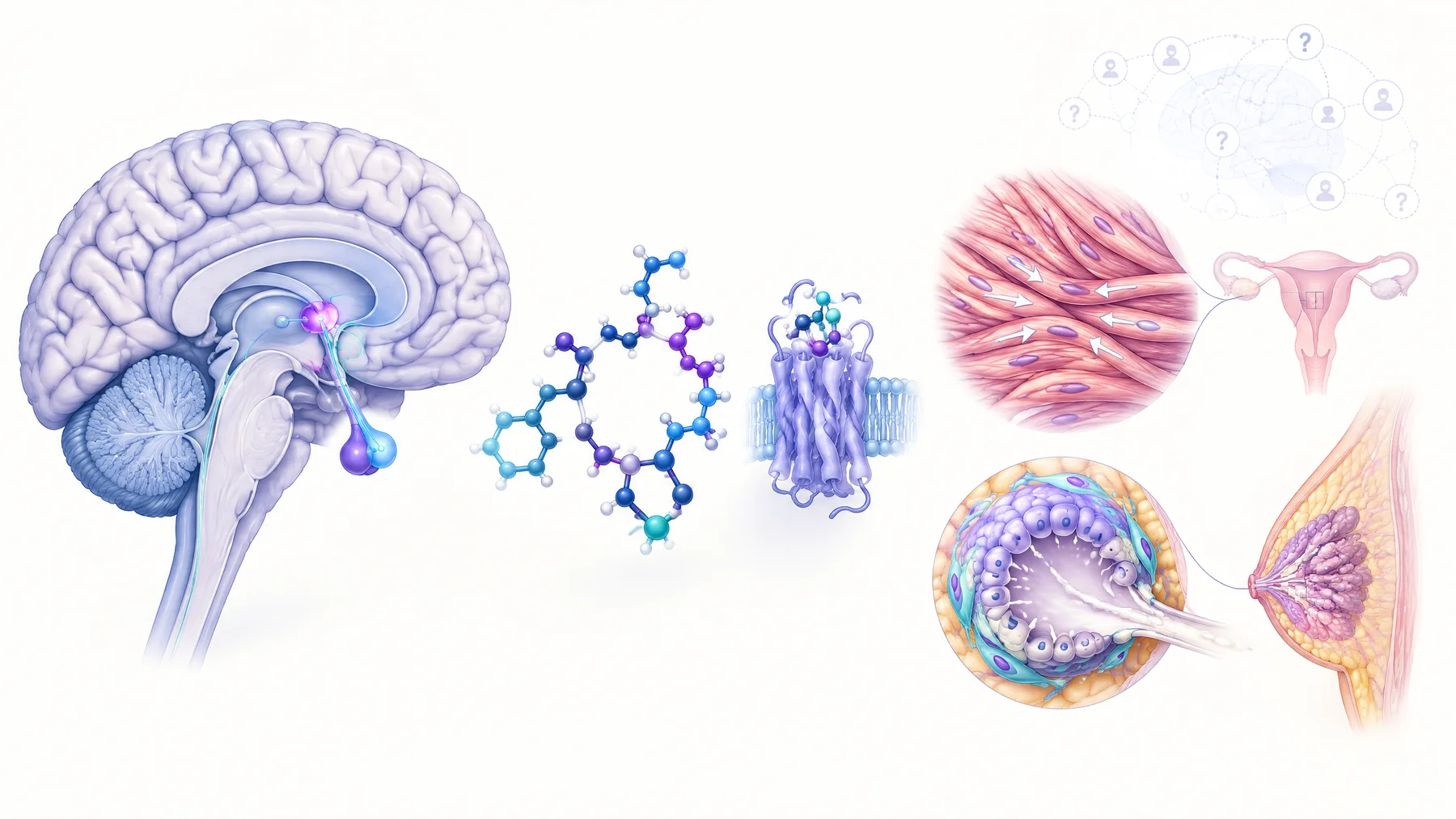
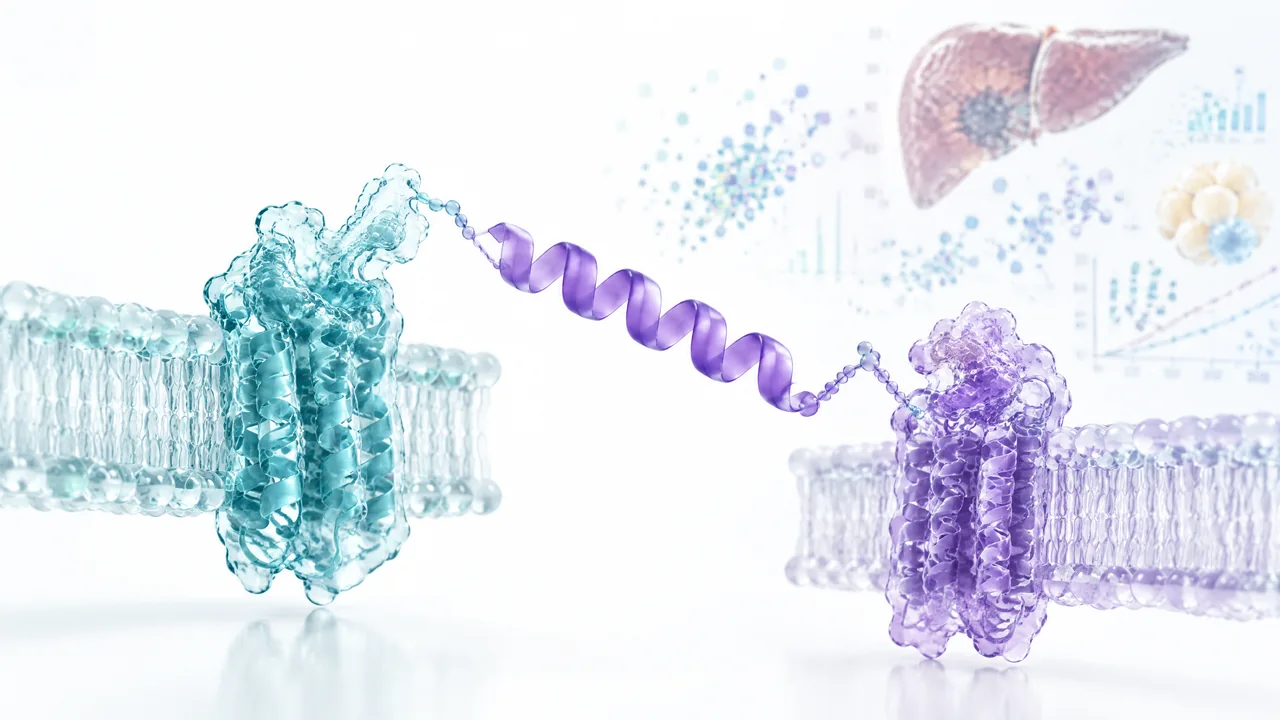
Survodutide is the development name for BI 456906. It is a synthetic 29-amino-acid peptide, modified from human glucagon and fitted with a C18 fatty di-acid through a linker to promote albumin binding and longer exposure. Its intended pharmacology is dual agonism at GCGR and GLP-1R. That makes it materially different from a single GLP-1R agonist, but it does not make it an approved formulation or a standard treatment protocol. [1] [8]
The appropriate category is an investigational human clinical candidate. The company pipeline lists it in phase 3 development for obesity and MASH, and the public phase 3 MASH registry record is recruiting rather than reporting efficacy results. The clinical literature therefore supports discussion of trial findings, not a claim of established therapeutic benefit, product equivalence, or a consumer dosing regimen. [5] [8]
Molecular pathway: why two receptors are being studied
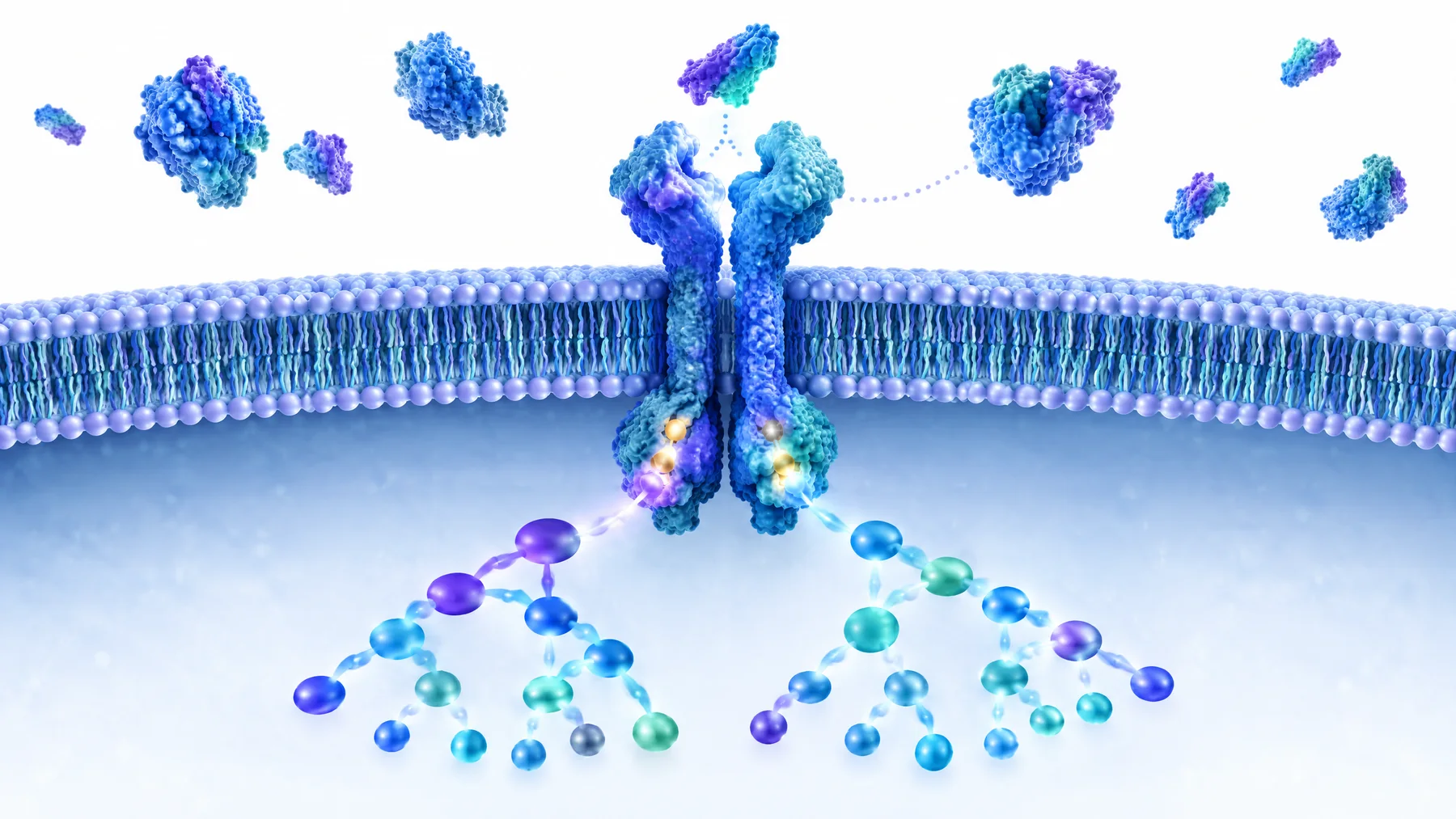
In cell and animal work, BI 456906 engaged both GLP-1R and GCGR. The authors used glucose tolerance, food-intake and gastric-emptying measures as in-vivo evidence consistent with GLP-1R engagement; liver Nnmt expression and circulating amino acids and FGF-21 were used as GCGR-related pharmacodynamic signals. This is target-engagement evidence, not proof that any one downstream marker explains human weight loss or liver histology. [1]
The rationale for combining signals is physiological rather than a promise of additive benefit in every person. GLP-1R activity was associated in the preclinical study with reduced food intake and delayed gastric emptying, whereas the dual agonist increased energy expenditure in diet-induced obese mice. Receptor biology and effect size can differ across species, formulations and study settings, so these model findings should not be converted into a personal prediction. [1]
What the model studies actually found
The pivotal discovery paper used lean mice, diet-induced obese (DIO) mice, reporter/knockout approaches and cellular assays; it did not establish clinical efficacy. In repeated daily subcutaneous dosing of DIO mice, BI 456906 reduced body weight by up to 32% at day 28 in one high-dose group. The authors also reported early food-intake suppression and a body-weight-adjusted increase in energy expenditure at one dose on days 7 and 8. These are model-specific outcomes, not human dose or outcome estimates. [1]
In that same DIO mouse experiment, the highest BI 456906 regimen produced greater weight reduction than one maximally effective semaglutide regimen, although the comparison was not significant against the 100 nmol/kg semaglutide group. This nuance matters: the study supports a dual-agonist hypothesis in mice, not a general clinical ranking against semaglutide. [1]
Human obesity evidence: a phase 2 placebo-controlled trial
In a 43-centre, 12-country phase 2 trial, 386 treated adults aged 18–75 years with BMI at least 27 kg/m² and without diabetes were randomised to placebo or one of four trial doses for 46 weeks. The primary planned-treatment analysis reported mean body-weight changes of −6.2%, −12.5%, −13.2% and −14.9% across increasing survodutide groups, versus −2.8% with placebo. This was a dose-finding result in a defined population, rather than an approved indication or a personalised expectation. [2]
Completion deserves equal attention: 233 of 386 participants (60.4%) completed the 46-week treatment period. Adverse events occurred in 91% of survodutide recipients and 75% of placebo recipients; gastrointestinal events were reported in 75% and 42%, respectively. The trial’s primary analysis also had COVID-19-related handling rules, so a headline percentage alone does not capture tolerability, discontinuation or analytic assumptions. [2]
Other human signals: type 2 diabetes and MASH
A separate 16-week phase 2 dose-finding trial enrolled 413 people with type 2 diabetes taking metformin. Across experimental survodutide groups, adjusted mean HbA1c reductions ranged from −0.91% to −1.71%, and the largest reported mean body-weight reduction was −8.7%. Semaglutide was an open-label comparator, while the placebo/survodutide portions were blinded; the short duration and differing blinding mean the comparison is informative but not a definitive head-to-head effectiveness verdict. [4]
The 48-week MASH phase 2 trial enrolled 293 participants with biopsy-confirmed MASH and F1–F3 fibrosis. Its primary endpoint—histologic MASH improvement without fibrosis worsening—occurred in 47%, 62% and 43% of the three survodutide groups, versus 14% with placebo. At least one-stage fibrosis improvement was a secondary outcome and occurred in 34%, 36%, 34% and 22%, respectively. These biopsy-based results are encouraging but do not establish reduction in cirrhosis, transplant, mortality or other long-term clinical outcomes. [3]
Risks and unanswered questions
Gastrointestinal effects were prominent in the MASH trial: nausea occurred in 66% of survodutide-treated participants versus 23% with placebo, diarrhoea in 49% versus 23%, and vomiting in 41% versus 4%. Serious adverse events occurred in 8% and 7%, respectively. These figures describe trial populations and studied regimens; they are not a complete safety label, interaction list or screening guide for unsupervised use. [3]
Important uncertainty remains around durability and clinical outcomes. The recruiting phase 3 LIVERAGE study plans to assess histology at week 52 and a composite of progression to cirrhosis, mortality, transplant, decompensation, MELD worsening or clinically significant portal hypertension over as long as seven years. Those are planned endpoints, not established benefits. Phase 2 studies were comparatively short, had selected eligibility criteria and were sponsored by the developer. [2] [3] [4] [5]
Australian regulatory context and research-only vials
The Therapeutic Goods Administration (TGA) describes the ARTG as the public database of therapeutic goods that can legally be supplied in Australia, with product, formulation, sponsor and manufacturer details. A public ARTG search conducted for this article did not identify a survodutide entry or an associated Australian PI/CMI. That search finding should be read narrowly: it supports the absence of an identified routine registered product, not an assertion about every possible legal pathway for an individual patient. [6]
Australia can regulate clinical trials of unapproved therapeutic goods through Clinical Trial Notification or Clinical Trial Approval schemes; trial participation is not the same as routine marketing approval. A vial advertised by a research supplier is not, merely by sharing the name “survodutide”, demonstrated to be the sponsor-controlled clinical product used in the studies. No validated combined protocol, dilution, storage rule, route instruction or self-administration schedule can be inferred from this evidence record. [1] [2] [3] [6] [7]
Comparison and practical reading of the evidence
The clearest mechanistic comparison is with GLP-1R-only semaglutide: survodutide was designed to activate both GCGR and GLP-1R, whereas the preclinical comparison reported dual-agonist effects in mice. In people with type 2 diabetes, the semaglutide comparison was open label and only 16 weeks; in the obesity phase 2 trial the comparator was placebo, not semaglutide. It is therefore inaccurate to claim that survodutide has been proven clinically superior to semaglutide across obesity, diabetes or liver disease. [1] [2] [4]
A careful reading separates endpoint from outcome. Weight change is not the same as a cardiovascular-outcome result; MASH improvement without fibrosis worsening is not the same as preventing liver failure; and a receptor or biomarker observation in mice is not a confirmed human causal pathway. Look for population, comparator, duration, completion, adverse events, funding and whether a result is published versus merely planned in a registry before drawing conclusions. [1] [2] [3] [4] [5]
Questions readers ask
Is survodutide an approved medicine in Australia?
No Australian ARTG entry, Product Information or Consumer Medicine Information for survodutide was identified in the public register search for this article. The ARTG is the TGA’s database for therapeutic goods that can legally be supplied in Australia, while public development materials and a registry record place survodutide in phase 3 investigation. It should not be represented as TGA-approved. [5] [6] [8]
Is survodutide actually a peptide?
Yes. BI 456906 is a synthetic 29-amino-acid, C18-acylated peptide designed as a dual GCGR/GLP-1R agonist. It is not a small molecule and it is not a blend of separately validated medicines. [1]
What is the strongest published human finding so far?
There are two different phase 2 result types rather than one universal answer: in adults without diabetes and BMI at least 27 kg/m², mean weight change at 46 weeks was up to −14.9% in a trial group versus −2.8% with placebo; in biopsy-confirmed MASH with F1–F3 fibrosis, the primary histology endpoint occurred in up to 62% of a survodutide group versus 14% with placebo. Both results require interpretation alongside adverse events, completion and trial eligibility. [2] [3]
Do published trials justify using a supplier vial or combining survodutide with another agent?
No. The studies evaluated specified sponsor-controlled investigational products within monitored protocols. They do not validate the identity, quality or interchangeability of seller-labelled vials, and they do not establish a combined protocol with another agent. Australian clinical-trial pathways for unapproved goods do not convert research supply into routine approved treatment. [1] [2] [3] [7]
What remains uncertain
This record synthesises published phase 2 evidence and registry plans; it does not substitute for an approved product label, prescribing information or individual medical assessment.
The obesity, diabetes and MASH trials studied different populations, durations, endpoints and experimental regimens, so their numerical outcomes cannot be pooled into one expected effect.
Preclinical receptor and mouse-metabolism observations establish model findings, not a confirmed causal pathway or effect size in people.
The Australian status statement is limited to the public ARTG/PI/CMI search performed for this article and the TGA material cited; absence of a located listing is not a claim about all special-access or trial pathways.
No claim is made about the identity, sterility, purity, stability, storage, dose, route, dilution, combination use or clinical interchangeability of any supplier-labelled vial.
References and further reading
- [1] BI 456906: Discovery and preclinical pharmacology of a novel GCGR/GLP-1R dual agonist with robust anti-obesity efficacy. Cell-based receptor pharmacology plus acute and repeated-dose experiments in lean mice, diet-induced obese mice, reporter/knockout mouse systems and other preclinical species.
- [2] Glucagon and GLP-1 receptor dual agonist survodutide for obesity: a randomised, double-blind, placebo-controlled, dose-finding phase 2 trial. 43-centre, 12-country, double-blind placebo-controlled dose-finding trial in 386 treated adults with BMI ≥27 kg/m² and no diabetes; 46-week treatment period.
- [3] A Phase 2 Randomized Trial of Survodutide in MASH and Fibrosis. 48-week randomised placebo-controlled trial in 293 participants with biopsy-confirmed MASH and F1–F3 fibrosis, assessing histologic and imaging outcomes.
- [4] Dose–response effects on HbA1c and bodyweight reduction of survodutide, a dual glucagon/GLP-1 receptor agonist, compared with placebo and open-label semaglutide in people with type 2 diabetes: a randomised clinical trial. Multicentre 16-week dose-finding trial in 413 participants with type 2 diabetes on metformin; placebo-controlled survodutide groups and an open-label semaglutide comparator.
- [5] LIVERAGE™: A Study to Test Whether Survodutide Helps People With a Liver Disease Called NASH/MASH Who Have Moderate or Advanced Liver Fibrosis (NCT06632444). Recruiting randomised, double-blind, placebo-controlled phase 3 trial, estimated n=1800, in non-cirrhotic MASH with F2–F3 fibrosis and planned follow-up up to seven years.
- [6] About the Australian Register of Therapeutic Goods (ARTG). TGA regulatory guidance describing the public register, searchable product details and access routes for goods not in the ARTG.
- [7] Clinical trials. TGA overview of Clinical Trial Notification and Clinical Trial Approval schemes for unapproved therapeutic goods.
- [8] Survodutide (BI 456906): GCGR/GLP1 agonist. Developer’s current pipeline description, not an efficacy study.