What is Sermorelin?
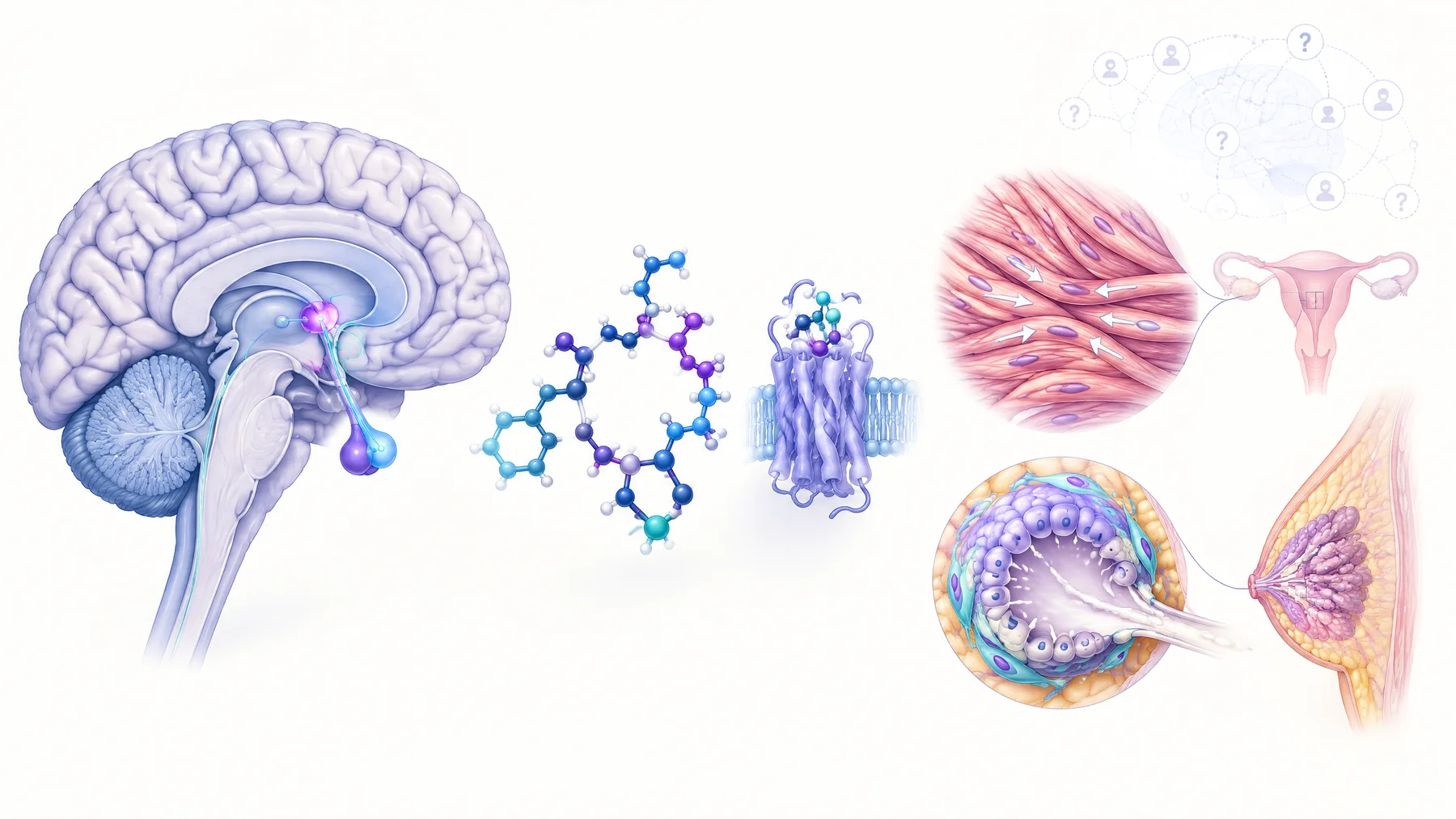
Sermorelin acetate is a defined synthetic peptide ingredient: a human growth hormone-releasing factor (GHRH/GRF) 1–29 peptide amide acetate salt. It is a peptide, not a small molecule, topical ingredient, glycoprotein hormone or pre-mixed ‘blend’. The evidence record is best described as historical human medicine research with a discontinued former US product (Geref), rather than as a currently verified Australian approved formulation.
An original, non-prescriptive evidence profile that separates a defined GHRH-fragment peptide from historical product status, research vials and claims not established by the available human studies.
What sermorelin is — and what it is not
Sermorelin acetate is the acetate-salt form of a short synthetic peptide related to human growth hormone-releasing hormone (GHRH). FDA’s substance registry gives the synonym “growth hormone-releasing factor (human)-(1-29)-peptide amide, acetate (salt), hydrate”, which identifies it as a 1–29 GHRH fragment rather than growth hormone itself. That matters: sermorelin is not recombinant human growth hormone, not a small-molecule secretagogue and not a generic name for a multi-ingredient peptide vial. [1]
The name also has a historical regulatory context. FDA records show that the brand Geref (sermorelin acetate) received US orphan-drug marketing approval in 1997 for idiopathic or organic growth-hormone deficiency in children with growth failure. A later FDA notice states that the Geref treatment and diagnostic presentations were discontinued and that the associated NDAs were withdrawn effective 18 June 2009; FDA concluded that the products had not been withdrawn for safety or effectiveness reasons. Historical approval is therefore real, but it is not evidence that a present-day vial bearing the word “sermorelin” is an approved or equivalent medicine. [6] [7]
The molecular pathway supported by the evidence
In a small human pharmacology comparison, normal male volunteers given GHRH(1–29) showed a growth-hormone response. Peak GH response and GH area under the curve were similar to those of a modified GHRH agonist under that study’s conditions. The same experiment found that an analogue’s much greater activity in rats was not reproduced in the volunteers. It is useful evidence that this GHRH fragment can evoke GH release in that model, but it also cautions against treating animal results or closely related peptides as interchangeable with sermorelin in people. [2]
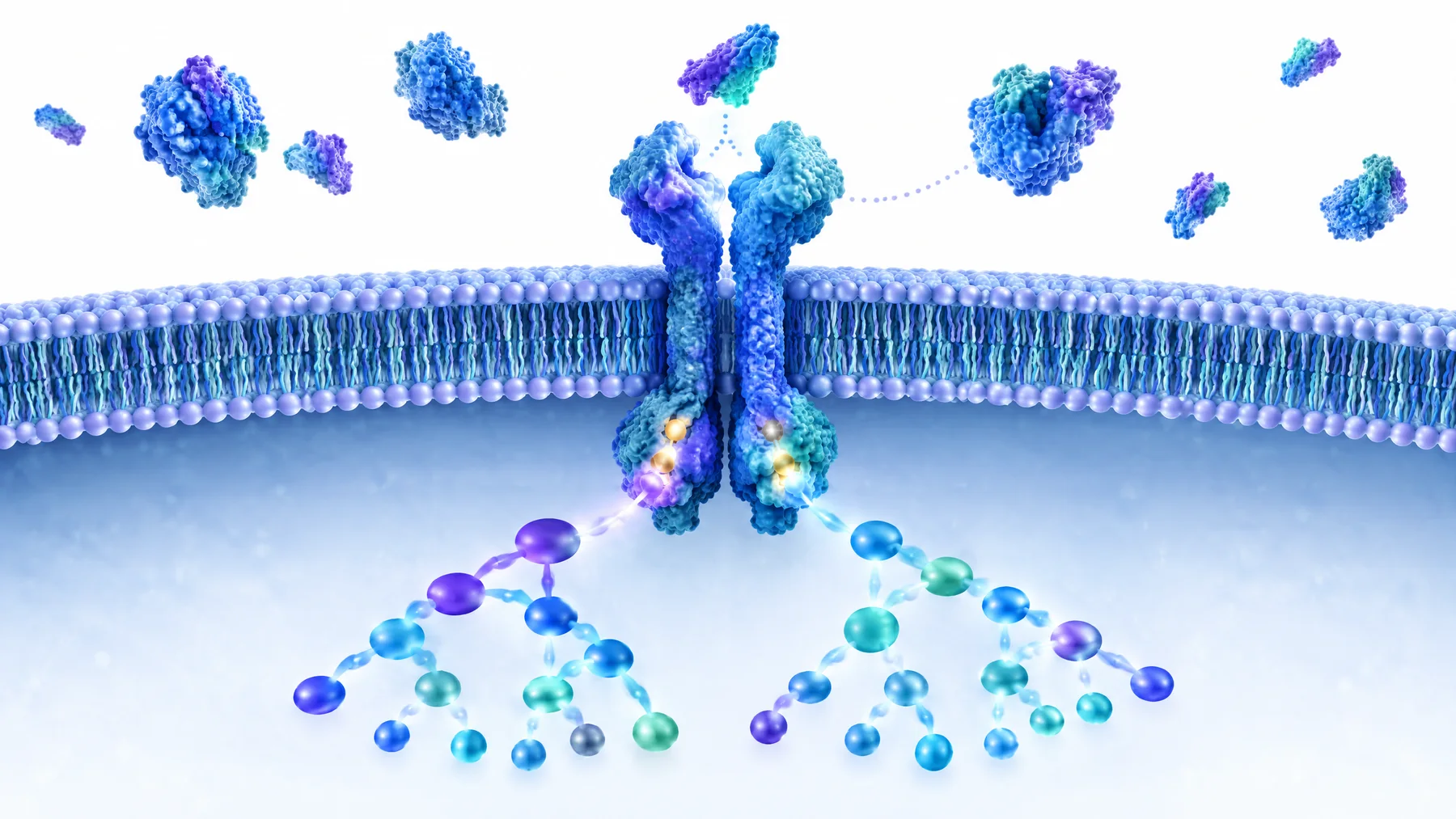
Mechanistic cell work provides a narrower kind of evidence. In pituitary cells and Chinese-hamster-ovary cells engineered to overexpress the GHRH receptor, GHRH activated MAP kinase; inhibitor-style experiments implicated G-protein beta-gamma subunits, Ras and phosphatidylinositol 3-kinase in that experimental pathway. Those findings support receptor signalling biology, not a clinical outcome claim. They were not a trial of current commercial sermorelin products, and a cell-signalling pathway should not be read as proof of benefits for body composition, ageing, sleep or athletic performance. [5]
The key paediatric study: faster growth velocity, with important boundaries
The strongest directly relevant historical treatment study located was a multicentre, open-label trial in 110 previously untreated prepubertal children diagnosed with growth-hormone deficiency. Eighty-six children were eligible for the efficacy analysis. Mean height velocity rose from 4.1 cm/year at baseline to 8.0 cm/year at six months and 7.2 cm/year at 12 months; at six months, 74% were classified as having a good response. The investigators also reported no adverse changes in their general biochemical or hormonal analyses, no fasting-glucose change and no excessive IGF-I generation during the study period. [3]
That result should be read precisely. It describes one year of protocolised GHRH(1–29) treatment in a selected group of prepubertal children with diagnosed GH deficiency, not an estimate of adult height, a result for children without that diagnosis, or evidence for adult ‘anti-ageing’ use. The trial was open label, had no parallel untreated comparator, and 24 of 110 enrolled children were not included in the efficacy analysis. Its bone-age to height-age change ratio was not significantly different from one at 12 months, so the study is not a shortcut to claims about final stature or long-term skeletal outcomes. [3]
What the adult human evidence does and does not show
One small study enrolled 10 women and 9 men aged 55–71 years and evaluated a related but not identical molecule, [Nle27]GHRH-(1–29)-NH2. After a placebo period, participants received the analogue for 16 weeks. Nightly administration produced an acute GH release and increased integrated nocturnal GH, IGF-I and IGF-binding protein-3. Skin thickness increased in both sexes; lean mass, insulin sensitivity, general wellbeing and libido increased statistically in men but not women, while most other body-composition and bone-density measures did not change. [4]
This is not a sermorelin-specific proof of benefit in older adults. The intervention contained a position-27 norleucine substitution, the sample was only 19 people, follow-up was short, and several findings differed by sex. Transient hyperlipidaemia was the study’s reported adverse effect. The authors themselves called for further work on the observed sex differences. Endocrine biomarker changes and a small, short study cannot establish durable benefits or safety for longevity, weight loss, muscle gain or sexual function. [4]
How to read the safety and uncertainty signal
Available human studies are informative but not a modern, comprehensive safety package. The paediatric trial monitored clinical chemistry and hormone measures for up to a year, while the older-adult analogue study involved only 19 participants for four months of active treatment. The latter reported transient hyperlipidaemia. These designs can identify some short-term observations; they cannot reliably rule out uncommon, delayed or population-specific harms. [3] [4]
It is also important not to collapse the risks of sermorelin into those of administered growth hormone, or to assume they are absent. The TGA explains that GH promotes liver IGF-1 release and warns that chronically excessive GH/IGF-1 activity is associated with serious disease in acromegaly. That is biological context, not proof that sermorelin causes acromegaly at any particular exposure. A responsible interpretation is that a peptide designed to affect the GH axis warrants diagnosis-led endocrine assessment and product-specific safety review, not casual extrapolation from marketing claims. [10]
Australian regulatory context and the difference between a medicine and a vial
In Australia, the ARTG is the TGA’s public database for therapeutic goods that can be legally supplied, with product, formulation, sponsor and manufacturer information. Historical US Geref approval does not establish ARTG inclusion. A named current sermorelin ARTG entry was not independently confirmed in the public material reviewed for this article, so sermorelin should not be represented here as an Australian-approved medicine. Current status should be checked directly in the ARTG and with an appropriately qualified clinician or pharmacist. [8]
If a therapeutic good is not in the ARTG, the TGA calls it unapproved. The TGA says such goods may sometimes be accessed through practitioner pathways, but it has not evaluated them for quality, safety, efficacy or performance; the practitioner must consider approved alternatives, risks and informed consent. This is why a research-only or supplier vial is not interchangeable with the former branded Geref formulation, and why a label, concentration or supplier claim cannot create a validated protocol. No combined or ‘blend’ protocol is established by the studies cited here. [6] [9]
Comparison with related substances: do not transfer the evidence
Sermorelin/GHRH(1–29) sits upstream of GH release; recombinant human GH is the downstream hormone. The human GHRH studies observed GH release or changes in GH/IGF-I after administration, whereas the TGA describes GH itself as promoting liver IGF-1 release. These are related endocrine steps, not the same intervention. Efficacy, adverse effects, product quality and regulatory status for recombinant GH cannot simply be assigned to sermorelin, and vice versa. [2] [4] [10]
Even nearby GHRH analogues cannot be treated as identical. In normal male volunteers, a modified GHRH(1–29) agonist did not show the superiority that had been observed in rats. The older-adult trial likewise studied a [Nle27] analogue rather than unmodified sermorelin. This is a practical lesson for reading peptide literature: identify the exact sequence, population, formulation and outcome before carrying a finding across to another compound or a retail product. [2] [4]
What the studies do not provide
The studies above do not provide a universal self-administration schedule, dilution method, storage rule or route recommendation for people today. Their dosing and monitoring were study-specific and attached to defined historical formulations and participant criteria. They also do not validate using a supplier’s vial as a substitute for Geref, nor do they validate combining sermorelin with other peptides. Product-specific information and clinical oversight cannot be reconstructed from an old study abstract or a dosage blog. [3] [4] [6] [9]
A useful evidence hierarchy is: first confirm the exact substance and formulation; then ask whether it is currently regulated for the proposed use; then identify a study in the same population with an outcome that matters. For sermorelin, the best located direct treatment evidence concerns diagnosed, prepubertal GH-deficient children and a historical product era. Claims about cosmetic use, fat loss, fitness enhancement or healthy ageing remain outside what these studies can establish. [3] [4] [6] [8]
Questions readers ask
Is sermorelin actually a peptide?
Yes. Sermorelin acetate is registered by FDA’s substance system as a GHRF/GHRH human 1–29 peptide amide acetate salt. It is not growth hormone itself and it is not a small molecule. [1]
Was sermorelin ever an approved medicine?
Yes, historically in the United States. FDA records identify Geref (sermorelin acetate) as approved for childhood growth-hormone deficiency with growth failure, while a separate Geref presentation was used to evaluate pituitary somatotroph GH secretion. The US NDAs were withdrawn after discontinuation in 2009; this does not establish current Australian approval. [6] [7]
What is the best human evidence for sermorelin-related treatment?
A multicentre open-label study in prepubertal children with diagnosed GH deficiency found increased height velocity over one year of GHRH(1–29) treatment. Its lack of a parallel control and limited duration mean the result cannot answer questions about final adult height, adults, or non-deficient populations. [3]
Does an increase in GH or IGF-I prove an anti-ageing or body-composition benefit?
No. In a 19-person study of a related [Nle27] GHRH analogue, GH and IGF-I increased, but outcomes were mixed and sex-specific, follow-up was short, and the authors called for further study. Biomarker movement is not a substitute for demonstrated long-term clinical benefit. [4]
Can a historical trial be used as a dosing guide for a supplier vial?
No. Historical trials used defined protocols in selected participants, and the former Geref products were specific regulated formulations. The TGA states that unapproved goods have not been evaluated by it for quality, safety, efficacy or performance. That combination does not support a universal schedule, dilution, storage rule or peptide blend protocol. [3] [4] [6] [9]
What remains uncertain
Direct human literature is historical and sparse. The best paediatric trial was open label and did not establish final adult height; the adult study was only 19 people and used [Nle27]GHRH-(1–29)-NH2 rather than unmodified sermorelin. The cell work establishes signalling in experimental models, not clinical outcomes. Historical US Geref approval and discontinuation do not resolve current Australian formulation or ARTG status; no named current sermorelin ARTG entry was independently confirmed in the public material reviewed. No validated modern self-administration, dilution, storage or blend protocol can be inferred from these sources.
References and further reading
- [1] SERMORELIN ACETATE — UNII 00IBG87IQW. Standardised ingredient identity record
- [2] Bioactivity of growth hormone releasing hormone (1-29) analogues after SC injection in man. Comparative human pharmacology study in normal male volunteers
- [3] Once daily subcutaneous growth hormone-releasing hormone therapy accelerates growth in growth hormone-deficient children during the first year of therapy. Multicentre open-label clinical trial; 110 previously untreated prepubertal children, 86 in efficacy analysis, up to one year
- [4] Endocrine and metabolic effects of long-term administration of [Nle27]growth hormone-releasing hormone-(1-29)-NH2 in age-advanced men and women. Single-blind randomised placebo-controlled human study; 10 women and 9 men aged 55–71, with 16 weeks of active related analogue
- [5] Growth Hormone-Releasing Hormone Stimulates Mitogen-Activated Protein Kinase. Cell-signalling experiment in pituitary cells and GHRH-receptor-overexpressing CHO cells
- [6] Determination That GEREF (Sermorelin Acetate) Injection ... Were Not Withdrawn From Sale for Reasons of Safety or Effectiveness. Regulatory determination and historical product record
- [7] Search Orphan Drug Designations and Approvals — Sermorelin acetate (Geref). Regulatory designation and marketing-approval record
- [8] Australian Register of Therapeutic Goods (ARTG). Public regulatory database description
- [9] Access an unapproved therapeutic good (health practitioners). Regulatory guidance
- [10] Too much of a good thing: the health risks of human growth hormone. Regulator health-information article