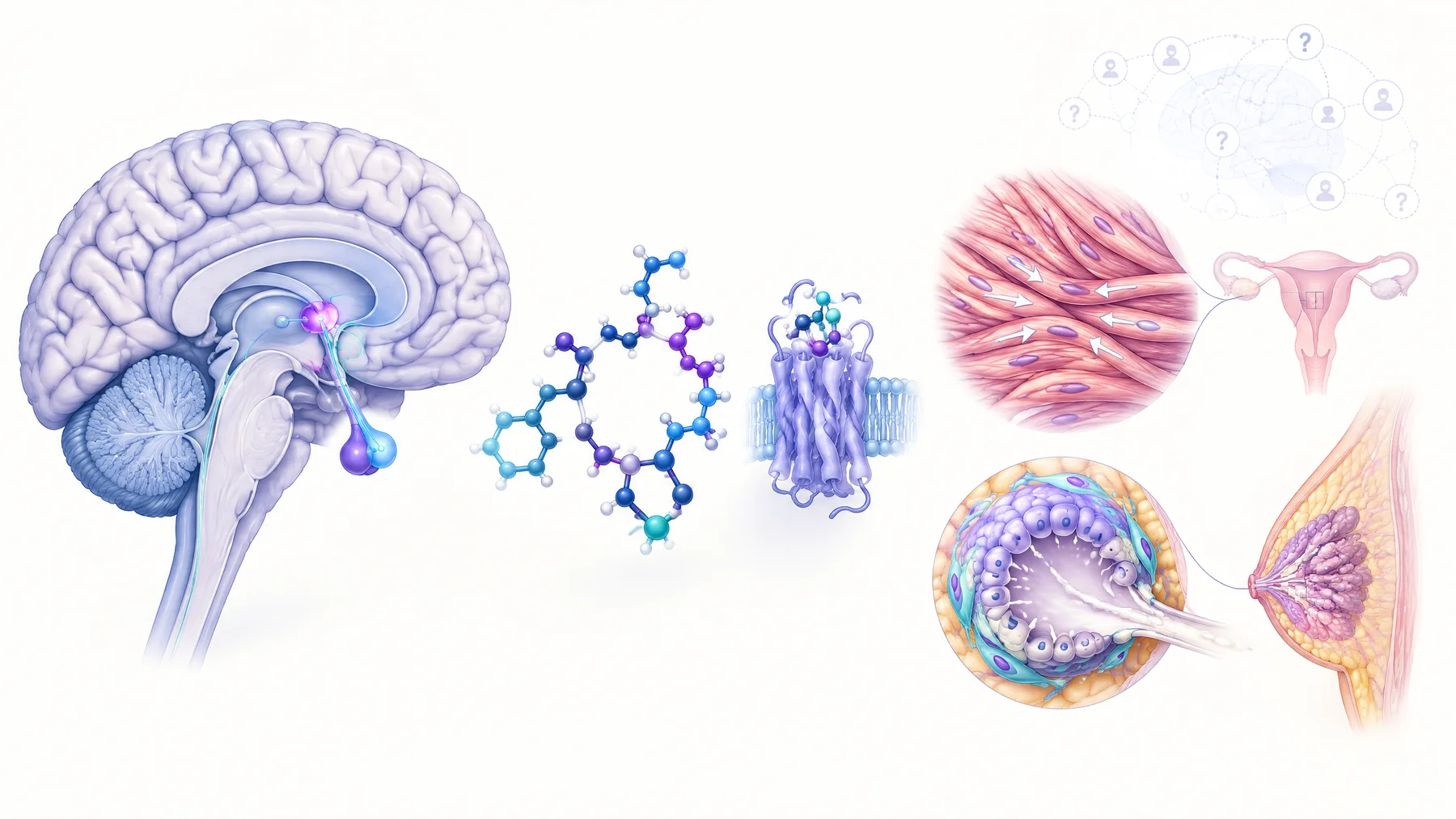

What is Semax?
Semax is a synthetic **heptapeptide** (seven amino acids: Met-Glu-His-Phe-Pro-Gly-Pro), designed as an analogue of the ACTH(4–10) fragment. It is therefore a peptide, not a small molecule, hormone preparation, topical cosmetic ingredient or mixture. A manufacturer-hosted Russian medical-use instruction describes a specific 0.1% prescription nasal-drops product (registration number LS-002553) and describes the peptide as lacking hormonal activity; that product identity must not be conflated with unlabelled or ‘research-use’ supplier vials.
Semax is a real synthetic peptide with a research history in rodent neurobiology and small or incompletely reported clinical studies in stroke rehabilitation. Those findings are not a validated basis for self-treatment, cognitive enhancement in healthy people, injections, supplier-vial dosing, or an Australian approval claim. The key interpretive distinction is between a named Russian nasal-drop medicine and an unverified product sold elsewhere.
What Semax is — and what it is not
Semax is the seven-amino-acid sequence Met-Glu-His-Phe-Pro-Gly-Pro. The primary rat papers call it an ACTH(4–10) analogue, and the Russian product instruction identifies the same sequence as the active substance in its 0.1% nasal-drop medicine. Calling it an ACTH-derived peptide describes its design origin; it does not make Semax interchangeable with endogenous ACTH or prove an ACTH-like clinical effect. [4] [5] [6]
A branded medicine formulation and a peptide sold in a research vial are not automatically the same therapeutic product. The Russian instruction specifies a ready-made nasal-drop formulation, named excipient and manufacturer. By contrast, a vial sold outside an approved supply chain does not carry the Australian regulator’s assessment of identity, quality, safety or efficacy. [6] [8] [11]
What the molecular pathway evidence actually shows
The most repeated mechanistic signal is a relationship with brain-derived neurotrophic factor (BDNF), a protein involved in neuronal survival and synaptic plasticity. In one rat hippocampus experiment, a single intranasal Semax exposure was followed by higher BDNF protein, higher BDNF and trkB messenger RNA, and higher trkB phosphorylation; treated rats also made more conditioned avoidance responses. This is an animal experiment, not evidence that Semax improves human memory or that BDNF caused the behavioural result. [4]
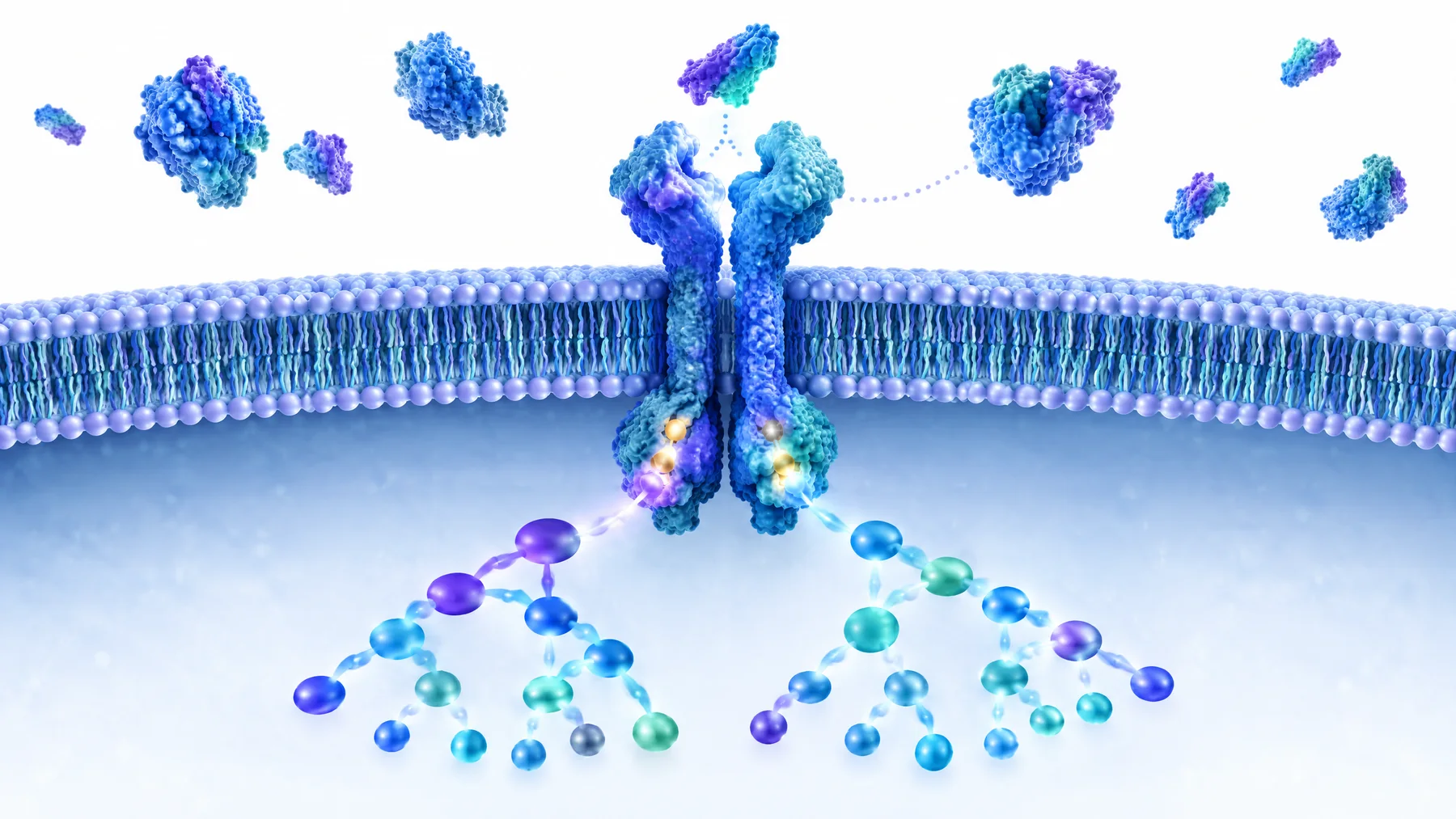
A separate rat basal-forebrain study found time-dependent, specific and reversible binding of tritium-labelled Semax to isolated membranes and a rapid rise in BDNF protein after intranasal exposure. The authors described binding sites, not an identified human receptor. It is therefore more accurate to say that a direct target remains unresolved than to present a settled ‘Semax receptor’ pathway. [5]
Pharmacokinetic observations also require restraint. In labelled peptide work in rats, radioactivity attributable mostly to intact Semax was detected in brain soon after intranasal administration, but the peptide was rapidly degraded and Pro-Gly-Pro predominated among measured peptide-related material. Rat tissue kinetics do not establish human brain exposure, a human dose, or a clinical route recommendation. [10]
Findings in models of brain injury
The best-characterised transcriptomic study used rats with permanent focal middle cerebral artery occlusion (pMCAO), produced by direct coagulation of the middle cerebral artery. Investigators compared ischaemic cortex from Semax-treated and saline-treated rats at 3 and 24 hours. More than half of the Semax-associated altered genes at 24 hours belonged to immune-response categories, with immunoglobulin- and chemokine-related genes prominent. These are gene-expression observations in injured rat cortex, not proof of neuroprotection or a treatment effect in people with stroke. [1]
A pilot histology study examined normal rat brain and incomplete global rat brain ischaemia. Semax and the shorter C-terminal peptide Pro-Gly-Pro were associated with increased proliferation markers in neuroglia, vascular endothelium and subventricular-zone progenitor cells; only Semax was reported to reduce histological manifestations of ischaemic damage in that experimental setting. The pilot design, species, artificial injury model and comparison with a peptide fragment all limit any direct clinical inference. [12]
These models can generate hypotheses about inflammation, vascular responses and neurotrophin signalling. They cannot establish that Semax prevents stroke, reduces disability, repairs brain tissue or safely enhances cognition in an uninjured person. Translation would require adequately designed, independently replicated human trials with clinically meaningful outcomes. [1] [4] [12]
Human evidence: confined, clinical and not definitive
A 1997 indexed comparative clinical study involved 30 people in the acute phase of hemispheric ischaemic stroke who received Semax within combined intensive therapy and 80 patients treated conventionally. The abstract reports faster regression of general cerebral, focal and particularly motor deficits in the Semax group, assessed with clinical scales, EEG mapping and somatosensory evoked potentials. It does not describe randomisation, blinding, allocation concealment or adverse-event reporting in the indexed abstract, so the result should be treated as an early comparative signal rather than conclusive efficacy evidence. [2]
A 2018 clinical study followed 110 people after ischaemic stroke, divided by earlier or later rehabilitation timing and then into Semax-positive and Semax-negative subgroups. It measured plasma BDNF, Medical Research Council motor performance and the Barthel Index. The authors reported higher plasma BDNF and better functional recovery measures in association with Semax and earlier rehabilitation. The abstract does not state that treatment allocation was randomised or blinded, so rehabilitation timing and other group differences may explain part of the association. Plasma BDNF is also not a direct measurement of BDNF activity in the brain. [3]
Neither study establishes Semax as an evidence-based treatment for healthy-person focus, memory, mood, fatigue or ‘nootropic’ use. Their participants had stroke-related clinical needs, and their designs do not provide the kind of large, well-controlled evidence normally needed to establish a broad cognitive claim. [2] [3] [11]
Risks and unanswered safety questions
The available human abstracts are not a comprehensive safety database. They do not provide enough detail to define rare harms, interactions, effects of prolonged use, safety in healthy users, or the risk profile of non-standard routes and formulations. Absence of an adverse event in a short abstract is not evidence that the event cannot occur. [2] [3]
The Russian 0.1% product instruction lists local nasal-mucosal irritation with prolonged use and lists several contraindications, including pregnancy, breastfeeding, acute psychiatric states, anxiety-associated disorders and a history of seizures. Those are label statements for that particular product, not a substitute for an Australian product information document or individual medical assessment. [6]
Products imported or bought online outside Australian approval pathways have not been evaluated by the TGA, which says their safety, quality and efficacy cannot be guaranteed and that counterfeit or undeclared ingredients are possible. This is a product-quality concern in addition to the uncertainty around Semax itself. [8]
Australian regulatory context
The ARTG is the TGA’s public register for therapeutic goods that can be supplied in Australia. A public ARTG search undertaken for this article did not identify a Semax medicine entry. This is a point-in-time database finding, not legal advice; absence from a search is not evidence that a product offered online is approved, and a product’s status can change. [7] [11]
Australian approval is product-specific. The TGA says a company seeking to supply a prescription medicine must provide evidence of quality, safety and efficacy, and an approved prescription medicine is entered in the ARTG. A Russian registration number or label does not supply that Australian assessment. [6] [11]
The Personal Importation Scheme can apply to some therapeutic goods not entered in the ARTG, subject to conditions. It does not amount to TGA evaluation or approval; the TGA expressly warns that the safety, quality and efficacy of imported products cannot be guaranteed. Where an unapproved medicine is sought for an individual patient, practitioner-led pathways such as the Special Access Scheme may apply under their own criteria. [8] [9]
Related substances and formulation claims
Semax is related structurally to an ACTH fragment, but the published experiments do not identify it as ACTH replacement therapy, a growth-hormone secretagogue or a general ‘peptide hormone’ treatment. The Russian product instruction specifically characterises the peptide as an ACTH-fragment analogue without hormonal activity. The proposed neurotrophic and binding observations should not be recast as proof of endocrine activity or a defined receptor mechanism. [4] [5] [6]
The exact formulation matters. The registered Russian product described in the instruction is a 0.1% nasal-drop solution in a 3 mL dropper bottle. A dry, multi-milligram ‘research’ vial, an injection-oriented product or a blend is a different product presentation. None of the sources reviewed validates a combined protocol, universal reconstitution method, storage rule or injection schedule for such products. [6] [8]
How to read a Semax study without over-reading it
First identify the model. ‘Rat hippocampus’, ‘permanent middle cerebral artery occlusion’ and ‘people in post-stroke rehabilitation’ are materially different research settings. A molecule can alter a rat biomarker, change a rodent injury-model transcriptome and still fail to show a patient-important benefit in a robust human trial. [1] [3] [4]
Next identify the endpoint. BDNF concentration, messenger RNA, membrane binding, EEG features and a Barthel Index are not interchangeable. A higher BDNF value is a biomarker observation; it does not by itself demonstrate better cognition, neuronal repair, long-term independence or prevention of a future stroke. [3] [4] [5]
Finally, check design protections. The two located human reports provide useful leads but are not described in their indexed abstracts as large, blinded, randomised trials with full safety reporting. The most responsible conclusion is that Semax remains a compound of research and limited clinical interest, rather than a settled, broadly proven therapy. [2] [3]
Questions readers ask
Is Semax actually a peptide?
Yes. Semax is a synthetic seven-amino-acid peptide and an analogue of the ACTH(4–10) fragment. It is not itself a small molecule, a topical ingredient or a mixture. [4] [6]
Does Semax increase BDNF in humans?
The 2018 post-ischaemic-stroke study reported higher **plasma** BDNF in Semax-treated subgroups. A rat experiment found increases in hippocampal BDNF and trkB-related measures. Neither result proves that Semax raises BDNF in the human brain or that BDNF is the cause of a clinical benefit. [3] [4]
Is Semax approved in Australia?
A public ARTG search performed for this record did not identify a Semax medicine. Australian prescription medicines require TGA assessment and ARTG registration before supply. Because registers and legal circumstances can change, confirm a current product’s status directly with the TGA or a qualified Australian health professional. [7] [11]
Does a research vial have the same status as Russian Semax nasal drops?
No such equivalence should be assumed. The Russian instruction describes a particular 0.1% nasal-drop medicine and its manufacturer. The TGA warns that unapproved imported products are not evaluated for safety, quality or efficacy. A label saying ‘research use’ is not evidence of pharmaceutical equivalence or an administration protocol. [6] [8]
What should a competing athlete do?
Do not infer anti-doping status from the absence of a name in an example list. WADA says its categories are not exhaustive and that substances without current approval by any governmental regulatory health authority for human therapeutic use may fall under S0; it directs athletes to check with their anti-doping organisation. Semax’s regulatory position varies by jurisdiction, so an athlete should obtain sport-specific advice before use. [6] [13]
What remains uncertain
The human literature located here is narrow, focused on stroke contexts and reported largely through indexed abstracts. These records do not provide a robust basis for general nootropic, mood, fatigue or healthy-person claims. [2] [3]
Most pathway and injury-model evidence is from rats. Animal exposure, tissue distribution, biomarkers and lesion models cannot specify a human therapeutic effect, dose, route or duration. [1] [4] [5] [10] [12]
The Russian instruction verifies a named nasal formulation and registration number as presented by its host, but it is not an Australian regulator document and it does not validate research vials, blends or non-nasal use. [6] [8] [11]
ARTG status was checked through the public TGA register interface on 3 October 2026. A search result is necessarily point-in-time and should be reconfirmed for any legal, clinical or supply decision. [7] [11]
References and further reading
- [1] The peptide semax affects the expression of genes related to the immune and vascular systems in rat brain focal ischemia: genome-wide transcriptional analysis. Controlled in vivo rat permanent middle cerebral artery occlusion (pMCAO) study; Semax-treated ischaemic rats were compared with saline-treated ischaemic rats at 3 and 24 hours; cortical microarray analysis, at least five animals per time point.
- [2] Effectiveness of semax in acute period of hemispheric ischemic stroke (a clinical and electrophysiological study). Comparative controlled clinical study reported in Russian: 30 acute hemispheric-ischaemic-stroke patients receiving Semax within intensive therapy versus 80 conventionally treated controls; clinical scales, EEG mapping and somatosensory evoked potentials reported in the abstract.
- [3] The efficacy of semax in the tretament of patients at different stages of ischemic stroke. Clinical study of 110 people after ischaemic stroke, grouped by early versus late rehabilitation and Semax-positive versus Semax-negative subgroups; plasma BDNF, Medical Research Council motor performance and Barthel Index assessed.
- [4] Semax, an analog of ACTH(4-10) with cognitive effects, regulates BDNF and trkB expression in the rat hippocampus. Rat experiment following a single intranasal Semax exposure, measuring hippocampal BDNF protein, BDNF and trkB mRNA, trkB phosphorylation and conditioned avoidance responses.
- [5] Semax, an analogue of adrenocorticotropin (4-10), binds specifically and increases levels of brain-derived neurotrophic factor protein in rat basal forebrain. Tritium-labelled Semax binding study in isolated rat basal-forebrain membranes plus intranasal exposure experiment measuring basal-forebrain BDNF protein.
- [6] Инструкция по медицинскому применению препарата СЕМАКС (Semax medical-use instruction). Product instruction for Semax 0.1% nasal drops, registration number LS-002553 dated 30 December 2011; states composition, form, contraindications and manufacturer.
- [7] Australian Register of Therapeutic Goods (ARTG). Public ARTG search resource, reviewed for this record on 3 October 2026.
- [8] Personal Importation Scheme. TGA consumer and regulatory guidance for personal importation of therapeutic goods not entered in the ARTG.
- [9] Access to unapproved therapeutic goods for individual patients (Special Access Scheme). TGA guidance describing practitioner-led Special Access Scheme pathways for individual patients.
- [10] Kinetics of semax penetration into the brain and blood of rats after its intranasal administration. Radiolabelled Semax study in nonbred white rats after intranasal administration, measuring brain and blood radioactivity and peptide-related material.
- [11] Prescription medicines overview. TGA overview of Australian prescription-medicine regulation and ARTG registration.
- [12] The effect of Semax and its C-end peptide PGP on the morphology and proliferative activity of rat brain cells during experimental ischemia: a pilot study. Histological study in normal rat brain and incomplete global rat brain ischaemia comparing Semax and its C-terminal peptide Pro-Gly-Pro.
- [13] The Prohibited List (2026). World Anti-Doping Agency 2026 Prohibited List and explanatory material, effective from 1 January 2026.