
What is PT-141 (bremelanotide)?
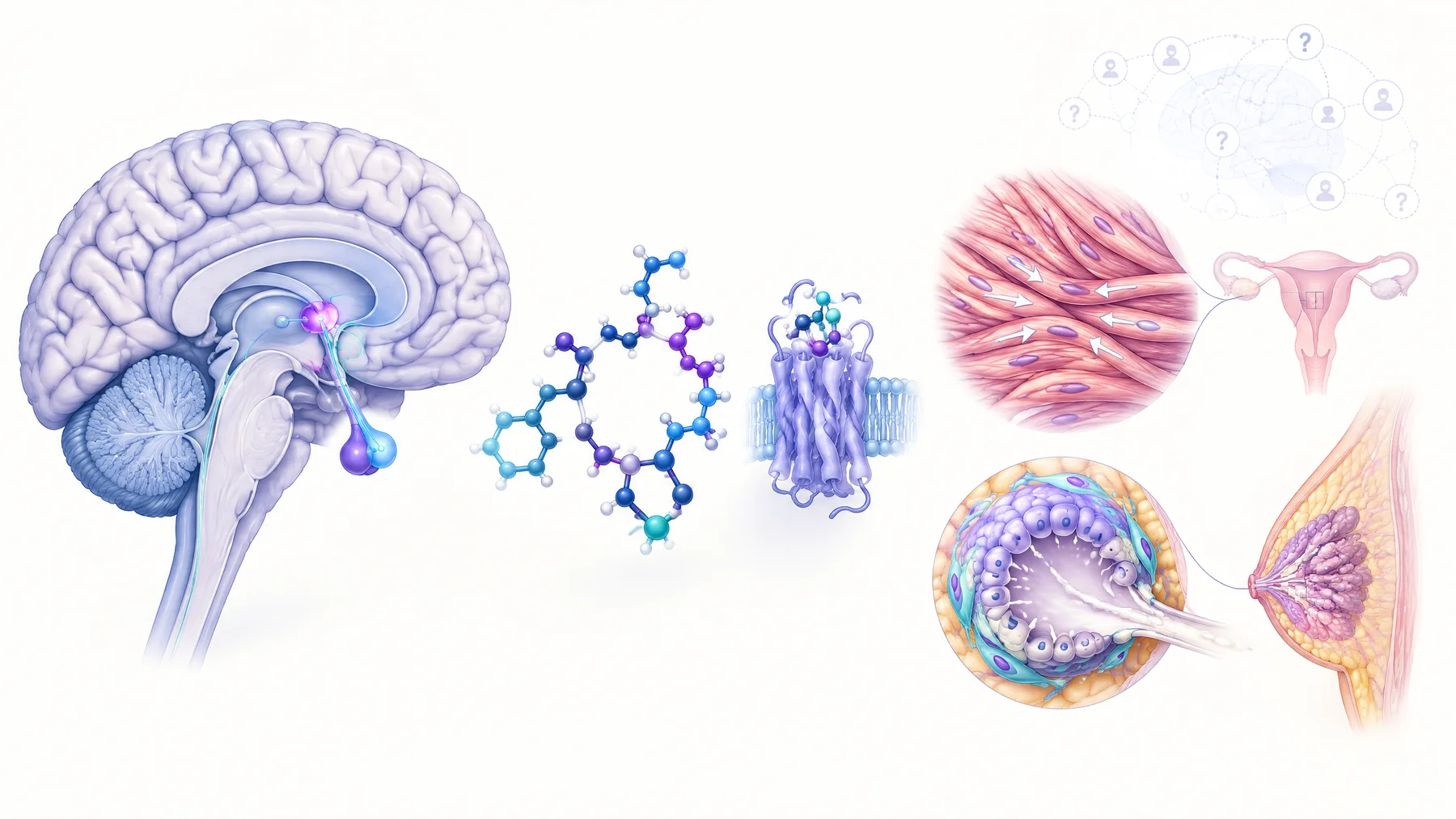
PT-141 is bremelanotide, a synthetic cyclic heptapeptide analogue of alpha-melanocyte-stimulating hormone (alpha-MSH) and a melanocortin-receptor agonist. It is a peptide—not a steroid, a testosterone product, or a generic name for a ‘libido blend’. In the United States, the finished prescription medicine is Vyleesi (bremelanotide injection); the named active ingredient and the approved finished medicine should not be treated as interchangeable with unverified supplier vials.
Bremelanotide/PT-141 is a cyclic peptide medicine with placebo-controlled human trial evidence in carefully selected premenopausal women with acquired, generalised HSDD. The pivotal trials found statistically significant, modest average improvements in validated desire and distress measures versus placebo, while nausea, flushing and headache were common. Its labelled mechanism is melanocortin-receptor activation, but the mechanism by which it improves HSDD remains unknown. Vyleesi is a US prescription product with a narrow indication, not a proven sexual-performance enhancer or a demonstrated treatment for men or postmenopausal women. For Australia, the ARTG should be checked for the exact product and current status; no Australian approval should be assumed from overseas labelling or an online ‘PT-141’ vial.
Identity: what PT-141 is—and is not
PT-141 is the development name for bremelanotide. The US label describes bremelanotide acetate as a synthetic cyclic heptapeptide; the drug substance is a melanocortin-receptor agonist. This matters because it corrects two frequent category errors: it is genuinely a peptide, but it is not a naturally occurring hormone preparation, and it is not synonymous with every product marketed online under the PT-141 name. [1]
Bremelanotide is an approved medicine in one specific jurisdiction and formulation: the current US DailyMed label identifies Vyleesi as a human prescription drug marketed under a New Drug Application. Its indication is acquired, generalised HSDD in premenopausal women when low desire causes marked distress or interpersonal difficulty and is not explained by a medical or psychiatric condition, relationship problems, or a medication/drug. The same label explicitly says it is not indicated for men, postmenopausal women, or sexual-performance enhancement. [1]
Molecular pathway: receptor activity is known; the clinical pathway is not
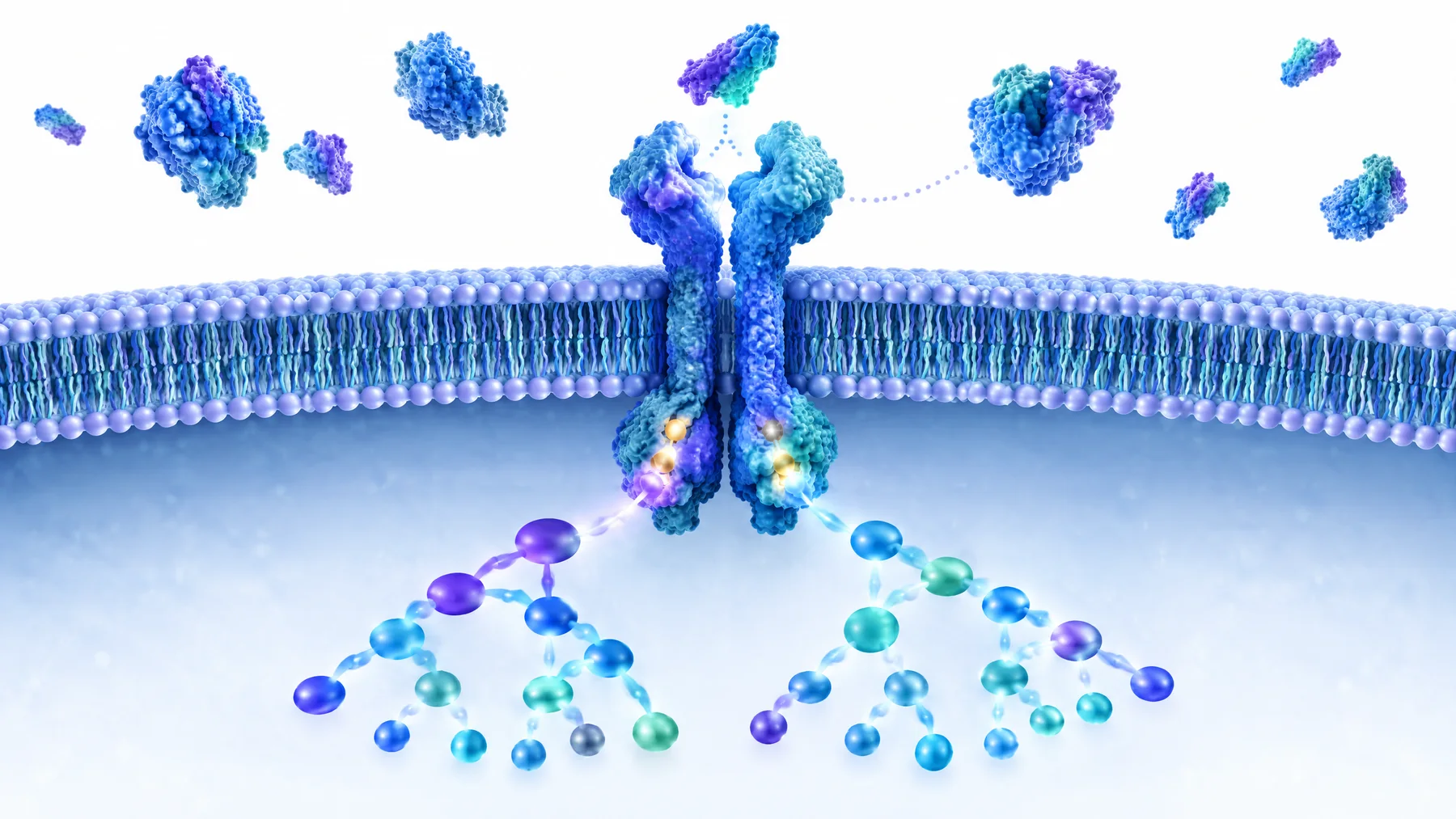
The labelled pharmacology is broader than a single ‘desire receptor’ story. Bremelanotide non-selectively activates melanocortin receptor subtypes, with the label listing potency in the order MC1R, MC4R, MC3R, MC5R and MC2R. At therapeutic exposure, the label identifies MC1R and MC4R binding as most relevant; MC1R activation on melanocytes provides a biologically coherent explanation for pigmentary effects. [1]
It would overstate the evidence to map receptor binding directly onto a guaranteed change in libido, arousal or erection. The US label states that the mechanism by which Vyleesi improves HSDD in women is unknown. The phase 3 authors discuss neurobiological hypotheses involving melanocortin signalling and sexual-response pathways, but those hypotheses do not establish a complete causal pathway in individual people. [1] [2]
The pivotal human model: two phase 3 HSDD trials
The strongest efficacy evidence is the paired RECONNECT phase 3 programme (studies 301 and 302). These were 24-week, randomised, double-blind, placebo-controlled trials after a placebo run-in, with an optional open-label extension. The published modified intention-to-treat population totalled 1,202 premenopausal women; participants were mostly White (85.6%), almost all were recruited at US sites (96.6%), and mean age was 39 years. [2]
Participants had acquired, generalised HSDD for at least six months and a history of prior normal sexual function. The study population was deliberately selective: pregnancy/lactation, other female sexual dysfunction, and recent relevant psychiatric diagnoses, substance abuse or several psychotropic medicines were exclusions. The trials therefore test a defined clinical diagnosis, not low desire from every cause or a broad wellbeing use. [2] [3]
The coprimary outcomes were change in the Female Sexual Function Index desire domain (FSFI-D) and in distress about low desire (FSDS-DAO item 13). Compared with placebo, bremelanotide produced statistically significant adjusted mean differences in desire of 0.30 in study 301 and 0.42 in study 302, and distress differences of −0.37 and −0.29 respectively; pooled differences were 0.35 for desire and −0.33 for distress. These are group-average questionnaire changes, not a promise of response for an individual. [2]
A pre-specified secondary measure, satisfying sexual events associated with study drug dosing, did not show a statistically significant difference versus placebo in the publication. That outcome is a useful reminder that statistically significant changes in the validated desire/distress measures do not establish improvement across every sexual-function metric. [2]
What the dose-finding and extension studies add
An earlier 12-week randomised, placebo-controlled dose-finding trial tested 0.75, 1.25 and 1.75 mg in premenopausal women with female sexual dysfunction. In the efficacy dataset (n=327), pooled 1.25/1.75 mg results versus placebo showed a mean change of +0.7 versus +0.2 satisfying sexual events per month, alongside statistically significant improvements in total Female Sexual Function Index and Female Sexual Distress Scale–Desire/Arousal/Orgasm scores. Its pooled-dose analysis and broader female-sexual-dysfunction population make it supportive context, rather than a substitute for the later, diagnosis-specific phase 3 trials. [4]
In the 52-week open-label extension of RECONNECT, 684 of 856 eligible core-trial completers enrolled and 272 completed the extension. Reported desire and distress improvements were maintained, and no new safety signal was identified by the investigators. However, every participant knew they were receiving bremelanotide and fewer than half completed the extension; the descriptive, uncontrolled design cannot separate drug effect from selection, expectation or attrition effects as reliably as the blinded core trials. [5]
Risks, contraindications and uncertainty
The current US label contraindicates Vyleesi in uncontrolled hypertension or known cardiovascular disease. It reports transient blood-pressure increases and reduced heart rate after each dose, generally returning to baseline within 12 hours, and advises considering cardiovascular risk. This is a clinically important limitation on any claim that PT-141 is a routine or risk-free lifestyle product. [1]
Nausea was the most frequent adverse reaction in the phase 3 programme: the label reports it in 40% of treated patients, anti-emetic use in 13%, and discontinuation because of nausea in 8%. Flushing, injection-site reactions, headache and vomiting are also listed as common adverse reactions. The phase 3 publication likewise found more nausea, flushing and headache with bremelanotide than with placebo. [1] [2]
Focal hyperpigmentation is another distinctive risk. The label reports it in 1% of phase 3 recipients using up to eight doses monthly, says risk was higher with more frequent dosing and in people with darker skin, and notes that resolution was not confirmed in all people after stopping. Bremelanotide may also slow gastric emptying and affect absorption of oral medicines; the label specifically advises avoiding oral naltrexone products used for alcohol or opioid dependence. [1]
Australian regulatory context: do not infer approval
For Australia, a prescription medicine is a registered ARTG medicine with an AUST R number; the TGA says these products are assessed for quality, safety and efficacy. The ARTG is the public reference database for therapeutic goods that can be supplied in Australia, subject to exemptions and specific unapproved-goods pathways. [6] [7]
This research located a current US label but did not verify an ARTG entry for an exact bremelanotide/PT-141 product. Accordingly, this article makes no claim that bremelanotide is TGA-approved or routinely available in Australia. A clinician, pharmacist or reader assessing a specific product should check the current ARTG by product name, active ingredient, sponsor or ARTG identifier rather than relying on overseas approval, social media, or a supplier’s use of ‘research’ language. [1] [6] [7]
Australian regulatory history also warrants care with online peptide marketing. In a 2018 Federal Court filing concerning a retailer, the Department identified ‘Bremelanotide (PT-141)’ among advertised products and alleged unlawful advertising of Schedule 4 substances. This historical filing is not evidence about the quality, legality or approval of every current product, but it illustrates why product-specific regulatory verification matters. [8]
Approved formulation versus online or research vials
The evidence and label apply to a defined finished medicine: Vyleesi is a 1.75 mg/0.3 mL sterile solution in a single-dose autoinjector, with specified inactive ingredients and a regulated label. A product merely labelled ‘PT-141’ does not, by name alone, establish the same identity, concentration, sterility, device performance, storage history, clinical oversight or regulatory status. [1]
For that reason, the label should be read as evidence about its named medicine and its studied population, not as a universal dilution, storage or administration template for compounded or research-supplier material. No validated combined protocol is established here, and this record does not endorse self-treatment, product mixing, or extrapolation to conditions outside the labelled indication. [1] [2] [6]
How to read claims about PT-141
When evaluating a PT-141 claim, first ask whether it matches the studied model: premenopausal women with acquired, generalised HSDD and distress, not simply occasional low desire or a performance goal. Next, distinguish a statistically significant mean difference on a validated self-report scale from a claim of universal benefit. Finally, look for whether the claim reports nausea, blood-pressure effects, pigmentary risk and discontinuation—not only desirable outcomes. [1] [2] [3]
Claims for men, erectile dysfunction, postmenopausal women, fertility, bodybuilding, tanning, mood, or a ‘no-side-effects’ libido boost should be treated as outside the US-labelled HSDD indication and outside the pivotal model described above. Absence of support in these trials is not proof of no biological effect; it does mean those claims cannot be presented as conclusions from the RECONNECT evidence. [1] [2] [3]
Questions readers ask
Is PT-141 actually a peptide?
Yes. PT-141 is bremelanotide, a synthetic cyclic heptapeptide and melanocortin-receptor agonist. It is not a small molecule, steroid or testosterone formulation. [1]
Is PT-141 an approved medicine?
A US prescription medicine containing bremelanotide, Vyleesi, has a current US drug label for acquired, generalised HSDD in premenopausal women. That approval is specific to that jurisdiction, formulation and indication. This research did not verify an ARTG entry for an exact bremelanotide product, so it should not be described as Australian-approved without a current ARTG check. [1] [6] [7]
Does the pivotal evidence show that it enhances sexual performance?
No. The pivotal trials evaluated desire and distress outcomes in a defined HSDD population. The US label specifically says Vyleesi is not indicated to enhance sexual performance. [1] [2]
What were the main limitations of the phase 3 evidence?
The two trials were blinded and placebo-controlled, but participants were a selected HSDD population, mostly White and predominantly from US sites. They do not establish efficacy for men, postmenopausal women, people with different causes of low desire, or unsupervised supplier products. [2] [3]
What safety concerns are most important?
The label highlights transient blood-pressure increase with reduced heart rate, nausea, focal hyperpigmentation and interactions related to slowed gastric emptying. It contraindicates the medicine in uncontrolled hypertension or known cardiovascular disease. [1]
What remains uncertain
The pivotal evidence is meaningful but population-specific: it concerns carefully screened premenopausal women with acquired, generalised HSDD, not men, postmenopausal women, all causes of low desire, erectile dysfunction, or general sexual-performance use.
Most efficacy endpoints were validated patient-reported desire and distress measures. The pivotal publication did not find a statistically significant placebo-adjusted difference for the satisfying-sexual-events secondary endpoint.
The extension study was open-label, descriptive and had substantial attrition (272 of 684 enrollees completed), so it is weaker than the blinded core trials for estimating sustained efficacy.
The key phase 3 publication and extension study report sponsor funding from Palatin Technologies and AMAG Pharmaceuticals; this does not invalidate the results, but is relevant context when weighing the evidence.
No exact bremelanotide/PT-141 ARTG entry was verified in the sources checked. Because ARTG status can change and product-specific details matter, this record deliberately does not claim Australian approval; check the current ARTG for the exact product.
References and further reading
- [1] VYLEESI- bremelanotide injection. Regulatory prescribing information; current label page updated 13 November 2025, prescribing information revised March 2024
- [2] Bremelanotide for the Treatment of Hypoactive Sexual Desire Disorder: Two Randomized Phase 3 Trials. Two identically designed 24-week randomised, double-blind, placebo-controlled phase 3 trials (RECONNECT 301 and 302), with optional open-label extension
- [3] NCT02333071: Study to Evaluate the Efficacy/Safety of Bremelanotide in Premenopausal Women With Hypoactive Sexual Desire Disorder (HSDD). Completed phase 3 multicentre randomised, double-blind, placebo-controlled parallel-group trial with open-label extension; actual enrolment 723
- [4] Bremelanotide for female sexual dysfunctions in premenopausal women: a randomized, placebo-controlled dose-finding trial. 12-week randomised, placebo-controlled dose-finding trial of 0.75, 1.25 and 1.75 mg; efficacy dataset n=327
- [5] Long-Term Safety and Efficacy of Bremelanotide for Hypoactive Sexual Desire Disorder. 52-week open-label extension after the two RECONNECT phase 3 trials; descriptive analyses
- [6] Searching the Australian Register of Therapeutic Goods (ARTG). TGA ARTG database/search guidance
- [7] Prescription medicines. TGA regulatory overview
- [8] Secretary of the Department of Health v Peptide Clinics Pty Ltd: Concise Statement (Federal Court filing). 2018 concise statement alleging advertising-law contraventions; not a clinical study or a current ARTG determination