What is Pinealon (EDR)?
Pinealon, also called EDR, is a synthetic tripeptide with the amino-acid sequence Glu-Asp-Arg. It is a peptide, not a hormone, small molecule, or established Australian medicine. The evidence located is principally cell and animal research, with a small amount of weakly reported human evidence. It should be treated as a research substance rather than as a validated cognitive, anti-ageing, or neuroprotective treatment.
Pinealon (EDR) is a genuine synthetic three-amino-acid peptide. Experimental papers report changes in oxidative-stress markers, cell survival and neuronal morphology in selected cell systems and disease models. These findings are not evidence that it prevents dementia, improves cognition, or slows ageing in people. The human literature located is small and insufficiently reported to establish benefit or safety; in Australia, it should not be represented as an approved medicine or as a standard injectable protocol.
Identity: a short synthetic peptide, not an approved ‘anti-ageing’ medicine
Pinealon is the synthetic tripeptide Glu-Asp-Arg (EDR). ‘Tripeptide’ means that it contains three amino-acid residues; it does not mean it is a naturally occurring hormone or a clinically interchangeable product. The 2011 cell paper and the 2012 rat paper both identify Pinealon as Glu-Asp-Arg. A peptide sequence alone does not establish a therapeutic indication, an oral or injectable formulation, or a dose for people. [1] [2]
The most defensible classification is a preclinical research peptide with a limited human literature, rather than an approved Australian medicine. A TGA search for ‘Pinealon’ returned no matching TGA website record, and no Pinealon-specific ARTG entry, Product Information or Consumer Medicine Information was identified in this review. The ARTG is the public register for therapeutic goods approved for legal supply in Australia; its status should be checked directly at the time of any clinical decision because registers can change. [7] [10]
Research reports are not a product label. For example, the rat pregnancy experiment named a Russian product source and used an intraperitoneal experimental regimen in pregnant rats; that is neither an Australian label nor a basis for translating dose, route, dilution, storage or duration to humans. Likewise, a vial sold online is not made clinically validated by carrying the letters ‘EDR’. [2] [8] [9]
What the foundational cell study actually showed
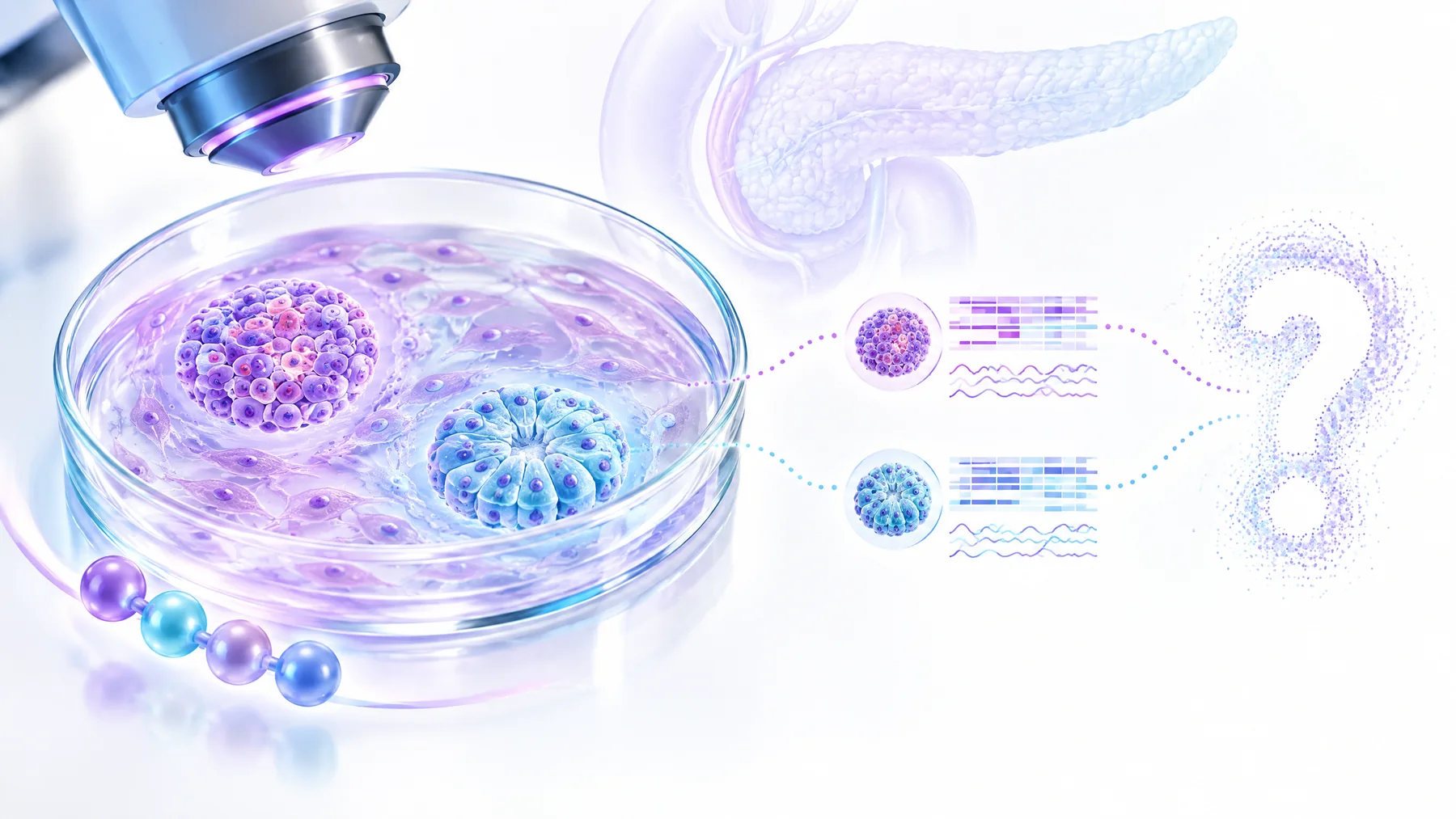
In a 2011 primary in-vitro study, investigators exposed rat cerebellar granule cells, neutrophils and PC12 pheochromocytoma cells to oxidative-stress paradigms. Pinealon was associated with dose-dependent restriction of reactive oxygen species (ROS) accumulation, fewer propidium-iodide-positive necrotic cells, delayed ERK1/2 activation and changes in cell-cycle measures. These are laboratory read-outs in isolated cells, not clinical outcomes such as memory, sleep, traumatic-brain-injury recovery or dementia prevention. [1]
The authors inferred from the differing concentration-response patterns that Pinealon might interact directly with the cell genome. That is a hypothesis generated by the experiment, not a demonstrated human target or a settled mechanism. The study did not establish pharmacokinetics, blood–brain delivery in people, long-term toxicity, an optimal human concentration, or superiority over standard treatment. [1]
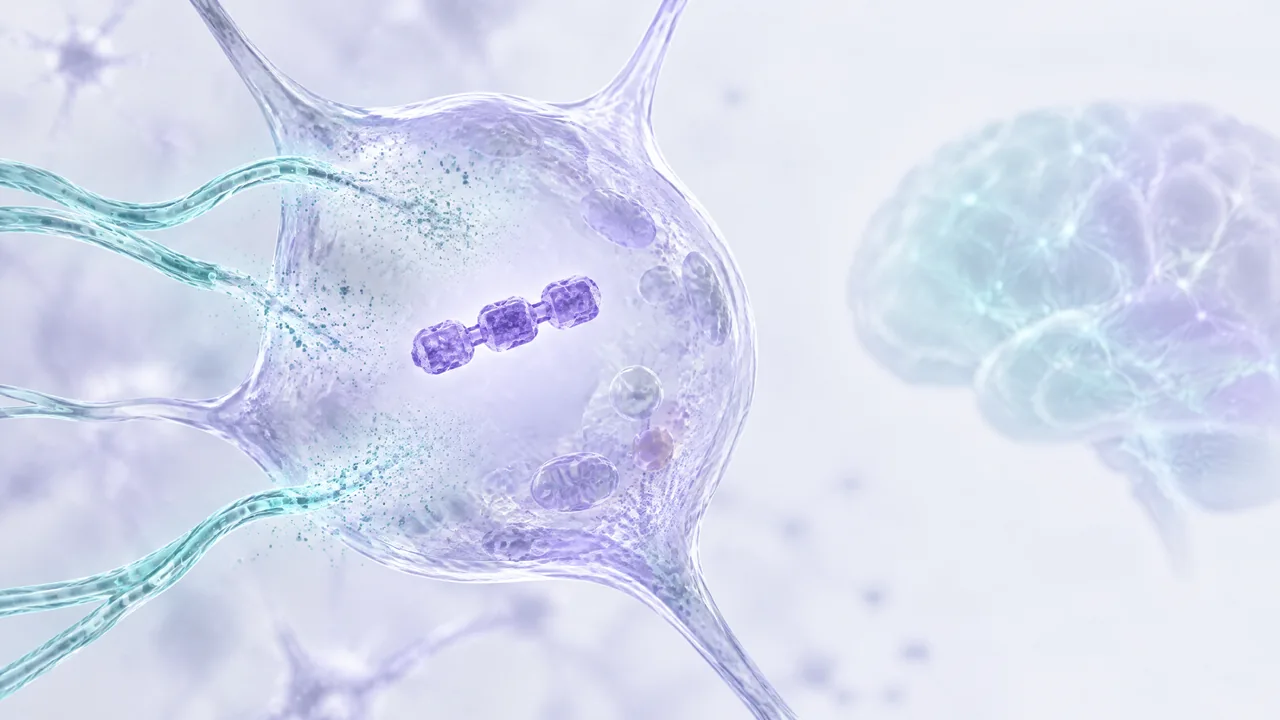
A 2024 study used a more human-relevant but still in-vitro model: induced cortical neurons directly reprogrammed from fibroblasts of three older women. After 10 days of EDR at 10 micrograms/mL, the investigators reported a lower 8-OHdG staining signal and increases in primary dendritic processes and total dendrite length. They found no statistically significant effect on their mitochondrial-activity, lysosomal-activity, p16 or lamin B1 measures. Those mixed results are a reason to avoid turning a single marker or cell-shape change into a broad ‘brain rejuvenation’ claim. [3]
Animal findings are model-specific, not proof of human neuroprotection
The 2012 in-vivo paper used pregnant Wistar rats given methionine to create prenatal hyperhomocysteinaemia. Compared with offspring of methionine-only dams, offspring from the Pinealon-plus-methionine group performed better on selected Morris water-maze measures and yielded cerebellar cells with lower ROS and fewer necrotic cells after an ex-vivo hydrogen-peroxide challenge. Pinealon did not lower the offspring homocysteine concentration in that experiment, which is consistent with an observed stress-response association rather than correction of the model’s underlying biochemical exposure. [2]
This is an experimental maternal-exposure model, not a trial in pregnant people, children, people with high homocysteine or people with cognitive symptoms. Each behavioural group had 23 offspring, and biological-family effects, species differences, the artificial model and the pre-treatment design constrain generalisation. It provides a lead for replication, not a pregnancy, paediatric or cognitive-use recommendation. [2]
In a separate 5xFAD mouse model carrying amyloid-related APP and PSEN1 mutations, EDR treatment was studied for two months before hippocampal electrophysiology and spine analysis. The authors reported prevention of dendritic-spine loss in their model, whereas the trend toward restored long-term potentiation did not reach statistical significance. Mouse genetic models can illuminate biology, but neither amyloid-model spine morphology nor a non-significant electrophysiological trend demonstrates treatment of Alzheimer disease in people. [4]
Human evidence: signals reported, but no reliable efficacy conclusion
A PubMed-indexed 2015 report (Russian-language article with an English abstract) describes 32 adults aged 41–83 years with chronic multimorbidity and organic brain syndrome in remission who received preparations called Pinealon and Vesugen. The abstract reports changes described as anabolic and geroprophylactic and says Vesugen appeared more prominent than Pinealon. Because the report combines two peptides and the accessible abstract does not specify allocation, comparator, blinding, separate Pinealon results, dosing, adverse-event collection or a prespecified clinical endpoint, it cannot establish that Pinealon caused any claimed benefit. [5]
A 2021 narrative review relays a report of oral Pinealon added to standard therapy in 72 people with sequelae of traumatic brain injury and cerebrasthenia, with reported improvements in memory, headaches and performance measures. In the material reviewed here, that cohort is presented through a review rather than an accessible, prospectively registered, peer-reviewed randomised trial report with full methods and safety data. It is therefore a lead for source verification, not a dependable basis for patient counselling or administration instructions. [6]
Taken together, the located human evidence does not show a well-characterised randomised, blinded Pinealon trial with independently replicated cognitive outcomes, clinically meaningful follow-up and systematic safety reporting. Claims that Pinealon has proven benefits for memory, sleep, concussion, traumatic brain injury, dementia or ‘biological age’ exceed this evidence base. [5] [6]
Molecular pathway: observations should not be mistaken for a target map
The best-supported experimental observations are limited: in stressed cell preparations, EDR exposure was associated with reduced ROS accumulation, less necrotic-cell staining and altered timing of ERK1/2 activation; in the 2024 induced-neuron experiment it was associated with oxidative-DNA-damage staining and dendritic morphology changes. These results support further mechanistic work in the specific experimental systems used, not a confirmed receptor, gene target or human brain pathway. [1] [3]
Reviews and modelling papers discuss potential DNA, histone and gene-expression interactions, including possible links to neuroplasticity-related processes. These proposals remain unresolved: the 5xFAD study itself states that the exact mechanism is unknown, and the 2011 authors’ ‘direct genome’ proposition was an inference from cellular concentration-response patterns. A cautious reader separates measured endpoints from the proposed explanation for them. [1] [4] [6]
Safety and uncertainty: absence of a label is an information gap, not reassurance
There is no Australian Pinealon product label in the sources reviewed here that defines contraindications, interactions, reproductive risk, pharmacovigilance findings or a validated administration schedule. The small 2015 human abstract reported pro-oxidant activity by chemiluminescence and a decrease in CD34-positive haematopoietic-cell markers, then called for further study. That unusual and incompletely characterised observation reinforces the need not to infer safety from cell or animal experiments. [5] [7] [10]
The TGA warns that unapproved peptide products imported or marketed online may be poorly labelled and may lack verifiable identity, concentration, sterility or freedom from contaminants. Those quality risks are distinct from Pinealon’s intrinsic pharmacology: even a research paper about EDR cannot verify the contents or safety of an unrelated supplier vial. For an injectable, uncertainty about identity and sterility can itself create serious risk. [8]
No combined or ‘stacked’ protocol can be derived from the cited studies. The experiments tested defined preparations under narrow laboratory conditions, sometimes alongside another peptide, and did not validate combinations in patients. Adding other compounds makes attribution of effects and harms harder, rather than converting limited evidence into a treatment plan. [3] [5]
Australian regulatory context
In Australia, therapeutic goods generally must be included in the ARTG before legal supply, import or export. Products outside the ARTG are ‘unapproved therapeutic goods’; the TGA says it has not evaluated them for quality, safety, efficacy or performance. That classification is not a finding that every unapproved substance is ineffective, but it does mean that it has not passed the usual Australian pre-market evaluation for the claimed use. [7] [9]
There are practitioner-led pathways for certain unapproved goods, including the Special Access Scheme for an individual patient and the Authorised Prescriber scheme for multiple patients with the same condition. They are not a consumer endorsement, a substitute for an ARTG listing or permission for routine commercial sale. The TGA advises practitioners to consider approved options, risks, informed consent and applicable state or territory requirements first. [9]
For consumers, the practical distinction is simple: a research-supplier vial is not an approved formulation, and a web claim is not an Australian medicine label. The TGA specifically advises caution with online and overseas peptide products and notes that inadequately labelled imports may be seized rather than released under the Personal Importation Scheme. [8]
How Pinealon compares with nearby research claims—and how to read them
EDR was tested beside the short peptides KED and AEDG in the 2024 induced-neuron experiment. All three were associated with some dendritic-arborisation measures in that model, while EDR alone was reported to reduce the oxidative-DNA-damage marker; none produced significant changes in the mitochondrial, lysosomal, p16 or lamin B1 measures assessed. Similarity of laboratory observations is not evidence that the peptides are interchangeable, clinically effective, or appropriate to combine. [3]
A useful reading sequence is: first identify the model (cell culture, maternal rat exposure, transgenic mouse or human study); then ask whether the outcome is a biomarker, morphology measure, behavioural task or patient-important endpoint; finally look for an appropriate comparator, blinding, independent replication and full safety reporting. Pinealon currently has interesting preclinical signals but does not clear those clinical-evidence hurdles. [1] [2] [3] [4] [5]
Questions readers ask
Is Pinealon actually a peptide?
Yes. Pinealon is the synthetic tripeptide Glu-Asp-Arg (EDR). It is not a glycoprotein hormone, a coenzyme or a small molecule. [1] [2]
Is Pinealon an approved medicine in Australia?
No Pinealon-specific ARTG medicine approval or Australian product-information record was located in this review, and a TGA website search returned no matching Pinealon record. The ARTG is the current public database to check before relying on any claim of Australian approval. [7] [10]
Does Pinealon have proven benefits for memory or dementia?
No. There are preclinical cell and animal findings and limited human reports, but the located evidence does not establish reliable clinical benefit for memory, traumatic brain injury, dementia or ageing. [1] [2] [3] [4] [5] [6]
Do the papers support a Pinealon injection or oral dosing schedule?
No. Experimental animal routes and laboratory concentrations are not human prescribing instructions, and the accessible human reports do not provide the kind of controlled, label-level evidence needed to create a validated schedule. [2] [3] [5] [6]
Why is an online ‘research peptide’ vial not equivalent to the peptide in a paper?
A paper reports an experiment using a stated preparation; it cannot establish the identity, concentration, sterility or contaminant status of a vial supplied elsewhere. The TGA flags poorly labelled, unapproved peptide products as a consumer-safety concern. [2] [8]
What remains uncertain
The evidence is dominated by in-vitro and animal studies from a relatively narrow research literature. The accessible human record is small, incompletely reported and in one case combines Pinealon with Vesugen; the traumatic-brain-injury cohort was identified through a review rather than a fully assessed primary randomised-trial report. No Pinealon-specific Australian product label, ARTG medicine entry, validated human dosing regimen, pharmacokinetic programme, comprehensive interaction assessment or robust long-term safety dataset was located. Laboratory concentrations, animal routes and supplier-vial claims must not be converted into human administration advice.
References and further reading
- [1] Pinealon increases cell viability by suppression of free radical levels and activating proliferative processes. In-vitro cellular experiments in rat cerebellar granule cells, neutrophils and PC12 pheochromocytoma cells under oxidative-stress paradigms.
- [2] Pinealon protects the rat offspring from prenatal hyperhomocysteinemia. Pregnant Wistar rats received a methionine-loading prenatal hyperhomocysteinaemia model; offspring underwent Morris water-maze testing and ex-vivo cerebellar-cell analyses.
- [3] Short Peptides Protect Fibroblast-Derived Induced Neurons from Age-Related Changes. In-vitro study of directly reprogrammed induced neurons from fibroblasts of three older female donors, with 10-day exposure to EDR, KED or AEDG.
- [4] Neuroprotective Effects of Tripeptides—Epigenetic Regulators in Mouse Model of Alzheimer’s Disease. 5xFAD and 5xFAD-M transgenic mouse experiments with daily intraperitoneal EDR or KED before hippocampal electrophysiology and dendritic-spine analysis.
- [5] [Effect of synthetic peptides on aging of patients with chronic polymorbidity and organic brain syndrome of the central nervous system in remission]. Russian-language report with English abstract; 32 adults with polymorbidity and organic brain syndrome received Pinealon and Vesugen, with limited design details available in the abstract.
- [6] EDR Peptide: Possible Mechanism of Gene Expression and Protein Synthesis Regulation Involved in the Pathogenesis of Alzheimer’s Disease. Narrative review of EDR/Pinealon biology and prior clinical and preclinical reports.
- [7] About the Australian Register of Therapeutic Goods (ARTG). TGA regulatory guidance describing the public ARTG and its purpose.
- [8] TGA warning on the risks of importing unapproved peptide products. Consumer safety advisory on imported online unapproved peptide products.
- [9] Access an unapproved therapeutic good (health practitioners). TGA guidance on practitioner pathways for unapproved therapeutic goods.
- [10] TGA website search for Pinealon. TGA website search conducted for Pinealon.