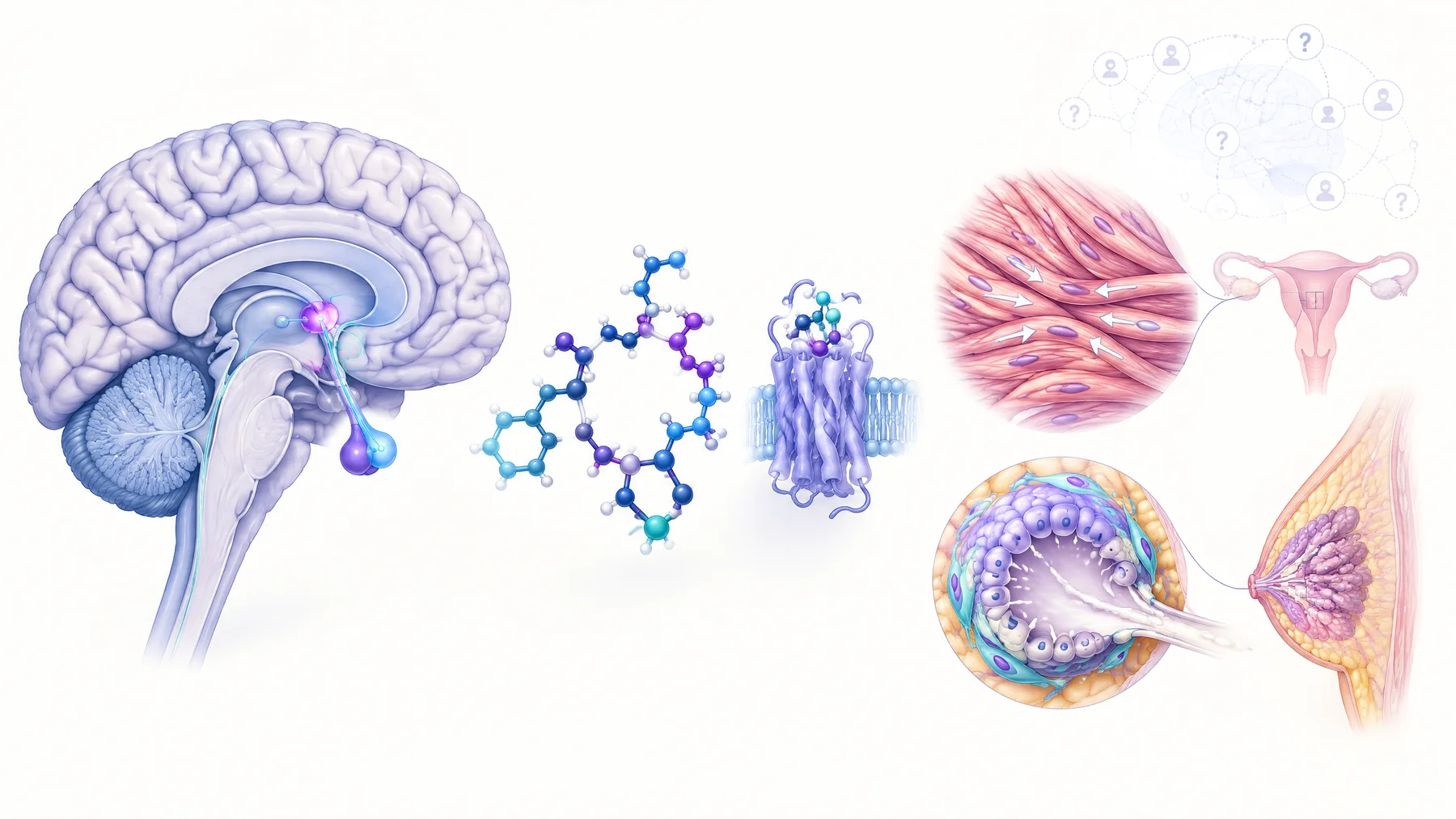

What is MOTS-c?
An endogenous mitochondrial-derived peptide (MDP) and a preclinical research substance when supplied synthetically; it is not an approved medicine or an established therapeutic hormone product. MOTS-c means mitochondrial open reading frame of the 12S rRNA-c. It is a 16-amino-acid peptide encoded by a short open reading frame in mitochondrial DNA, within the 12S rRNA region. A vial marketed as “MOTS-c” is not an approved formulation simply because the body makes an endogenous peptide of that name. Research-supplier material and any purported injectable product require separate scrutiny for identity, sterility, quality and legal supply status.
MOTS-c is a real, 16-amino-acid peptide encoded in mitochondrial DNA, but the therapeutic claims often attached to it run well ahead of human evidence. In cell and mouse experiments, researchers have linked MOTS-c to metabolic-stress signalling, AMPK activation and improved exercise or metabolic endpoints in particular mouse models. In people, the direct evidence is much narrower: a ten-man acute exercise study found transient increases in endogenous MOTS-c in muscle and circulation, while a 40-patient cardiac study found an association between lower circulating levels and endothelial dysfunction. Neither result establishes that administering synthetic MOTS-c treats obesity, diabetes, ageing, performance or cardiovascular disease. For Australia, it should be read as an unapproved, preclinical research peptide rather than a medicine with a validated consumer dose, route or storage instruction.
1. What MOTS-c is — and what it is not
MOTS-c is short for mitochondrial open reading frame of the 12S rRNA-c. The original report identified it as a 16-amino-acid peptide encoded by mitochondrial DNA, rather than by the nuclear genome. That makes it a mitochondrial-derived peptide: an endogenous signalling molecule under investigation, not a vitamin, NAD+ itself, or a conventional small-molecule drug. [1]
The important practical distinction is between an endogenous molecule and a medicine. The existence of circulating or tissue MOTS-c does not establish that a synthetic peptide has a safe dose, predictable absorption, clinical benefit or an approved indication. The published therapeutic experiments cited below used cells and rodents; the human work cited here measured endogenous MOTS-c rather than treating participants with it. [1] [2] [4]
2. The molecular pathway: promising, but model-bound
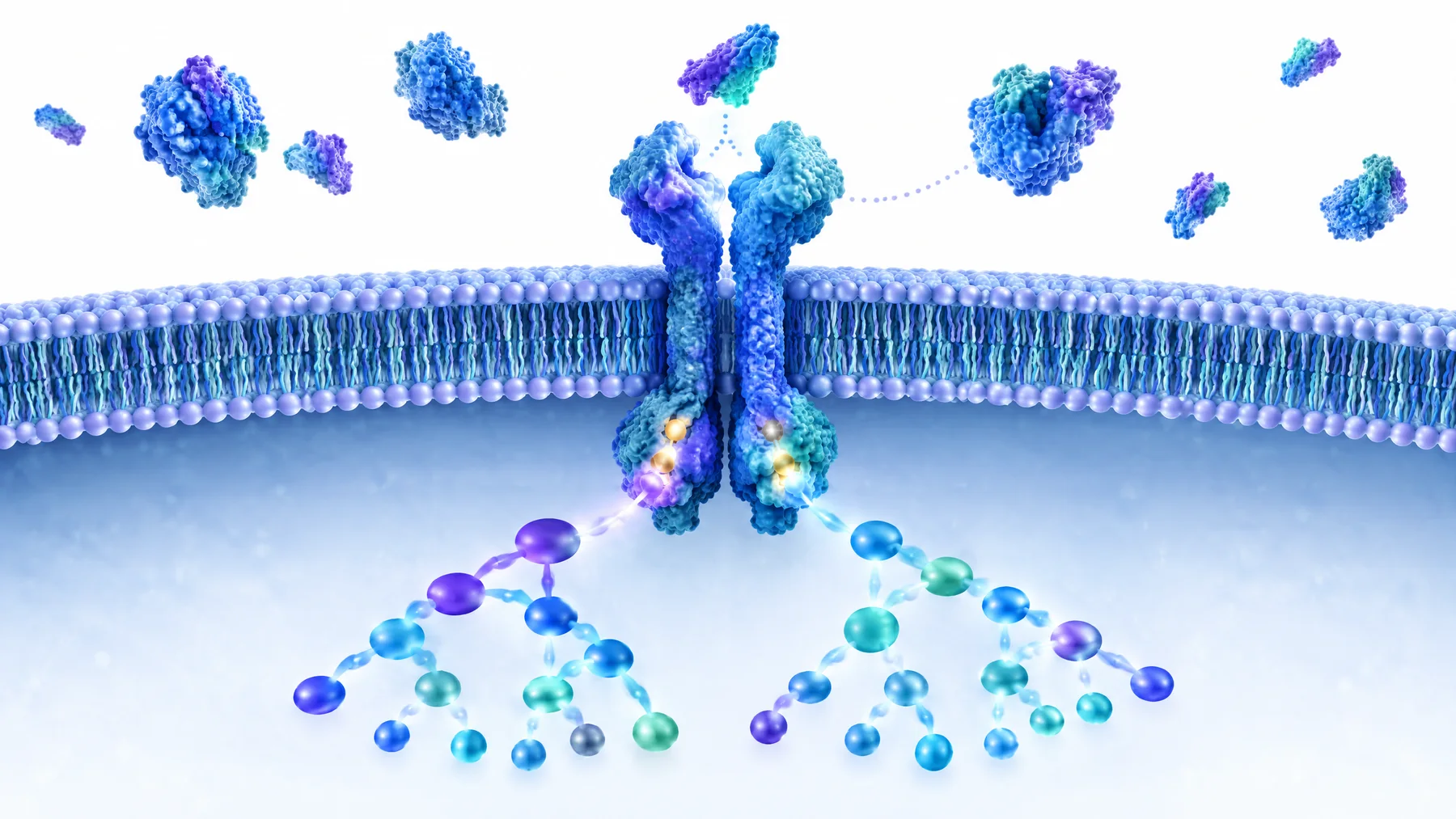
In the 2015 discovery study, MOTS-c was reported to act prominently in skeletal muscle. In cultured muscle cells and mouse experiments, the authors linked it to inhibition of the folate cycle and connected de novo purine synthesis, accumulation of the purine intermediate AICAR, and activation of AMPK, a cellular energy-sensing kinase. This is a mechanistic finding from experimental systems, not proof of a therapeutic pathway in patients. [1]
A later cell-based study reported that metabolic stress — glucose restriction, serum deprivation or an oxidant challenge — was followed by MOTS-c movement to the nucleus in HEK293 cells. The study found AMPK dependence for this stress-associated nuclear translocation and interactions with stress-response factors including NRF2. Those are useful hypotheses for mitonuclear communication, but HEK293 and HepG2 cell experiments cannot determine a clinical effect of an injected research peptide. [3]
3. What the metabolic mouse studies actually found
The foundational metabolic paper used male C57BL/6 mice for short metabolic studies and outbred male CD-1 mice for diet-induced obesity work. In high-fat-fed C57BL/6 mice, seven days of intraperitoneal MOTS-c was associated with higher whole-body insulin sensitivity and insulin-stimulated glucose disposal during clamp testing. In eight-week-old CD-1 mice fed a diet containing 60% of calories from fat, daily intraperitoneal treatment during an eight-week experiment was associated with less diet-induced weight gain, lower insulin, less hepatic lipid accumulation, and muscle AMPK/GLUT4 changes without a reported food-intake difference. [1]
These are controlled rodent outcomes, not human weight-loss evidence. The models were male mice with a specific high-fat diet, the treatment route was intraperitoneal, and the study sizes for several endpoints were small (for example, six to ten animals per group in figure captions). Differences in species, disease model, route and peptide handling mean the result cannot be converted into a human administration plan. [1]
4. Exercise and physical-capacity findings in mice
In a 2021 Nature Communications study, daily intraperitoneal MOTS-c improved treadmill performance in young 12-week-old male CD-1 mice and in high-fat-fed male C57BL/6J mice. The same paper reported improved treadmill outcomes in middle-aged and old C57BL/6N mice, and described increased physical capacity and healthspan measures when intermittent treatment was begun late in life. These are encouraging preclinical signals, but running time or distance in rodents is not a demonstration of improved athletic performance, healthy ageing or disease outcomes in people. [2]
The experimental context also matters. In young CD-1 mice, the paper compared small groups (five, five and six animals for the dose groups shown in one treadmill experiment); in old-mouse treadmill work it reported 19 controls and 18 treated animals. Such experiments can identify a biological effect worth testing further, but they do not supply human pharmacokinetics, long-term safety data or a clinically validated route. [2]
5. Human evidence: endogenous measurements, not treatment trials
The clearest direct human physiology result comes from ten sedentary healthy young men who completed high-intensity cycling intervals. Muscle MOTS-c increased relative to baseline after exercise, while circulating levels increased during and immediately after exercise and returned toward baseline after four hours. This repeated-measures observation supports the idea that endogenous MOTS-c responds to acute exercise; it does not show that taking MOTS-c reproduces exercise benefits. [2]
A separate observational study included 40 people undergoing coronary angiography and endothelial-function testing for recurrent angina without significant structural coronary lesions. The 20 participants classified with endothelial dysfunction had lower plasma MOTS-c than the 20 with normal endothelial function, and levels correlated with coronary endothelial measures. The study also found that adding MOTS-c to rat and renal-artery-stenosis mouse aortic rings improved acetylcholine responsiveness. Association in a selected clinical sample, plus an ex-vivo rodent finding, does not prove that low MOTS-c causes vascular disease or that peptide treatment benefits patients. [4]
A ClinicalTrials.gov keyword query currently returns studies that measure MOTS-c as a biomarker, including an exercise-program study in breast-cancer patients, rather than a study administering MOTS-c as the intervention. Registry searching is incomplete evidence of absence, but it reinforces the central reading of the published evidence: human research should not be mistaken for a proven MOTS-c treatment programme. [8]
6. Risks and the uncertainty that cannot be dosed away
There is no clinical trial-derived basis in the cited literature for a consumer dose, injection route, escalation scheme, dilution method, storage rule or combined “stack” involving MOTS-c. Human safety, pharmacokinetics, immunogenicity, interactions, contraindications and long-term outcomes remain insufficiently characterised for therapeutic use. A dose used in a mouse paper is an experimental condition, not a human instruction. [1] [2] [3] [4]
The TGA warns that unapproved peptide products have not been evaluated by it for safety, quality or effectiveness. It highlights uncertainties about manufacture, sterility, actual contents and labelling, as well as injection-related risks such as contamination, infection and local tissue damage. These regulator warnings apply to the product category and supply context; they should not be presented as a catalogue of adverse effects proven specifically for MOTS-c. [5]
7. Australian regulatory context
In Australia, peptide products are therapeutic goods under the Therapeutic Goods Act 1989. An approved therapeutic product is ordinarily included in the Australian Register of Therapeutic Goods (ARTG), whose records provide product, formulation, sponsor and, where available, Product Information and Consumer Medicine Information. No MOTS-c ARTG medicine entry or approved MOTS-c indication was identified in this review; readers should verify the ARTG directly for any claimed product. [5] [6]
“Research use only” is not a regulatory shortcut. The TGA states that this disclaimer alone does not change a peptide product’s regulatory status, permit importation, or remove advertising and supply obligations. Individual pathways such as compounding, the Personal Importation Scheme, Special Access Scheme or Authorised Prescriber pathway have specific legal conditions and do not turn an unapproved product into a generally approved medicine. [5]
8. Sport, related substances and a disciplined way to read claims
MOTS-c should not be conflated with other products marketed around energy or performance. It is a peptide; NAD+ is a coenzyme, and compounds such as MK-677 and SLU-PP-332 are small molecules. Similar marketing language does not make their biology, evidence base, risks or legal status interchangeable. The meaningful comparison for MOTS-c is between endogenous peptide measurement, preclinical synthetic-peptide experiments and an approved medicine — categories that currently remain distinct. [1] [2]
For athletes, the World Anti-Doping Agency Prohibited List explicitly names MOTS-c under S4.4.1 as an AMPK activator and metabolic modulator prohibited at all times. An anti-doping rule is not evidence of medical efficacy; it is nevertheless a material consequence for competitive sport. [7]
A useful reading rule is to ask four questions: Was the peptide administered, or merely measured? In which species and model? Was the result a biomarker, a functional endpoint or a clinical outcome? And is there an approved formulation with a regulator-reviewed label? Applied to MOTS-c, this separates intriguing mitochondrial biology from claims of established treatment, fat loss, anti-ageing or performance enhancement. [1] [2] [4] [5] [6]
Questions readers ask
Is MOTS-c an approved medicine in Australia?
No approved MOTS-c medicine, indication or regulator-reviewed product label was identified in this review of ARTG resources. The ARTG is the TGA register used to search therapeutic products that can be supplied in Australia; an online research-peptide listing is not evidence of ARTG inclusion. [5] [6]
Has MOTS-c been shown to cause weight loss or improve diabetes in humans?
No. Mouse studies reported protection against high-fat-diet-associated obesity and insulin resistance in specified models, but the cited human work measured endogenous MOTS-c during exercise or associated circulating levels with coronary endothelial function. It did not administer MOTS-c to treat obesity or diabetes in people. [1] [2] [4]
Does exercise increase MOTS-c?
In one acute study of ten sedentary healthy young men, endogenous MOTS-c increased in skeletal muscle after interval cycling and increased in circulation during and after the session before returning toward baseline after four hours. This is a small, short-term physiological observation, not evidence that any supplement or injection is equivalent to exercise. [2]
Can a mouse-paper dose be used to work out a human MOTS-c dose?
No. The cited mouse experiments used particular strains, diets, endpoints and intraperitoneal research administration. They do not establish human pharmacokinetics, safety, route, dose, schedule, preparation or storage. [1] [2]
Is MOTS-c relevant to anti-doping rules?
Yes. WADA explicitly lists MOTS-c among AMPK activators in the S4.4.1 metabolic-modulator category, prohibited at all times. Athletes should seek sport-specific anti-doping advice rather than infer permissibility from a product label. [7]
What remains uncertain
The strongest efficacy findings are in cells, ex-vivo vessels and mice. Species, strain, sex, diet, endpoint and intraperitoneal research-administration differences prevent direct translation to people. [1] [2] [3] [4]
Human evidence is small and non-therapeutic: the acute exercise study included 10 young men, and the coronary study was an observational comparison of 40 selected patients. Neither establishes treatment efficacy, dose or safety. [2] [4]
ARTG status should be checked live because registers can change. This review found no approved MOTS-c medicine entry or indication, but the definitive product-level check is the ARTG itself. [6]
TGA warnings about unapproved peptide products are category and supply-chain warnings; they do not, by themselves, establish a MOTS-c-specific adverse-event rate. [5]
References and further reading
- [1] The mitochondrial-derived peptide MOTS-c promotes metabolic homeostasis and reduces obesity and insulin resistance. Mechanistic cell work plus controlled mouse metabolic studies, including C57BL/6 and CD-1 high-fat-diet models, glucose tolerance and clamp experiments.
- [2] MOTS-c is an exercise-induced mitochondrial-encoded regulator of age-dependent physical decline and muscle homeostasis. Within-person acute exercise biomarker study in 10 sedentary healthy young men, with parallel controlled experiments in young, middle-aged and old mice and cell studies.
- [3] The Mitochondrial-Encoded Peptide MOTS-c Translocates to the Nucleus to Regulate Nuclear Gene Expression in Response to Metabolic Stress. Cell-line mechanistic study using HEK293 and HepG2-related molecular, imaging, chromatin and gene-expression experiments under metabolic stress.
- [4] Downregulation of circulating MOTS-c levels in patients with coronary endothelial dysfunction. Cross-sectional clinical comparison of 40 angiography patients (20 with endothelial dysfunction and 20 with normal endothelial function), alongside rat and mouse aortic-ring experiments.
- [5] Understanding your responsibilities when importing, compounding and supplying unapproved peptide products. Therapeutic Goods Administration regulatory and safety guidance.
- [6] Australian Register of Therapeutic Goods (ARTG). Official TGA public register/search resource for medicines, devices and biologicals.
- [7] World Anti-Doping Agency Prohibited List. WADA prohibited-substance classification.
- [8] ClinicalTrials.gov API keyword search: MOTS-c. Registry keyword search; returned records include studies in which MOTS-c is measured as a biomarker, such as NCT04013568, rather than the intervention.