What is MK-677 (ibutamoren)?
MK-677, also called ibutamoren (and studied as ibutamoren mesylate), is an orally bioavailable synthetic small molecule and non-peptide growth-hormone secretagogue—not a peptide, protein hormone, topical ingredient, or validated injectable product. It is a ghrelin-receptor (GHSR) agonist; the free base is reported as C27H36N4O5S (molecular weight 528.7 g/mol). (Sources 1, 8)
MK-677/ibutamoren is a research-stage, non-peptide small-molecule ghrelin-receptor agonist. Human trials demonstrate growth-hormone/IGF-1 target engagement and some body-composition changes, but have not established a durable clinical benefit; a large Alzheimer disease trial was negative despite sustained IGF-1 elevation. Australia’s ARTG search returns no ibutamoren product, while the current Poisons Standard lists it in Schedule 4 and Appendix D controls. (Sources 1, 2, 5, 8-12)
Identity: MK-677 is not a peptide
MK-677 is the development code commonly used for ibutamoren. Chemical records describe ibutamoren as a small, orally bioavailable, non-peptide growth-hormone secretagogue (GHS), rather than an amino-acid peptide or growth hormone itself. In published clinical work, the mesylate salt is often named. That distinction matters: the evidence concerns a synthetic receptor agonist, not replacement with prescribed recombinant growth hormone. (Sources 2, 4, 8) [2] [4] [8]
The name is also seen as MK-0677, MK677, L-163,191 and, in Australian sport information, LUM-201 or Nutrobal. Names on a supplier page do not establish a medicine’s registration, formulation, quality or suitable route. The studies summarised here evaluated oral investigational preparations; they do not validate consumer ‘research’ vials, injections, combinations or storage practices. (Sources 2-5, 8, 9, 11) [2] [3] [4] [5] [8] [9] [11]
Molecular pathway: a ghrelin-receptor agonist
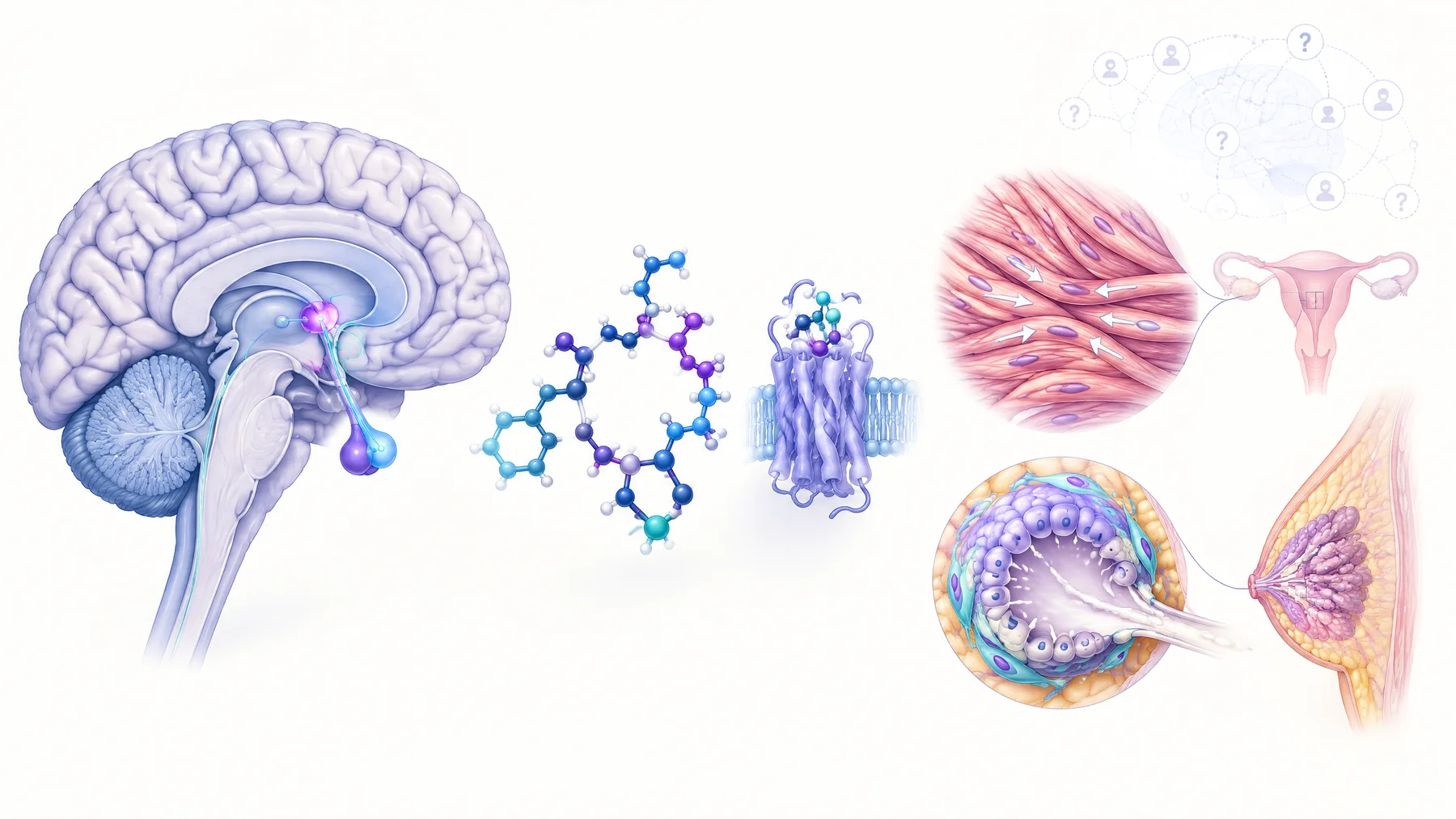
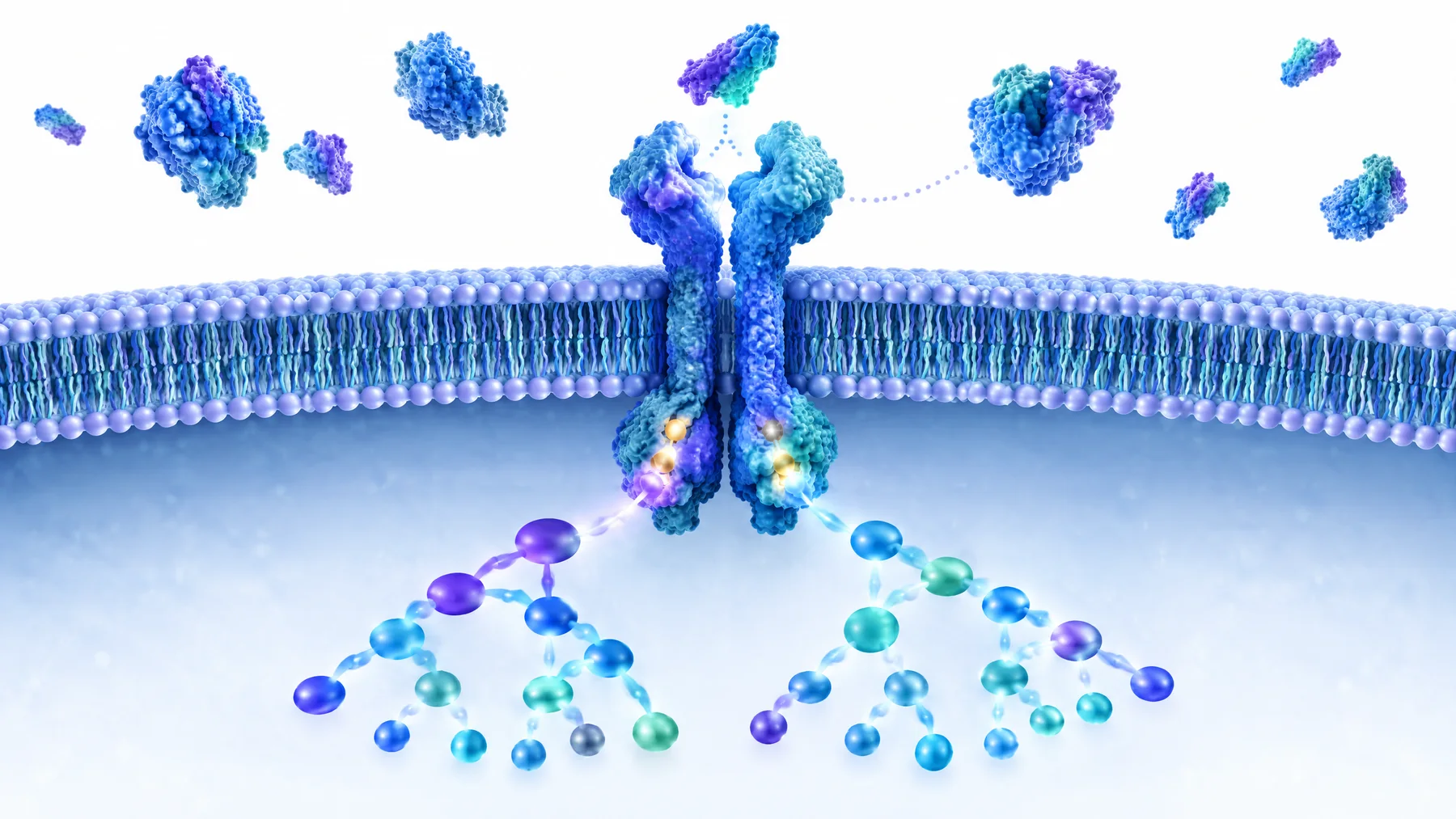
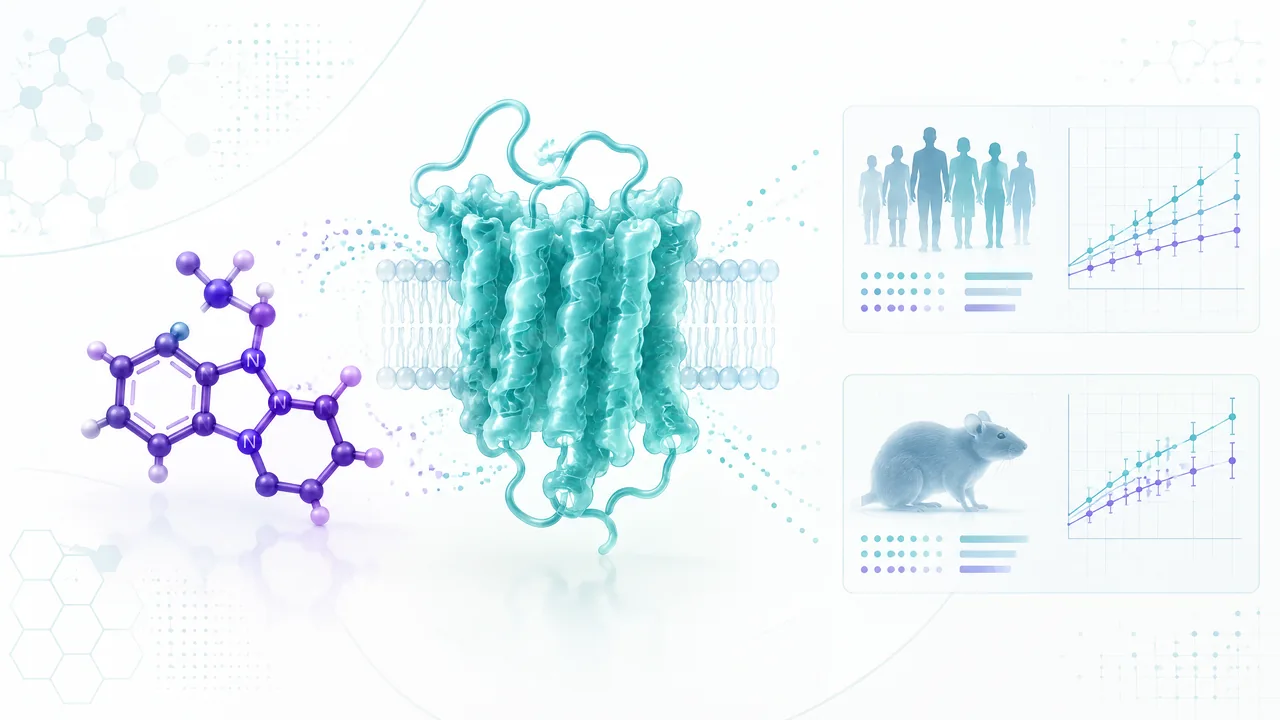
Ghrelin is an endogenous appetite-related hormone that activates the growth-hormone secretagogue receptor (GHSR). A cryo-electron microscopy and mutagenesis study resolved ibutamoren bound to the human GHSR–Gi signalling complex and measured agonist-induced receptor signalling. This is direct molecular evidence for the target; it is not evidence that every downstream health claim is clinically true. (Source 1) [1]
In people, intervention studies consistently found increased growth hormone (GH) and insulin-like growth factor-1 (IGF-1), supporting biological target engagement. For example, a short crossover trial in eight calorie-restricted healthy adults improved nitrogen balance while raising GH and IGF-1, and a trial in growth-hormone-deficient children produced short-term rises in GH, IGF-1 and IGF-binding protein-3 in some participants. These biomarker results do not by themselves demonstrate improved strength, growth, cognition or long-term safety. (Sources 3, 4) [3] [4]
What controlled human studies found
The most informative body-composition study was a two-year, double-blind, placebo-controlled modified-crossover trial in 65 healthy adults aged 60–81 years. Its first-year comparison found higher GH and IGF-1, a mean 1.1 kg increase in fat-free mass with MK-677 versus a 0.5 kg decline with placebo, and higher body weight. It did not find a significant reduction in abdominal visceral fat or total fat mass; limb fat increased more with MK-677. The published dose is a study detail, not a dosing recommendation. (Source 2) [2]
Crucially, the fat-free-mass change in that selected healthy older cohort did not translate into measured improvements in strength, function or quality of life. The investigators described the trial as proof-of-concept, noting that its size and duration were not sufficient to assess functional endpoints, that men and women were combined, and that the cohort was small and healthy. ‘Lean mass’ should therefore not be silently re-labelled as muscle performance or healthy ageing. (Source 2) [2]
Other human models answer narrower questions. In eight healthy adults aged 24–39 undergoing short caloric restriction, MK-677 improved seven-day nitrogen balance compared with placebo; that is a short catabolism model, not proof of treatment for disease or athletic performance. In a sleep experiment, eight young and six older healthy people had short crossover periods, with changes in sleep-stage measures reported. Both studies were very small and brief. (Sources 3, 7) [3] [7]
Disease and preclinical models set useful limits
A much larger multicentre, double-blind Alzheimer disease trial provides an important counterexample to biomarker-driven claims. Among 563 people with mild-to-moderate Alzheimer disease randomised for 12 months, serum IGF-1 increased by 60.1% at six weeks and 72.9% at 12 months with MK-677, yet there were no significant treatment-group differences in the prespecified cognition, activities-of-daily-living or global clinical measures. Target engagement was therefore demonstrated, but slowing Alzheimer disease was not. (Source 5) [5]
Animal findings should remain in their model. In a rat experiment, oral MK-677 initially increased peak GH 1.8-fold, but six weeks of 4 mg/kg did not increase body growth or serum IGF-1; the GH response was then abolished. The authors observed higher hypothalamic somatostatin expression and proposed this as a possible explanation for desensitisation. With only four rats per treatment group for several measures, this is a hypothesis-generating rat result, not a human dosing or efficacy rule. (Source 6) [6]
Risks and unresolved safety questions
In the healthy-older-adult trial, frequent reported effects included increased appetite that subsided over months, transient mild lower-leg oedema and muscle pain. Fasting glucose rose by an average 0.3 mmol/L (5 mg/dL), insulin sensitivity declined, and cortisol rose modestly; bone-mineral-density changes were interpreted as consistent with increased bone remodelling. These findings are observations in a small, screened research cohort, not a complete safety profile. (Source 2) [2]
Australian sport authorities caution that the extent of adverse effects remains uncertain and flag concerns involving congestive heart failure, insulin sensitivity, glucose tolerance and bone mineral density from clinical safety experience. The negative Alzheimer trial and the lack of long-term functional trials reinforce the distinction between a hormonal response and a favourable benefit–risk balance. People with glucose, cardiovascular, cancer, endocrine or other complex health issues should not infer safety from online marketing or from a single trial population. (Sources 2, 5, 11) [2] [5] [11]
Australian regulatory and sport context
A current Therapeutic Goods Administration (TGA) Australian Register of Therapeutic Goods (ARTG) search for ‘ibutamoren’ returns no matching results. That means this article should not describe MK-677 as a TGA-approved medicine or imply there is an approved Australian patient label, standard indication, dose-escalation schedule or universal administration protocol. A supplier’s bottle, capsule or research vial is not evidence of ARTG registration. (Source 9) [9]
The current Poisons Standard lists ibutamoren as a Schedule 4 substance and marks it for Appendix D. Appendix D clause 5 is headed ‘Poisons for which possession without authority is illegal’; the Standard is implemented through relevant state and territory legislation, so applicable requirements should be checked with the appropriate jurisdiction rather than assumed from an online seller. Sport Integrity Australia also states that ibutamoren is prohibited at all times under WADA category S2.2.4. (Sources 10-12) [10] [11] [12]
Comparison with related substances
MK-677 can resemble a ‘peptide’ in marketing because it works through the ghrelin/GHSR system and affects GH release, but its chemical class is different. Ghrelin is the endogenous peptide ligand; ibutamoren is a synthetic non-peptide small-molecule agonist. It also differs from prescribed GH: it is designed to stimulate endogenous GH secretion rather than supply recombinant GH itself. These differences do not establish superiority, interchangeability or a shared safety profile. (Sources 1, 4, 8) [1] [4] [8]
The evidence also argues against treating ‘GH secretagogue’ as a benefit label. In different models, MK-677 increased GH/IGF-1, altered nitrogen balance or fat-free mass, affected sleep-stage measures, failed to improve Alzheimer outcomes, and did not promote growth after prolonged rat exposure. A receptor class or biomarker cannot replace indication-specific trials that measure outcomes meaningful to the people who might use a medicine. (Sources 2-7) [2] [3] [4] [5] [6] [7]
How to read MK-677 claims responsibly
First ask who was studied, for how long and what outcome was measured. A seven-day calorie-restriction study is not a sports-performance trial; a short study in 18 prepubertal children with idiopathic GH deficiency is not evidence for healthy adults; and a rat somatic-growth experiment cannot establish a human protocol. The strongest claims should match the actual population and endpoint, not merely the fact that GH or IGF-1 changed. (Sources 3, 4, 6) [3] [4] [6]
Second, separate observation from recommendation. The 25 mg once-daily regimens reported in several legacy trials were controlled research protocols with defined eligibility, monitoring and endpoints—not an approved label or self-administration schedule. No validated combined protocol with other substances follows from these studies. The most defensible summary is that ibutamoren has human pharmacology data but unresolved long-term clinical utility, safety and legal status in Australia. (Sources 2-5, 9-12) [2] [3] [4] [5] [9] [10] [11] [12]
Questions readers ask
Is MK-677 a peptide?
No. MK-677 (ibutamoren) is a synthetic small-molecule, non-peptide growth-hormone secretagogue that acts as a ghrelin-receptor agonist. It should not be confused with ghrelin, recombinant growth hormone or a peptide injection. (Sources 1, 8) [1] [8]
Is MK-677 an approved medicine in Australia?
The TGA ARTG search for ibutamoren returns no matching results, so it should not be presented as an ARTG-approved Australian medicine. The current Poisons Standard nevertheless lists ibutamoren in Schedule 4 and Appendix D; legal controls are implemented in state and territory law. (Sources 9, 10, 12) [9] [10] [12]
Does a rise in IGF-1 prove that MK-677 improves health or performance?
No. MK-677 raised IGF-1 in several trials, but healthy older adults did not gain measured strength or functional improvement in the main body-composition study, and the 563-person Alzheimer disease trial found no slowing of clinical progression despite sustained IGF-1 elevation. (Sources 2, 5) [2] [5]
Can a study dose be used as a personal schedule?
No. Published doses and intervals describe monitored investigational protocols in specific populations; they are not an approved Australian label or a validated self-administration, injection, storage or combination protocol. (Sources 2-5, 9) [2] [3] [4] [5] [9]
Is MK-677 allowed in tested sport?
Sport Integrity Australia states that ibutamoren is prohibited at all times under the WADA Prohibited List, category S2.2.4. Athletes should use the official current anti-doping resources for eligibility questions. (Source 11) [11]
What remains uncertain
This record is an educational synthesis, not a prescribing, compounding, anti-doping or legal opinion. The human evidence spans small and heterogeneous populations, short experimental studies and one larger negative disease trial; it provides no validated self-administration, injection, storage, cycling or combination protocol. The ARTG and Poisons Standard were checked against the cited official pages, but state/territory implementation and anti-doping lists can change and should be verified at the time of a decision. (Sources 2-7, 9-12)
References and further reading
- [1] Structural basis of human ghrelin receptor signaling by ghrelin and the synthetic agonist ibutamoren. Cryo-electron microscopy of human GHSR–Gi complexes with ghrelin or ibutamoren, supported by receptor mutagenesis and calcium-mobilisation signalling assays.
- [2] Effects of an Oral Ghrelin Mimetic on Body Composition and Clinical Outcomes in Healthy Older Adults. Two-year double-blind, randomised, placebo-controlled modified-crossover trial of 65 healthy adults aged 60–81; primary one-year endpoints were fat-free mass and abdominal visceral fat.
- [3] MK-677, an orally active growth hormone secretagogue, reverses diet-induced catabolism. Double-blind, randomised, placebo-controlled two-period crossover study in eight healthy adults aged 24–39 during two 14-day caloric-restriction periods.
- [4] Effects of oral administration of ibutamoren mesylate, a nonpeptide growth hormone secretagogue, on the growth hormone-insulin-like growth factor I axis in growth hormone-deficient children. Short-term, multicentre controlled study in 18 prepubertal children with idiopathic growth-hormone deficiency; hormonal outcomes were assessed after 7–8 days of exposure.
- [5] Growth hormone secretagogue MK-677: no clinical effect on AD progression in a randomized trial. Double-blind, multicentre randomised placebo-controlled trial of 563 people with mild-to-moderate Alzheimer disease for 12 months.
- [6] Effect of the Orally Active Growth Hormone Secretagogue MK-677 on Somatic Growth in Rats. Rat experiment measuring acute GH response and six-week somatic, endocrine and hypothalamic/pituitary measures after oral MK-677; several endpoints used n=4 per treatment group.
- [7] Prolonged oral treatment with MK-677, a novel growth hormone secretagogue, improves sleep quality in man. Double-blind placebo-controlled crossover sleep study in eight healthy young adults and short treatment-period study in six healthy older adults.
- [8] Ibutamoren | C27H36N4O5S | CID 178024. Curated chemical identity and descriptor record.
- [9] Australian Register of Therapeutic Goods (ARTG): search for ibutamoren. Current public ARTG search result.
- [10] Therapeutic Goods (Poisons Standard—October 2026) Instrument 2026. Current Commonwealth Poisons Standard, including Schedule 4 and Appendix D controls.
- [11] Ibutamoren (MK 677) Information. Regulatory and anti-doping educational record that links to the ARTG and WADA Prohibited List.
- [12] The Poisons Standard (the SUSMP). TGA explanation of the current SUSMP, its legislative status and relationship to state and territory legislation.