What is GHRP-6 (growth hormone-releasing peptide-6)?
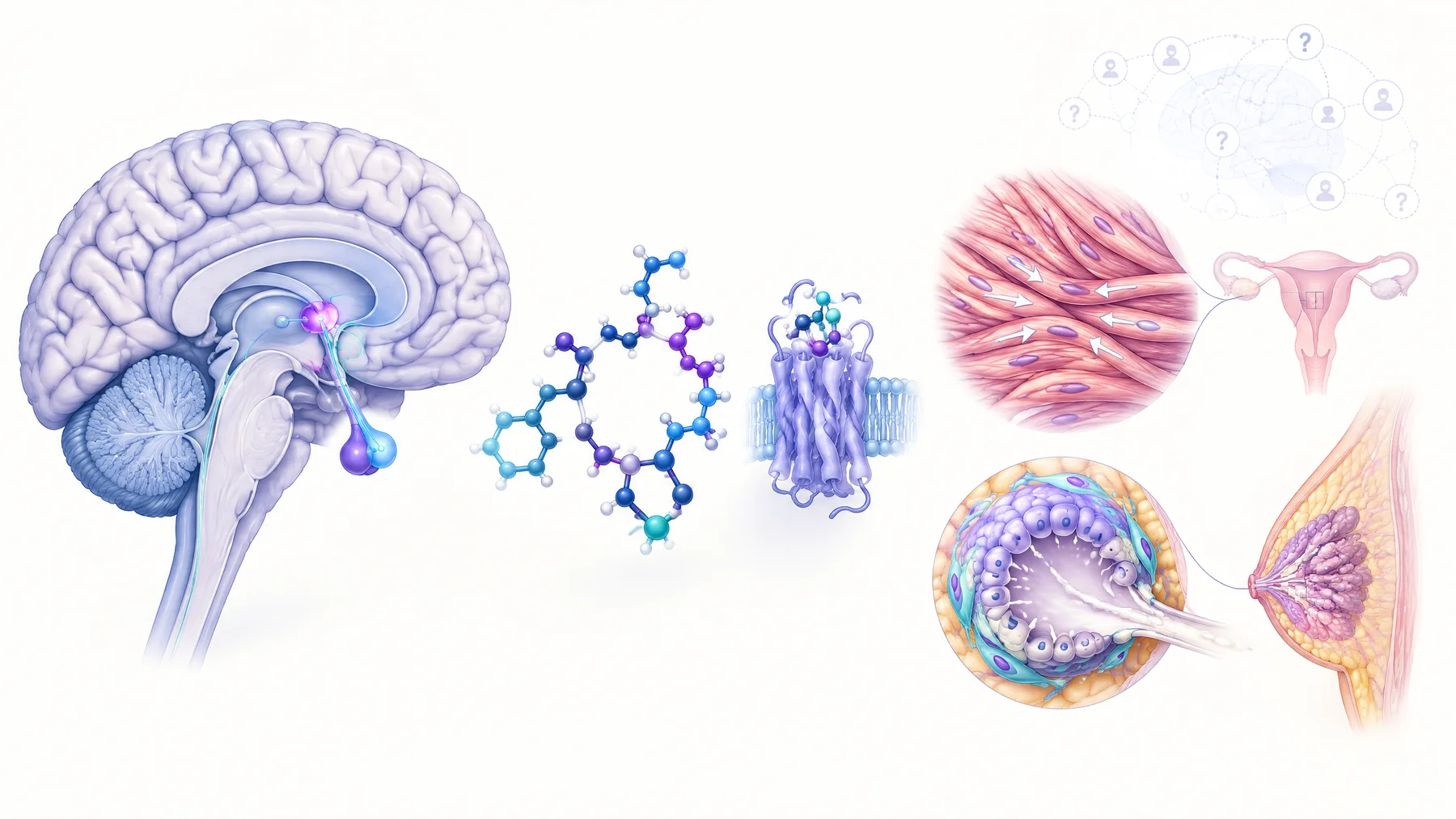
GHRP-6 is a synthetic six-amino-acid peptide (His-D-Trp-Ala-Trp-D-Phe-Lys-NH2; molecular weight 872.44 Da), not growth hormone itself. It is a growth-hormone secretagogue: an experimental substance designed to provoke release of endogenous growth hormone (GH). It is best classified as an investigational human candidate with substantial endocrine pharmacology and preclinical literature, rather than an approved consumer medicine or a standardised ‘research vial’ formulation.
GHRP-6 is a real synthetic peptide with reproducible acute GH-secretagogue activity in controlled research. That narrow finding is not evidence that self-administered products improve muscle, recovery, ageing, appetite, sleep, or disease outcomes. The human literature located here consists mainly of physiology experiments and a nine-person single-dose pharmacokinetic study, not long-term treatment trials. In Australia, TGA scheduling and unapproved-goods controls make online peptide marketing a regulatory as well as a quality-and-safety issue.
What GHRP-6 is — and what it is not
GHRP-6 means growth hormone-releasing peptide-6, also called growth hormone-releasing hexapeptide. It is a synthetic hexapeptide, with the sequence His-D-Trp-Ala-Trp-D-Phe-Lys-NH2, rather than a naturally occurring supply of GH. In the 2013 human pharmacokinetic paper, its reported molecular weight was 872.44 Da. [2]
Calling it a ‘GH peptide’ can obscure an important distinction: GHRP-6 does not replace GH. It is a secretagogue, meaning it can signal within the hypothalamic–pituitary system and alter GH release. That makes its acute endocrine effect biologically plausible, but does not establish a therapeutic benefit for any particular goal. [1] [5]
A supplier’s lyophilised vial is not an approved formulation merely because the ingredient name is printed on it. An approved medicine has a defined product, manufacturer and regulatory record; a research-only or online product may not have been assessed for identity, sterility, potency, quality or clinical effectiveness. [7] [8] [13]
Molecular pathway: a GH secretagogue, not a simple on–off switch
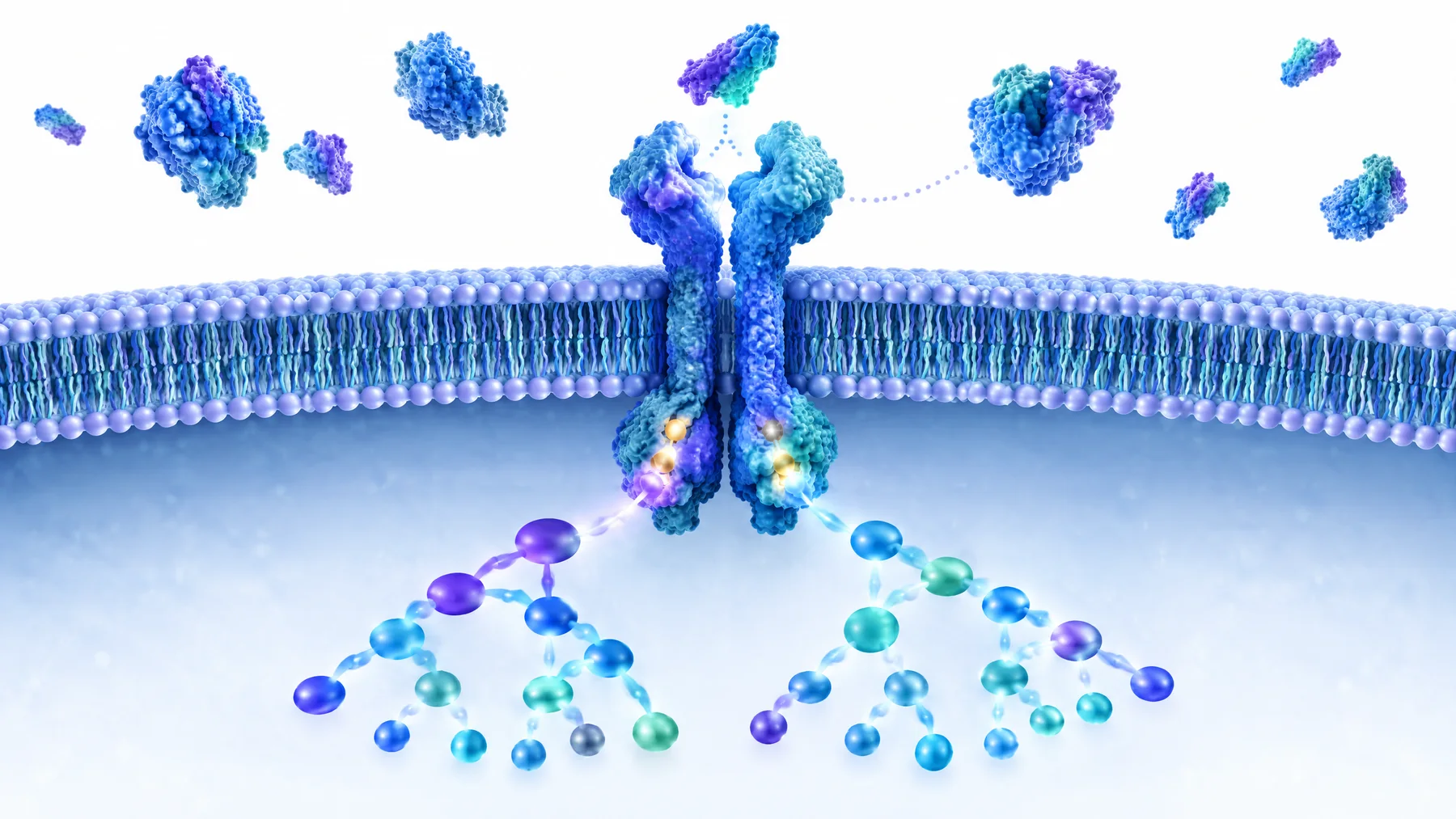
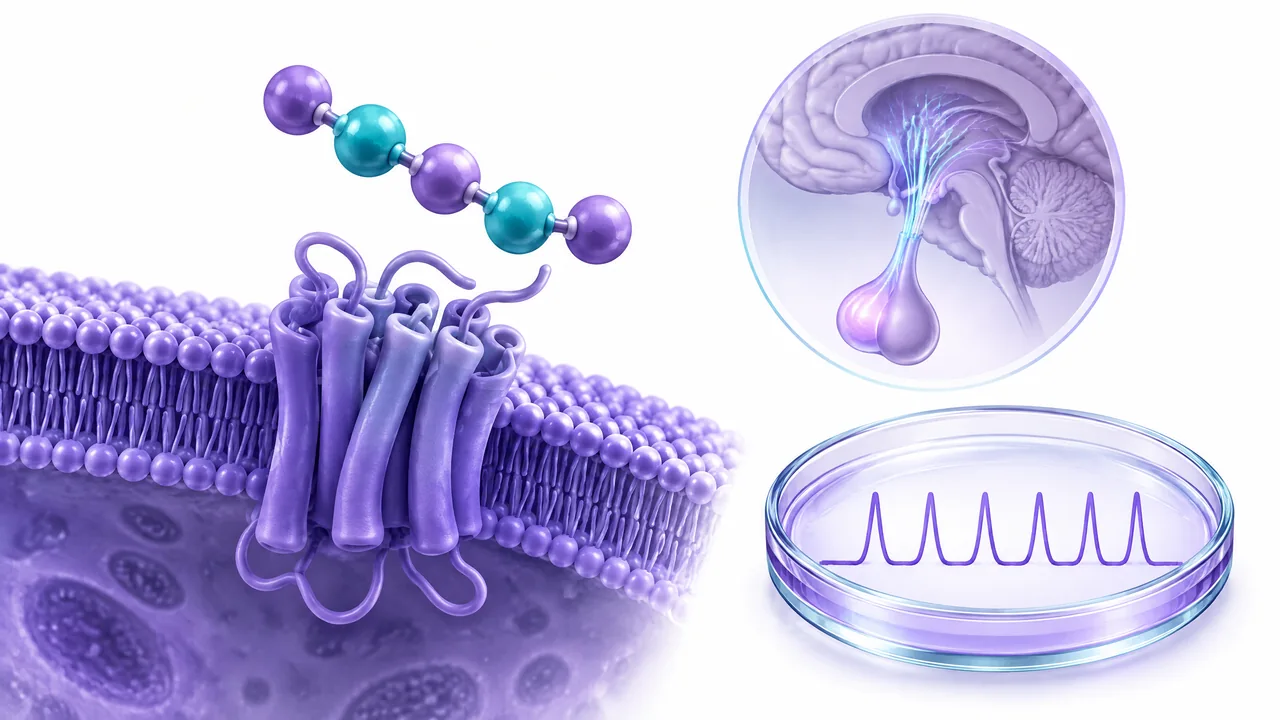
The growth-hormone-secretagogue receptor (GHS-R) was cloned from pituitary and hypothalamic tissue in a foundational study. The authors showed that this G-protein-coupled receptor was the target of growth-hormone secretagogues and described a pathway involved in pulsatile GH release. [5]
Human physiology indicates that the response is not simply a direct pituitary switch. In a study of nine healthy men, blocking endogenous GH-releasing hormone (GHRH) before a GHRP-6 challenge greatly reduced the GH response. The experiment supports a role for endogenous hypothalamic GHRH in most of the acute response under those test conditions. [3]
This dependence matters when interpreting claims of predictable effects. Endocrine responses can vary with the underlying hypothalamic–pituitary state and with the study population; a response in a supervised challenge study is not a transferable treatment protocol. [1] [3]
What controlled human studies actually found
A 1995 study compared 12 people with hypothalamopituitary disconnection with 11 matched controls across separate intravenous GHRH, GHRP-6 and combined challenges. In controls, the GH area under the curve after GHRP-6 was greater than after GHRH, and the combined challenge was greater than the arithmetic sum of separate responses. In the disconnection group, the GHRP-6 response was markedly reduced while the GHRH response was similar to controls. This is evidence about acute GH physiology in a small, specialised clinical model, not efficacy for body composition or recovery. [1]
The 1998 antagonist study is a second small human physiology experiment. Nine healthy men received a GHRH antagonist or saline before an intravenous GHRP-6 challenge on separate occasions. The antagonist substantially lowered both peak GH increase and GH area under the curve, supporting the conclusion that endogenous GHRH was required for most of the acute GHRP-6-associated GH response in these participants. [3]
These studies demonstrate a hormone response, not a clinically validated outcome. They were brief, used controlled research challenges, and did not test long-term safety, athletic performance, fat loss, injury healing, sleep, or healthy ageing. [1] [3]
Pharmacokinetics: useful data with narrow limits
A phase I pharmacokinetic study measured plasma GHRP-6 after a single intravenous bolus in nine healthy male volunteers at three research dose levels. Using LC–MS, the investigators fitted a bi-exponential disposition model and reported mean distribution and elimination half-lives of 7.6 ± 1.9 minutes and 2.5 ± 1.1 hours, respectively. [2]
That study was designed to characterise drug concentration over time, not to set a treatment regimen. Its sample was very small, male-only, single-dose and intravenous; four participants also showed atypical concentration spikes during the elimination phase. It cannot establish a universal route, interval, dilution, storage method, dose, or long-term safety profile. [2]
What animal and laboratory findings can — and cannot — say
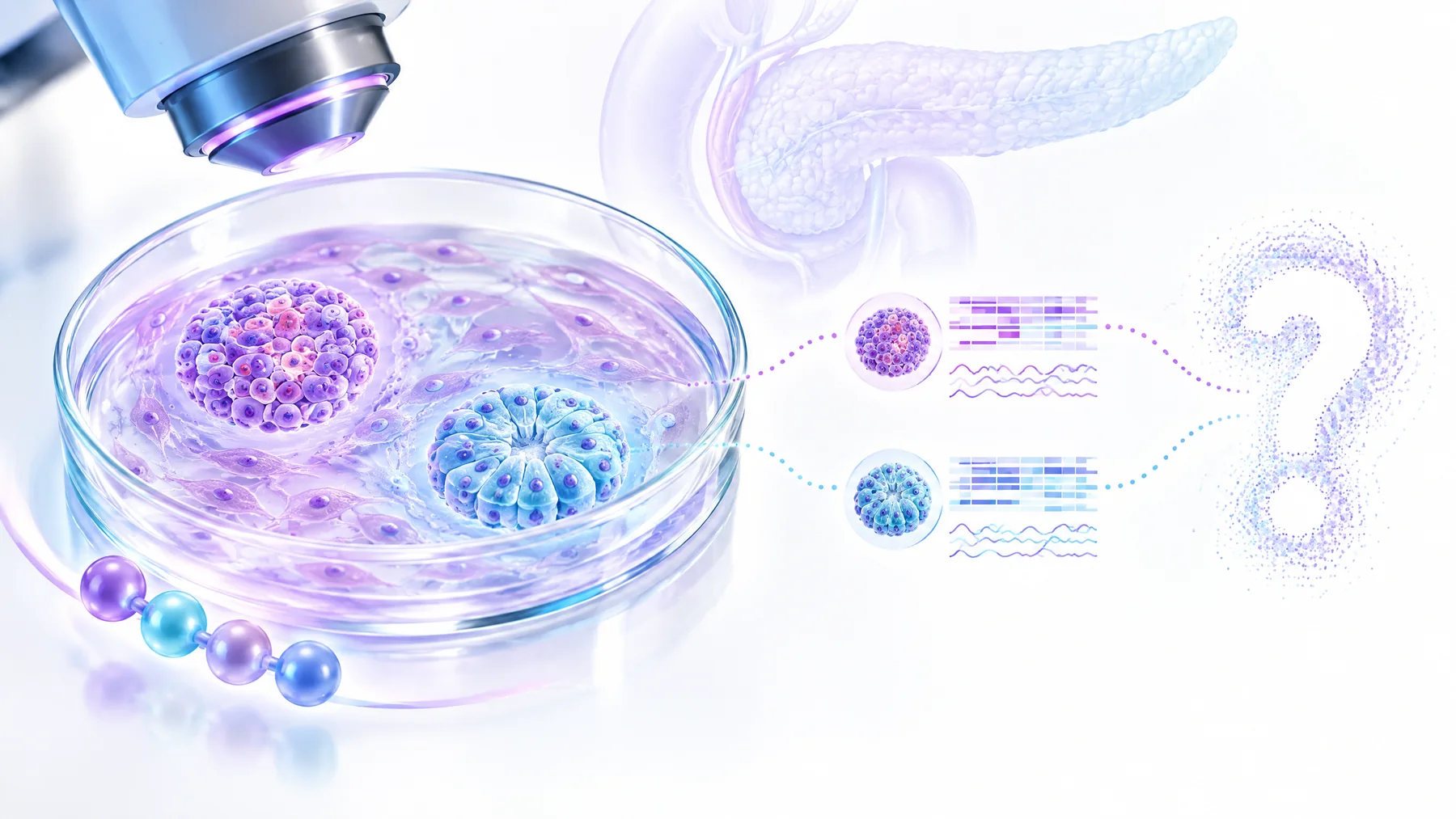
In pentobarbital-anaesthetised Sprague–Dawley rats, GHRP-6 produced a GH response after surgical hypothalamic ablation and in rats carrying transplanted pituitaries. The authors interpreted this as evidence of a direct stimulatory pituitary component in that animal preparation. Responses were also altered by sex-steroid treatment, dexamethasone, circulating free fatty acids and bombesin. [4]
A separate goldfish experiment found that intraperitoneal GHRP-6 increased food intake and decreased locomotor activity under the tested conditions; capsaicin pretreatment blocked those effects. The work suggests an appetite-related signalling effect in that species, not a proven appetite or weight-management treatment in people. [11]
Animal models are valuable for locating pathways and generating hypotheses, but their anaesthesia, surgery, receptor biology, doses, outcome measures and disease context differ from real-world human use. Claims of cardiac, gut, tissue-repair or metabolic benefit should therefore not be presented as established clinical effects without dedicated human trials. [4] [11]
Risks and the large unanswered questions
The evidence base does not provide the kind of long-term, adequately powered clinical safety data needed to support routine self-administration. Small acute studies are not designed to find uncommon harms, delayed endocrine consequences, interactions, or risks in people with pituitary, metabolic, cardiovascular, pregnancy-related, cancer or other health conditions. [1] [2] [3]
The TGA scheduling decision cited limited information on risks and benefits under appropriate medical supervision, potential effects associated with excess GH signalling, evidence of misuse, and additional risks from injected products. These are regulatory risk considerations, not a quantified GHRP-6 adverse-event rate. [6]
Australia’s health authorities have separately reported serious adverse effects associated with unapproved peptide products as a category, including liver injury, severe allergic reactions and inflammatory complications. The statement does not attribute those outcomes specifically to GHRP-6; its relevance here is that an unapproved product’s contents and quality may be uncertain. [10]
Australian regulatory context
The TGA’s March 2015 final scheduling decision listed GHRP-6 in Schedule 4 and Appendix D, Item 5, alongside other growth-hormone secretagogues and related peptides. The decision recorded concerns about limited supervised-use data, injection-related risks and misuse. State and territory medicines-and-poisons laws implement scheduling controls, so legal requirements should be checked locally rather than inferred from an online listing. [6] [9]
The ARTG is the TGA’s public database for therapeutic goods that can be legally supplied in Australia. The TGA explains that goods outside the ARTG have not been assessed by it for safety, quality or effectiveness, although defined practitioner, clinical-trial and other pathways can apply in specific circumstances. Those pathways are not evidence of product approval. [7] [8]
In a 2026 compliance release, the TGA alleged unlawful advertising of prescription-only peptide goods including GHRP-6 and stated that many peptides supplied or imported in Australia are unapproved. The release concerns allegations, not a finding that every product or claim is unlawful, but it is a clear reason to separate regulatory records from marketing claims. [13]
How to compare and read GHRP-6 claims
GHRP-6 should not be confused with GHRH or with prescribed recombinant GH. GHRH is a hypothalamic hormone signal, while GHRP-6 is a synthetic secretagogue; the controlled studies showed that GHRP-6 and GHRH can interact, rather than establishing that either is interchangeable with GH treatment. [1] [3]
It is also not correct to treat every ‘peptide’ as the same kind of substance. Related secretagogues such as GHRP-2, hexarelin and ipamorelin are separate compounds. A result for one compound, route, formulation, species or combined intervention is not automatically a result for GHRP-6 alone. [6]
A careful reader asks: Was the study in humans? How many people were studied? Was the endpoint a hormone concentration or a health outcome? Was the product controlled and identified? And was the research single-dose, short-term, or long-term? For GHRP-6, the strongest directly demonstrated human finding is acute GH secretion under supervised experimental conditions, not durable clinical benefit. [1] [2] [3]
Questions readers ask
Is GHRP-6 an approved medicine in Australia?
No approved Australian GHRP-6 formulation or product information was identified in the public ARTG material checked for this record. The ARTG is the public database for therapeutic goods that may legally be supplied, while products outside it have not been assessed by the TGA for safety, quality or effectiveness. A product sold as ‘research use’ is not an approved medicine. [7] [8] [13]
Does GHRP-6 increase growth hormone in people?
Small, controlled human challenge studies found acute increases in GH after GHRP-6. The response was strongly reduced when endogenous GHRH was blocked and in people with hypothalamopituitary disconnection, showing that the system is physiologically dependent and context-specific. These findings do not prove long-term health or performance benefits. [1] [3]
Does a research study provide a dosing, mixing or storage protocol?
No. The nine-person pharmacokinetic study used one intravenous research exposure and describes measured concentrations over time. It was not a clinical prescribing study and cannot validate a self-administration schedule, product dilution, injection route, storage method or combination protocol. [2]
Is GHRP-6 the same as ghrelin?
No. GHRP-6 is synthetic. Ghrelin is an endogenous ligand of the growth-hormone-secretagogue receptor; in a goldfish model, GHRP-6 activated one receptor subtype and produced ghrelin-like behavioural effects. That species-specific observation does not make GHRP-6 identical to ghrelin or establish the same effect in humans. [11]
Do animal findings prove that GHRP-6 heals tissues or treats disease?
No. Rat, fish and laboratory studies can support mechanistic hypotheses, but they do not replace controlled clinical trials of a defined human condition and outcome. The human papers located for this record chiefly evaluate endocrine challenge physiology and pharmacokinetics. [1] [2] [4] [11]
What remains uncertain
The direct human evidence located is small, old and largely confined to acute intravenous endocrine challenges or pharmacokinetics; the pharmacokinetic study enrolled only nine healthy men. Neither it nor the physiology studies establish long-term safety, an approved indication, patient-important efficacy, a self-administration regimen, or the quality of supplier vials. Animal results, including rat and goldfish work, are model-specific and cannot be translated into human treatment claims. Australian regulatory status and ARTG entries can change, and state or territory law adds controls beyond the national scheduling record; readers should use current official TGA and local medicines-and-poisons sources.
References and further reading
- [1] Blocked growth hormone-releasing peptide (GHRP-6)-induced GH secretion and absence of the synergic action of GHRP-6 plus GH-releasing hormone in patients with hypothalamopituitary disconnection: evidence that GHRP-6 main action is exerted at the hypothalamic level. Twelve people with hypothalamopituitary disconnection and 11 matched controls underwent separate intravenous GHRH, GHRP-6, and combined challenges; GH area under the curve was measured.
- [2] Pharmacokinetic study of Growth Hormone-Releasing Peptide 6 (GHRP-6) in nine male healthy volunteers. Nine healthy male volunteers received a single intravenous GHRP-6 bolus at one of three research dose levels; plasma concentrations were quantified by LC–MS.
- [3] Growth Hormone (GH)-Releasing Peptide-6 Requires Endogenous Hypothalamic GH-Releasing Hormone for Maximal GH Stimulation. Nine healthy men received saline or a GHRH antagonist before an intravenous GHRP-6 challenge on two occasions; serial GH samples were taken.
- [4] Regulation of His-dTrp-Ala-Trp-dPhe-Lys-NH2 (GHRP-6)-induced GH secretion in the rat. Pentobarbital-anaesthetised rats, including surgically hypothalamus-ablated and hypophysectomised-transplanted preparations, were tested for GH responses to GHRP-6.
- [5] A receptor in pituitary and hypothalamus that functions in growth hormone release. Expression cloning and pharmacological characterisation of a G-protein-coupled receptor from human and swine pituitary and hypothalamic tissue.
- [6] Delegates’ final decisions and reasons for decisions — March 2015. TGA scheduling decision and reasons following ACMS advice.
- [7] About the Australian Register of Therapeutic Goods (ARTG). Regulatory information page.
- [8] Unapproved therapeutic goods. Regulatory information page.
- [9] The Poisons Standard. Legislative overview.
- [10] Concerns regarding the public health risks associated with unapproved peptide products. Public-health and regulator statement based on TGA reports and state/territory hospitalisation data.
- [11] GHRP-6 mimics ghrelin-induced stimulation of food intake and suppression of locomotor activity in goldfish. In vivo goldfish experiment examining food intake and locomotor activity after intraperitoneal GHRP-6, with capsaicin pretreatment.
- [13] Former company and directors behind BioV8 to face court for alleged unlawful advertising of peptides. TGA media release concerning commenced Federal Court proceedings and general compliance context.