What is GHRP-2 (pralmorelin)?
GHRP-2, also called pralmorelin or KP-102, is a synthetic six-residue oligopeptide growth-hormone secretagogue—not growth hormone itself and not a small molecule. The free-base sequence is H-D-Ala-D-2Nal-Ala-Trp-D-Phe-Lys-NH2; the Japanese diagnostic medicine is pralmorelin hydrochloride.
GHRP-2 is a synthetic ghrelin-receptor agonist that can provoke growth-hormone secretion. It has a defined diagnostic role in a Japanese product, while small human studies and animal experiments should not be converted into a self-administration or long-term treatment protocol.
Identity: a peptide secretagogue, not growth hormone
GHRP-2 is the common name for pralmorelin, a synthetic hexapeptide (six amino-acid residues) also known as KP-102. Its sequence includes D-amino-acid residues and a 2-naphthylalanine residue; this makes it a designed peptide analogue rather than the natural 28-amino-acid hormone ghrelin. It is also distinct from somatropin: GHRP-2 stimulates a signalling system that can prompt pituitary growth-hormone release, whereas somatropin is growth hormone itself. [1] [2]
There is one important formulation distinction. Japan’s PMDA lists GHRP Kaken 100 Injection as a prescription-only, freeze-dried injection containing 100 micrograms of pralmorelin hydrochloride per vial, with a specific diagnostic indication: growth-hormone secretory deficiency. That regulator-reviewed product should not be treated as interchangeable with a vial, tablet or ‘research’ product carrying a similar name. [2]
Molecular pathway: why growth hormone can rise
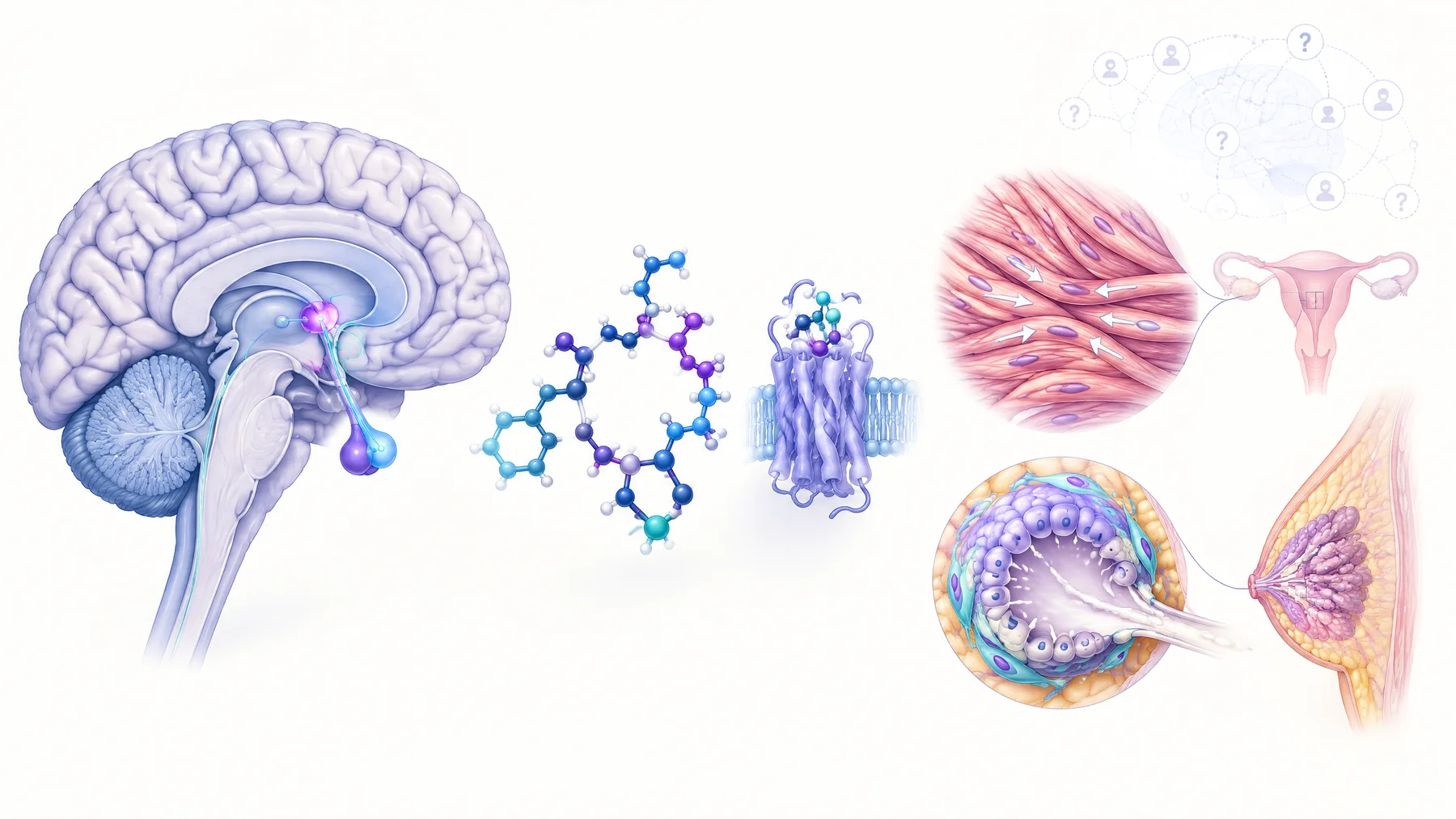
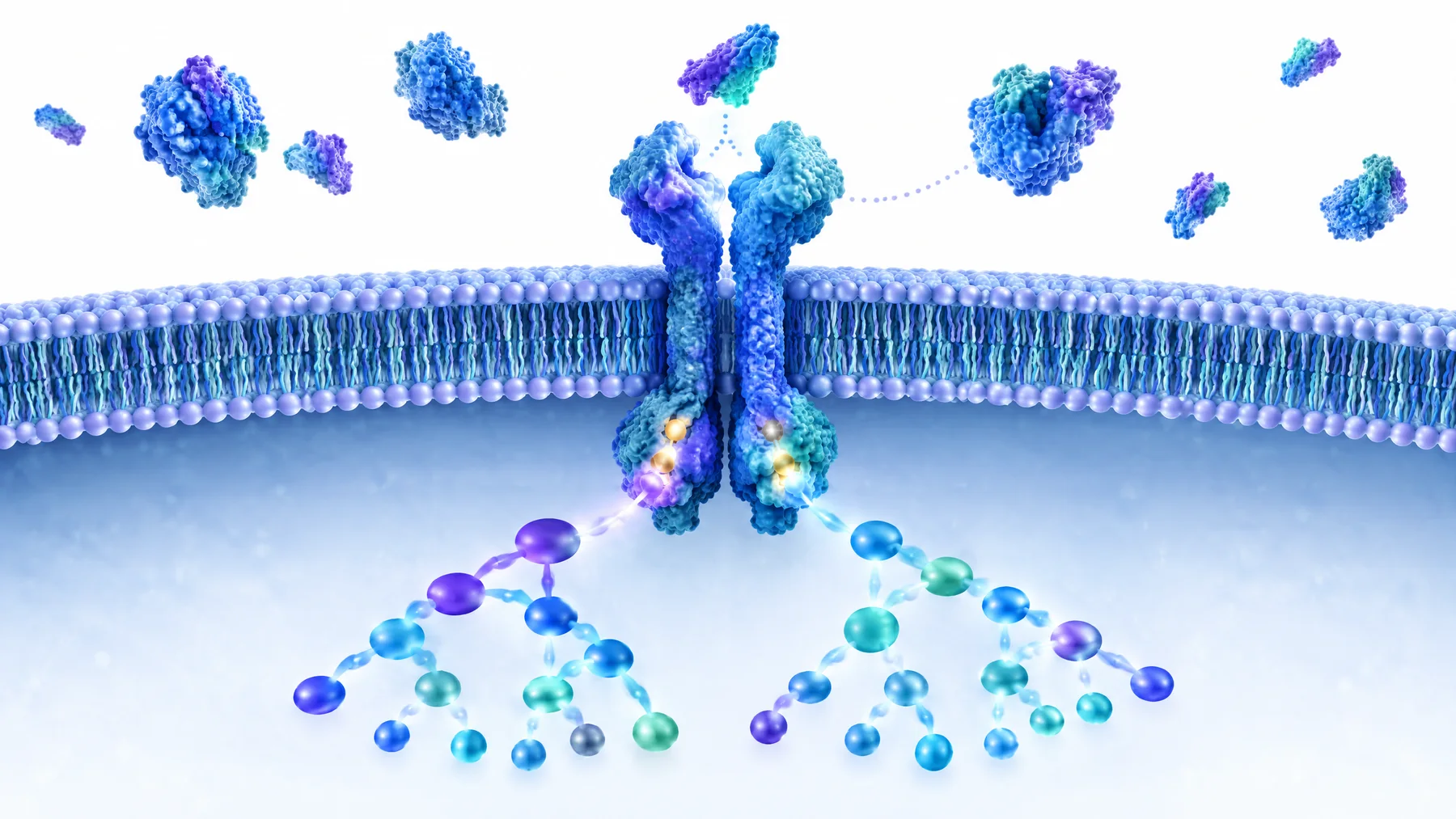
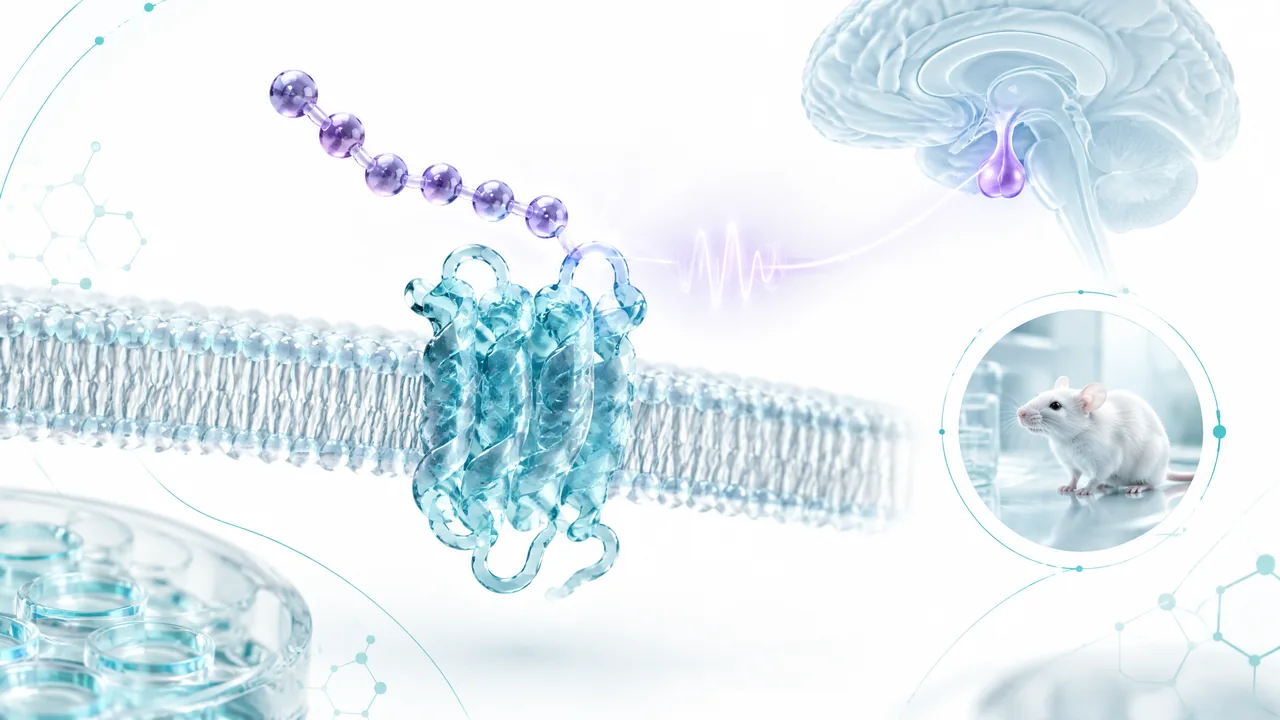
The Japanese product information describes pralmorelin as binding the growth-hormone-secretagogue (GHS) receptor and promoting pituitary GH secretion mainly through hypothalamic actions. In laboratory systems cited in that label, it increased GH release from cultured rat anterior-pituitary cells and its GH-releasing effect was reduced after interventions that disrupted parts of the hypothalamic–pituitary system. These observations support a GH-secretagogue pathway; they do not establish a broad, disease-modifying action in humans. [2]
A small human physiology study adds useful nuance. Eleven people with isolated GH deficiency caused by a homozygous GHRH-receptor mutation still had a 4.5-fold rise in GH from baseline after GHRP-2, although the response was far smaller than the 79-fold rise in eight unrelated controls. The authors concluded that intact GHRH signalling was not an absolute requirement, consistent with a GHRH-independent component at pituitary somatotrophs. This is mechanistic evidence in a rare genetic model, not proof that GHRP-2 corrects GH deficiency. [6]
What the controlled human studies actually measured
The clearest clinical-use evidence is diagnostic, not therapeutic. In a controlled validation study, 77 healthy participants and 58 adults already classified as having severe GH deficiency by insulin-tolerance testing underwent a fasting intravenous GHRP-2 challenge with serial GH measurements. Peak GH occurred within 60 minutes in every participant; mean peak GH was 84.6 micrograms/L in the healthy group and 1.36 micrograms/L in the patient group. The study supported a test-specific cut-off for severe deficiency, with results mildly affected by age and adiposity. It does not show that repeatedly raising GH treats the underlying disorder. [4]
An acute feeding experiment also deserves careful reading. Seven lean healthy men received a 270-minute subcutaneous infusion of GHRP-2 or saline before an unrestricted buffet meal. Food intake was 35.9% higher with GHRP-2, and GH exposure during the infusion was higher. This was a very small, short experiment in healthy men that measured a single meal, not sustained weight gain, nutritional benefit, athletic performance or safety with repeated use. [3]
In another small endocrine challenge study, six young and six older healthy adults received intravenous GHRP-2 or comparison stimuli. GHRP-2 strongly increased GH and was not endocrine-specific: prolactin, ACTH and cortisol also increased. Those measured hormone responses are relevant uncertainty signals, but the sample size and acute design cannot quantify long-term clinical risk. [5]
Animal findings are model-specific—not evidence of a human treatment effect
In a mouse experiment, daily peripheral GHRP-2 increased food intake and body weight in both wild-type and neuropeptide-Y-deficient mice. Body-composition measurements showed increased fat and bone mass, not lean mass; hypothalamic agouti-related protein (AGRP) expression increased, and a melanocortin-receptor agonist prevented weight gain in the knockout mice. The results point to an AGRP-linked energy-balance mechanism in that mouse setting, not to a justified human body-composition claim. [7]
A different study used rats with adjuvant-induced arthritis, a model of inflammatory cachexia. After eight days of GHRP-2, arthritis-associated increases in skeletal-muscle MuRF1, MAFbx and TNF-alpha messenger RNA were prevented, while serum IGF-I increased. These are molecular and hormonal outcomes in diseased rats; they cannot demonstrate prevention of muscle loss, arthritis treatment or injury recovery in people. [8]
Risks and major uncertainties
Safety information exists for the Japanese diagnostic product, but it belongs to a single, supervised diagnostic exposure and cannot be generalised to chronic or unsupervised use. Its current label lists sensations of heat (reported in 16.0%), increased bowel sounds, nausea or abdominal discomfort, hypotension, drowsiness, sweating, hunger, dizziness and other reactions; pregnancy is a contraindication. The same label states that safety with simultaneous use of other diagnostic agents such as CRH, LH-RH or TRH has not been established. [2]
The TGA’s scheduling decision noted limited information on risks and benefits of growth-hormone secretagogues under appropriate medical supervision, concern about hormonal and cardiovascular downstream effects, and additional risks where substances are injected. These concerns are especially relevant because the clinical studies above are mostly short endocrine challenges rather than long-term treatment trials. [3] [4] [5] [9]
Australian regulatory context
Australia’s Poisons Standard is a national classification instrument used by states and territories for controls on medicines and poisons; it is not a finding that a substance is an approved therapeutic product. In the 2015 final decision, the TGA placed pralmorelin (GHRP-2) in Schedule 4 and Appendix D, citing uncertain long-term safety, potential misuse and the need for medical supervision. [9] [10]
For a practical state example, NSW Health lists pralmorelin (GHRP-2) among Schedule 4 Appendix D medicines. NSW explains that these are prescription-only substances considered liable to abuse, misuse or diversion and subject to more stringent possession and supply controls. Requirements vary by jurisdiction, so this is educational regulatory context rather than legal or prescribing advice. [11]
Comparing GHRP-2 with related endocrine terms and products
The labels ‘growth-hormone peptide’, ‘GH secretagogue’ and ‘growth hormone’ are not interchangeable. GHRP-2/pralmorelin is a synthetic peptide agonist of the GHS receptor; GHRH is a different hypothalamic signal; and GH is the hormone measured after stimulation. The rare GHRH-receptor mutation study shows why this distinction matters: GHRP-2 produced a residual GH response even when GHRH-receptor signalling was defective, but that response was much lower than in controls. [1] [2] [6]
Product provenance matters as much as the molecule’s name. A mass-spectrometry case report identified approximately 50 micrograms of GHRP-2 per tablet in a product sold as an over-the-counter nutritional supplement. This finding is not a survey of all products, but it illustrates why an unregulated product name, supplier claim or dosage statement is not evidence of identity, quality, sterility, safety or equivalence to the Japanese diagnostic medicine. [2] [12]
A practical way to read GHRP-2 claims
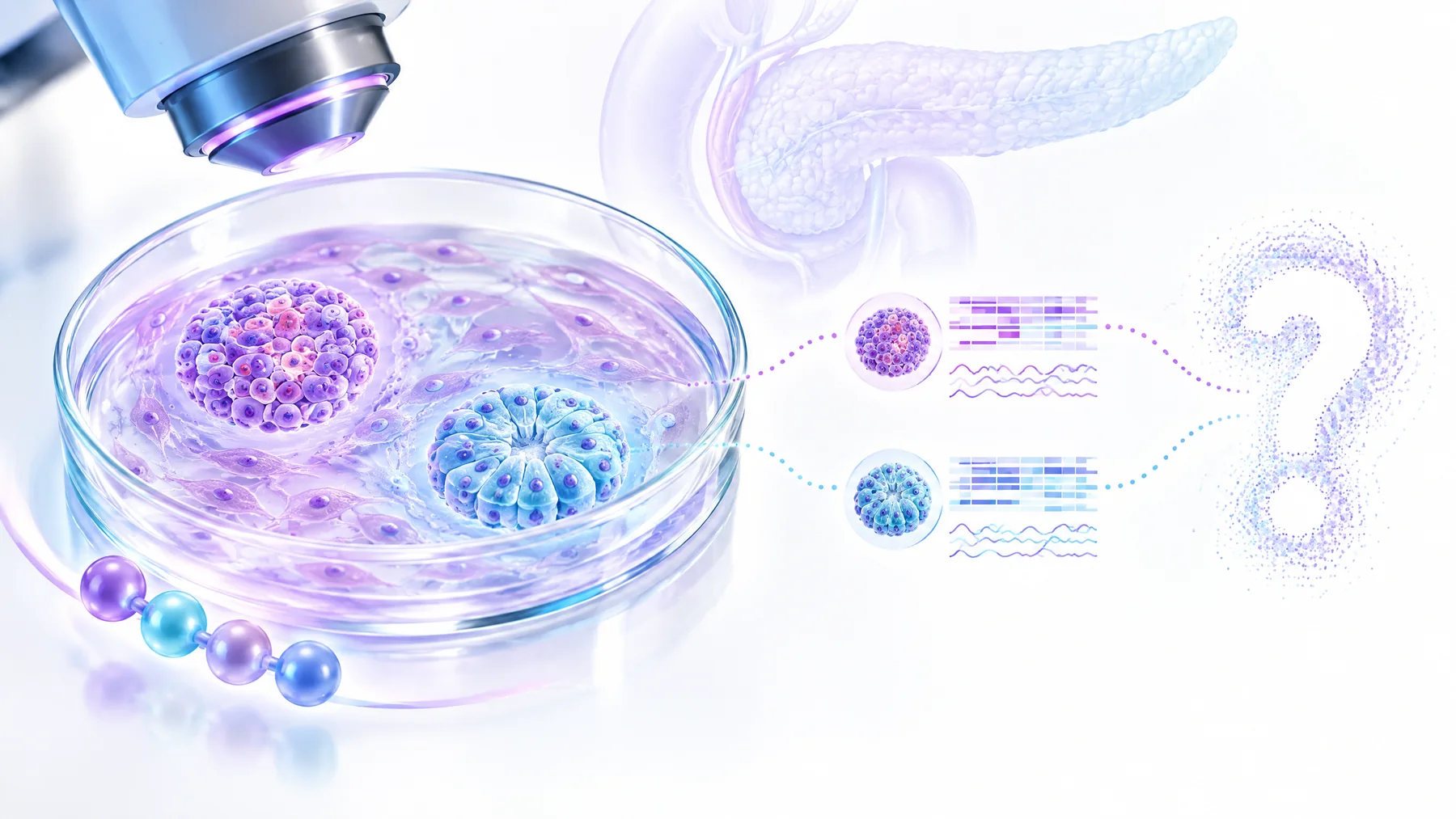
Start with the model and endpoint. A diagnostic study can show how a defined challenge separates groups with and without severe GH deficiency; an acute feeding study can show a change in one meal; and rodent studies can identify hypotheses about appetite, fat mass or muscle gene expression. None of those endpoints independently validates a repeated-use protocol or a general claim about muscle, fat loss, anti-ageing, recovery or wellbeing. [3] [4] [7] [8]
Then check whether the claim matches a reviewed formulation and indication. The Japanese label is for diagnosis of GH secretory deficiency under specified clinical conditions, not a general-purpose regimen. It also warns that safety of co-administration with other diagnostic agents has not been established; therefore, claims for peptide ‘stacks’ or blends lack validation merely because their individual names appear in research literature. [2] [9]
Questions readers ask
Is GHRP-2 actually a peptide?
Yes. GHRP-2 (pralmorelin) is a synthetic oligopeptide/hexapeptide with the sequence H-D-Ala-D-2Nal-Ala-Trp-D-Phe-Lys-NH2. It is not a small molecule and it is not recombinant growth hormone. [1] [2]
Is GHRP-2 an approved medicine?
A specific pralmorelin-hydrochloride product, GHRP Kaken 100 Injection, is listed by Japan’s PMDA as a prescription diagnostic medicine for growth-hormone secretory deficiency. That is a formulation- and indication-specific approval, not evidence that all products called GHRP-2 are approved medicines. [2]
Is GHRP-2 approved for bodybuilding, appetite or long-term weight change?
The sources reviewed do not establish those uses. The human appetite result came from one acute experiment in seven healthy men, and the mouse study found fat rather than lean-mass gain. The Japanese product label is diagnostic, not a body-composition or appetite-treatment indication. [2] [3] [7]
What does Australia’s Schedule 4/Appendix D status mean?
It is a control classification, not a marketing approval. The TGA’s scheduling material placed pralmorelin/GHRP-2 in Schedule 4 and Appendix D, and NSW describes its Appendix D medicines as prescription-only substances subject to additional controls because of misuse, abuse or diversion concerns. State and territory implementation is relevant. [9] [10] [11]
Can findings in rats or mice tell us that GHRP-2 will preserve muscle or change body composition in people?
No. The rat arthritis study measured gene-expression and IGF-I changes in a disease model, while the mouse work found increased fat and bone mass rather than lean mass. Those experiments are useful for mechanism hypotheses but do not demonstrate human clinical outcomes. [7] [8]
What remains uncertain
The human literature reviewed is dominated by diagnostic challenges and very small acute physiology studies; the rodent findings use disease-specific or genetic models. The Japanese label documents one diagnostic formulation, not a general treatment protocol, and Australian scheduling sources address control rather than efficacy. Consequently, no universal route, dose, dilution, storage rule, treatment schedule, blend protocol or long-term outcome is inferred here.
References and further reading
- [1] Pralmorelin. Curated chemical and biological-identity record
- [2] 注射用GHRP科研100 添付文書 (GHRP Kaken 100 Injection prescribing information). Current prescription-medicine label, revised July 2025
- [3] Growth Hormone Releasing Peptide-2 (GHRP-2), Like Ghrelin, Increases Food Intake in Healthy Men. Acute saline-comparator infusion feeding experiment in 7 lean healthy men
- [4] A simple diagnostic test using GH-releasing peptide-2 in adult GH deficiency. Controlled diagnostic-validation study: 77 healthy people and 58 adults with severe GH deficiency by insulin-tolerance test
- [5] Effects of GHRP-2 and hexarelin, two synthetic GH-releasing peptides, on GH, prolactin, ACTH and cortisol levels in man. Comparison with the effects of GHRH, TRH and hCRH. Comparative acute endocrine-challenge study in 6 young and 6 older healthy adults
- [6] Growth hormone-releasing peptide-2 stimulates GH secretion in GH-deficient patients with mutated GH-releasing hormone receptor. Mechanistic physiological study in 11 people with homozygous GHRH-receptor mutation and 8 unrelated controls
- [7] GH-releasing peptide-2 increases fat mass in mice lacking NPY: indication for a crucial mediating role of hypothalamic agouti-related protein. Chronic peripheral GHRP-2 study in wild-type and neuropeptide-Y-knockout mice
- [8] Ghrelin receptor agonist GHRP-2 prevents arthritis-induced increase in E3 ubiquitin-ligating enzymes MuRF1 and MAFbx gene expression in skeletal muscle. Control and adjuvant-induced-arthritis rat study with 8 days of GHRP-2 or saline
- [9] Delegates’ final decisions and reasons for decisions — March 2015. TGA delegate final decision and rationale
- [10] The Poisons Standard (the SUSMP). Current TGA legislative-instrument overview
- [11] Schedule 4 Appendix D drugs — prescribed restricted substances. Current state regulatory list and explanatory guidance
- [12] Identification of the growth-hormone-releasing peptide-2 (GHRP-2) in a nutritional supplement. Liquid-chromatography and mass-spectrometry analysis of a marketed supplement tablet