What is CJC-1295 with DAC?
Synthetic peptide and long-acting analogue of human growth hormone-releasing hormone (GHRH); an investigational human candidate, not an approved Australian medicine. The research literature calls the albumin-binding compound CJC-1295. “DAC” is used in commerce to mean the albumin-binding Drug Affinity Complex version. It should not be conflated with short-acting, non-DAC GHRH-fragment products marketed under similar names; a supplier vial is not an approved formulation or evidence that its stated contents are correct. The TGA explicitly lists CJC-1295 among examples of unapproved peptide products. It is therefore inaccurate to call CJC-1295-DAC an ARTG-approved medicine or to treat online ‘research use only’ vials as regulated medicines.
CJC-1295 with DAC is an albumin-binding synthetic GHRH analogue, not growth hormone itself. Small controlled studies in healthy adults measured sustained increases in GH and IGF-I, but they did not establish durable clinical benefits such as improved body composition, athletic performance, ageing outcomes, or treatment of disease. In Australia, the TGA identifies CJC-1295 as an unapproved peptide product.
Identity: a peptide designed to last longer
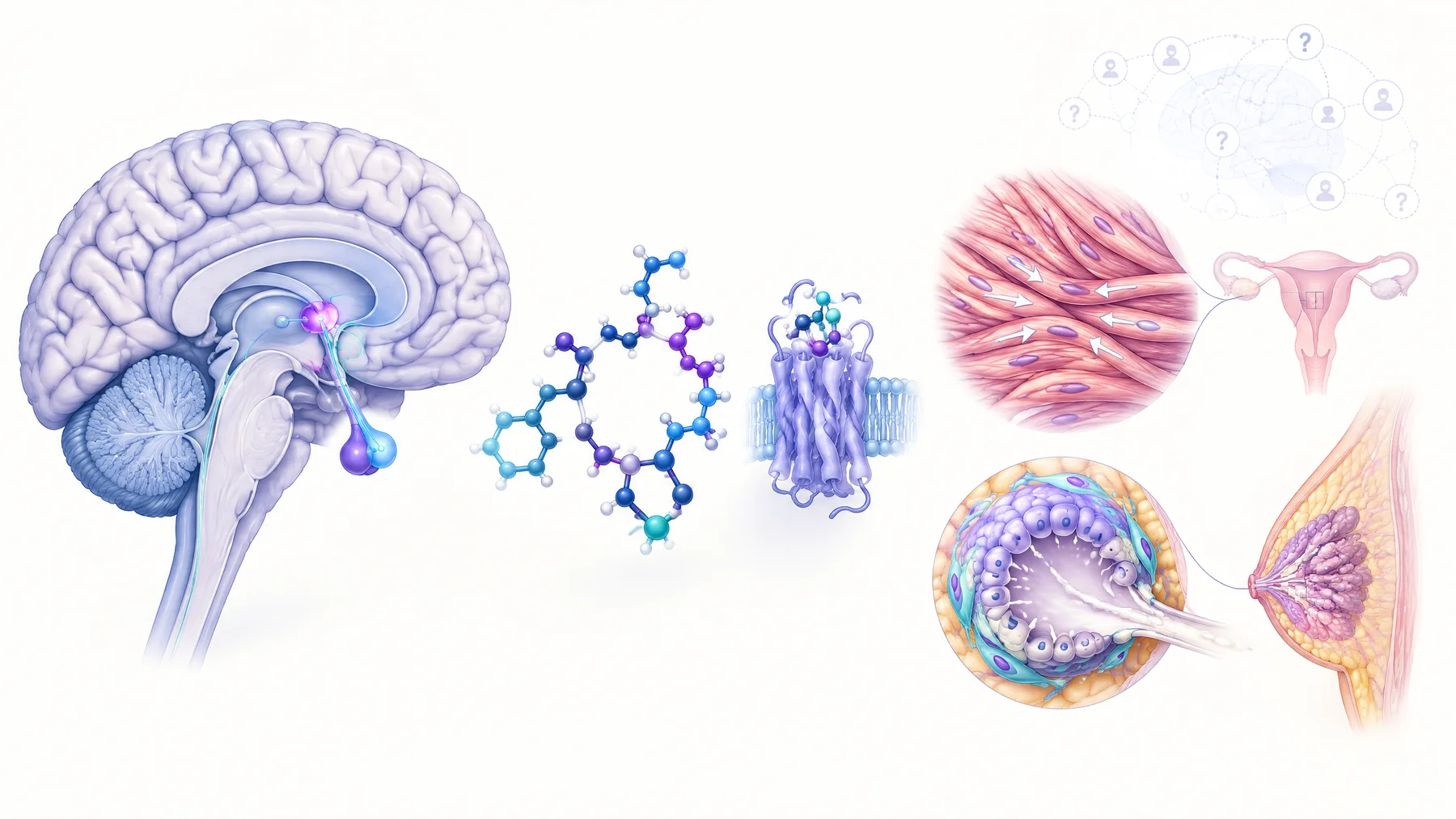
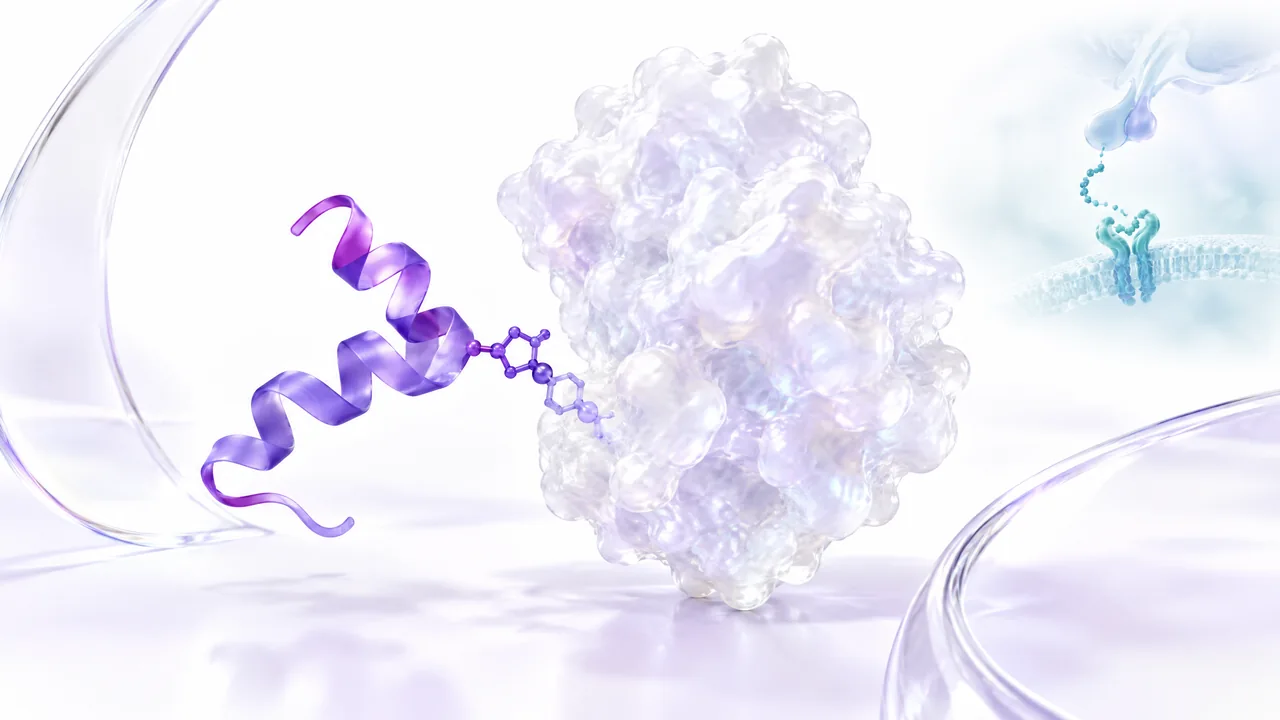
CJC-1295-DAC is a synthetic peptide analogue of GHRH, the hypothalamic signal that prompts the anterior pituitary to release growth hormone (GH). It is not GH, testosterone or a nutritional supplement. In the foundational laboratory paper, CJC-1295 was described as a tetrasubstituted hGRF(1-29) analogue carrying a C-terminal reactive group intended to form a covalent association with endogenous serum albumin. [2]
The DAC distinction matters. The long duration reported for CJC-1295 relates to its albumin-binding design, whereas similarly named ‘no-DAC’ or modified-GRF products are not automatically the same molecule, pharmacokinetic profile or evidence base. Product names used by research suppliers are not a substitute for a product-information document, identity testing or regulatory approval. [2] [6]
What the albumin-binding design was shown to do
In vitro and rat work supplied the rationale for the DAC approach. CJC-1295 and related derivatives activated GH secretion in cultured rat anterior-pituitary cells; after subcutaneous administration to male Sprague-Dawley rats, the selected compound produced a four-fold higher two-hour GH area under the curve than hGRF(1-29) and remained detectable in rat plasma beyond 72 hours. A rat plasma western blot found an immunoreactive species at the serum-albumin band, consistent with the intended albumin association. [2]
These experiments support a molecular-duration explanation in a defined laboratory setting. They do not show that albumin binding delivers a particular health benefit in people, nor do they validate a storage, mixing or administration method for products sold outside clinical research. [2] [6]
Molecular pathway: what is measured versus what is inferred
The measured pathway is pituitary stimulation followed by higher circulating GH and IGF-I. In the healthy-adult trials, CJC-1295 produced dose-dependent rises in mean GH and IGF-I after injection. The authors estimated a 5.8–8.1-day half-life; these are study pharmacokinetic observations, not a general dosing instruction. [1]
A separate physiological study sampled healthy men overnight before and one week after a single CJC-1295 injection. GH pulses remained present: pulse frequency and magnitude did not significantly change, while trough GH, mean GH and IGF-I rose. This shows an endocrine signal in that small, short experiment; it does not prove that preserving pulses makes treatment clinically beneficial. [4]
Model-specific findings: the knockout-mouse result
A five-week study used one-week-old GHRH-knockout (GHRHKO) mice, a model with absent endogenous GHRH signalling. In that model, daily CJC-1295 restored body weight and length to normal relative to heterozygous controls; less frequent treatment improved growth versus placebo but did not fully normalise it. Femur and tibia length, relative lean mass and subcutaneous fat mass were also reported. [3]
This is evidence in a juvenile genetically GHRH-deficient mouse model, not evidence for routine use in healthy adults, obesity, muscle gain, injury recovery or anti-ageing. The paper also reported increased pituitary RNA/GH mRNA and findings consistent with somatotroph proliferation, outcomes whose significance and safety cannot be extrapolated directly to humans. [3]
Human evidence: pharmacology, not demonstrated clinical benefit
The pivotal publication comprised two randomised, placebo-controlled, double-blind ascending-dose studies lasting 28 and 49 days in healthy adults aged 21–61 years. Its primary outcomes were GH and IGF-I concentrations and CJC-1295 pharmacokinetics. After a single injection, mean GH rose two- to ten-fold for at least six days and mean IGF-I 1.5- to three-fold for nine to eleven days; after repeated study dosing, mean IGF-I remained above baseline for up to 28 days. No serious adverse reactions were reported in these short studies. [1]
Those results establish short-term biomarker effects in healthy volunteers. They do not establish a net benefit for a disease or for cosmetic, strength, sleep, fat-loss or longevity claims, and the absence of serious reactions in small, brief trials is not proof of long-term safety. [1]
Clinical development: an unanswered efficacy question
ClinicalTrials.gov records one multicentre, randomised, placebo-controlled, double-blind Phase 2 study in adults with HIV-associated visceral obesity (NCT00267527). It planned 12 weeks of treatment and six weeks of follow-up, enrolled 120 people, and was marked terminated. The registry shows no posted results. [5]
A terminated, results-unreported study cannot be used to infer efficacy or safety for HIV-associated visceral obesity, and it offers no basis for extrapolating to people without HIV or without visceral obesity. A registry listing also does not constitute regulator approval. [5] [6]
Risks and uncertainty, including the vial problem
The scientific uncertainty has two layers: the medicine-level evidence is limited, and the supplied product may be uncertain. The TGA says unapproved peptide products have not been evaluated by it for safety, quality or effectiveness, and highlights unknown manufacture, sterility, ingredient identity, dosage information, interactions and short- and long-term harms. [6]
The TGA has received reports across the broader unapproved-peptide category of severe allergic reactions, systemic inflammatory response syndrome, hypersensitivity symptoms, infection-related and local tissue risks, and poor-quality packaging. These reports are not proof that CJC-1295 alone caused each event, but they are a reason not to assign a safety profile to a labelled online vial from the small clinical literature. [6]
Australian regulatory and sport context
In Australia, peptide products are therapeutic goods. The TGA specifically names CJC-1295 as an example of an unapproved peptide product, meaning it has not been included in the ARTG and has not been assessed by the TGA for safety, quality or effectiveness. ‘Research use only’ wording does not itself make importation or supply lawful. Compounding has narrow person-specific and other regulatory conditions; it is not a general approval pathway or endorsement of online sales. [6] [7]
For athletes subject to the World Anti-Doping Code, WADA lists GHRH and its analogues—including CJC-1295—under S2.2.4 growth hormone-releasing factors, prohibited at all times. This sporting classification is separate from a clinical efficacy assessment. [8]
How to read claims about CJC-1295-DAC
Separate the molecule, the model and the outcome. A rat albumin-binding experiment supports longer exposure in rats; a GHRHKO-mouse study supports growth effects in that deficient mouse model; and short healthy-volunteer trials support changes in GH and IGF-I. None of those findings, alone or combined, demonstrates a validated protocol or a clinical outcome in a different population. [1] [2] [3] [4]
Be cautious of claims that collapse ‘CJC-1295’ and ‘CJC-1295-DAC’ into one interchangeable product, turn a biomarker change into a body-composition or longevity promise, or use an unlabelled/online vial as though it were a trial-grade formulation. The appropriate conclusion from the available record is investigational endocrine pharmacology with important unresolved benefit, product-quality and safety questions—not an evidence-based self-administration schedule. [1] [5] [6]
Questions readers ask
Is CJC-1295-DAC an approved medicine in Australia?
No. The TGA identifies CJC-1295 as an unapproved peptide product. It should not be represented as ARTG-approved, and a ‘research use only’ disclaimer does not by itself make supply or importation lawful. [6] [7]
Is CJC-1295-DAC the same as growth hormone?
No. It is a synthetic analogue of GHRH, intended to stimulate pituitary GH release. In the human studies, the measured downstream markers were GH and IGF-I; it is not administered GH itself. [1] [2]
What has actually been demonstrated in people?
Short, controlled healthy-volunteer studies demonstrated sustained, dose-related changes in GH and IGF-I and reported no serious adverse reactions during those studies. They did not demonstrate long-term safety or clinical benefits such as fat loss, muscle gain, performance enhancement or anti-ageing effects. [1] [4]
Does the DAC label prove a vial will last longer or be sterile?
No. Albumin association and extended exposure were studied for the defined research compound. The TGA warns that unapproved peptide products may have uncertain manufacture, sterility, identity, labelling and dosage information; a label cannot resolve those uncertainties. [2] [6]
Is CJC-1295 permitted in tested sport?
No for athletes governed by the World Anti-Doping Code: WADA lists CJC-1295 among GHRH analogues prohibited at all times under S2.2.4. [8]
What remains uncertain
The strongest human studies are short pharmacokinetic/pharmacodynamic studies in healthy adults; they measure GH and IGF-I, not patient-important outcomes or long-term harms. [1] [4]
The most striking growth result comes from juvenile GHRH-knockout mice, a specific genetic-deficiency model that does not generalise to healthy people or common commercial claims. [3]
The registered Phase 2 HIV-visceral-obesity study was terminated and has no posted results, leaving efficacy and safety in that patient group unresolved. [5]
Evidence about the defined research compound does not authenticate the composition, sterility, stability or concentration of unapproved supplier vials; the TGA identifies these as material uncertainties. [6]
References and further reading
- [1] Prolonged stimulation of growth hormone (GH) and insulin-like growth factor I secretion by CJC-1295, a long-acting analog of GH-releasing hormone, in healthy adults. Two randomised, placebo-controlled, double-blind ascending-dose trials (28 and 49 days) in healthy adults aged 21–61 years; GH, IGF-I and pharmacokinetics were measured.
- [2] Human growth hormone-releasing factor (hGRF)1-29-albumin bioconjugates activate the GRF receptor on the anterior pituitary in rats: identification of CJC-1295 as a long-lasting GRF analog. In vitro stability and cultured rat anterior-pituitary GH secretion assays, plus pharmacodynamic/pharmacokinetic testing in normal male Sprague-Dawley rats.
- [3] Once-daily administration of CJC-1295, a long-acting growth hormone-releasing hormone (GHRH) analog, normalizes growth in the GHRH knockout mouse. Five-week treatment experiment in one-week-old GHRH-knockout mice, with placebo-treated knockout and heterozygous controls; growth, body composition, skeletal measures and pituitary outcomes assessed.
- [4] Pulsatile secretion of growth hormone (GH) persists during continuous stimulation by CJC-1295, a long-acting GH-releasing hormone analog. Within-subject overnight 20-minute blood sampling in healthy men aged 20–40 years before and one week after a single CJC-1295 injection; GH pulsatility and IGF-I assessed.
- [5] A Study to Evaluate CJC 1295 in HIV Patients With Visceral Obesity (NCT00267527). Multicentre, randomised, placebo-controlled, double-blind Phase 2 trial; 120 adults with HIV-associated visceral obesity; planned 12-week treatment and six-week follow-up.
- [6] Understanding your responsibilities when importing, compounding and supplying unapproved peptide products. TGA regulatory and safety guidance, published 13 April 2026.
- [7] Australian Register of Therapeutic Goods (ARTG). TGA public register and search guidance for therapeutic goods that can be supplied in Australia.
- [8] The Prohibited List. World Anti-Doping Agency prohibited-substances classification.