
 View on Peak SINGLEDosage chart
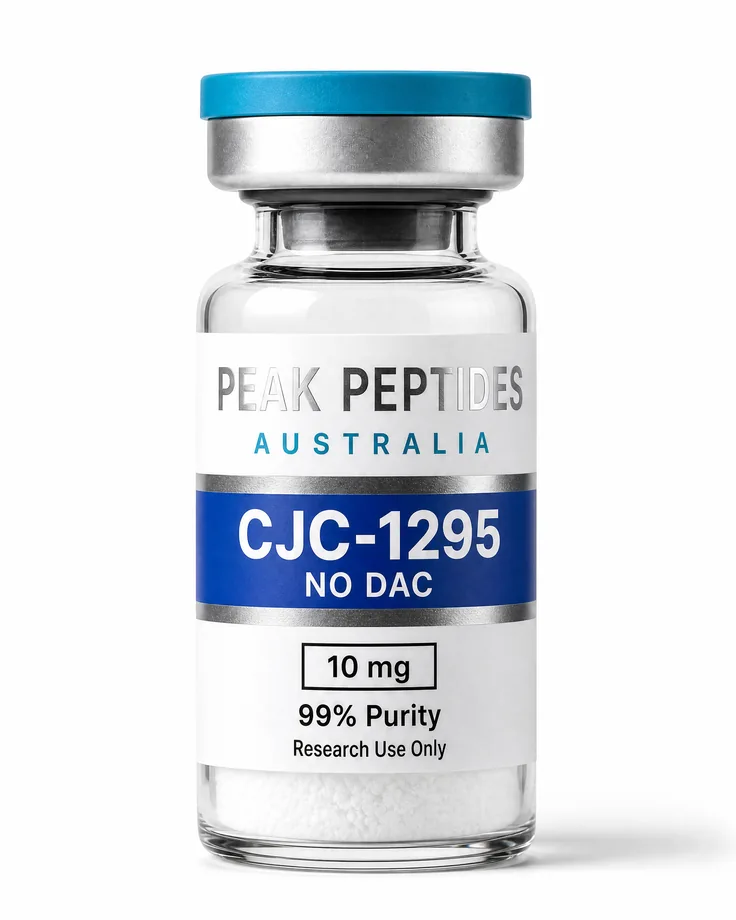
CJC-1295 No DAC
Modified GRF 1-29
Cited example and evidence context
Research summary · not a validated human regimen
Open dosage chart
Modified GRF 1-29 with DAC · long-acting GHRH analogue
The reference schedule uses CJC-1295 DAC twice weekly: 300 mcg in weeks 1–2, then 500 mcg, 750 mcg and 1,000 mcg in successive steps. With 2 mL in a 5 mg vial, the concentration is 2.5 mg/mL, so the 300 mcg starting amount is 12 units (0.12 mL) on a U-100 syringe.
Reviewed 25 Oct 2026 · Education only, not medical advice
CJC-1295 DAC 5 mg vial
Not currently stocked by Peak Peptides Australia
No product photo — this strength isn't stocked by Peak
Gradual twice-weekly approach · 5 mg vial + 2 mL BAC water
2 mL is the mix on the matching 5 mg reference protocol, giving 2.5 mg/mL and 25 mcg per U-100 unit.
| Week | Dose each time | Syringe units | Syringe fill |
|---|---|---|---|
| Weeks 1–2Start | 300 mcg | 12 units0.12 mL | |
| Weeks 3–4 | 500 mcg | 20 units0.2 mL | |
| Weeks 5–6 | 750 mcg | 30 units0.3 mL | |
| Weeks 7–12Maintenance | 1 mg | 40 units0.4 mL |
Twice weekly · 3–4 days apart · subcutaneous injection
The reference schedule uses two injections per week, spaced 3–4 days apart.
The source describes an 8–12 week schedule; it mentions an optional extension to 16 weeks but gives no additional chart step.
Community-reported reference amounts — CJC-1295 DAC has no TGA-approved or clinically established public dose. Education only, not medical advice. Dose amounts adapted from CJC-1295 DAC 5 mg vial dosage protocol (PeptideDosages.com); units are recalculated for the vial and mix selected above.
Using a 1 mL (100-unit) insulin syringe, 2 full draws of bacteriostatic water gives 2.5 mg/mL.
 1
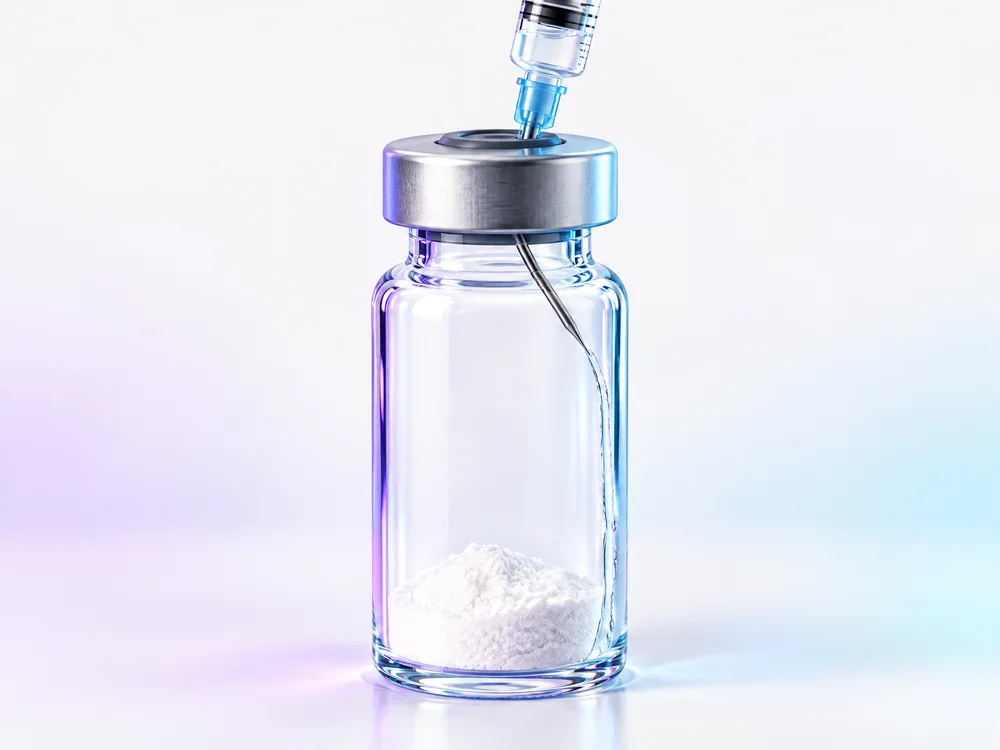
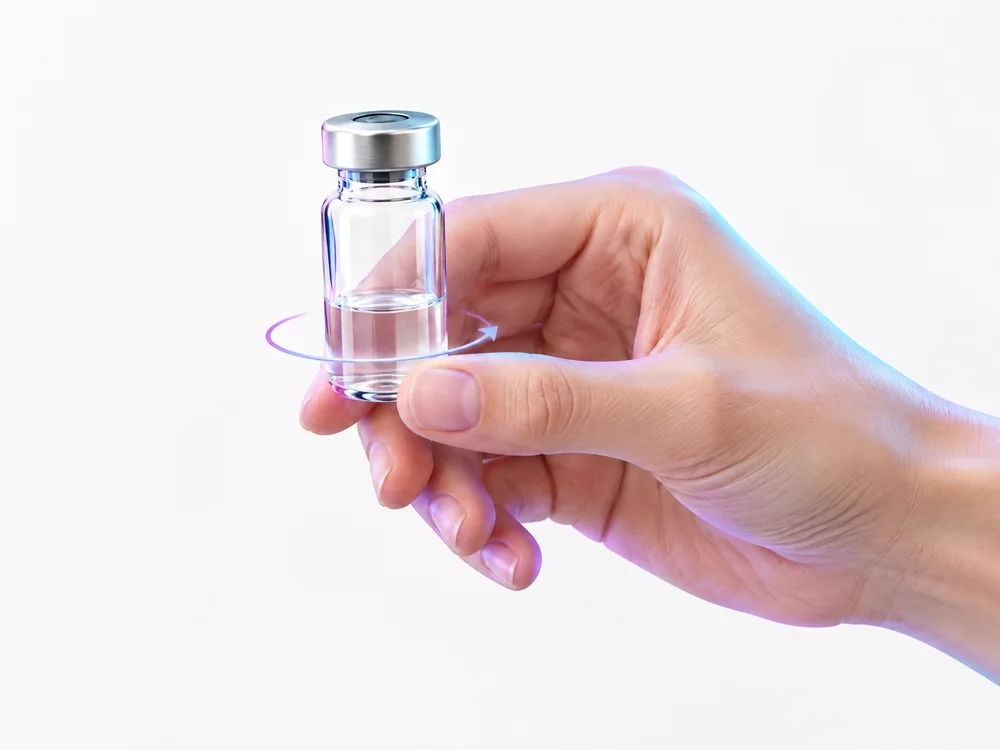
Wipe both rubber stoppers with an alcohol swab and let them dry. Draw 2 mL of bacteriostatic water and let it run slowly down the inside of the vial wall — not straight onto the powder.
 2
Swirl or roll the vial gently until the powder has dissolved. Give it a few minutes to settle if needed.
 3
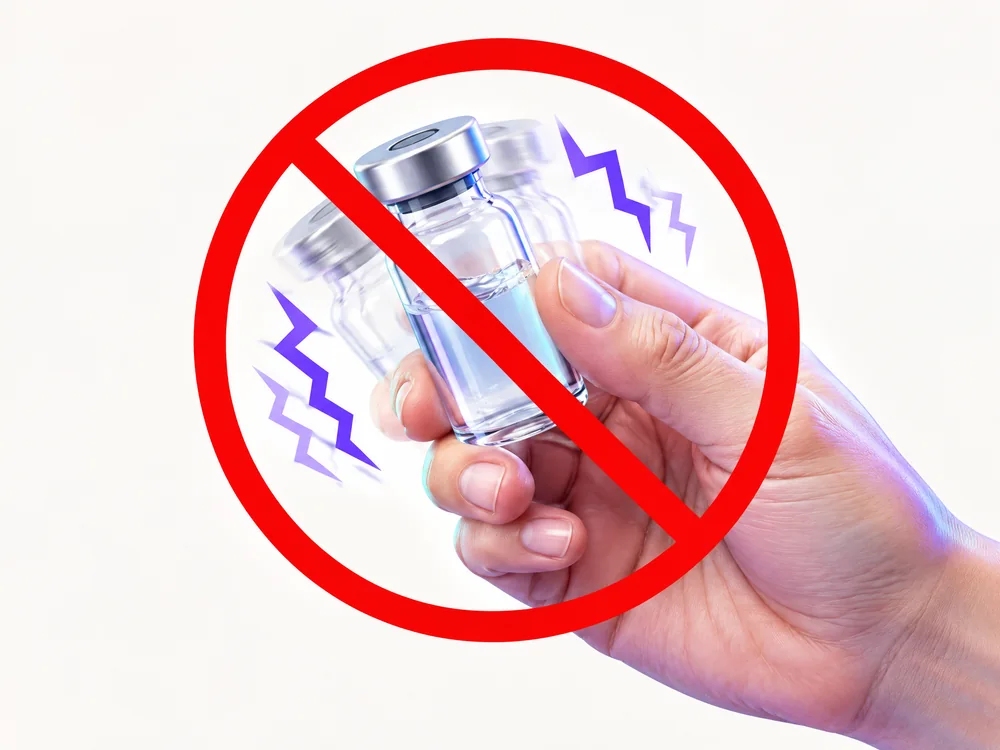
Shaking can damage the peptide and cause foaming. Gentle swirling only.
 4
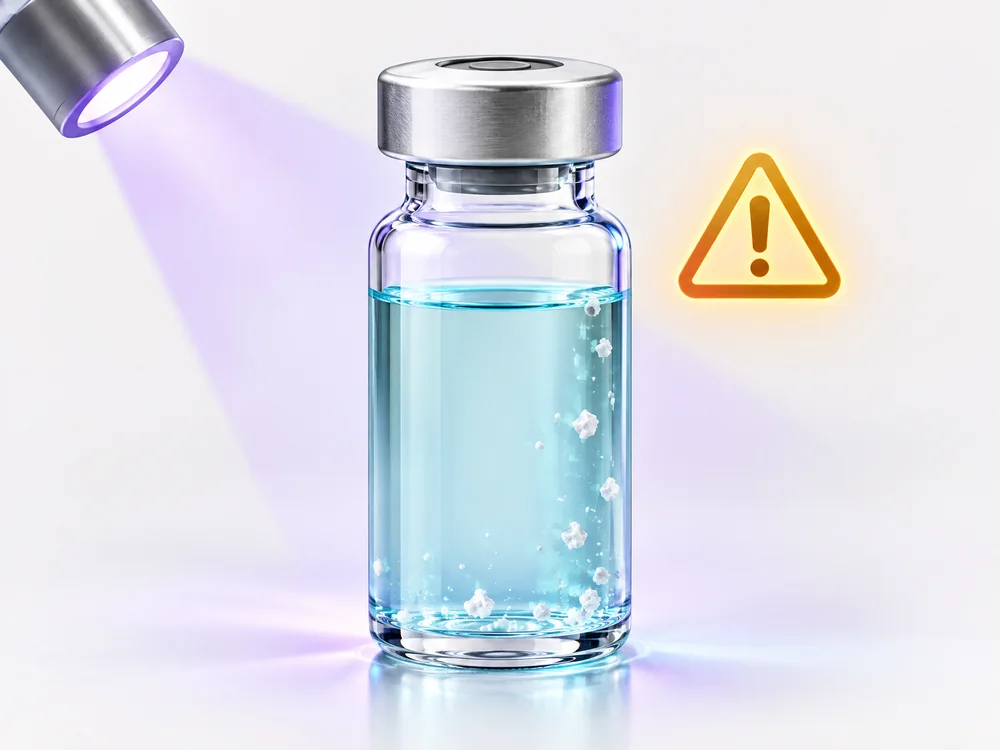
Only use it once it is fully clear with no particles. Label the vial with the date and 2.5 mg/mL, then store it in the fridge at 2–8 °C.
Counts follow the dosage chart above at the highest amount in each step, using a 5 mg vial mixed with 2 mL.
Plus an approved sharps container. Syringes and swabs are sold by Australian pharmacies — Peak Peptides and Pure Performance supply the bacteriostatic water.
Enter your vial, water and dose to see the matching syringe units.
Concentration
2.50 mg/mL
(2500 mcg/mL)
Calculated Liquid Volume
0.120 mL
Equivalent U-100 volume scale position
Illustration of a U-100 volume scale, not preparation or injection guidance
CJC-1295 DAC is a synthetic analogue of growth hormone-releasing hormone. It is designed to activate the GHRH receptor on pituitary cells, which can increase growth hormone release and downstream IGF-1 signalling.
The DAC modification enables binding to serum albumin. In rat research, this albumin-bound form remained in circulation longer than the parent GHRH fragment; in healthy-adult research, CJC-1295 had an estimated half-life of 5.8–8.1 days.
Guidance: World Health Organization · National Diabetes Services Scheme (NDSS)
With 2 mL in a 5 mg vial, the concentration is 2.5 mg/mL. A 300 mcg amount is 12 units, or 0.12 mL, on a U-100 syringe.
The matching 5 mg reference protocol uses 2 mL. That makes 2.5 mg/mL, so each U-100 syringe unit contains 25 mcg.
A 5 mg vial contains five full 1,000 mcg amounts. At two amounts per week, that is about 2.5 weeks, excluding handling loss.
With the default 5 mg plus 2 mL mix, 750 mcg is 30 units, or 0.30 mL, on a U-100 syringe.
View on Peak SINGLEDosage chartModified GRF 1-29
Cited example and evidence context
 View on Peak SINGLEDosage chart
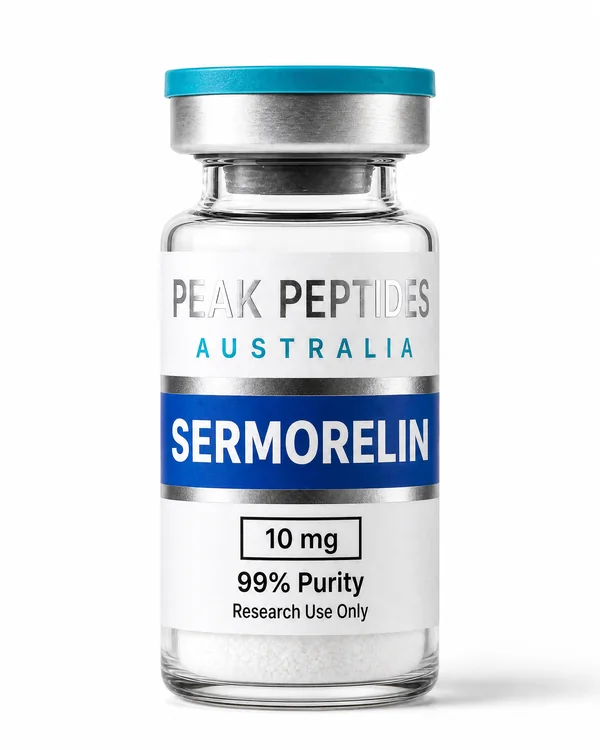
Sermorelin Acetate (GHRH 1-29)
 View on Peak SINGLEDosage chart
Selective GH Secretagogue