What is Cartalax (Ala-Glu-Asp; AED)?
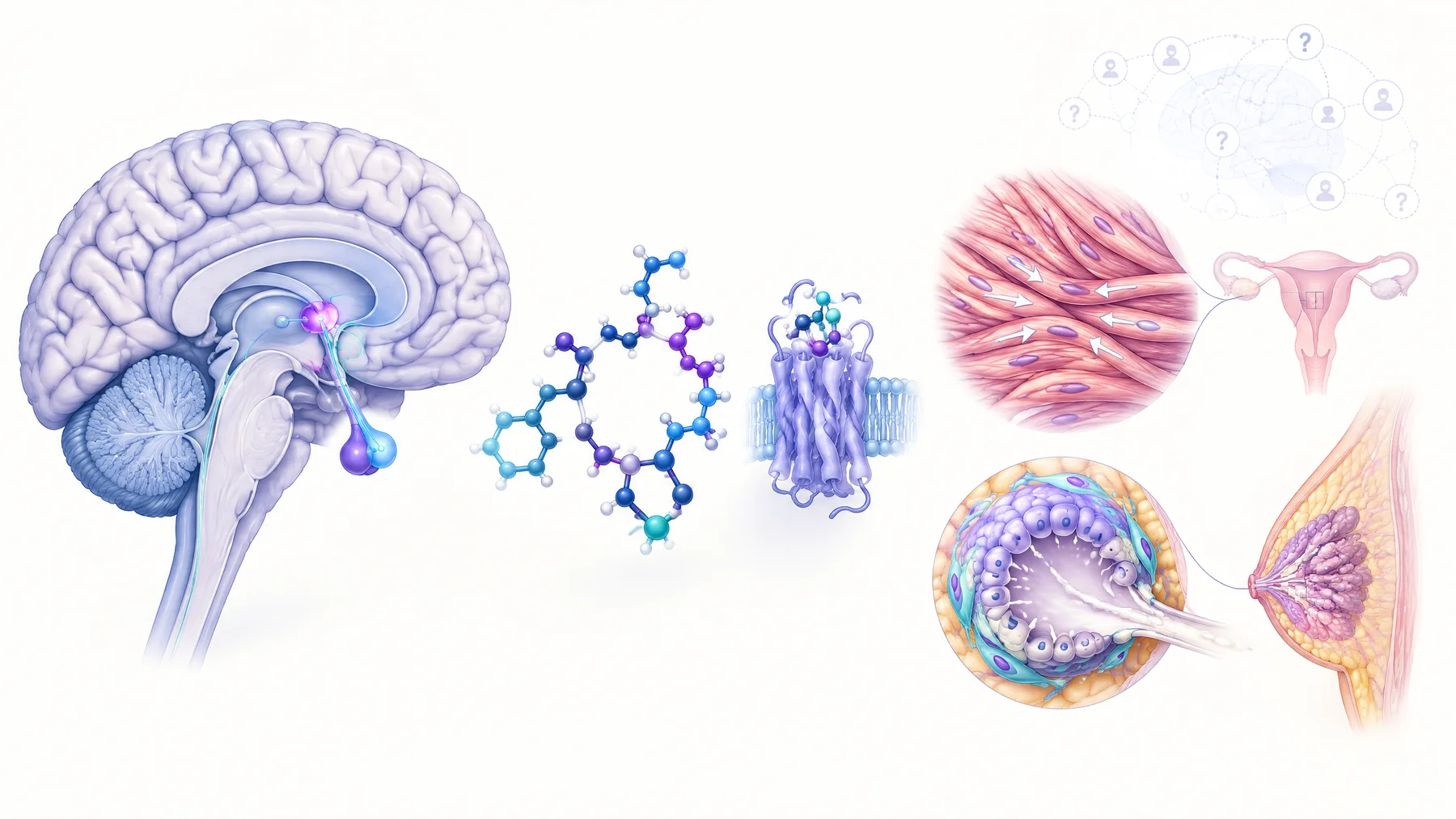
Cartalax is a name used for the synthetic tripeptide L-alanyl-L-alpha-glutamyl-L-aspartic acid, sequence Ala-Glu-Asp (AED), rather than a hormone, a topical cosmetic ingredient, or a mixture. PubChem lists Cartalax and T-31 among its synonyms and gives a molecular weight of 333.29 g/mol. This defined tripeptide must be kept separate from the bovine cartilage-derived polypeptide complex (PPCC) tested alongside it in one cell-culture paper.
Cartalax is the three-amino-acid peptide AED. Its strongest directly relevant finding is a single published in-vitro experiment in primary chondrocytes from young and old rats, in which 200 ng/mL AED increased cultured cell counts over five days. That observation does not demonstrate cartilage regeneration, pain relief, osteoarthritis treatment, or safety in people. No Australian ARTG product entry, Product Information or Consumer Medicine Information for Cartalax was identified in this evidence review; the ARTG is the authoritative public register to check for products legally supplied in Australia.
Identity: a defined short peptide, not a cartilage extract
Cartalax refers to AED: alanine–glutamic acid–aspartic acid. It is therefore genuinely a peptide, but an unusually small one—three amino acids—not a naturally occurring glycoprotein hormone and not a multi-ingredient ‘joint blend’. PubChem records the sequence AED, molecular formula C12H19N3O8 and molecular weight 333.29 g/mol. [5]
Names matter here. The 2023 cartilage-cell study compared AED with PPCC, a polypeptide complex isolated from bovine cartilage. PPCC and AED were tested at different concentrations and produced different numerical results. Evidence for the complex cannot be silently reassigned to the pure tripeptide sold or described as Cartalax. [1]
A vial labelled ‘Cartalax’ is not, by itself, evidence of a standard approved formulation, pharmaceutical quality, an indication, or an administration protocol. Those are product-specific matters that require an identifiable sponsor, formulation and regulator documentation—not merely the name of an experimental chemical. [5] [6]
The directly relevant cartilage finding
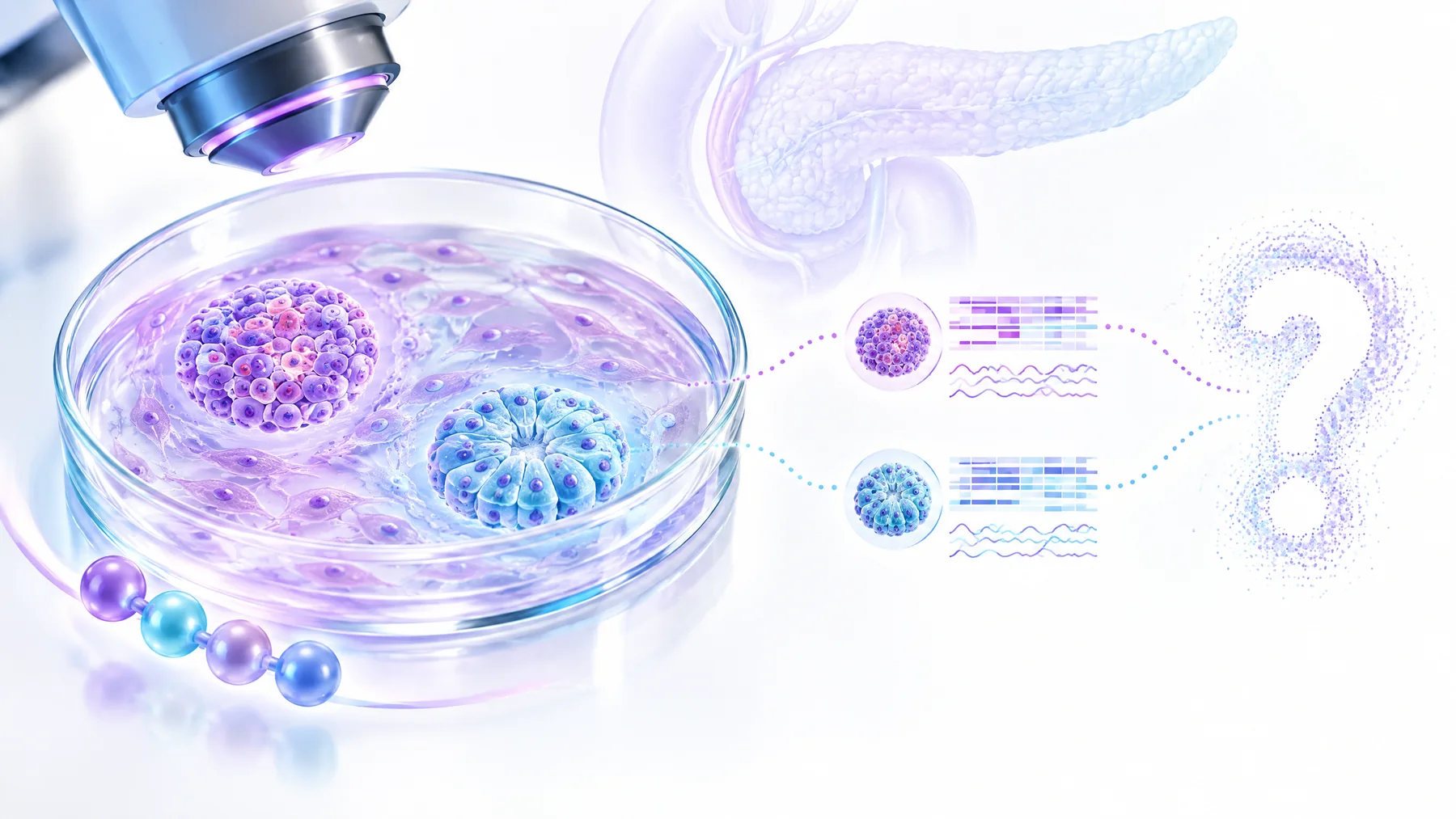
Myakisheva and colleagues cultured primary chondrocytes obtained from young (3-month) and old (20-month) rats. At passage four, they followed cell growth over five days after testing AED at 20, 200 and 2,000 ng/mL. This is an in-vitro rat-cell experiment, not an osteoarthritis treatment study in living animals or people. [1]
The paper reports 200 ng/mL as the effective AED concentration. Compared with its control cultures, cell numbers increased 1.4–1.8-fold in cultures from young rats and 1.6–2.1-fold in cultures from old rats. The result is an observed change in cultured chondrocyte number under the paper’s conditions. [1]
This result should not be translated into a human dose, injection route, frequency, or expected clinical effect. A concentration placed directly into a dish is not exposure in a joint or bloodstream; it does not establish absorption, distribution, metabolism, elimination, sterile formulation requirements, or a therapeutic window. The study also measured proliferation/cell growth, not joint pain, mobility, cartilage thickness, structural repair or adverse events in people. [1]
Molecular pathway claims: signals observed, target unresolved
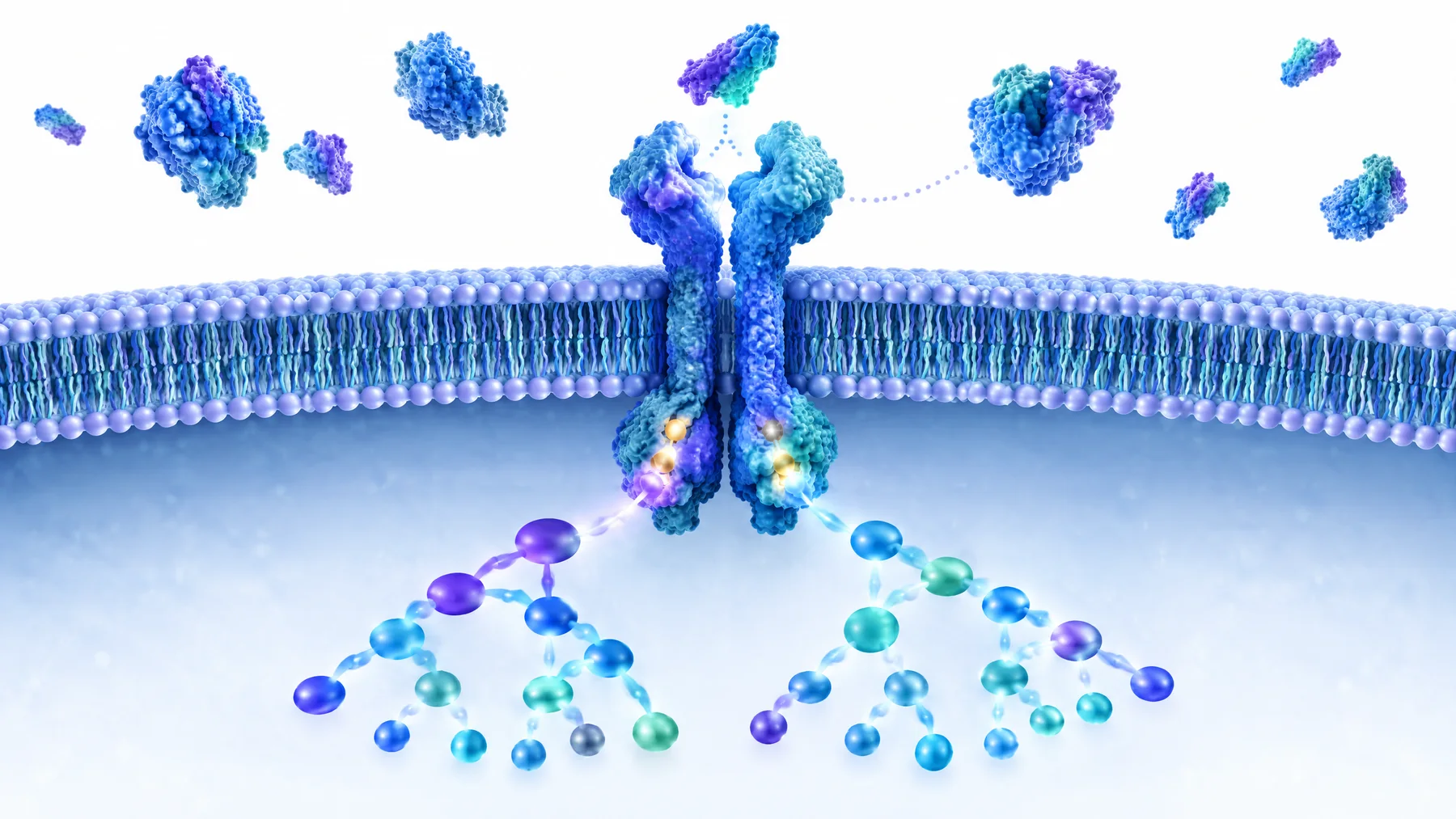
In a separate primary study, human embryonic bone-marrow mesenchymal stem cells (FetMSCs) were aged in passage-based and stationary culture models and exposed to AED, KED or KE at nanomolar concentrations. The investigators measured IGF1, FOXO1, TERT, TNKS2 and NFκB gene expression; the abstract reports that the peptides modulated some of these genes and that all three stimulated NFκB expression in both ageing models. [2]
That work is useful as a cell-culture observation, but it does not identify a validated AED receptor, prove direct DNA binding in chondrocytes, or demonstrate that any mRNA change causes cartilage repair. NFκB and IGF1 are biologically important pathways, yet observing expression changes in an ageing stem-cell model is not proof of a beneficial anti-inflammatory or regenerative effect in osteoarthritis. [2]
The appropriate conclusion is deliberately narrow: AED has reported biological activity in several cultured-cell systems, while its pharmacological target and disease-relevant mechanism remain unresolved. A pathway diagram should therefore distinguish measured culture outcomes from proposed downstream clinical benefits. [1] [2]
Other laboratory models are not joint-treatment evidence
A 2016 study exposed ageing rat skin fibroblasts in culture to AED, AEDG, KED and KE. By immunofluorescent confocal microscopy, the authors reported lower MMP-9 and higher Ki-67 and CD98hc with all tested peptides; AED and AEDG also suppressed caspase-dependent apoptosis in that model. These cells were skin fibroblasts, not cartilage cells, and the experiment did not test an intervention in an animal or a person. [3]
A 2019 human-cell experiment examined AED, AEDG, KE, KED and their combined mixture in human periodontal-ligament stem cells under basal or neuroinductive conditions. The reported increases in neuronal markers were strongest for the mixture and KED, not a demonstration that AED alone treats cartilage disease. It is a useful warning against treating results from peptide mixtures as evidence for Cartalax alone. [4]
Across these models, endpoints are laboratory markers—cell number, marker expression or apoptosis—not patient-centred outcomes. Differences in cell source, culture medium, peptide concentration, comparator and endpoint mean that results cannot be pooled into a universal ‘Cartalax effect’. [1] [2] [3] [4]
Human evidence and safety: what has not been shown
The primary studies located for AED/Cartalax are preclinical or in-vitro. They do not provide a randomised human trial showing improvement in osteoarthritis pain, physical function, imaging outcomes, cartilage repair, disability, or disease progression. Nor do they provide a validated human dose, route, escalation schedule, dilution method, storage instruction or interaction profile. [1] [2] [3] [4]
Safety cannot be inferred from a peptide’s small size or from cultured cells remaining viable. Clinically meaningful safety assessment would need a defined manufactured product and human data on adverse events, allergy or immune reactions, laboratory effects, contaminants, sterility where relevant, and longer-term exposure. Those data were not supplied by the studies reviewed here. [1] [2] [3] [4]
A PubMed query mapped ‘Cartalax’ to alanyl-glutamyl-aspartic acid and returned six indexed records at the time checked, including cell-culture and tissue-culture reports rather than a Cartalax human clinical-efficacy paper. Database searching cannot prove that no study exists anywhere, but it reinforces the need to treat human claims as unverified until a full trial record and publication are available. [8]
Australian regulatory context
The Therapeutic Goods Administration (TGA) describes the Australian Register of Therapeutic Goods (ARTG) as the public database of therapeutic goods that can be legally supplied in Australia. It is the appropriate starting point for checking a named product’s formulation, sponsor and any Product Information or Consumer Medicine Information. [6]
No Cartalax ARTG entry, Australian Product Information or Consumer Medicine Information was identified in this review. That is not evidence that a research chemical is an approved medicine; readers should check the live ARTG by exact product name and sponsor because register contents can change. [6]
The TGA states that goods not included in the ARTG are ‘unapproved therapeutic goods’ and that it has not evaluated such goods for quality, safety, efficacy or performance. Certain practitioner pathways, including the Special Access Scheme and Authorised Prescriber scheme, exist under conditions; they do not convert a research vial into an approved medicine or establish effectiveness. [7]
How to read claims, comparisons and vial marketing
The most defensible comparison is between evidence types, not promotional labels: AED has limited cell-culture evidence; PPCC is a different bovine-cartilage polypeptide mixture; and neither result establishes a clinically validated combined protocol. A blend containing Cartalax plus other substances has a new composition and cannot borrow a safety or efficacy conclusion from any component’s separate experiment. [1] [4]
When reading a headline such as ‘supports cartilage’ or ‘regenerates joints’, ask four questions: Was the substance pure AED or a mixture? Was the model a dish, animal or human? What outcome was actually measured? Was the comparison a control and was the result replicated? For the directly relevant AED paper, the answers are pure AED, cultured rat chondrocytes, five-day cell-growth curves, and no human outcome. [1]
For an Australian reader with joint symptoms, this evidence record is not a treatment plan. It supports cautious scientific literacy: distinguish a laboratory observation from clinical care, and seek appropriately qualified clinical advice rather than extrapolating a culture concentration into self-administration. [1] [6] [7]
Questions readers ask
Is Cartalax actually a peptide?
Yes. Cartalax is a synonym for the synthetic tripeptide Ala-Glu-Asp (AED), with three amino-acid residues. It is not the same thing as a bovine-cartilage polypeptide complex, even though both appeared in the same chondrocyte-culture report. [5] [1]
Does Cartalax regenerate cartilage or treat osteoarthritis in people?
That has not been demonstrated by the evidence located. The directly relevant result was increased cell number in primary rat chondrocyte cultures over five days; the reviewed studies do not report human osteoarthritis outcomes such as pain, function, imaging or structural repair. [1] [2] [3] [4]
Does 200 ng/mL in the rat chondrocyte study provide a human dose?
No. It was an in-vitro culture concentration, not a dose administered to an animal or person. The paper does not establish a human route, dose, schedule, dilution, storage method, exposure level or safety margin. [1]
Is Cartalax a TGA-approved medicine in Australia?
No ARTG entry, Australian Product Information or Consumer Medicine Information for Cartalax was identified in this review. The TGA says the ARTG is the database of therapeutic goods approved for legal supply, and goods outside it have not been evaluated by the TGA for quality, safety, efficacy or performance. Recheck the live ARTG for any future product-specific change. [6] [7]
Can results for a Cartalax-containing blend be assumed from AED studies?
No. The published experiments used defined peptides or, separately, a cartilage-derived polypeptide complex. A blend changes the intervention, and no validated combined protocol or combined clinical evidence was identified here. [1] [4]
What remains uncertain
This is a limited-evidence record. The directly relevant cartilage paper is a short, single in-vitro rat-chondrocyte study with restricted full-text access; it reports cell counts rather than clinical outcomes and does not provide the information needed to assess replication, randomisation, blinding, sample size, pharmacokinetics or long-term safety. Other AED publications use different cell types and endpoints, so they cannot validate a cartilage-treatment claim. PubMed and regulator-register searches are point-in-time checks, and a failed or empty name search cannot prove that no product, study or jurisdiction-specific record exists; it is why the live ARTG should be checked for any exact product and sponsor.
References and further reading
- [1] Peptides of cartilage tissue: regulation of chondrocyte proliferation, geroprotection and prospects for use in osteoarthrosis. In-vitro primary chondrocyte cultures from young (3-month) and old (20-month) rats; AED and a separate bovine cartilage polypeptide complex tested at 20, 200 and 2,000 ng/mL; five-day growth curves at passage four.
- [2] Gene expression in human mesenchymal stem cell aging cultures: modulation by short peptides. In-vitro study of human embryonic bone-marrow mesenchymal stem cells (FetMSCs) in passage-based and stationary ageing models, comparing AED, KED and KE at nanomolar concentrations and measuring IGF1, FOXO1, TERT, TNKS2 and NFκB expression.
- [3] Peptide Regulation of Skin Fibroblast Functions during Their Aging In Vitro. In-vitro ageing cultures of Wistar rat skin fibroblasts exposed to KE, KED, AED and AEDG; immunofluorescent confocal measurement of Ki-67, CD98hc, caspase-3 and MMP-9.
- [4] Effect of short peptides on neuronal differentiation of stem cells. In-vitro study of human periodontal-ligament stem cells exposed to AED, AEDG, KE, KED or their mixture, assessed by MTT, immunofluorescence and western blot under basal and neuroinductive conditions.
- [5] Alanyl-glutamyl-aspartic acid (PubChem CID 87815447). Curated chemical identity record.
- [6] About the Australian Register of Therapeutic Goods (ARTG). TGA regulatory guidance and ARTG access record.
- [7] Access an unapproved therapeutic good (health practitioners). TGA guidance on ARTG status and practitioner access pathways for unapproved therapeutic goods.
- [8] PubMed query: Cartalax / alanyl-glutamyl-aspartic acid. Reproducible NCBI PubMed query; the database maps Cartalax to alanyl-glutamyl-aspartic acid and returns indexed records.