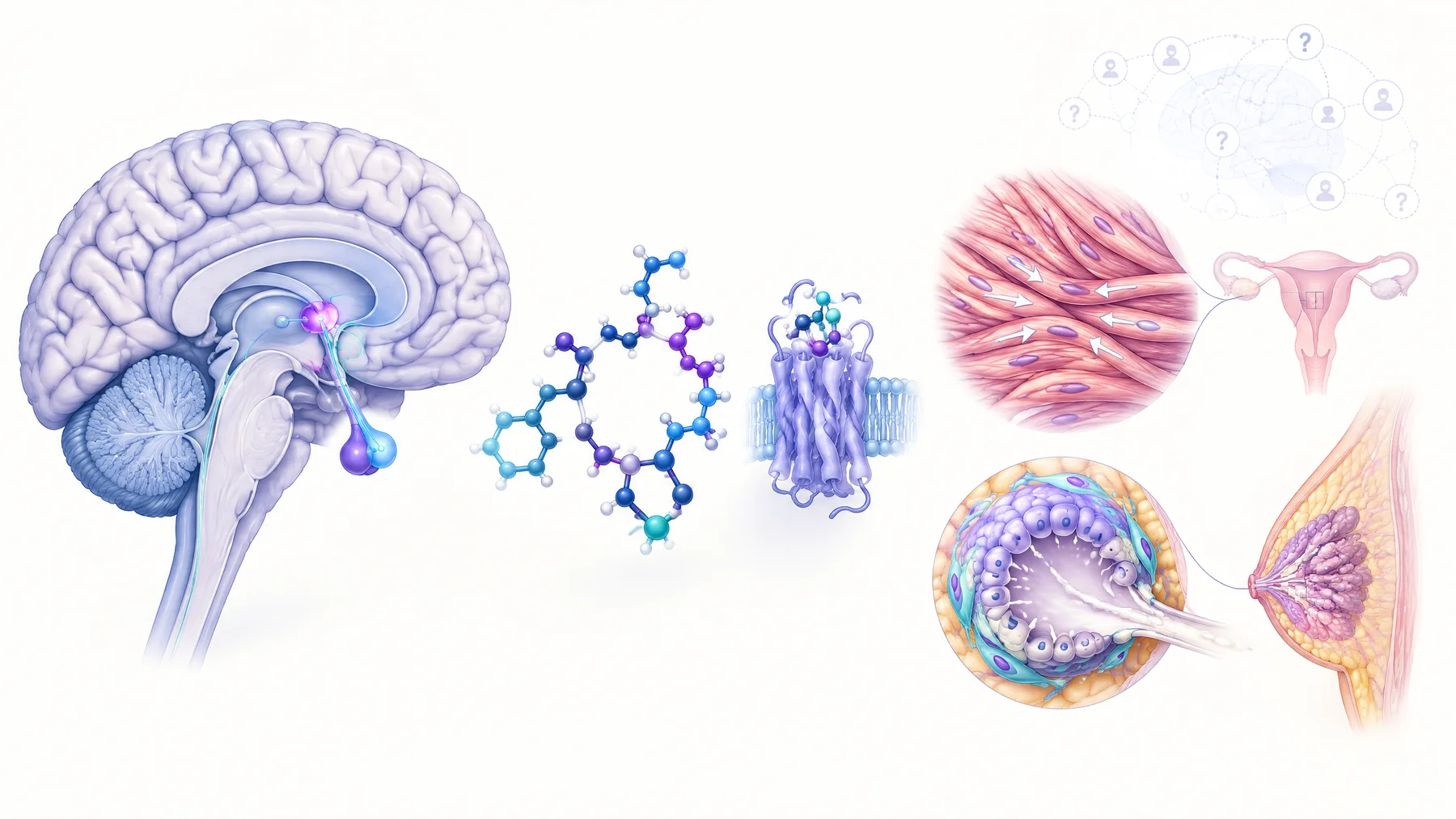
What is Adipotide?
Adipotide is a synthetic, ligand-directed pro-apoptotic peptidomimetic: CKGGRAKDC-GG-D(KLAKLAK)2. The CKGGRAKDC portion was selected as a white-adipose-vasculature homing motif; the D(KLAKLAK)2 portion is the cell-killing cargo. It is peptide-derived research candidate—not a naturally occurring hormone, topical cosmetic ingredient, blend, or approved medicine. In the registered human study it was called Prohibitin-TP01.
Adipotide is unusual among proposed weight-loss compounds because its intended target is the blood-vessel network supporting white adipose tissue, rather than a gut-hormone receptor or appetite receptor. Animal experiments reported loss of white fat, body-weight reduction and metabolic changes, but also a renal tubular-toxicity signal in monkeys. The only registered first-in-human study, in men with metastatic prostate cancer and obesity, was terminated with four enrolled participants and no results posted. Those facts rule out claims of demonstrated human efficacy, a standard patient dose, or a validated commercial formulation.
Identity: a vascular-targeting peptidomimetic, not a standard weight-loss peptide
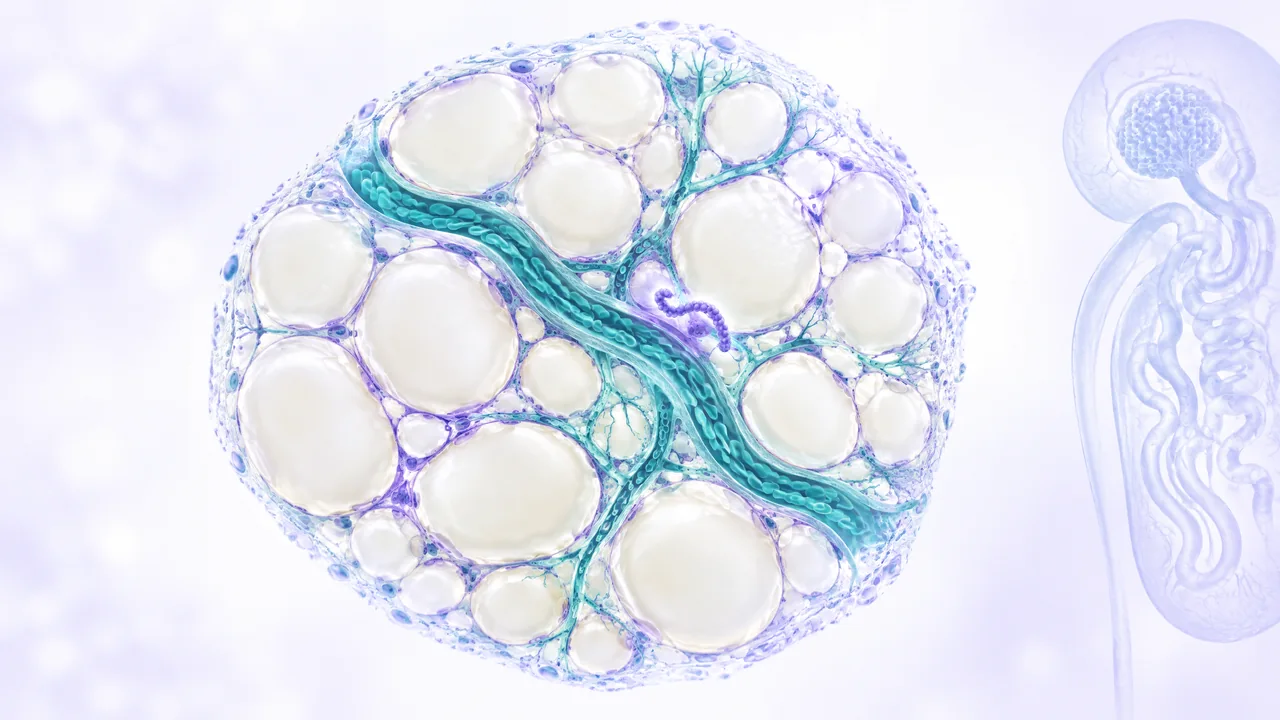
The name adipotide refers to the chimeric peptidomimetic CKGGRAKDC-GG-D(KLAKLAK)2. In the foundational study, investigators identified CKGGRAKDC by in-vivo phage display as a motif that homes to white-fat vasculature and reported association with prohibitin. They coupled it to a pro-apoptotic sequence to damage targeted cells. That design matters: adipotide is intended to affect adipose-tissue endothelium, not directly to mimic GLP-1, insulin, hCG or another circulating hormone. [1]
The term is sometimes presented as if it describes a finished injectable medicine. It does not. The primate research material was made to study specifications, while the human registry describes Prohibitin-TP01 as investigational and not commercially available at the time of that trial. A research-supplier vial, if encountered, is not the same thing as a regulator-approved formulation with verified manufacturing, labelling, stability, indication and product information. [3] [4] [5]
Proposed molecular pathway—and where the evidence stops
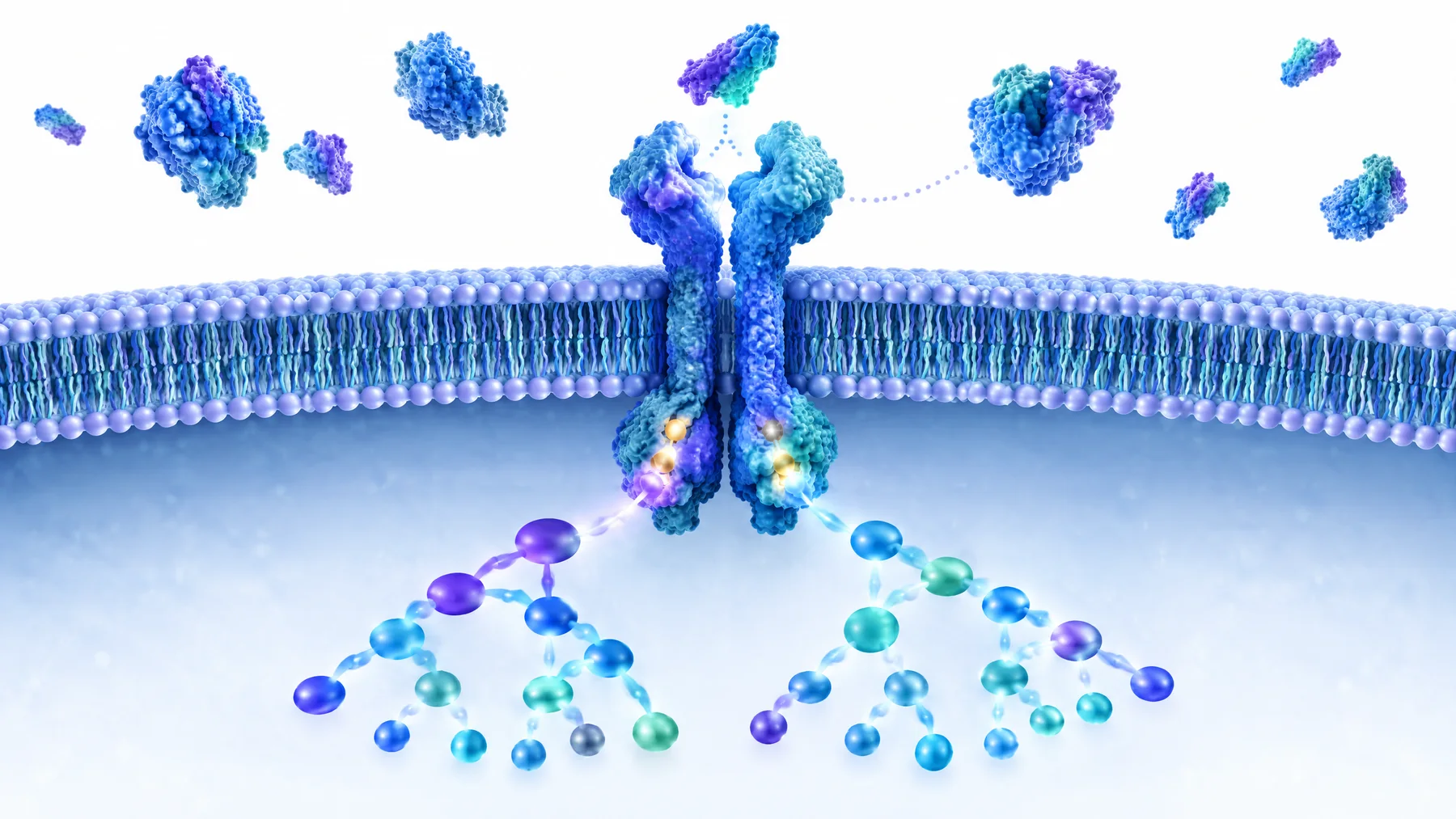
In obese mouse experiments, the targeting motif associated with prohibitin in white-fat vessels; delivery of the pro-apoptotic construct to that vasculature was reported to ablate white fat and normalise metabolic measures in that model. This supports a mechanism within the studied animal system, not proof that prohibitin targeting will be selective, effective or safe in people. Prohibitin expression in human white-fat vessels was a rationale for further research, rather than clinical validation. [1]
A later mouse-and-rat study found that the weight-loss phenotype was accompanied by lower food intake in high-fat-fed animals, without a measured rise in energy expenditure or evidence of conditioned taste aversion. The authors interpreted this as evidence that perturbing adipose vasculature may influence food intake; the mediator of that signal was not identified. Therefore, it is inaccurate to say adipotide has a proven appetite-suppression mechanism or a proven direct fat-cell-killing mechanism in humans. [2]
What the animal studies actually found
The 2004 proof-of-concept paper used obese mouse models and reported rapid reversal of obesity after targeted ablation of adipose tissue, with no detectable adverse effects under that experiment's conditions. Its central contribution was target discovery and a rodent proof of concept; it was not a human study and cannot establish a clinical benefit–risk balance. [1]
An independent energy-balance study used high-fat-fed C57BL/6 mice and high-fat-fed Long-Evans rats. In the high-fat-fed groups, the construct reduced body weight and food intake; the effect was not seen in low-fat-fed mice, and measured energy expenditure did not change. This model dependence is useful context: an animal result in diet-induced obesity is not a universal result for lean animals, other causes of obesity, or people. [2]
The most clinically relevant preclinical study tested spontaneously obese rhesus macaques, with additional observations in baboons and cynomolgus monkeys. In the placebo-controlled rhesus fixed-dose cohort, 10 treated and 5 saline-control animals were followed through 28 days of treatment and recovery; treated animals averaged 10.6% body-weight reduction, and MRI/DEXA supported marked white-adipose reduction. Weight, BMI and abdominal-circumference changes began to reverse during recovery, which is an important qualification to claims of durable fat loss. [3]
Human evidence: a terminated first-in-human study, not a demonstrated treatment
The registered first-in-human trial was a single-arm, open-label Phase 1 study of Prohibitin-TP01 in men with obesity and metastatic or otherwise incurable prostate cancer. Its purpose was dose tolerability and biologic activity, not a definitive obesity trial. The registry records actual enrolment of four participants, termination at the principal investigator's request, and no posted results. [4]
Because there are no posted trial outcomes, the public record does not establish human weight loss, fat loss, pharmacokinetics, adverse-event rates, a maximum tolerated dose, or effectiveness against prostate cancer. The protocol's planned treatment cycle is not a usable administration recommendation, particularly because the study population had advanced cancer and protocol-level renal eligibility and monitoring. No human self-administration schedule can be inferred from this record. [4]
Safety signal and major uncertainties
Renal findings are the key preclinical safety concern. In rhesus studies, increasing dose was associated with higher creatinine, glucosuria, proteinuria and urine epithelial-cell changes. A dedicated 28-day study in lean rhesus monkeys found dose-dependent tubular degeneration, regeneration and single-cell necrosis on kidney histology. Many laboratory and tissue changes improved after recovery, but some residual abnormalities were noted in individual animals. [3]
Reversibility in a limited animal study is not evidence that renal injury is acceptable or reversible in people. Further unknowns include human tissue selectivity, immune response to a synthetic peptide, repeat-cycle effects, interactions, reproductive risk, long-term tissue consequences and whether animal adipose loss translates into meaningful, durable clinical outcomes. The terminated trial and absence of results leave those questions unanswered. [3] [4]
Australian regulatory context
Adipotide should not be described as an Australian-approved medicine. The TGA explains that therapeutic goods not included in the Australian Register of Therapeutic Goods (ARTG) are unapproved and have not been assessed by the TGA for safety, quality or effectiveness. The ARTG is the appropriate live database to check product name, formulation and sponsor details; this research identified no approved adipotide formulation or Australian Product Information. [5] [7]
Unapproved goods can be subject to tightly defined legal pathways, but those pathways do not turn an investigational compound into an approved therapy. For Australian clinical research, the TGA describes Clinical Trial Notification and Clinical Trial Approval schemes for use of unapproved goods for experimental purposes in humans. This is regulatory context, not advice to obtain, import, compound or use adipotide. [5] [6]
How to read claims about adipotide
A useful evidence hierarchy here is: molecular and animal findings first; then non-human-primate efficacy and toxicology; then a very small, unpublished-result human safety study. Attractive animal percentage-loss figures should retain their model, comparator, duration and recovery period. They cannot be converted into a human dose, predicted percentage loss or assurance of safety. [1] [2] [3] [4]
Adipotide is best compared by development status and mechanism, not by marketing category. Unlike a labelled medicine, it has no approved indication, consumer information, validated escalation plan or established combined protocol. Combining it with another substance would create a new, untested exposure rather than an evidence-based regimen. [4] [5]
Questions readers ask
Is adipotide an approved medicine in Australia?
No approved Australian adipotide formulation was identified in this research, and it should not be presented as an ARTG-approved medicine. TGA guidance says products outside the ARTG have not been assessed by the TGA for safety, quality or effectiveness; current listings should be checked directly in the live ARTG. [5] [7]
Has adipotide been proven to cause weight loss in people?
No. The registered Phase 1 study of its alias Prohibitin-TP01 enrolled four men with advanced prostate cancer and obesity, was terminated, and has no posted results. Animal findings do not supply proof of human efficacy. [3] [4]
What is the main safety concern seen in research?
Kidney tubular dysfunction and injury in non-human primates. The primate study reported dose-related creatinine and urinary changes, and renal tubular lesions in formal toxicology work; improvement after recovery did not resolve the absence of human safety data. [3]
Why is adipotide not simply another appetite-suppressing peptide?
Its experimental design targets white-adipose blood vessels via a prohibitin-associated homing motif coupled to a pro-apoptotic cargo. Reduced food intake was observed in high-fat-fed rodents, but the signalling link was not identified and is not established in humans. [1] [2]
What remains uncertain
The evidence base is dominated by animal research. Mouse and rat findings are model-specific; the rhesus efficacy cohort was small and short, and renal injury was observed. The only registered human study was an oncology-focused, open-label Phase 1 trial with actual enrolment of four participants, terminated status and no posted results. No conclusion about human efficacy, safety, dose, storage, route for routine care, repeat use or combination use is justified. Australian approval status should be verified in the live ARTG rather than inferred from a supplier listing.
References and further reading
- [1] Reversal of obesity by targeted ablation of adipose tissue. Mechanistic in-vivo phage-display, target-identification and obese-mouse intervention study; Nature Medicine 2004; PMID 15133506; doi:10.1038/nm1048.
- [2] Peptide designed to elicit apoptosis in adipose tissue endothelium reduces food intake and body weight. High-fat- and low-fat-fed C57BL/6 mouse and high-fat-fed Long-Evans rat energy-balance experiments over 4 or 27 days; Diabetes 2010; PMID 20103704; doi:10.2337/db09-1141.
- [3] A peptidomimetic targeting white fat causes weight loss and improved insulin resistance in obese monkeys. Dose-finding, placebo-controlled obese-rhesus efficacy studies plus lean-rhesus repeat-dose toxicology; also reports observations in baboons and cynomolgus monkeys; Science Translational Medicine 2011; PMID 22072637; doi:10.1126/scitranslmed.3002621.
- [4] NCT01262664: A First-in-Man, Phase I Evaluation of A Single Cycle of Prohibitin Targeting Peptide 1 in Patients With Metastatic Prostate Cancer and Obesity. Single-arm, open-label Phase 1 trial at MD Anderson; actual enrolment 4; terminated per principal investigator's request; no results posted.
- [5] Unapproved therapeutic goods. TGA regulatory guidance page, not a clinical study.
- [6] Clinical trials. TGA overview of Clinical Trial Notification and Clinical Trial Approval schemes, not a clinical study.
- [7] Australian Register of Therapeutic Goods (ARTG). Live public regulatory database and search resource, not a clinical study.