Skip to content
Dosage guide · 10 mg vial

Adipotide Dosage Protocol

FTPP · fat-targeted proapoptotic peptidomimetic

The reference protocol uses a once-daily subcutaneous amount of 250 mcg for weeks 1–2, increasing by 250 mcg every 2 weeks to 1 mg in weeks 7–8. With 3 mL of bacteriostatic water, a 10 mg vial is 3.33 mg/mL, so 250 mcg is 7.5 units on a U-100 syringe. This is not a clinically established human dose.

How oftenOnce daily
Starting dose250 mcg
Start = units7.5 units
Mix3 mL BAC water

Reviewed 25 Oct 2026 · Education only, not medical advice

Adipotide 10 mg vial

Not currently stocked by Peak Peptides Australia

No product photo — this strength isn't stocked by Peak

01 · DOSAGE CHART

Adipotide dosage chart

Gradual daily approach · 10 mg vial + 3 mL BAC water

BAC water added
Concentration3.33 mg/mL
1 unit (U-100)33.3 mcg= 0.01 mL
How oftenOnce dailySubcutaneous injection

3 mL is the reference protocol mix, making the concentration 3.33 mg/mL and 1 mg equal to 30 units.

Adipotide dosage chart for a 10 mg vial mixed with 3 mL of bacteriostatic water
WeekDaily doseSyringe units
Weeks 1–2Start250 mcg7.5 units0.075 mL
Weeks 3–4500 mcg15 units0.15 mL
Weeks 5–6750 mcg22.5 units0.225 mL
Weeks 7–8Max1 mg30 units0.3 mL

Once daily · any consistent time · subcutaneous injection

The reference protocol increases the daily amount by 250 mcg every 2 weeks.

Its schedule is 8 weeks; its longer supply estimates assume the 1 mg daily amount continues after week 8.

The protocol’s listed amounts are not a clinically established human dose.

Community-reported amounts — Adipotide has no clinically established human dose and the first-in-human trial was terminated after four participants. Education only, not medical advice. Dose amounts adapted from Adipotide 10 mg vial dosage protocol (PeptideDosages.com); units are recalculated for the vial and mix selected above.

02 · HOW TO MIX

Mixing a 10 mg vial with 3 mL of BAC water

Using a 1 mL (100-unit) insulin syringe, 3 full draws of bacteriostatic water gives 3.33 mg/mL.
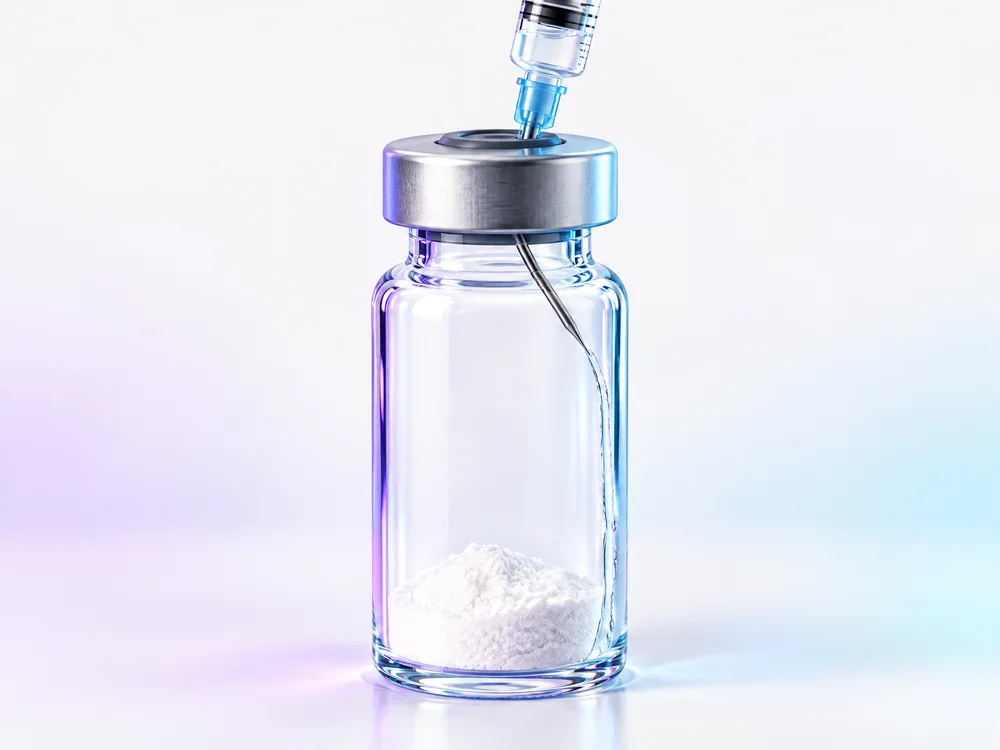
  1. Bacteriostatic water running slowly down the inside wall of a peptide vial1

    Add the water slowly

    Wipe both rubber stoppers with an alcohol swab and let them dry. Draw 3 mL of bacteriostatic water and let it run slowly down the inside of the vial wall — not straight onto the powder.
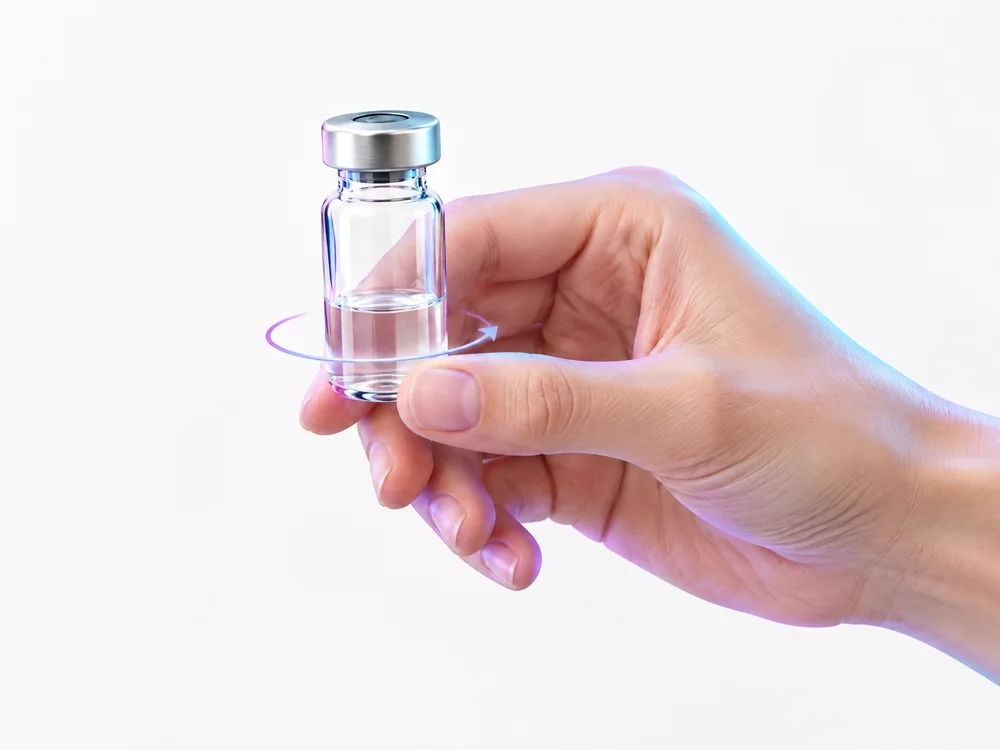
  2. Hand gently swirling an upright vial in a small circle2

    Swirl gently

    Swirl or roll the vial gently until the powder has dissolved. Give it a few minutes to settle if needed.
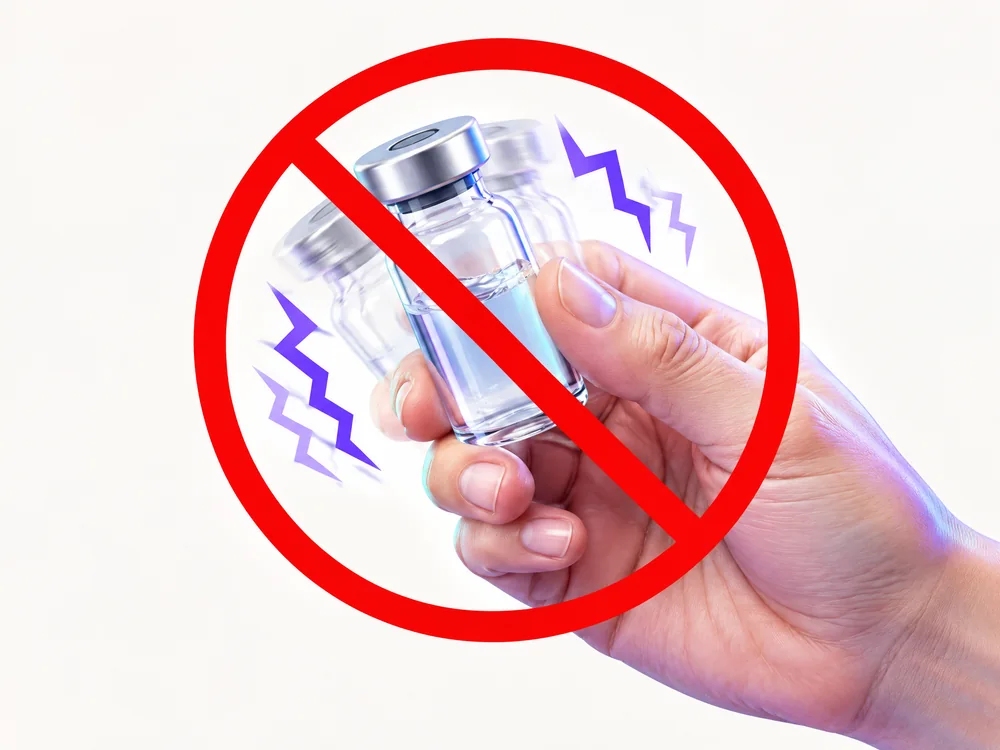
  3. A vial being shaken with a red cross through it3

    Don't shake it

    Shaking can damage the peptide and cause foaming. Gentle swirling only.
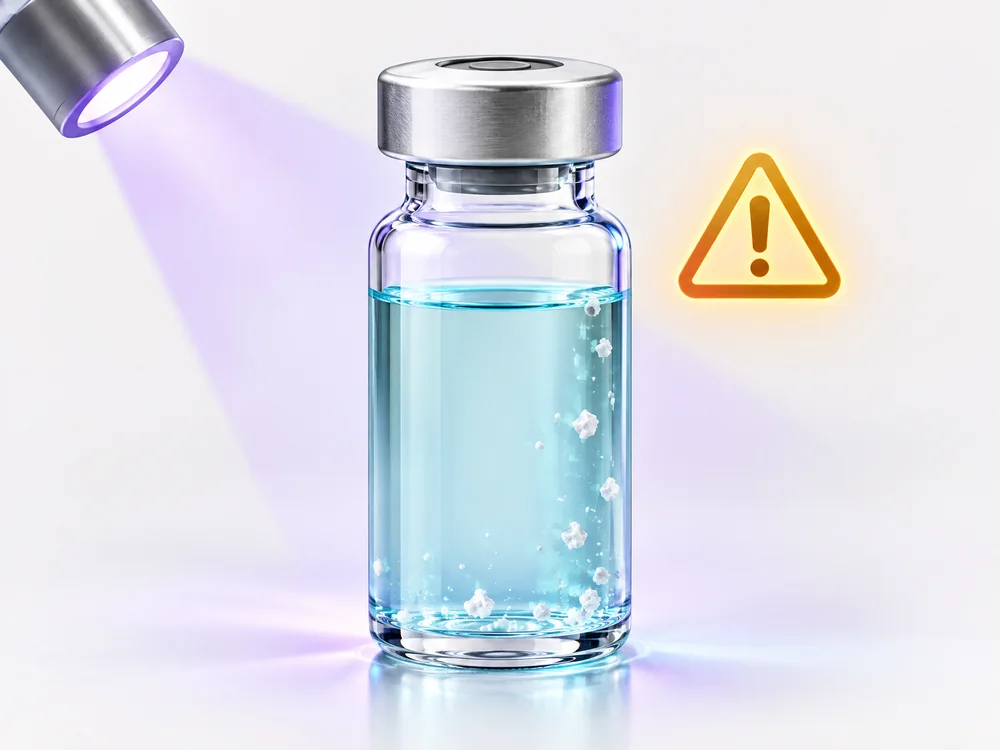
  4. Close-up of a vial with small undissolved particles and a caution symbol4

    Check it's fully clear

    Only use it once it is fully clear with no particles. Label the vial with the date and 3.33 mg/mL, then store it in the fridge at 2–8 °C.

Full illustrated reconstitution guide
03 · SUPPLIES NEEDED

What you'll need

Counts follow the dosage chart above at the highest amount in each step, using a 10 mg vial mixed with 3 mL.

Length of protocol
4Adipotide 10 mg vials35 mg needed in total
601 mL insulin syringesU-100, 27–31G · one per draw + one per vial mixed
2BAC water 10 mL bottles12 mL used for mixing
120Alcohol swabsSkin + stopper, every time

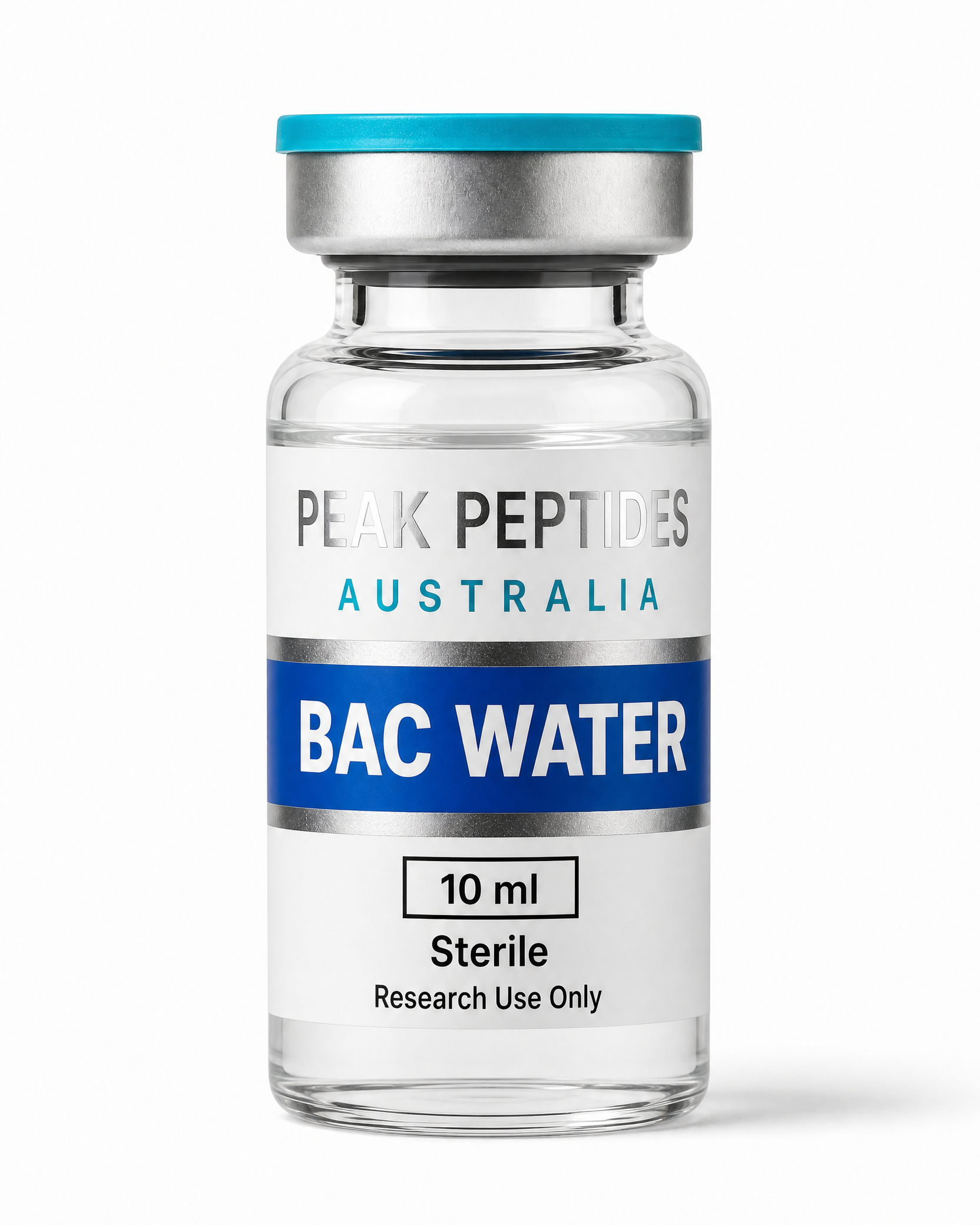
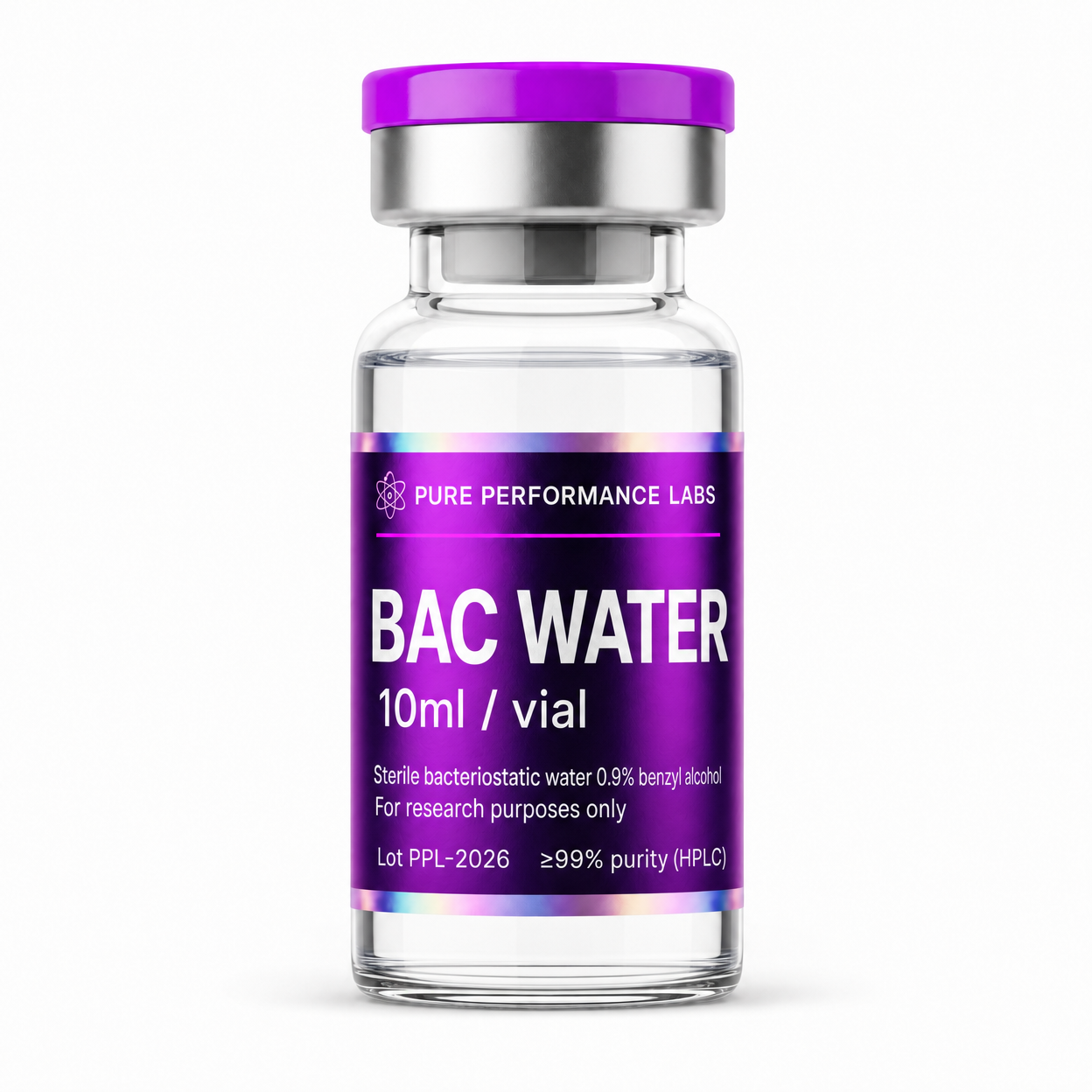
Plus an approved sharps container. Syringes and swabs are sold by Australian pharmacies — Peak Peptides and Pure Performance supply the bacteriostatic water.

04 · CALCULATOR

Check a different amount

Enter your vial, water and dose to see the matching syringe units.

Concentration Calculator
mg
3 mL
mcg

Concentration

3.33 mg/mL

(3333 mcg/mL)

Calculated Liquid Volume

0.075 mL

Equivalent U-100 volume scale position

7.5markings (not biological IU)
01020304050607080901008 marks

Illustration of a U-100 volume scale, not preparation or injection guidance

05 · PROTOCOL DETAILS

About Adipotide

Protocol overview

Starting amount
250 mcg once daily for weeks 1–2
How it increases
Add 250 mcg every 2 weeks, to 1 mg daily in weeks 7–8
Frequency
Once daily
Route
Subcutaneous in the reference protocol
Reference schedule
8 weeks
Common mix
3 mL bacteriostatic water → 3.33 mg/mL

Storage

Before mixing
The reference protocol says to store the lyophilised vial at −20 °C in dry, dark conditions.
After mixing
The reference protocol says to refrigerate at 2–8 °C and protect from light.
Never
Avoid repeated freeze–thaw cycles or using a vial that is cloudy or has particles.

How it works

Adipotide, also called FTPP or Prohibitin-TP01, is a synthetic peptidomimetic. In animal research, it binds a target on blood vessels in white fat and carries a pro-apoptotic sequence intended to damage those vessels.

In obese monkeys, the reported biological effect was reduced white adipose tissue alongside weight loss. This animal mechanism and outcome do not establish effectiveness or safety in people.

Illustrated mechanism explainer

What the research shows

  • In obese rhesus monkeys given 0.43 mg/kg subcutaneously each day for 28 days, the treated group had an average 10.6% reduction in body weight; the comparison group had 5 animals and the treated group had 10.
  • A 28-day toxicology experiment in 15 lean rhesus monkeys tested 0.25, 0.43 and 0.75 mg/kg daily. Kidney lesions were dose-dependent, and the 0.75 mg/kg group had increasing creatinine during dosing.
  • ClinicalTrials.gov lists the first-in-human Prohibitin-TP01 programme as terminated at the principal investigator’s request in January 2019, with actual enrolment of 4 participants and no posted results.
  • That human protocol began at 0.03 mg/kg once daily for up to 28 days in men with metastatic prostate cancer and obesity; it does not establish the fixed microgram amounts in this chart.
  • A TGA ARTG search for Adipotide returned no matching record. The human registry describes Prohibitin-TP01 as investigational and not FDA approved or commercially available.

Reported side effects

  • Kidney toxicity is the key documented risk. In the primate toxicology experiment, kidney lesions were dose-dependent and included tubular degeneration, regeneration and single-cell necrosis.
  • At 0.75 mg/kg daily in lean rhesus monkeys, serum creatinine increased during the 28-day dosing interval; levels fell during recovery but remained slightly elevated at its end.
  • In the 0.43 mg/kg group, 2 monkeys had sporadic slight-to-moderate creatinine elevations. The animal findings cannot quantify risk in people.
  • Human safety data are extremely limited: the terminated first-in-human registry records only 4 actual participants and has no posted results.

Important notes

  • Adipotide is not an approved medicine in Australia: the TGA ARTG search returned no matching record. The human registry also states Prohibitin-TP01 was not FDA approved or commercially available.
  • Do not treat the reference-site amounts as safe or clinically validated. Primate research found dose-dependent kidney injury, including tubular lesions and creatinine changes.
  • The only registered human programme was a closely monitored cancer protocol and was terminated after 4 participants; no posted results establish safety, benefit or a routine human dose.
  • Prohibited in sport: Adipotide falls under WADA S0, which prohibits at all times pharmacological substances without current approval by a governmental health authority for human therapeutic use.
  • Never use a mixed vial that is cloudy or has particles in it.

Injection basics

  • Use a new sterile 1 mL (100-unit) U-100 insulin syringe, 27–31G, every time — never reuse or share.
  • Wipe the vial stopper and the skin with an alcohol swab and let both dry first.
  • Inject under the skin (subcutaneously) of the abdomen, thigh or upper arm, and rotate sites.
  • Put used syringes straight into an approved sharps container — the NDSS lists Australian disposal options.

Guidance: World Health Organization · National Diabetes Services Scheme (NDSS)

06 · QUICK ANSWERS

Adipotide questions

How many units is 250 mcg of Adipotide?

With 3 mL in a 10 mg vial, the concentration is 3.33 mg/mL. A 250 mcg amount is 7.5 units, or 0.075 mL, on a U-100 syringe.

How much bacteriostatic water is used for a 10 mg Adipotide vial?

The reference protocol uses 3 mL. This makes 3.33 mg/mL, so 30 U-100 units equals 1 mg and 15 units equals 500 mcg.

How long does a 10 mg Adipotide vial last?

At a fixed daily amount, a 10 mg vial contains 40 days of 250 mcg amounts, 20 days of 500 mcg amounts, 13.3 days of 750 mcg amounts or 10 days of 1 mg amounts.

Is Adipotide approved in Australia?

No matching Adipotide record was returned by the TGA ARTG search. It is not an approved medicine in Australia, and the first-in-human registry describes Prohibitin-TP01 as investigational.

07 · SOURCES

References

Related dosage guides

All dosages