What is TB-500?
Research-only synthetic peptide product name; not an approved medicine and not the same substance as full-length thymosin beta-4 TB-500 is a label used for an N-terminally acetylated seven-amino-acid fragment of thymosin beta-4, Ac-LKKTETQ, in anti-doping research. Full-length thymosin beta-4 (Tβ4) is a distinct 43-amino-acid peptide. The name on an online vial is therefore not evidence that it contains a standardised pharmaceutical formulation or that evidence for full-length Tβ4 applies to it.
TB-500 is best read as a research-product name with a short-peptide identity problem, not as a ready-made treatment protocol. The most often cited repair findings come from full-length thymosin beta-4 in cell and animal models. Those experiments are scientifically useful but do not establish that a TB-500 vial heals a human tendon, muscle injury or wound.
What TB-500 is — and what it is not
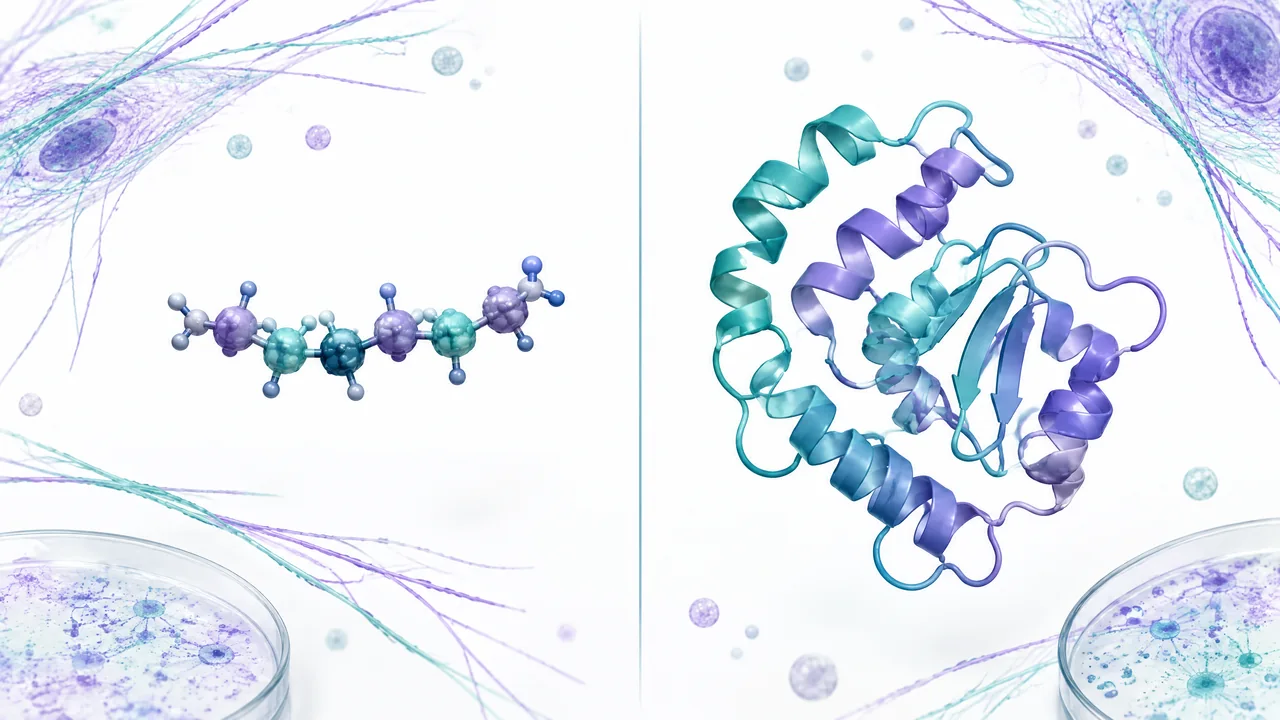
TB-500 is not a hormone, a topical cosmetic ingredient or a mixture. It is a short synthetic peptide associated with thymosin beta-4 (Tβ4). A World Anti-Doping Agency (WADA)-funded analytical project identified the active content of a product called TB-500 as the N-terminally acetylated Tβ4 residues 17–23: Ac-LKKTETQ. That is seven amino acids. By contrast, native Tβ4 is a 43-amino-acid peptide, so the two should not be treated as interchangeable names for one medicine. [3] [5]
This distinction changes how the literature should be read. Many influential repair studies administered full-length Tβ4, while some animal and cell experiments tested the unacetylated seven-residue sequence LKKTETQ. Neither result automatically identifies what a particular seller’s ‘TB-500’ vial contains or proves that it behaves like a regulated recombinant Tβ4 product. The TGA warns that labels on unapproved peptide products may be inaccurate or misleading. [2] [3] [8]
A molecular pathway with important boundaries
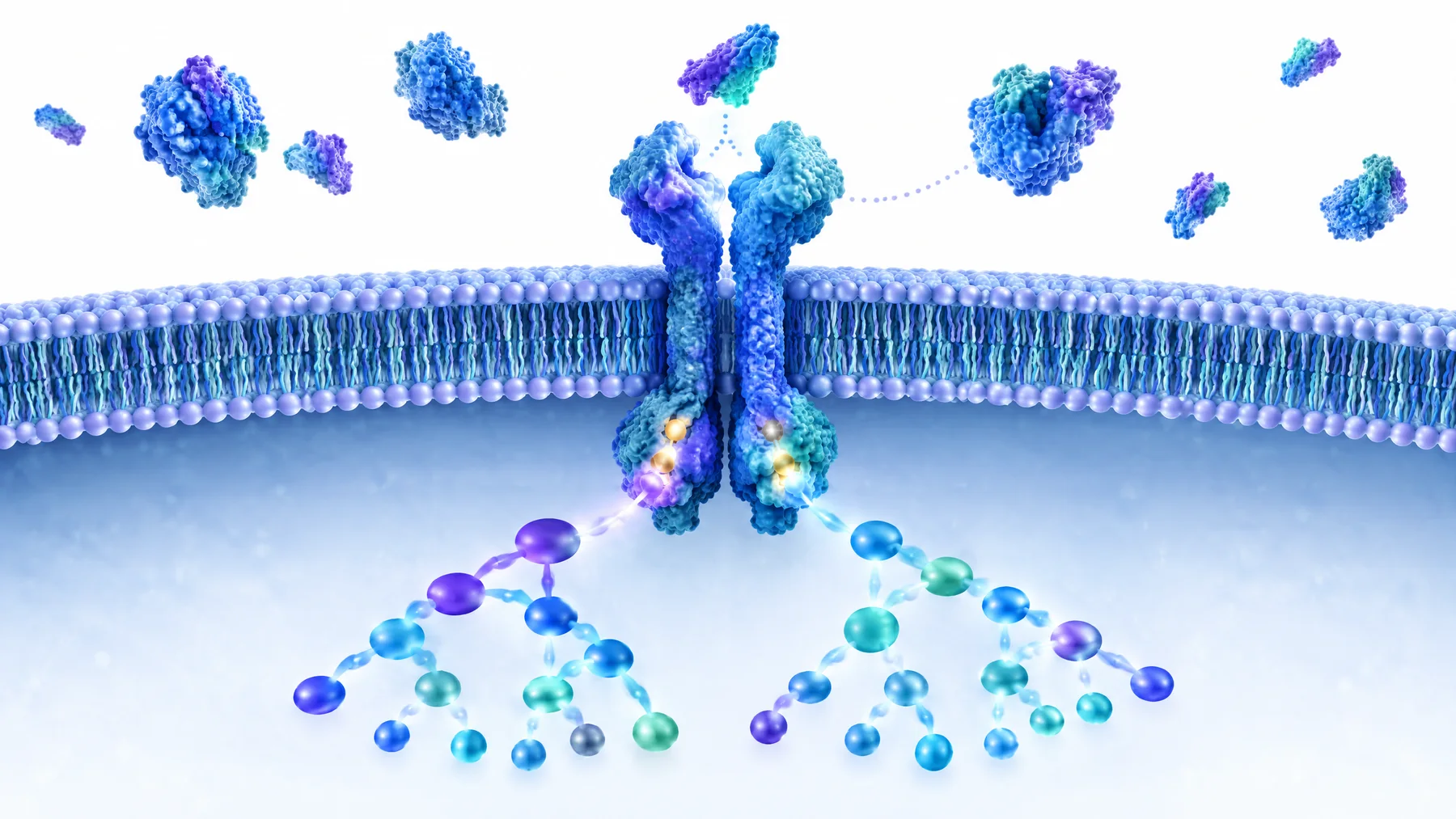
For full-length Tβ4, one established biochemical observation is actin binding. In a cell-free study, authentic Tβ4 formed a 1:1 complex with G-actin (actin monomers) and inhibited salt-induced actin polymerisation. This supports a role in regulating the pool of unpolymerised actin inside cells. It does not, by itself, show that injecting a short fragment repairs an injured structure in people. [4]
A separate experimental study found that Tβ4 and its seven-amino-acid actin-binding motif promoted endothelial-cell migration and adhesion, tube formation, and chick aortic-ring sprouting in the tested systems. Peptides missing part of that motif were inactive in those assays. These are observations of cell and ex vivo angiogenesis-related models; they are not clinical evidence of new blood-vessel growth, faster sporting recovery or a safe mechanism in humans. [3]
What the wound models actually found
In a 1999 full-thickness rat skin-wound model, topical or intraperitoneal full-length Tβ4 increased re-epithelialisation versus saline by 42% at day 4 and by as much as 61% at day 7. The treated wounds also contracted at least 11% more by day 7, with increased collagen deposition and angiogenesis reported. The study also observed two- to three-fold greater keratinocyte migration in a Boyden-chamber assay. These are model-specific findings in rats and cultured cells, not a human dosing or efficacy result. [1]
In another study, full-length Tβ4 accelerated repair of full-thickness dermal wounds in db/db diabetic mice and aged mice. In diabetic mice, wound contraction and collagen deposition increased; in aged mice, keratinocyte migration, contraction and collagen deposition increased. The seven-residue LKKTETQ sequence produced repair in aged animals comparable to the parent molecule in that experiment. The work did not demonstrate equivalent benefit for acetylated commercial TB-500, nor did it study human muscle, tendon or ligament injury. [2]
Human evidence: do not substitute Tβ4 for TB-500
Published phase I research has evaluated NL005, a recombinant human Tβ4 product described as 44 amino acids, in healthy Chinese volunteers. The report included a 54-person single-dose study and a 30-person multiple-dose study, both intravenous. It reported mild to moderate adverse events, no dose-limiting toxicities or serious adverse events, and no obvious accumulation over the short study period. That is early safety and pharmacokinetic evidence for a defined full-length recombinant product in healthy adults; it is not efficacy evidence and it is not a TB-500 fragment trial. [6]
The corresponding ClinicalTrials.gov record for the single-dose phase Ia study is marked completed but says ‘No Results Posted’. It enrolled 54 healthy volunteers and assessed safety, pharmacokinetics and anti-drug antibodies after intravenous recombinant Tβ4 or placebo. A registry listing and a short phase I programme cannot establish long-term safety, effectiveness in injured patients, or an administration approach for research-only supplier vials. [7]
Risks and uncertainty are not limited to the peptide
The main scientific uncertainty is twofold: the fragment’s clinical effects have not been established, and the contents of an unapproved vial may not match its label. It would be a mistake to convert cell migration, rodent wound closure or a small healthy-volunteer Tβ4 study into a universal claim of ‘healing’. Important unanswered questions include fragment-specific pharmacology, interactions, immunogenicity, long-term effects and outcomes in people with actual injuries or chronic wounds. [1] [2] [6] [8]
There is also a product-quality risk independent of the intended molecule. The TGA says unapproved peptide products have not been assessed for safety, quality or effectiveness and that sterility, actual contents, manufacturing and adverse effects may be unknown. Its advisory notes reports across unapproved peptide products of severe allergic reactions, systemic inflammatory illness, hypersensitivity symptoms and quality problems. Those reports are not proof that TB-500 itself caused each event, but they are a reason not to infer safety from a label or a ‘research use only’ disclaimer. [8]
Australian regulatory context
TB-500 is not an approved Australian medicine. The TGA specifically lists products containing TB-500 among examples of unapproved peptide products, meaning they are not included in the Australian Register of Therapeutic Goods (ARTG). The ARTG is the public register of therapeutic goods that can be legally supplied in Australia, with defined product, sponsor and manufacturer information. [8] [10]
An unapproved status does not turn a vial into an approved formulation through branding, compounding language or a research disclaimer. The TGA states that a ‘research use only’ statement alone does not change regulatory status, permit importation or remove supply and advertising obligations. Access pathways and professional obligations can be fact-specific; they are not evidence of product approval, product quality or a validated treatment protocol. [8] [10]
Sport and the misleading ‘recovery peptide’ shorthand
For athletes subject to anti-doping rules, WADA lists thymosin-β4 and its derivatives, including TB-500, among prohibited growth factors or growth-factor modulators. The listing applies at all times. This sporting prohibition should not be misread as proof that TB-500 works as a performance enhancer or injury treatment; it reflects the anti-doping framework and the class’s potential to affect biological processes relevant to sport. [9]
A more precise comparison is therefore: full-length Tβ4 is a naturally occurring actin-binding peptide that has been investigated in defined laboratory, animal and early human-research products; TB-500 refers to a short, acetylated fragment identified in a product carrying that name. Similar-looking claims about ‘Tβ4’ and ‘TB-500’ may refer to different molecules, formulations, routes and evidence levels. Combining TB-500 with another research substance would add further unknowns rather than create a validated combined protocol. [3] [5] [6] [8]
How to read a TB-500 claim carefully
First ask what was actually tested: full-length Tβ4, unacetylated LKKTETQ, acetylated Ac-LKKTETQ, or an unspecified commercial vial. Next ask where it was tested: a cell assay, chick aortic-ring assay, rodent skin wound, or a healthy-volunteer phase I trial. A positive result can be meaningful within that setting while remaining unable to predict human outcomes after a different formulation or route. [1] [2] [3] [6]
Then separate a biological measurement from a patient outcome. Re-epithelialisation, collagen deposition, a migration assay and pharmacokinetic exposure are not the same as reduced pain, restored tendon strength, return to sport or long-term safety. Finally, look for the regulator’s product record rather than relying on supplier certificates or social-media claims. For TB-500 in Australia, the TGA’s position is that products of this kind are unapproved and have not been evaluated for safety, quality or effectiveness. [1] [2] [6] [8]
Questions readers ask
Is TB-500 an approved medicine in Australia?
No. The TGA identifies products containing TB-500 as examples of unapproved peptide products, not goods included in the ARTG. An unapproved product should not be described as an approved Australian formulation. [8] [10]
Is TB-500 the same as thymosin beta-4?
No. The name TB-500 has been associated with Ac-LKKTETQ, an acetylated seven-residue fragment, whereas full-length Tβ4 is a 43-amino-acid peptide. Evidence for one should not be silently transferred to the other. [3] [5]
Do animal wound studies prove that TB-500 heals human tendon or muscle injuries?
No. The cited animal work involved skin wounds in rats, diabetic mice and aged mice, and the cell work involved migration or angiogenesis-related assays. These models do not establish clinical benefit for human tendon, ligament or muscle injuries, nor do they validate a supplier vial. [1] [2] [3]
Does a small phase I thymosin beta-4 study establish TB-500 safety?
No. The published phase I report studied a defined recombinant full-length Tβ4 product in healthy volunteers over a limited period. It cannot answer long-term safety or efficacy questions for the shorter TB-500 fragment, an unapproved product or people with injuries. [6] [7]
Is TB-500 allowed in sport?
For athletes governed by the WADA Prohibited List, thymosin-β4 and derivatives such as TB-500 are prohibited at all times. Athletes should use their relevant sport and anti-doping authority’s current rules when assessing a specific situation. [9]
What remains uncertain
The strongest efficacy-like findings cited are from rat and mouse skin-wound models, cell assays and chick aortic-arch assays. They do not establish treatment effects for human tendon, ligament, muscle or chronic-wound conditions.
Human data discussed are early, short-term studies of a defined recombinant full-length Tβ4 product in healthy adults. They are not studies of Ac-LKKTETQ/TB-500 supplier vials and do not demonstrate clinical efficacy.
‘TB-500’ is a commercially used product name rather than a verified universal formulation. The chemical identity, purity, concentration, sterility and stability of a specific unapproved vial cannot be inferred from this literature.
No administration, dilution, storage, route or combination protocol is provided because this record does not identify an approved TB-500 formulation or a validated human regimen.
References and further reading
- [1] Thymosin beta4 accelerates wound healing. Full-thickness rat skin-wound experiment with topical or intraperitoneal full-length Tβ4 versus saline, plus keratinocyte migration assay
- [2] Thymosin beta 4 and a synthetic peptide containing its actin-binding domain promote dermal wound repair in db/db diabetic mice and in aged mice. Full-thickness dermal wound experiments in db/db diabetic and aged mice, with full-length Tβ4 and a seven-residue actin-binding sequence
- [3] The actin binding site on thymosin beta4 promotes angiogenesis. Human umbilical-vein endothelial-cell migration/adhesion and tube assays, and chick aortic-arch sprouting experiments using Tβ4, fragments and synthetic peptides
- [4] Thymosin beta 4 and Fx, an actin-sequestering peptide, are indistinguishable. Purified-peptide and actin-binding experiments, including nondenaturing gel electrophoresis and polymerisation testing
- [5] Investigation of in vitro/ex vivo TB-500 metabolism, synthesis of relevant metabolites and detection limits in urine and plasma. In vitro human microsome/S9 and ex vivo plasma/serum metabolism work, synthesis of metabolites and anti-doping detection-method development
- [6] A first-in-human, randomized, double-blind, single- and multiple-dose, phase I study of recombinant human thymosin β4 in healthy Chinese volunteers. Randomised, double-blind, placebo-controlled single- and multiple-dose intravenous studies of recombinant full-length Tβ4 (NL005) in healthy Chinese adults
- [7] A Phase 1a Study of Thymosin Beta 4 in Healthy Volunteers (NCT04555824). Completed randomised, double-blind, placebo-controlled, single-dose escalating intravenous recombinant Tβ4 phase Ia study in 54 healthy Chinese volunteers
- [8] Understanding your responsibilities when importing, compounding and supplying unapproved peptide products. Regulatory and safety advisory; not a clinical study
- [9] The Prohibited List. Current WADA prohibited-substance classification
- [10] About the Australian Register of Therapeutic Goods (ARTG). Regulatory guidance; not a clinical study