What is SNAP-8 (acetyl octapeptide-3)?
Synthetic octapeptide used as a topical cosmetic ingredient; limited human evidence is for combination microneedle patches or multi-ingredient skincare regimens, not a standalone medicine. acetyl octapeptide-3 acetyl octapeptide-1 acetyl glutamyl heptapeptide-3 Ac-Glu-Glu-Met-Gln-Arg-Arg-Ala-Asp-NH₂ (Ac-EEMQRRAD-NH₂) It is not botulinum toxin, not a hormone, and not an approved injectable wrinkle medicine. A peptide supplier vial is not equivalent to a regulated topical cosmetic formulation or a TGA-approved medicine.
SNAP-8 is an eight-amino-acid synthetic peptide marketed for the appearance of expression lines. It is best understood as a topical cosmetic ingredient, not as an injectable ‘Botox alternative’ or a medicine. Its proposed mechanism borrows from SNAP-25/SNARE biology, but direct proof that standalone topical SNAP-8 reaches facial neuromuscular targets and changes muscle activity in people is lacking. Small human studies found improved wrinkle measurements with microneedle patches or regimens containing several active ingredients, so those results cannot isolate SNAP-8’s effect. In Australia, an anti-wrinkle topical product may be a cosmetic when claims concern appearance; claims to alter physiology, or injectable presentation, can bring it under therapeutic-goods regulation.
1. Identity: a cosmetic peptide, not an injectable medicine
SNAP-8 is the trade name commonly used for acetyl octapeptide-3, a synthetic eight-residue peptide with the sequence Ac-EEMQRRAD-NH₂. It is an elongated relative of acetyl hexapeptide-3 (often called Argireline), rather than botulinum toxin itself. The distinction matters: botulinum toxin is a biologic neurotoxin medicine used under clinical regulation, whereas SNAP-8 appears in topical cosmetic formulations and experimental delivery systems. [3] [10]
‘Peptide’ does not by itself mean ‘medicine’. In Australia, a product’s status depends on its ingredients, intended use, presentation and claims. A topical anti-wrinkle product can be a cosmetic when it is presented as changing appearance; a claim to modify an underlying physiological process can make it a therapeutic good. This article found no Australian approved SNAP-8 medicine or official TGA label; the ARTG is the public database to check a specific finished therapeutic product. [6] [7] [8]
2. Why SNAP-8 is linked to the SNARE pathway
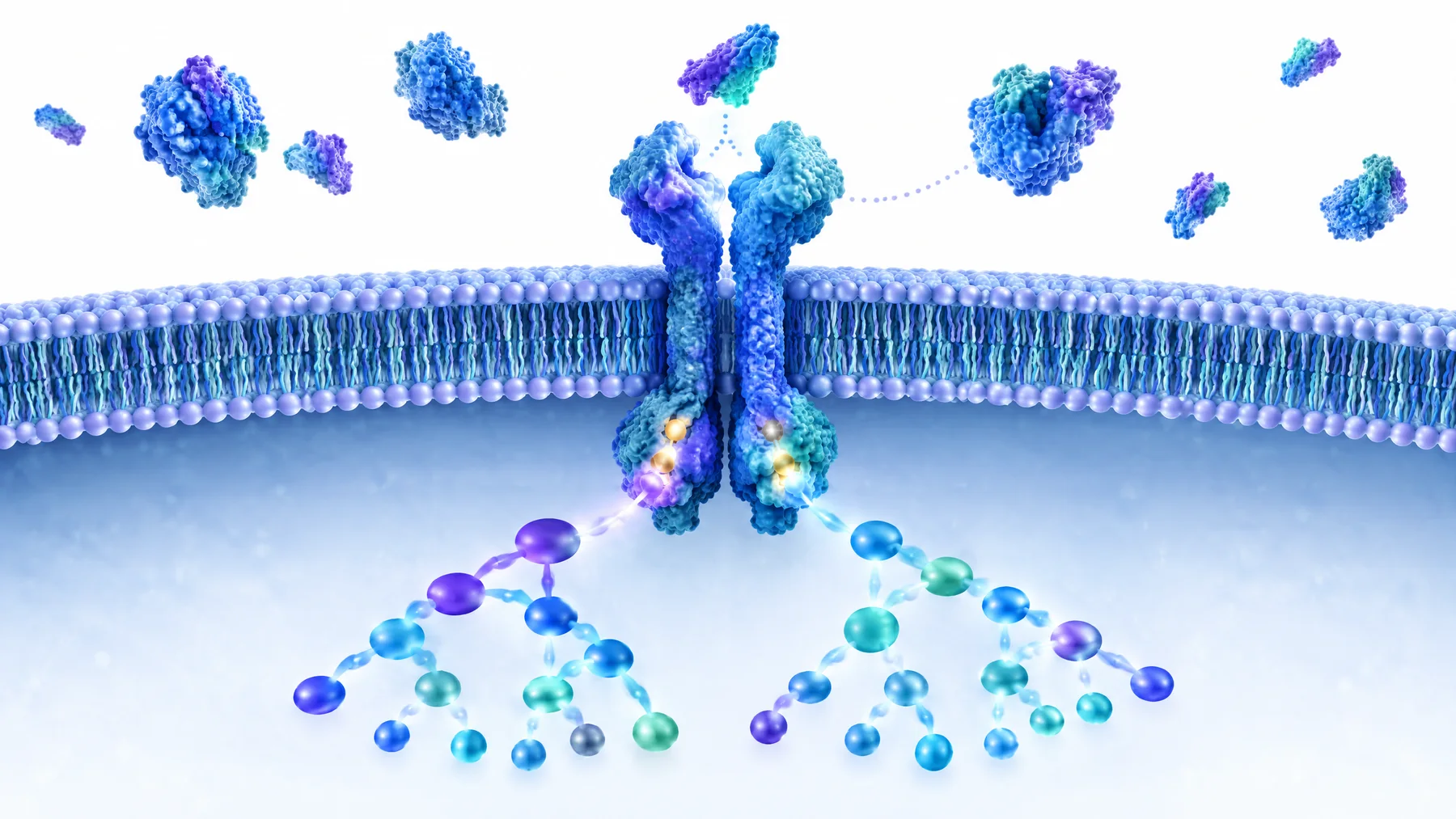
The rationale begins with SNAP-25, a component of the SNARE machinery that helps vesicles fuse with cell membranes during regulated secretion. In a foundational laboratory study, selected peptides patterned after the N-terminal domain of SNAP-25 disrupted SNAP-25/syntaxin binary-complex formation and inhibited calcium-dependent exocytosis in detergent-permeabilised excitable cells; they also protected cultured hippocampal neurones in a hypoglycaemia/excitotoxicity model. These are mechanistic cell and tissue experiments, not studies of topical SNAP-8 on human facial muscles. [1]
SNAP-8 was designed in the same conceptual family. A 2018 molecular-modelling paper predicted that several ‘botox-like’ cosmetic peptides could bind a synaptotagmin-1 cleft and alter its simulated motion. That result is hypothesis-generating only: docking and molecular-dynamics simulations do not establish binding in living skin, skin penetration, or wrinkle benefit in people. [4]
3. What has actually been tested in people
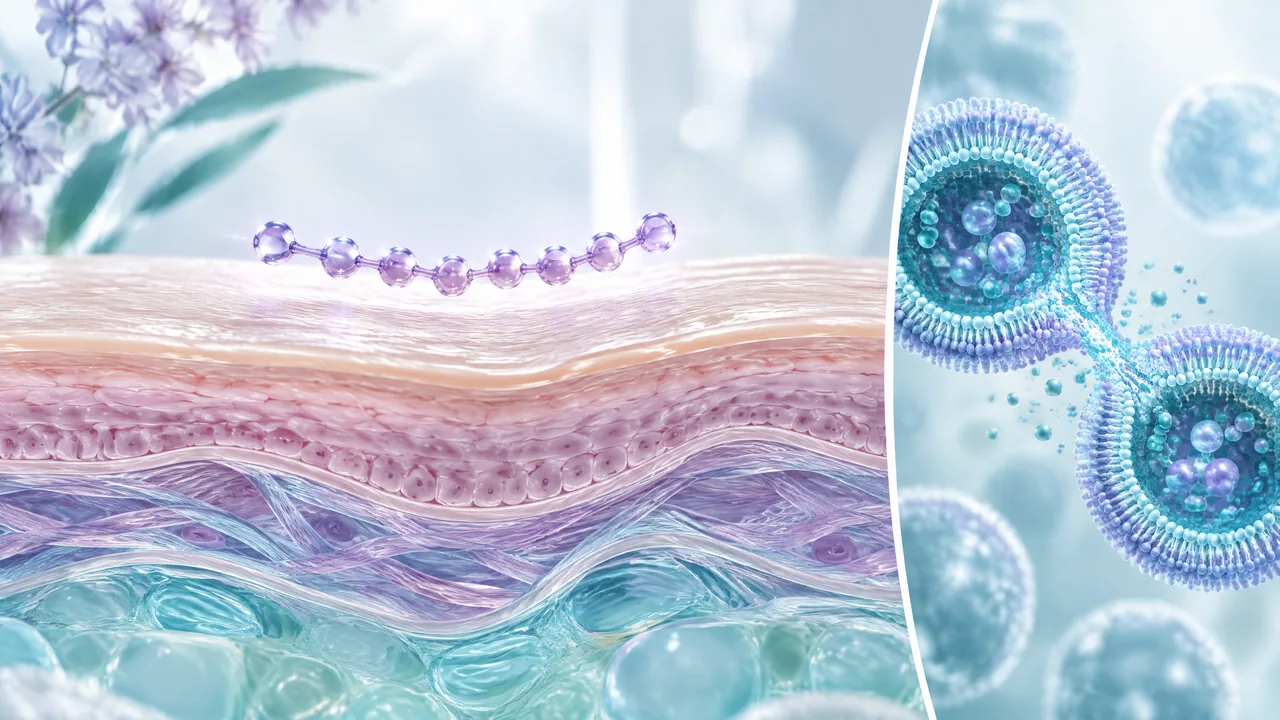
The strongest directly relevant published human evidence is formulation-level rather than ingredient-level. Avcil and colleagues reported a company-funded, single-centre 12-week study of hyaluronic-acid microneedle patches containing acetyl octapeptide-3 plus arginine/lysine polypeptide, palmitoyl tripeptide-5, adenosine and seaweed extracts. The authors reported no primary or cumulative skin reactions and changes in fine lines/wrinkles (25.8% decrease), hydration (15.4% improvement), dermal density (14.2% increase) and thickness (12.9% increase). Because every participant received a multi-active patch, the study cannot determine how much, if any, of the effect came from SNAP-8 alone. [2]
A 2024 comparative study tested a different dissolving patch: 0.03% SNAP-8 together with 5% L-ascorbic acid 2-glucoside, 4% sodium cyclic lysophosphatidic acid and hyaluronic acid. Twenty-four adults with eye wrinkles enrolled and 21 completed 28 days; the active and hyaluronic-acid placebo patches were used on opposite eye areas. Several instrumental roughness measures improved more with the active combination than placebo, and no reported erythema, oedema, scaling or participant-reported local symptoms occurred during the study. This supports the short-term performance and tolerability of that particular combination patch, not isolated SNAP-8 efficacy or the safety of other devices and formulations. [3]
A separate 14-week open-label study of 29 women evaluated a complete skincare regimen whose serum included GABA and seven peptides, among them acetyl octapeptide-3. Investigator ratings improved from baseline and no adverse events were reported, but there was no control arm and the regimen contained many active ingredients. It therefore offers weak, indirect support for a combined product, rather than a test of SNAP-8. [5]
4. Delivery is part of the unanswered question
The outer stratum corneum is a substantial barrier to hydrophilic, high-molecular-weight substances. In the 2024 study, 350-µm dissolving microneedles were shown in minipig skin to create superficial channels, and the tested combination patch was stronger than its hyaluronic-acid placebo for several eye-area measurements. This is relevant because a conventional cream or serum cannot be assumed to deliver an octapeptide in the same way as a microneedle device. [3]
That study’s authors speculated that an early change in peak wrinkle height reflected SNAP-8’s muscle-relaxing action, with later changes reflecting the vitamin-C derivative and cyclic lysophosphatidic acid. This is an interpretation, not an ingredient-separation experiment. No study located here measured acetylcholine release, facial muscle activity or target engagement after topical standalone SNAP-8 in humans. [3]
5. Safety and uncertainty: avoid transferring results between products
The human studies above reported good short-term tolerability in their own small samples, but neither establishes long-term safety, use in pregnancy or breastfeeding, compatibility with all skin conditions, or safety when used with unrelated active products. The 2024 patch study had 21 completers, a 28-day observation period and a multi-ingredient device; the 2020 study was company-funded and also evaluated a multi-ingredient patch. These limitations prevent a universal safety conclusion for SNAP-8. [2] [3]
Do not infer an injection route, dose, dilution, storage rule or treatment schedule from cosmetic-ingredient literature. In Australia, injectable cosmetic procedures involve substances placed under the skin and are regulated differently from topical cosmetics. TGA guidance also warns that ‘research use only’ wording does not remove regulatory obligations where a peptide product is in fact therapeutic. [7] [8]
6. Australian regulatory context
For a topical product, wording matters. The TGA gives ‘smooth the appearance of fine lines’ as an example of a cosmetic-style appearance claim, while claims such as stimulating collagen production to repair skin at the cellular level are therapeutic-style claims. AICIS likewise lists anti-wrinkle and anti-ageing products without SPF among examples of cosmetics, while noting that primary use, ingredients and claims must all be assessed. [6] [8]
If a peptide product is regulated as a therapeutic good, it generally must be included in the ARTG before import, manufacture, supply, export or advertising, unless a specific legal exception applies. The TGA says it has not assessed unapproved peptide products for quality, safety or effectiveness. This is why a web-sold powder or vial should not be treated as interchangeable with a cosmetic cream, a studied microneedle patch, or an ARTG-listed medicine. [7]
7. Comparing SNAP-8 with related substances
Acetyl hexapeptide-3/8 (Argireline) is related but not identical: it is a six-residue SNAP-25-inspired peptide, while SNAP-8 is the eight-residue sequence. Argireline has its own 2002 study, including a 10% emulsion in healthy volunteers and laboratory evidence of inhibited neurotransmitter release. Those findings cannot be numerically transferred to SNAP-8; shared naming and a proposed pathway do not make them the same active ingredient. [3] [10]
SNAP-8 should also not be described as ‘Botox in a bottle’. The SNARE-inspired hypothesis is not evidence that a topical cosmetic peptide produces botulinum toxin’s clinical effect, duration or potency. The available SNAP-8 human literature evaluates devices or mixtures, with different concentrations, co-ingredients and delivery conditions. [1] [2] [3] [4]
8. A practical way to read SNAP-8 claims
When reading a claim, first ask whether the product is a conventional topical, a microneedle device, or an injection. Next, identify every active ingredient and the comparator. A study showing a combination patch outperforms a hyaluronic-acid patch is useful evidence for the combination and device in that study; it is not proof that one named peptide alone works in all serums. [2] [3]
Then separate outcome types. Instrumental changes in roughness, hydration or elasticity can be meaningful cosmetic endpoints, but they do not demonstrate disease treatment or a direct neuromuscular mechanism. Look for independent replication, larger diverse samples, an appropriate placebo, ingredient-specific arms and longer follow-up before treating a marketing claim as established fact. [2] [3] [5]
Questions readers ask
Is SNAP-8 an approved medicine in Australia?
No Australian approved SNAP-8 medicine or official TGA product label was identified in this review. SNAP-8 is more appropriately described as a topical cosmetic ingredient. If a finished product is presented for therapeutic use, it would generally need ARTG inclusion unless an exception applies; check the ARTG for the exact product rather than relying on an ingredient or supplier claim. [6] [7] [8]
Does SNAP-8 have proven standalone anti-wrinkle efficacy?
Not from the human studies located. Published studies reported improvements for multi-ingredient microneedle patches or a complete peptide regimen that included SNAP-8, so they cannot assign the observed result to SNAP-8 alone. The standalone molecular and neuromuscular mechanism in living facial skin also remains unproven. [2] [3] [4] [5]
Is SNAP-8 the same as botulinum toxin?
No. SNAP-8 is a short synthetic peptide designed around a SNAP-25/SNARE rationale. Botulinum toxin is a neurotoxin medicine with different molecular actions, clinical evidence and regulation. Calling SNAP-8 ‘Botox-like’ is a marketing shorthand, not evidence of equivalence. [1] [3] [4] [10]
Can results from a SNAP-8 microneedle patch be applied to a serum or a supplier vial?
No. Microneedles physically change delivery across the stratum corneum, and the published patches contained several actives. A conventional serum, powder or vial has different formulation, delivery, quality and regulatory considerations. No injection or self-mixing protocol follows from these cosmetic studies. [2] [3] [7] [8]
What remains uncertain
The SNAP-8 evidence base is sparse and formulation-dependent. Direct standalone topical SNAP-8 trials with replicated, blinded designs, ingredient-specific comparator arms, objective target-engagement measures and long follow-up were not identified. The two most relevant human studies tested multi-active microneedle patches, and the additional serum study was open-label and multi-ingredient. Mechanistic support comes from selected related SNAP-25 peptides and computational modelling, not direct demonstration of topical SNAP-8 action in facial neuromuscular tissue. Manufacturer-origin percentages should not be presented as independently verified clinical efficacy. Australian classification applies to a finished product and its claims, route and presentation—not to the ingredient name alone.
References and further reading
- [1] Small peptides patterned after the N-terminus domain of SNAP25 inhibit SNARE complex assembly and regulated exocytosis. Laboratory mechanistic study of selected N-terminal SNAP-25-derived peptides in SNARE-complex assays, detergent-permeabilised excitable cells and hippocampal neurones.
- [2] Efficacy of bioactive peptides loaded on hyaluronic acid microneedle patches: A monocentric clinical study. Company-funded, monocentric 12-week study of a multi-ingredient hyaluronic-acid microneedle patch containing acetyl octapeptide-3, other peptides, adenosine and seaweed extracts in healthy people with aged skin.
- [3] Clinical Safety and Efficacy Evaluation of a Dissolving Microneedle Patch Having Dual Anti-Wrinkle Effects With Safe and Long-Term Activities. IRB-approved 28-day comparative left/right eye-area study in 24 enrolled adults (21 completers) of a 350-µm dissolving combination patch versus a hyaluronic-acid patch; complementary minipig-skin penetration testing.
- [4] Molecular modeling elucidates the cellular mechanism of synaptotagmin-SNARE inhibition: a novel plausible route to anti-wrinkle activity of botox-like cosmetic active molecules. Molecular docking and molecular-dynamics simulations of botox-like cosmetic peptides and synaptotagmin-1.
- [5] An Open Label Clinical Trial of a Peptide Treatment Serum and Supporting Regimen Designed to Improve the Appearance of Aging Facial Skin. Single-centre, 14-week usage study in 29 women of a complete regimen including a serum with GABA and multiple peptides, including acetyl octapeptide-3.
- [6] Determining if your product is a cosmetic or therapeutic good. TGA regulatory guidance on classification based on claims, composition, administration and presentation.
- [7] How we regulate therapeutic peptide products. TGA compliance and regulatory guidance for peptide products.
- [8] Cosmetics and therapeutics. AICIS guidance on cosmetic versus therapeutic classification and industrial-chemical regulation.
- [9] Cosmeceutical peptides in the framework of sustainable wellness economy. Narrative review of cosmetic peptides that identifies the cited SNAP-8 efficacy figures as manufacturer-website data.
- [10] A synthetic hexapeptide (Argireline) with antiwrinkle activity. Laboratory mechanism work plus a healthy-volunteer study of a 10% Argireline emulsion for 30 days.