What is SLU-PP-332?
SLU-PP-332 is a synthetic, non-peptide small molecule (PubChem CID 5338394; C18H14N2O2; molecular weight 290.3), developed as a research agonist of the estrogen-related receptors ERRα, ERRβ and ERRγ. It is best classified as a preclinical research substance, not a peptide, hormone, topical ingredient, mixture, or approved medicine.
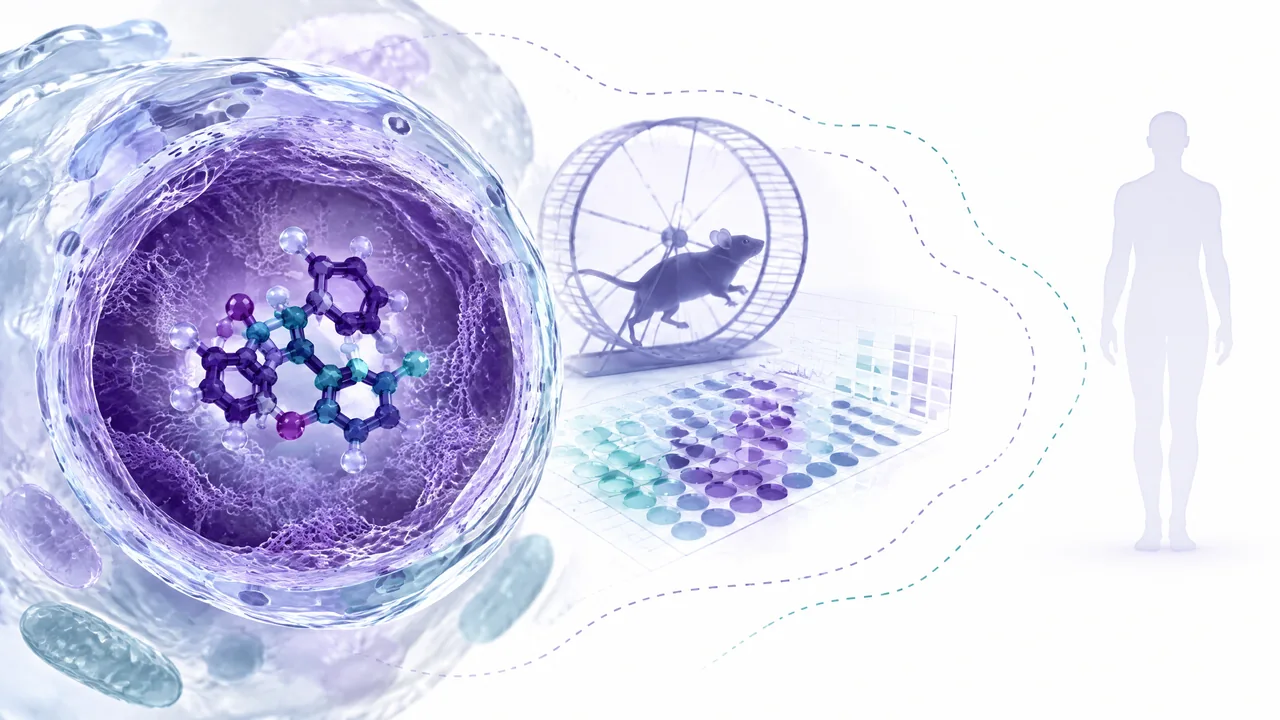
SLU-PP-332 is sometimes called an "exercise mimetic", but that label describes an experimental observation in mice rather than a proven substitute for exercise or a human treatment. It activates ERR nuclear receptors involved in energy-metabolism gene programs. In male mouse models, the compound increased markers of oxidative muscle, altered fuel use toward fat oxidation, increased energy expenditure and improved treadmill endurance under specific laboratory conditions. The studies used injected compound, small groups and short durations; they do not establish a human dose, route, safety profile, effectiveness, product quality standard or approved indication.
Identity: a small molecule, not a peptide
Despite being grouped with "peptides" on some commercial and social-media pages, SLU-PP-332 is not made of amino acids. Its listed molecular formula is C18H14N2O2 and its systematic name is 4-hydroxy-N-[(E)-naphthalen-2-ylmethylideneamino]benzamide. That chemical identity is consistent with a small synthetic molecule, not a peptide or glycoprotein hormone. [1]
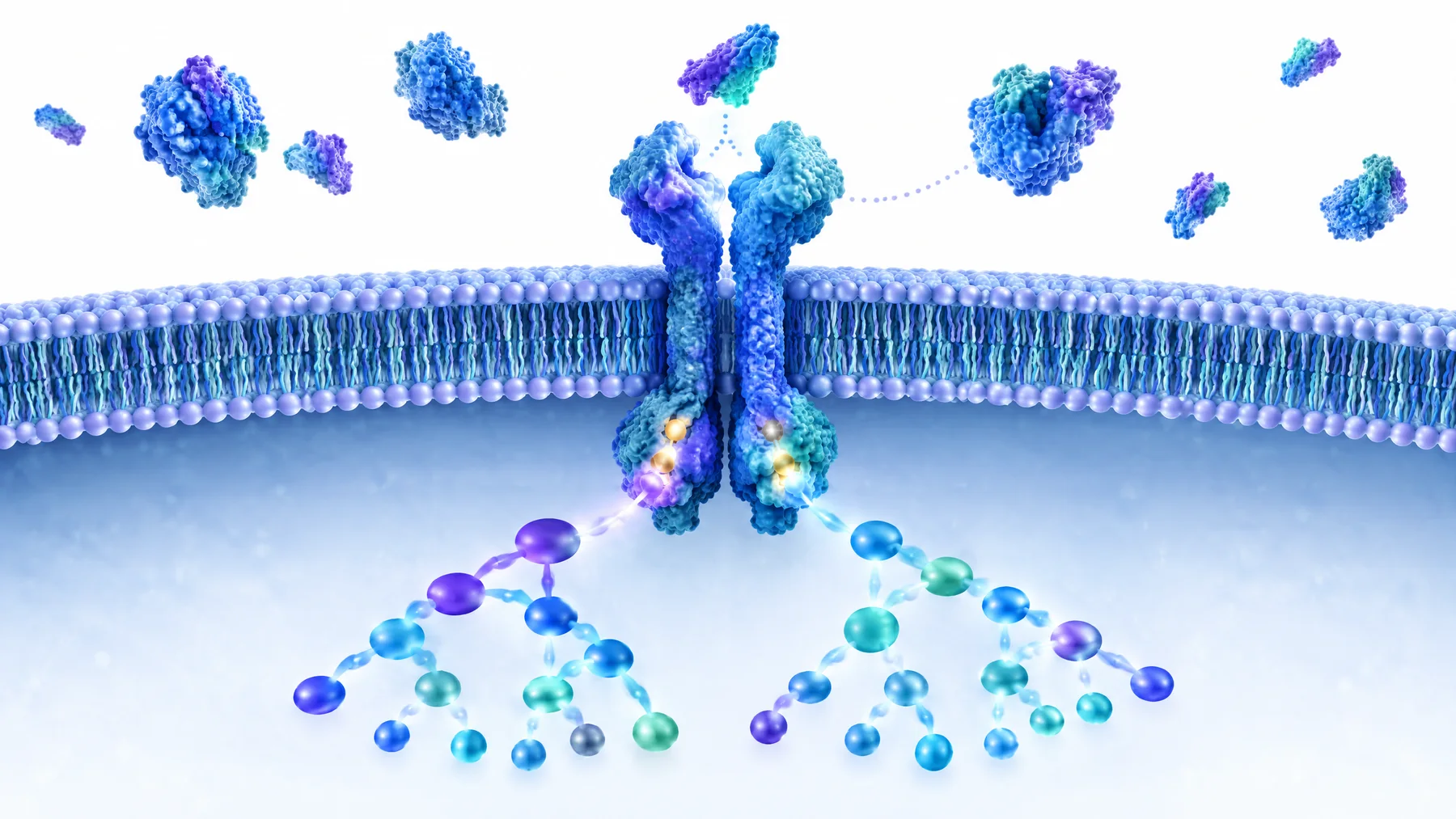
The original pharmacology paper describes SLU-PP-332 as a synthetic pan-ERR agonist, with activity at ERRα, ERRβ and ERRγ and the greatest potency for ERRα. ERRs are orphan nuclear receptors: intracellular transcriptional regulators involved in energy metabolism, rather than the classical oestrogen receptors. The compound is therefore a tool for studying ERR biology, not an oestrogen medicine. [2]
Molecular pathway: what the research supports
In C2C12 skeletal-muscle cells, SLU-PP-332 increased mitochondrial respiration and expression of an ERR-responsive metabolic gene (Pdk4). In mice, the investigators found induction of an acute aerobic-exercise-associated gene program in muscle. These are mechanistic signals compatible with altered cellular energy metabolism; they are not proof that the compound reproduces the full cardiovascular, musculoskeletal, neurological or long-term health effects of physical activity. [2]
A particularly useful test was a muscle-specific ERRα knockout experiment. SLU-PP-332 improved treadmill endurance and induced Ddit4 in control mice, but not in mice lacking ERRα in skeletal muscle. This supports a requirement for skeletal-muscle ERRα in that mouse performance response. It does not isolate the contribution of ERRβ or ERRγ, because the compound activates all three receptors at the study exposures. [2]
What happened in the mouse studies
In one study of sedentary adult male C57BL/6J mice, 7 days of intraperitoneal SLU-PP-332 treatment (50 mg/kg twice daily) preceded an exhaustion treadmill test. Treated mice ran about 70% longer and about 45% farther than vehicle controls. A 15-day protocol in the same strain was associated with more oxidative type IIa fibres and several mitochondrial-related measures in skeletal muscle. These are mouse outcomes from injected research compound, not a human administration protocol. [2]
A separate study examined male chow-fed C57BL/6J mice, diet-induced-obesity mice and ob/ob mice, generally housed at thermoneutrality. After 28 days in chow-fed mice, the compound was associated with lower respiratory exchange ratio, a calculated 25% increase in fatty-acid oxidation, higher energy expenditure and less fat-mass gain without a reported change in food intake or total body weight. In diet-induced-obesity mice, it was associated with improved glucose tolerance, less fat-mass gain and less liver triglyceride/steatosis; the authors also reported no change in the insulin-tolerance test. [3]
The exact models matter. The metabolic experiments used small groups of male mice (commonly 7–8 per group), high-fat diet or genetic obesity models, and intraperitoneal dosing. They do not tell us whether women, people with different causes of obesity or diabetes, older adults, people taking medicines, or humans in general would have comparable benefits or harms. [3]
Human evidence: currently absent
The two central SLU-PP-332 papers are cell and mouse studies, not clinical trials. An exact-term ClinicalTrials.gov API search for "SLU-PP-332" returned no studies at the time of this review. Absence from one registry search cannot rule out every possible study or future development, but it means there is no registered human trial to use for a human dose, route, adverse-event rate or efficacy claim. [2] [3] [4]
No human administration schedule should be inferred from animal injections. Differences in receptor biology, metabolism, exposure, formulation, disease context and study endpoints mean that animal mg/kg figures cannot be converted into a safe or effective human regimen. [2] [3]
Risks and uncertainty are the central issue
There is no established human safety profile for SLU-PP-332: no human pharmacokinetic programme, dose-ranging study, interaction study, reproductive-safety assessment or long-term safety dataset was identified in the sources reviewed. Because the target family regulates transcription across energy-demanding tissues, beneficial-looking mouse findings cannot be separated from possible off-target, tissue-specific or chronic consequences without formal development work. [2] [3] [4]
The mouse metabolic paper reported only relatively minor changes in measured plasma cholesterol and liver enzymes in one 28-day chow-fed experiment. That is not a toxicology clearance: it was a short efficacy study, not a comprehensive safety assessment. The same paper notes potentially opposing ERR isoform actions in metabolic regulation, reinforcing why pan-ERR activation needs careful evaluation rather than simple "fat-burning" claims. [3]
Australian regulatory context
SLU-PP-332 should be treated as an unapproved preclinical substance, not as an Australian-approved medicine. The Australian Register of Therapeutic Goods (ARTG) is the TGA's public register for therapeutic goods that may be supplied in Australia, and is the appropriate place to verify a specific product, sponsor and formulation. No SLU-PP-332 approved formulation or Product Information was identified in the material reviewed. [5]
The TGA states that therapeutic goods not included in the ARTG have not been assessed by it for safety, quality or effectiveness. The fact that a website labels a vial, capsule or powder "research use" does not turn it into an approved formulation and does not supply the missing clinical evidence, validated sterility, content assurance or consumer medicine information. [5] [6]
Do not confuse SLU-PP-332 with SLU-PP-915
SLU-PP-915 is a chemically distinct, later ERR pan-agonist. Its paper explicitly says that SLU-PP-332 lacks oral bioavailability, whereas SLU-PP-915 was developed as an orally bioavailable compound and was tested in mice. Evidence or marketing about SLU-PP-915 therefore cannot establish that SLU-PP-332 works orally, is safe orally, or should be substituted with it. [7]
Likewise, the term "exercise mimetic" is a research shorthand for selected molecular and physiological responses. It is not a clinical indication, a demonstration that activity is replaceable, or evidence of human weight-loss or performance benefit. [2] [3] [7]
How to read the headlines responsibly
The strongest findings are conditional: a defined synthetic compound, delivered by injection, changed predefined outcomes in particular male mouse models. The results are scientifically interesting because they combine receptor assays, muscle-cell work, metabolic-cage measurements, histology and a receptor-loss experiment. They are not a substitute for independent replication, formulation development, animal toxicology and phased human trials. [2] [3]
A useful reading rule is to ask four questions of any claim: Which compound—not a similarly named analogue—was tested? In which species and disease model? By what route and for how long? Was the outcome a biomarker, a mouse performance test, or a patient-important human outcome? For SLU-PP-332, the answer remains preclinical mouse and cell evidence. [2] [3] [4] [7]
Questions readers ask
Is SLU-PP-332 a peptide?
No. Its reported formula and systematic chemical name identify it as a small synthetic molecule, not an amino-acid peptide. The "peptide" label used by some websites is chemically inaccurate. [1]
Is SLU-PP-332 approved in Australia?
It should not be represented as an Australian-approved medicine. The ARTG is the TGA register used to verify approved therapeutic-goods products and formulations; no SLU-PP-332 approved formulation was identified in this review. [5]
Has SLU-PP-332 been tested in people?
No human SLU-PP-332 trial was identified in the primary literature reviewed, and the exact-term ClinicalTrials.gov search returned no studies. Consequently, there is no evidence-based human dose, route, benefit profile or adverse-effect rate. [2] [3] [4]
Did it improve endurance or weight in animals?
In defined male mouse experiments, it improved treadmill endurance and was associated with oxidative-muscle changes. In obese mouse models it was associated with less fat-mass gain and some metabolic improvements. These are encouraging preclinical observations, not proof of human performance, weight-loss or diabetes treatment. [2] [3]
Can the mouse injection regimen be converted to a human dose or an oral product?
No. The published protocols are animal experiments, not clinical guidance. Moreover, a later paper says SLU-PP-332 itself lacks oral bioavailability; oral evidence for the distinct compound SLU-PP-915 does not transfer to SLU-PP-332. [2] [3] [7]
What remains uncertain
This record deliberately does not provide a dose, cycle, dilution, storage instruction, route recommendation or supplier recommendation for people. The evidence base is dominated by two related research groups' short-term experiments in male mice and cells, with small animal groups and injected compound. There are no identified human clinical outcomes, human safety data, validated consumer formulation or evidence supporting online research-product claims. The ARTG should be checked directly for current Australian product status because regulatory databases can change.
References and further reading
- [1] PubChem PUG REST: Compound CID 5338394 properties (SLU-PP-332). Curated compound-identity record
- [2] Synthetic ERRα/β/γ Agonist Induces an ERRα-Dependent Acute Aerobic Exercise Response and Enhances Exercise Capacity. In vitro receptor and C2C12 cell assays plus controlled experiments in male C57BL/6J mice and muscle-specific ERRα knockout mice; intraperitoneal administration and treadmill endpoints.
- [3] A Synthetic ERR Agonist Alleviates Metabolic Syndrome. Controlled preclinical study in male chow-fed C57BL/6J, diet-induced-obesity C57BL/6J and ob/ob mice using indirect calorimetry, body composition, metabolic testing and tissue analyses.
- [4] ClinicalTrials.gov API exact-term search: SLU-PP-332. Exact-term registry query; response contained an empty studies array at the time reviewed.
- [5] Australian Register of Therapeutic Goods (ARTG). TGA public register information page
- [6] Unapproved therapeutic goods. TGA regulatory guidance page
- [7] An orally active estrogen receptor-related receptor agonist, SLU-PP-915, enhances aerobic exercise capacity. Preclinical mouse pharmacology study of chemically distinct SLU-PP-915, reported in the PubMed abstract.