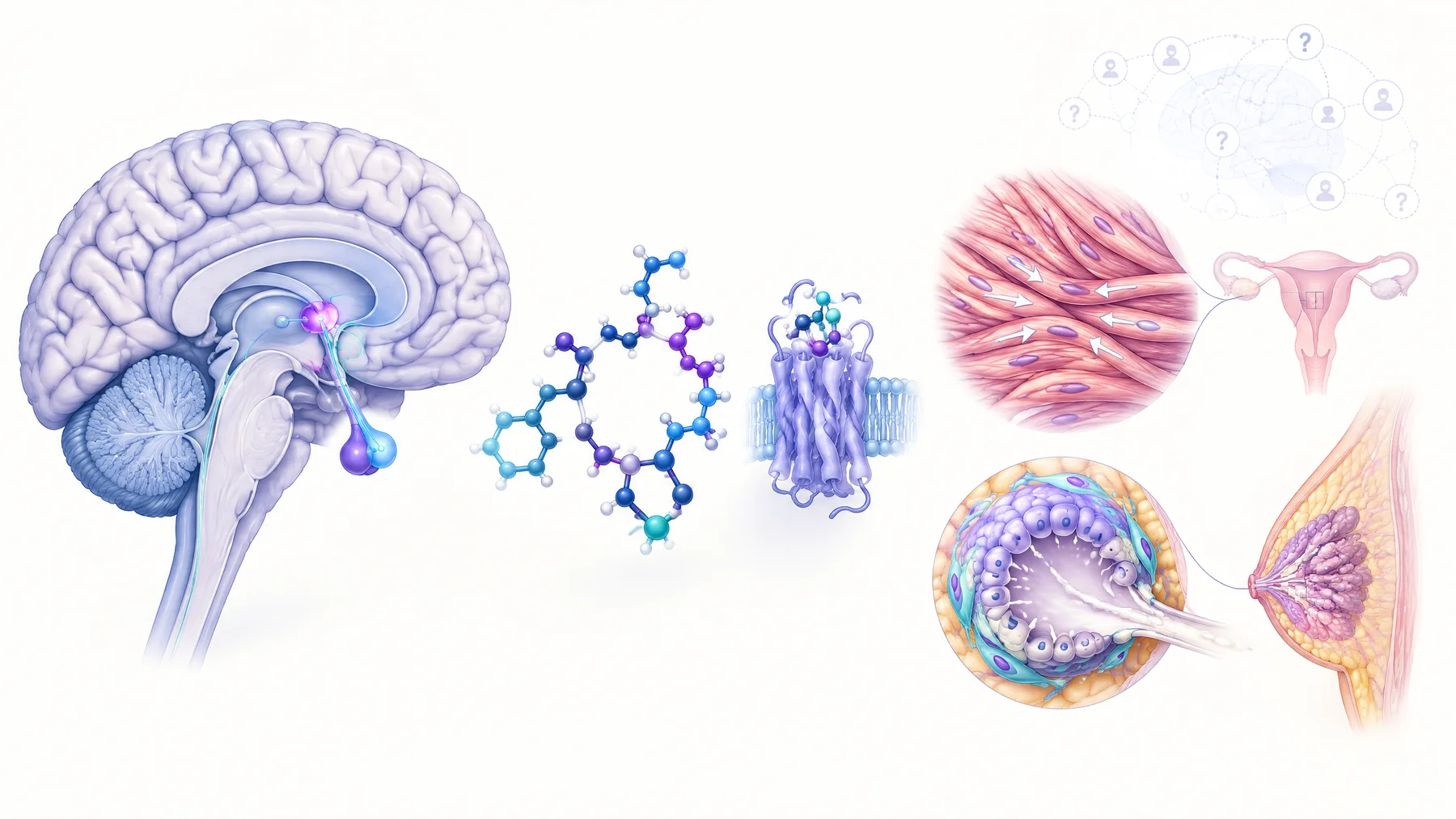
What is Prostamax (KEDP; Lys-Glu-Asp-Pro)?
Prostamax is a synthetic tetrapeptide, not a hormone, botanical extract, mixture or small molecule. Its sequence is Lys-Glu-Asp-Pro (KEDP), with molecular formula C20H33N5O9 and molecular weight 487.5 g/mol. The name is used for the discrete chemical entity in PubChem and in older peptide-bioregulator research; it is not the name of a standard Australian approved formulation. [Sources 1, 9]
Prostamax is the short synthetic peptide KEDP. The available record consists principally of a surgically induced rat prostate-inflammation experiment and laboratory studies of chromatin-related endpoints in human lymphocytes. Those findings are hypothesis-generating, not proof of symptom relief, prostate-size reduction, cancer prevention or safety in people. No Prostamax studies were returned in a current ClinicalTrials.gov name query, and Australian consumers should not mistake a research vial or a patent for a TGA-assessed medicine. [Sources 1-7]
Identity: a defined synthetic tetrapeptide, not a prostate extract
Prostamax is the four-amino-acid peptide Lys-Glu-Asp-Pro, commonly abbreviated KEDP. PubChem records the condensed sequence H-Lys-Glu-Asp-Pro-OH, an exact mass of 487.2278 Da and the neutral molecular formula C20H33N5O9. That makes Prostamax a synthetic peptide (a tetrapeptide), rather than a glycoprotein hormone, a topical cosmetic ingredient, a botanical product or a small-molecule drug. [Source 1] [1]
The historical patent literature describes peptide synthesis and proposes KEDP or its salts in a prostate-focused pharmacological composition. A patent documents an invention and its claims; it is not evidence that a product has passed contemporary clinical testing or received Australian marketing authorisation. The Russian patent record also notes invalidation for non-payment of fees, a legal event that is separate from medical efficacy or safety. [Source 9] [9]
What the proposed molecular pathway actually shows
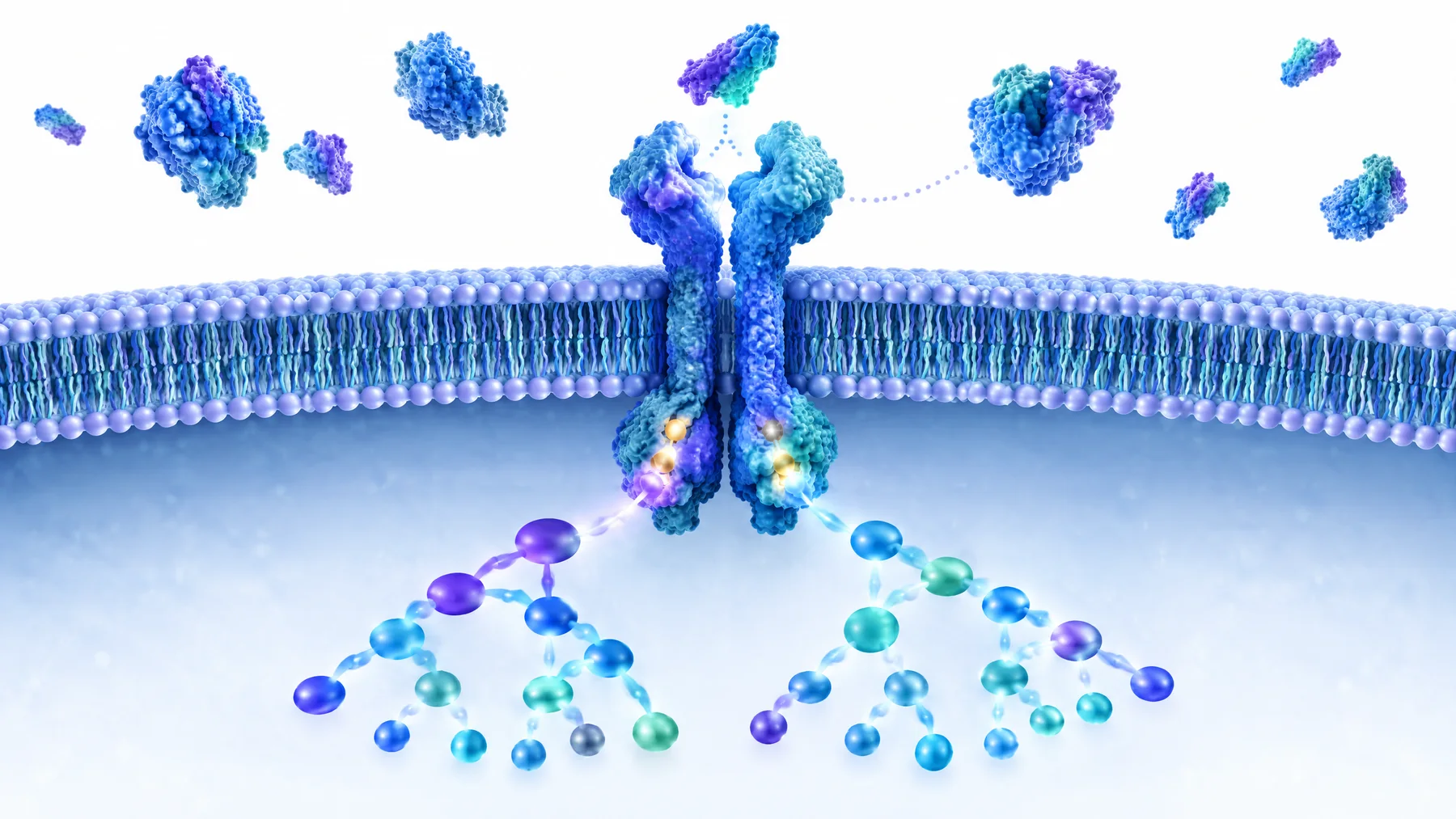
Prostate-targeted and chromatin-regulating descriptions of Prostamax originate mainly from the peptide-bioregulator research tradition and from experimental observations, rather than from an established receptor, target-engagement study or validated human pharmacodynamic pathway. The source record does not identify a confirmed human receptor, tissue-selective delivery mechanism, absorption profile, metabolism or clinically effective exposure for KEDP. [Sources 2-4] [2] [3] [4]
In one laboratory study, exposure of human lymphocyte chromatin to Prostamax was associated with shifts in differential-scanning-calorimetry endotherms. The authors interpreted these thermal changes as compatible with partial chromatin-fibre relaxation and small nucleosomal structural changes. This is a measured biophysical endpoint in lymphocyte material, not a demonstration that KEDP changes prostate gene expression in living people or improves a clinical condition. [Source 3] [3]
The rat prostatitis experiment: model-specific, not a treatment trial
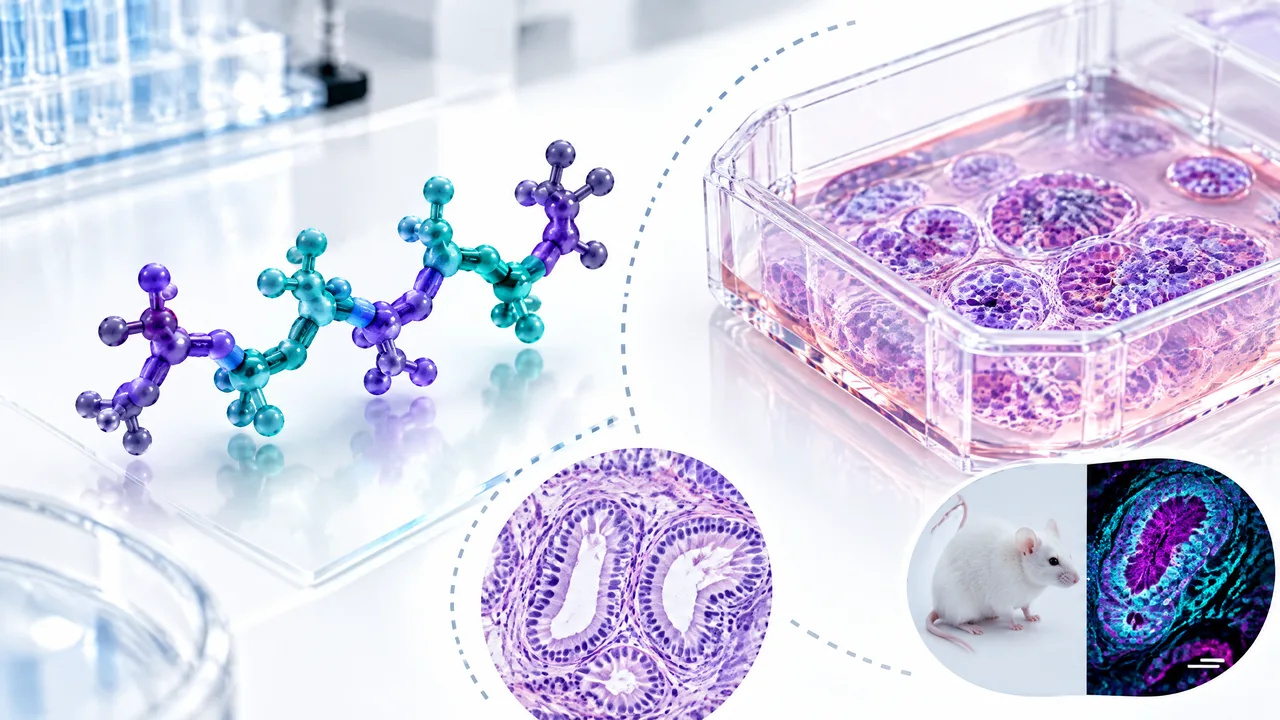
The most directly prostate-focused paper located used 60 four-month-old male Wistar rats (330–500 g). Investigators produced chronic aseptic inflammation by passing a silk thread through the ventral prostate lobe. Beginning 30 days after surgery, the study administered Prostamax intramuscularly at 20 micrograms/kg for 15 days; this is a description of one animal experiment, not a human dosing recommendation. [Source 2] [2]
At day 45 after surgery, the investigators reported less histological swelling, vascular hyperaemia and cellular infiltration in the Prostamax group than in operated controls. They reported that collagen-fibre area was more than 2.5-fold lower than control and that acinar epithelial area did not differ significantly from unoperated baseline. Gross prostate weight and volume were not significantly different between the treatment groups and controls. [Source 2] [2]
This experiment cannot establish efficacy for men with chronic prostatitis/chronic pelvic pain syndrome (CP/CPPS), benign prostatic enlargement or cancer. It used a physical-suture injury to one rat prostate lobe, not naturally occurring human disease; it assessed pathology rather than patient pain, urinary symptoms, sexual function or long-term safety; and reporting does not establish randomisation, blinding or a human-relevant exposure comparison. The comparator products were also administered by different routes and at different dose scales. [Source 2] [2]
Human material is not human clinical evidence
Two PubMed-indexed papers involve human lymphocyte material, but neither is a therapeutic trial. Meskhi and colleagues studied Prostamax-treated lymphocyte chromatin in situ and reported thermal-endotherm shifts versus untreated material. Their abstract supports a cellular/biophysical observation only; it does not report prostate symptoms, diagnosis, dose administered to participants, adverse events or a patient-centred outcome. [Source 3] [3]
A 2012 paper examined chromosomal characteristics in cells exposed to KEDP from older individuals aged 75–86 years. It reported increased sister-chromatid exchanges and Ag-positive nucleolar organiser regions, alongside changes in pericentromeric heterochromatin measures. The authors proposed chromatin decondensation as an interpretation. The abstract does not provide the information needed to infer a clinical benefit, and an increase in sister-chromatid exchange is a laboratory finding that should not be reframed as proof of protection or rejuvenation. [Source 4] [4]
A direct ClinicalTrials.gov API search for the term “Prostamax” returned an empty study list. This does not prove that no human work has ever occurred under another name or in an unregistered setting, but it means this search found no registered human trial record from which to verify a protocol, efficacy result or safety profile. [Source 5] [5]
Safety and uncertainty: the critical evidence gap
There is no regulator-reviewed Prostamax product information located in this research that supplies a human indication, contraindications, adverse-reaction frequency, interaction profile, pharmacokinetics, stability standard or evidence-based route and schedule. The limited animal and ex-vivo reports therefore cannot quantify human benefit–risk. It would be unsafe to derive self-administration, reconstitution, storage or injection guidance from them. [Sources 2-5] [2] [3] [4] [5]
Urinary difficulty, blood in urine, pelvic or genital pain, fever and chills can signal conditions requiring assessment rather than experimentation with an unproven peptide. Healthdirect advises medical review for such symptoms and notes that prostate problems include benign enlargement, bacterial and non-bacterial prostatitis, and prostate cancer—conditions with different diagnostic work-ups and treatments. [Source 8] [8]
Australian regulatory context and the meaning of a research vial
In Australia, the ARTG is the public register for therapeutic goods that can be supplied and records product, formulation, sponsor and manufacturer details. A supplier vial bearing the word “Prostamax” is not, by itself, evidence of ARTG inclusion, pharmaceutical quality, identity verification, sterility or clinical efficacy. A compound database entry and a patent similarly do not constitute a TGA product approval. [Sources 1, 6, 9] [1] [6] [9]
The TGA explains that goods not included in the ARTG are unapproved and have not been assessed by it for safety, quality or effectiveness. Defined pathways can sometimes allow practitioner-led access to unapproved goods, including clinical-trial, Special Access Scheme and Authorised Prescriber pathways, but those pathways are not a general endorsement and do not turn online research products into approved medicines. [Source 7] [7]
Do not merge distinct prostate conditions—or distinct substances
“Prostate health” is too broad to be a diagnosis. Benign prostatic enlargement, prostate cancer, acute or chronic bacterial prostatitis, CP/CPPS and asymptomatic inflammatory prostatitis differ in cause, investigation and management. CP/CPPS is a diagnosis of exclusion, and the Australian primary-care review notes that symptom-directed, individualised management is preferable to treating a single agent as curative for everyone. [Sources 8, 10] [8] [10]
The rat paper compared KEDP with a Serenoa repens extract product and a prostate-extract peptide product. Those are different preparations, not interchangeable versions of Prostamax. Similar histological findings in one rat model do not validate combination use, establish equivalent effects in people or justify substituting KEDP for a prescribed treatment. [Source 2] [2]
How to read claims about Prostamax responsibly
Start with the model and endpoint. “Reduced collagen area” in a surgically injured rat prostate is not the same endpoint as less pelvic pain, improved urine flow, fewer infections or reduced progression in men. “Chromatin change” in cultured lymphocyte material is not proof of a tissue-specific genomic effect or a clinical outcome. Each inference needs its own study at the relevant biological level. [Sources 2-4] [2] [3] [4]
Then check whether a claim can be anchored to a registered trial, a regulator-reviewed label and transparent safety data. The current name search found no ClinicalTrials.gov Prostamax record, while the TGA advises that ARTG status is the relevant public Australian product record. Until robust, independently replicated human trials exist, the evidence supports describing Prostamax as a research peptide with unresolved clinical relevance—not as a proven prostate therapy. [Sources 5-7] [5] [6] [7]
Questions readers ask
Is Prostamax an approved medicine in Australia?
This research did not identify a regulator-reviewed Australian Prostamax formulation or label. ARTG inclusion is the relevant public indicator for therapeutic goods supplied in Australia; products outside the ARTG are unapproved and have not been assessed by the TGA for safety, quality or effectiveness. Do not treat an online vial, chemical listing or patent as evidence of approval. [Sources 6, 7, 9] [6] [7] [9]
Is Prostamax really a peptide?
Yes. Prostamax is the synthetic tetrapeptide Lys-Glu-Asp-Pro (KEDP), with four amino-acid residues. It is not a peptide blend, hormone, plant extract or small molecule. [Source 1] [1]
Has Prostamax been shown to help prostatitis or enlarged prostate in people?
No reliable human therapeutic evidence was located. The prostate-focused efficacy report was a surgically induced aseptic-inflammation model in rats, while the human-material papers measured lymphocyte chromatin endpoints rather than prostate symptoms or outcomes. The direct ClinicalTrials.gov Prostamax search returned no registered studies. [Sources 2-5] [2] [3] [4] [5]
Can the animal study be used to choose an injection schedule?
No. It reports an intramuscular regimen in rats for experimental purposes; it does not establish a safe route, dose, interval, reconstitution method or duration for people. Human pharmacokinetic and safety evidence was not identified. [Sources 2-5] [2] [3] [4] [5]
What should someone do about urinary or pelvic symptoms?
Seek clinical assessment rather than self-treating with Prostamax. Prostate symptoms can arise from infection, benign enlargement, CP/CPPS, cancer and other conditions. Healthdirect specifically advises seeing a doctor for persistent urinary difficulties, pain, blood in urine, fever or chills. [Source 8] [8]
What remains uncertain
Evidence is unusually sparse and heterogeneous. The identified prostate efficacy study is a single older, surgically induced rat model with histological endpoints, while the two studies using human material concern ex-vivo/cellular chromatin measures rather than treatment outcomes. Key details for clinical translation—human formulation, bioavailability, receptor/target, dose-response, pharmacokinetics, toxicity, interactions, independent replication and patient-reported efficacy—were not established. The ClinicalTrials.gov result is an exact-name query, so it cannot exclude unregistered studies or work filed under a different name. Australian regulatory status should be checked directly in the ARTG for any specific product, sponsor and formulation. [Sources 2-7]
References and further reading
- [1] Prostamax | C20H33N5O9 | CID 9848296. Compound identity and computed-property record
- [2] Experimental studying of the drug efficiency Prostamax in the therapy of chronic aseptic prostatitis and its complications. Controlled experiment in 60 male Wistar rats with silk-suture-induced chronic aseptic inflammation of the ventral prostate lobe; histology and morphometry after experimental treatment
- [3] The influence of the peptide bioregulator prostamax on heterochromatin of human lymphocytes in situ. Human lymphocyte chromatin experiment using differential scanning calorimetry
- [4] Deheterochromatinization of the chromatin in old age induced by oligopeptide bioregulator (Lys-Glu-Asp-Pro). Chromosomal-endpoint study in cells exposed to KEDP from older individuals aged 75–86 years
- [5] ClinicalTrials.gov API v2 query: Prostamax. Exact-term registry search; response contained an empty studies array
- [6] Australian Register of Therapeutic Goods (ARTG). Official public-register description
- [7] Unapproved therapeutic goods. Official regulatory guidance
- [8] Prostate problems. Clinically governed educational resource
- [9] Tetrapeptide regulating prostate function, pharmacological agent based on thereof and method of its using (RU2177802C1). Patent specification and legal-event record
- [10] Prostatitis – diagnosis and treatment. Externally peer-reviewed primary-care review