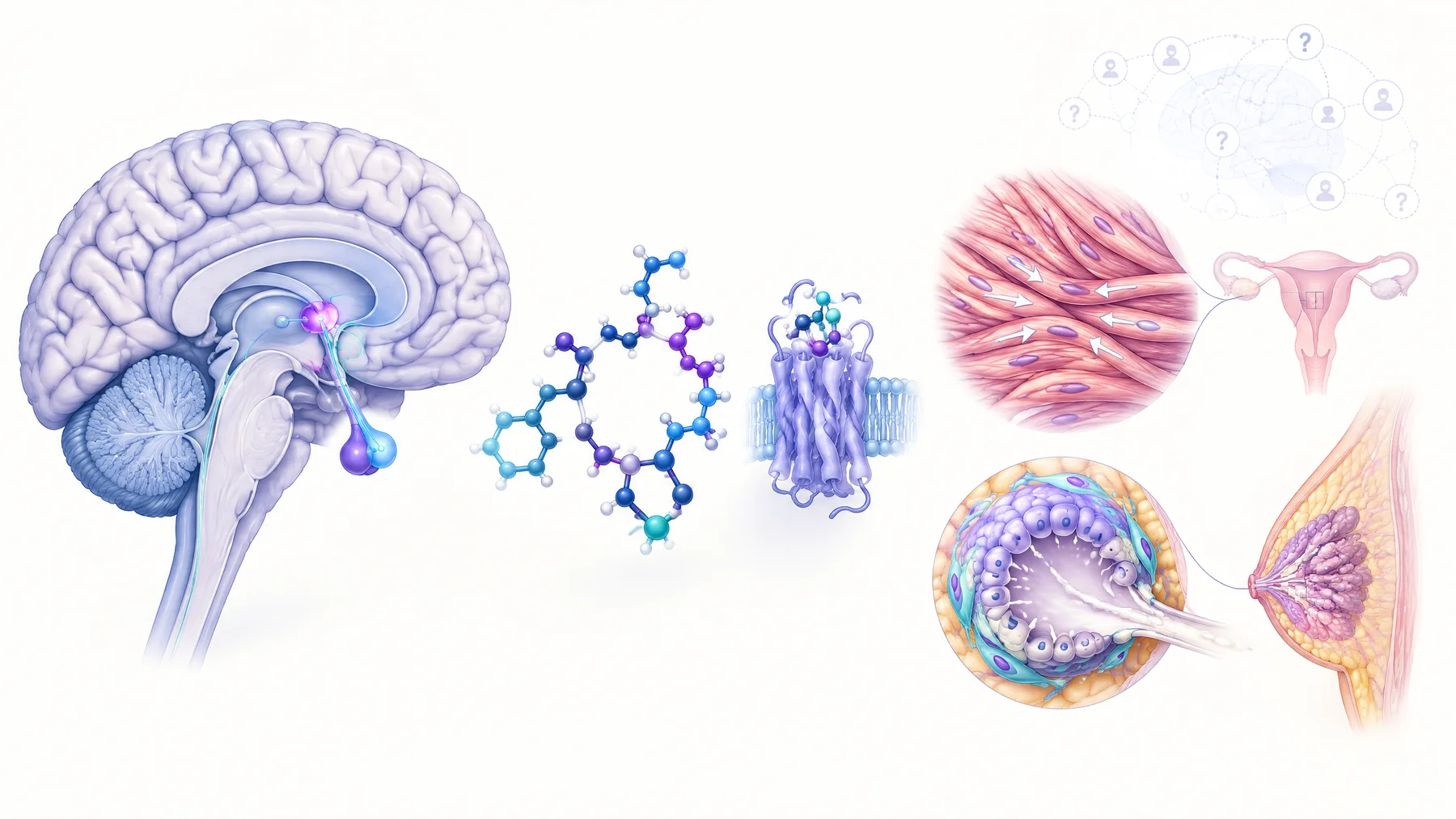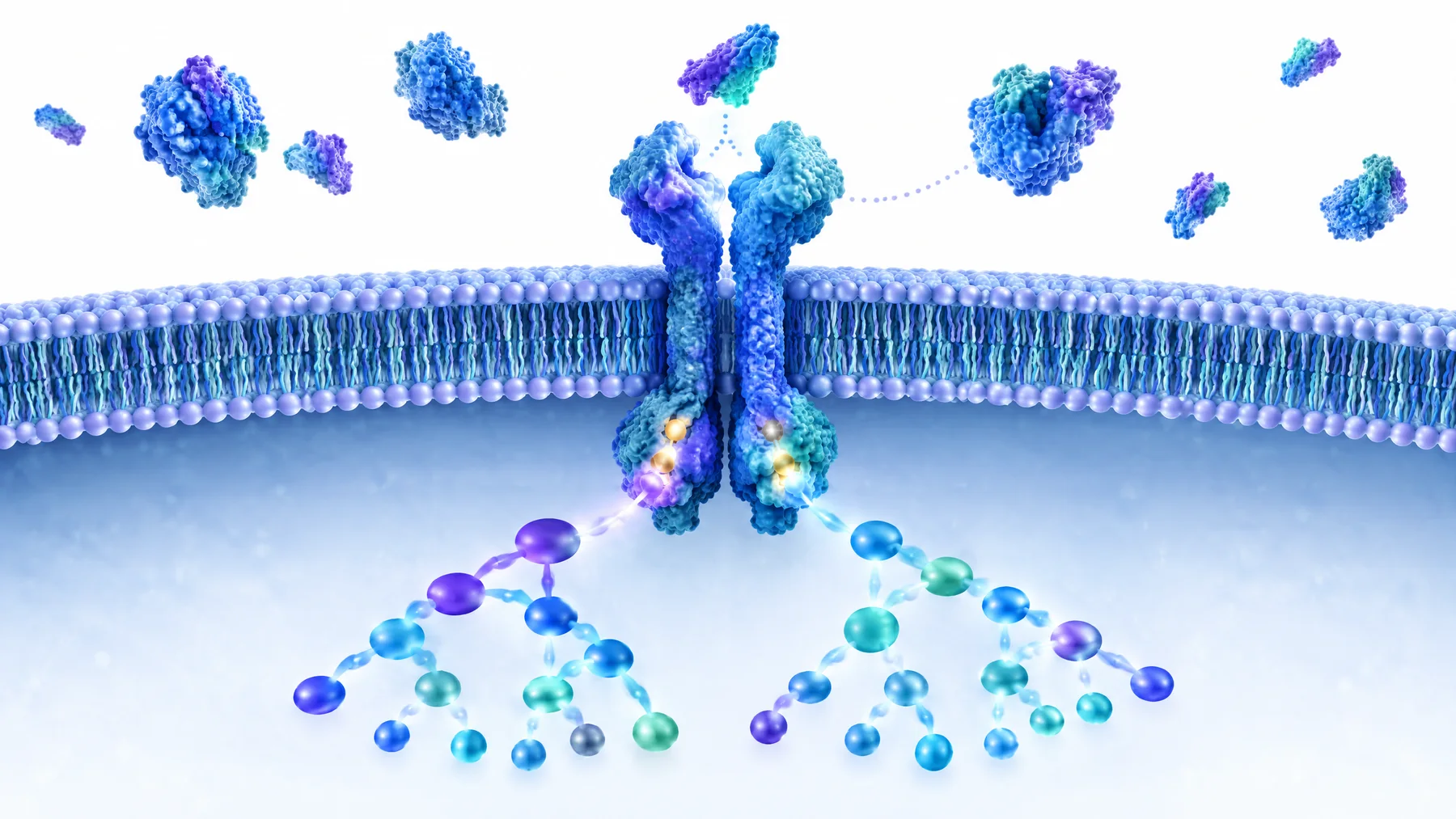

What is Neuroxelin Blend?
An ambiguous research-market mixture label, not a single peptide or an established medicine. Online descriptions commonly assign it four peptide components—PE-22-28, Pinealon (EDR), N-acetyl Semax and N-acetyl Selank—but this is a vendor-style formulation claim rather than a standardised pharmacological name or a clinically evaluated finished product.
Neuroxelin Blend should be read as an unvalidated combination of research peptides, not as an approved nootropic, antidepressant or anxiety treatment. PE-22-28 has direct TREK-1 channel and mouse-model data; Pinealon has a prenatal-stress rat study; Semax has rat hippocampal molecular and learning data; and an older, small randomised comparison studied parent Selank—not the N-acetyl blend—in people with anxiety-related diagnoses. None of these studies tests the four-component product. Australian readers should distinguish online research vials from ARTG-listed medicines and avoid treating a claimed ingredient list as proof of quality, sterility, effectiveness or safe human use.
1. Identity: a blend label, not one defined medicine
“Neuroxelin Blend” does not identify a single molecule in the scientific literature. A public online overview describes a fixed-ratio vial containing PE-22-28, Pinealon/EDR (Glu-Asp-Arg), N-acetyl Semax and N-acetyl Selank. That description is useful for identifying the purported ingredients, but it is not a product monograph, certificate of analysis, clinical trial or regulator record. Product names, ratios and salt forms can vary between suppliers, so the actual batch identity cannot be inferred from the blend name alone. [7]
All four named ingredients are peptides or peptide analogues. They are not interchangeable: PE-22-28 is a seven-residue mini-spadin analogue; Pinealon is the tripeptide EDR; Semax is an ACTH(4–10)-derived heptapeptide; and Selank is a tuftsin-derived peptide. “N-acetyl” denotes a modified form, so experiments on the parent Semax or Selank are not automatically experiments on the N-acetyl versions in a commercial mixture. [1] [2] [3] [4] [7]
2. Component-level molecular starting points
PE-22-28 has the clearest defined laboratory target among the proposed ingredients. In hTREK-1-expressing HEK cells, the 2017 study measured inhibition of TREK-1 potassium-channel current, with an IC50 reported as 0.12 nM; the investigators also found no change in several other K2P-channel currents or in hERG current under their assay conditions. This supports a direct in-vitro channel observation, not a demonstrated treatment mechanism in people. [1]
For parent Semax, a rat study measured increased hippocampal BDNF protein, trkB phosphorylation, and BDNF and trkB mRNA after a single exposure. A separate rat Selank experiment measured transient changes in mRNA for neurotransmission-related genes in frontal cortex. These are measured molecular responses in particular rodent tissues; they do not establish that the same pathway, exposure or effect occurs with N-acetyl variants or with all four ingredients combined. [3] [4]
Pinealon/EDR has been investigated in oxidative-stress and developmental-injury models. In the cited prenatal hyperhomocysteinaemia experiment, the authors proposed reduced oxidative injury as an explanation for their findings, but the study itself cannot settle a complete molecular mechanism or establish a clinical neuroprotective effect. [2]
3. What the preclinical studies actually found
Djillani and colleagues tested PE-22-28 in cell assays, mouse cortical neurons and mouse behavioural paradigms. In mice, PE-22-28 and related mini-spadin analogues reduced immobility in the forced-swim test; after four days, the paper also reported effects in learned-helplessness, novelty-suppressed-feeding and corticosterone-model experiments, and measured more BrdU-positive hippocampal cells. Forced-swim immobility and these other models are research endpoints, not diagnoses of human depression or proof of antidepressant benefit. [1]
The Pinealon paper used pregnant Wistar rats given methionine to create prenatal hyperhomocysteinaemia. In 45-day-old offspring, the methionine-plus-Pinealon group had faster early Morris-water-maze performance than the methionine-only group; cerebellar cells isolated from pups also showed lower oxidative-stress and necrosis markers after hydrogen-peroxide challenge. The design studied offspring of treated rats in a specific developmental insult model, not adults using a Neuroxelin-like blend. [2]
In the Semax experiment, a single parent-Semax exposure in rats was associated with a maximum 1.4-fold increase in hippocampal BDNF protein, 1.6-fold higher trkB phosphorylation, and increased conditioned-avoidance reactions. These findings are model- and time-specific, and the study did not test N-acetyl Semax, Selank, Pinealon, PE-22-28 or their combination. [3]
4. Human evidence: one constituent is not the blend
Among the verified sources here, the human study is a 2008 randomised comparative trial of parent Selank in 62 people with generalised anxiety disorder and neurasthenia: 30 received Selank and 32 medazepam. The abstract reports similar anxiolytic effects on psychometric scales and reports additional antiasthenic/psychostimulant effects for Selank. It does not test N-acetyl Selank, PE-22-28, Pinealon, Semax, or Neuroxelin as a finished product. [4]
This is a small, older study reported in Russian, with limited detail in the indexed English abstract about allocation methods, blinding, duration, adverse-event ascertainment and clinically important longer-term outcomes. It is therefore a signal about one parent peptide in one clinical setting, not adequate evidence for the safety or efficacy of a four-peptide cognitive or mood blend. [4]
No verified human trial in the sources reviewed evaluated the claimed Neuroxelin ingredient combination, its N-acetyl variants as a combination, a pharmacokinetic interaction, or a clinical endpoint for the finished vial. A claimed rationale that several pathways are “complementary” is a hypothesis; it is not evidence of synergy. [1] [2] [3] [4] [7]
5. Why combining the ingredients increases uncertainty
A blend makes the evidence question harder, not easier. Each component has been studied in different systems: PE-22-28 in channel assays and mice, Pinealon in a prenatal rat model, Semax in rat hippocampus, and Selank in rodents plus a limited human comparison. Those studies use different exposures, routes, endpoints and formulations. Combining them does not create a validated combined dose, route, interval, reconstitution method, storage rule or safety-monitoring plan. [1] [2] [3] [4]
In particular, parent Semax and parent Selank evidence should not be silently transferred to N-acetyl Semax and N-acetyl Selank. A terminal chemical modification can change handling by enzymes, distribution or target interactions; without direct comparative data for the relevant formulation, the practical consequence is unresolved. The fixed ratio described online also prevents attributing any effect or adverse event to one component. [3] [4] [7]
6. Risks and evidence gaps
The major risk message is uncertainty, not a catalogue of assumed side effects. The available studies do not establish human pharmacokinetics, blood–brain exposure, repeated-dose toxicity, immunogenicity, interaction effects, pregnancy safety, psychiatric safety, or batch-to-batch quality for the four-component mixture. Preclinical findings and one small parent-Selank trial cannot fill those gaps. [1] [2] [3] [4]
A research-use vial or an online ingredient list is not evidence that a product has been assessed as a pharmaceutical medicine. For people experiencing significant anxiety, mood symptoms, cognitive change or neurological symptoms, an untested blend should not displace clinical assessment or established care; urgent symptoms require urgent medical help. [5] [6] [7]
7. Australian regulatory context
In Australia, the Australian Register of Therapeutic Goods (ARTG) is the public database for therapeutic goods that can be legally supplied, and entries can show product, formulation, sponsor and manufacturer information. A review of the public regulator resources did not identify an ARTG entry, Australian Product Information document or Consumer Medicine Information document for a finished product called “Neuroxelin Blend”. This is a search finding rather than proof that no pathway could ever apply; it means the product should not be described as TGA-approved without a verifiable ARTG entry. [5]
The TGA states that goods not included in the ARTG have not been assessed by it for safety, quality or effectiveness. There are tightly defined routes by which certain practitioners can access unapproved goods for particular patients or research, but these pathways are not a general endorsement and cannot be used to facilitate commercial supply. This regulatory status is separate from whether a supplier markets a vial as “research only”. [5] [6]
8. A practical way to read claims about Neuroxelin
First, separate the name on the vial from the evidence. Ask whether the paper studied the exact sequence, modification, mixture, route and outcome being claimed. For Neuroxelin, the answer is no for the finished blend: the available papers concern individual constituents or parent peptides in different experimental settings. [1] [2] [3] [4] [7]
Second, distinguish a measured endpoint from a health claim. TREK-1 current inhibition in engineered cells, altered rat hippocampal BDNF/trkB markers, water-maze behaviour in an offspring injury model, and psychometric scales in a small parent-Selank study are all specific observations. None alone demonstrates improved cognition, mood resilience, recovery from brain injury or prevention of disease in the general public. [1] [2] [3] [4]
Questions readers ask
Is Neuroxelin Blend an approved medicine in Australia?
It should not be represented as TGA-approved on the basis of the evidence reviewed. No named ARTG entry or official Australian medicine label for the finished blend was identified in this research. The TGA explains that the ARTG is the database for goods legally supplied in Australia, and that non-ARTG goods have not been assessed by the TGA for safety, quality or effectiveness. [5] [6]
Does research on Semax or Selank prove that the N-acetyl Neuroxelin components work?
No. The verified Semax experiment used parent Semax in rats, while the human study used parent Selank. The claimed mixture uses N-acetyl versions and also adds PE-22-28 and Pinealon. Direct evidence for the exact modified combination is needed; it cannot be assumed from studies of parent peptides alone. [3] [4] [7]
Are there validated human administration protocols for the blend?
No validated combined protocol was found. The underlying studies used different compounds and research designs, so they cannot be converted into a universal human dose, route, dilution, storage method or treatment schedule for a commercial vial. [1] [2] [3] [4]
What is the strongest evidence for any proposed component?
PE-22-28 has a direct cell-assay finding of TREK-1-current inhibition and several mouse research endpoints. Parent Selank has the only verified human study in this source set, a 62-person comparison with medazepam. Neither finding validates Neuroxelin as a combined product or establishes a clinical benefit for the wider population. [1] [4]
What remains uncertain
The name and fixed composition are not standardised in peer-reviewed literature. The online composition source is not an official label and the linked supplier page was unavailable during review; actual formulation, purity, salt form and sterility therefore remain unverified. [7]
The constituent studies have heterogeneous models, formulations, routes and endpoints. They cannot establish human pharmacology or clinical outcomes for an N-acetyl-containing four-peptide mixture. [1] [2] [3] [4]
The only verified human evidence in this source set is a small 2008 study of parent Selank, not Neuroxelin. It does not validate a blend protocol or demonstrate combined safety. [4]
TGA resources explain regulatory principles but a regulator webpage alone cannot prove the legal status of every supplier batch. The absence of a located named Neuroxelin ARTG record should be rechecked against the current ARTG before any regulatory claim is made. [5] [6]
References and further reading
- [1] Shortened Spadin Analogs Display Better TREK-1 Inhibition, In Vivo Stability and Antidepressant Activity. Patch-clamp experiments in hTREK-1/HEK cells and other channel systems; mouse behavioural models; mouse cortical-neuron and hippocampal-cell endpoints.
- [2] Pinealon protects the rat offspring from prenatal hyperhomocysteinemia. Pregnant Wistar-rat methionine-loading model of prenatal hyperhomocysteinaemia; offspring Morris-water-maze testing and ex-vivo cerebellar-cell flow cytometry.
- [3] Semax, an analog of ACTH(4-10) with cognitive effects, regulates BDNF and trkB expression in the rat hippocampus. Single-exposure rat experiment measuring hippocampal BDNF and trkB molecular endpoints and conditioned-avoidance reactions.
- [4] [Efficacy and possible mechanisms of action of a new peptide anxiolytic selank in the therapy of generalized anxiety disorders and neurasthenia]. Comparative randomised study in 62 patients with generalised anxiety disorder and neurasthenia: parent Selank (n=30) versus medazepam (n=32), assessed with psychometric scales and serum enkephalin activity.
- [5] About the Australian Register of Therapeutic Goods (ARTG). TGA regulatory guidance describing the ARTG, its searchable product information and access arrangements.
- [6] Unapproved therapeutic goods. TGA guidance on unapproved therapeutic goods and controlled access pathways.
- [7] Neuroxelin Blend. Informational web page; not a study, official label or regulator record.