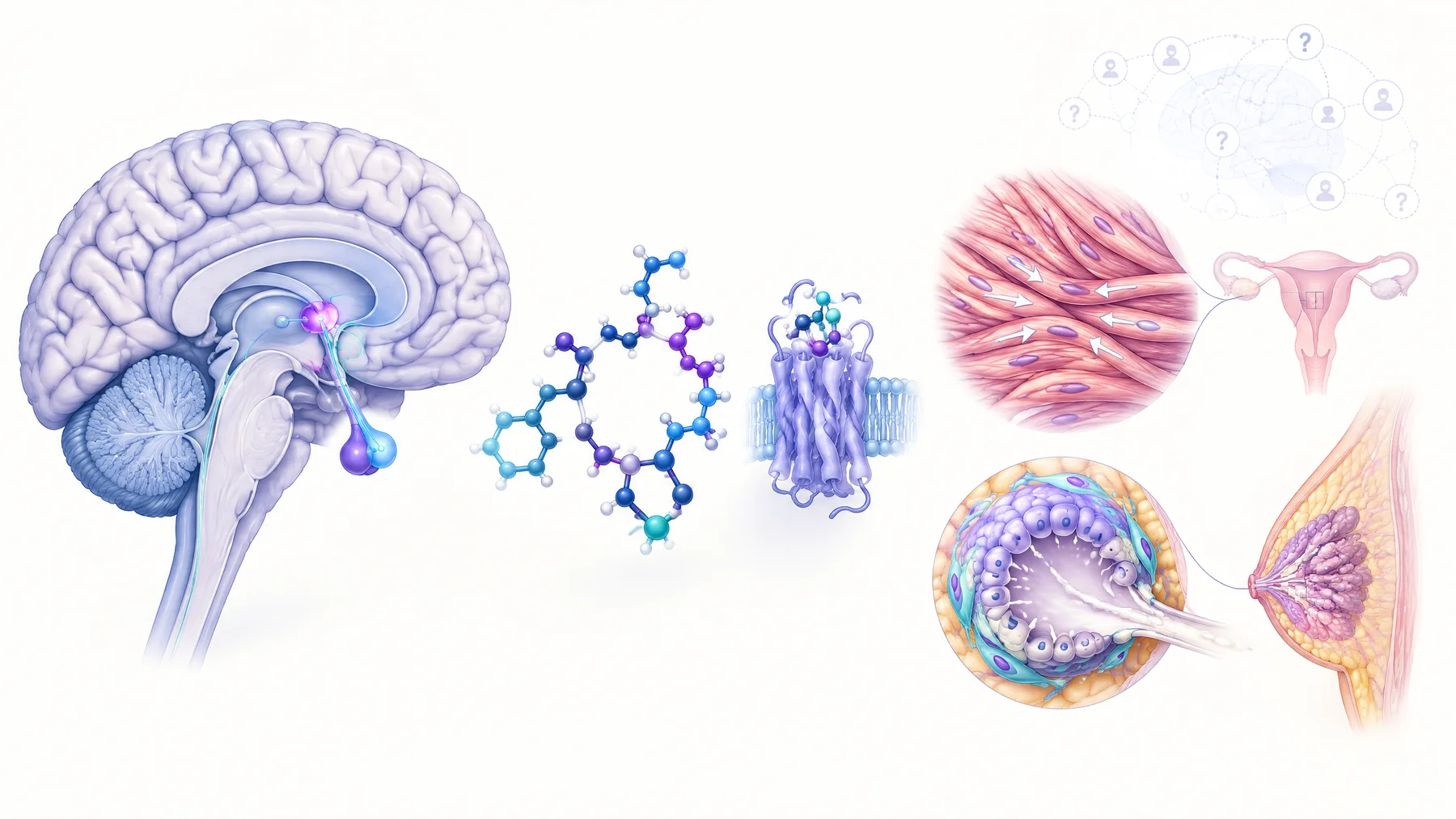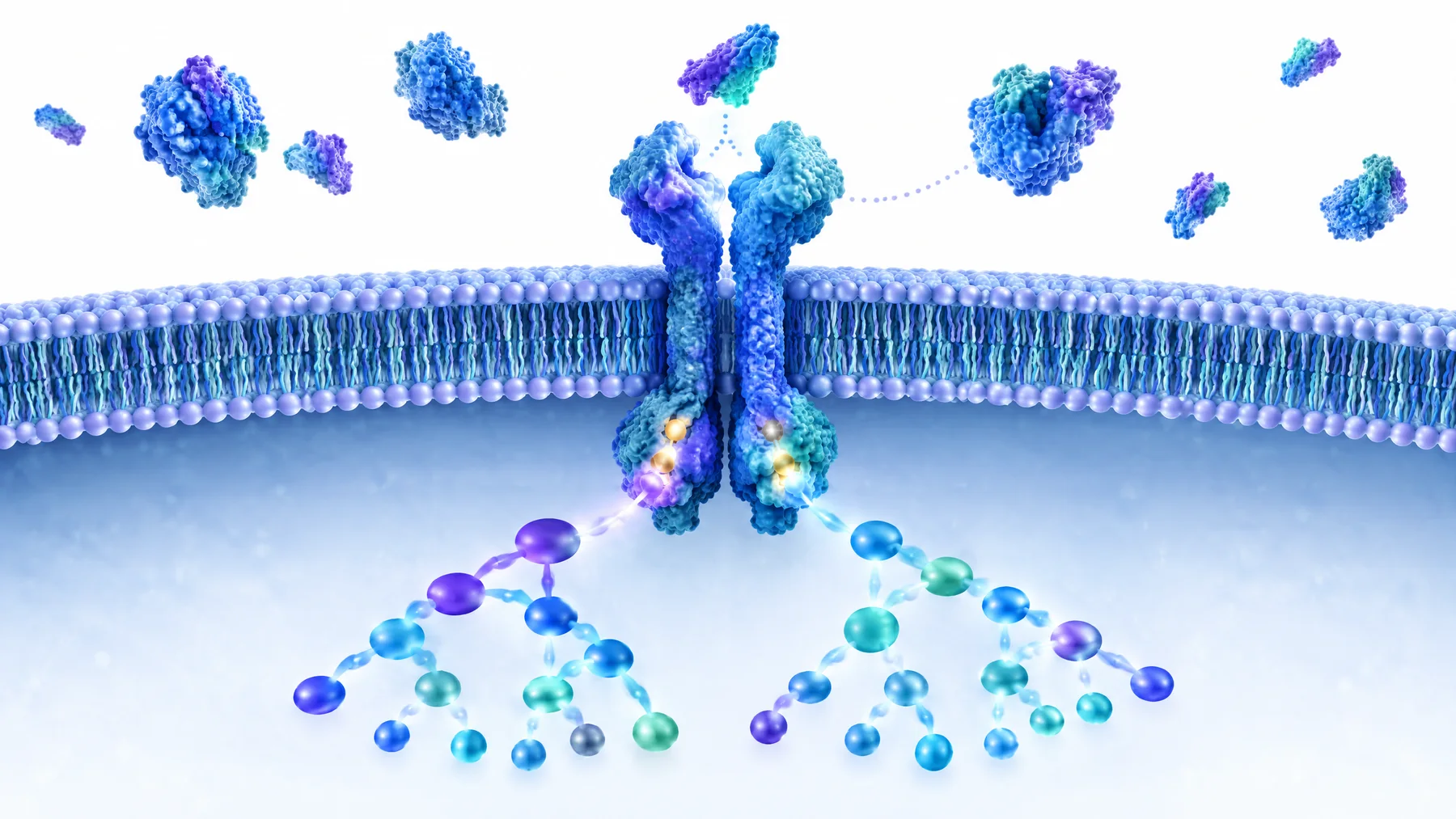

What is KLOW blend?
KLOW is not one chemically defined peptide, approved medicine, hormone, or standardised pharmaceutical formulation. It is a commercial/research-market label for a mixture commonly described as GHK-Cu, BPC-157, TB-500 and KPV. A supplier’s 80 mg product page calls these its synonyms and says it is for laboratory research only; that product description documents one marketed mixture, not a universally fixed composition, medicine label, or evidence of clinical use. [Sources 1–3]
KLOW blend is best understood as a supplier-defined mixture, not a validated combined treatment. The component literature contains model-specific signals—such as GHK-Cu in fibroblast cultures, BPC-157 in a rat tendon model, KPV in cell/mouse colitis experiments, and full thymosin beta-4 in rat wounds and selected topical human trials—but no direct evidence was located for the labelled four-component mixture. Australian readers should distinguish this from an approved ARTG medicine: the TGA identifies BPC-157, GHK-Cu and TB-500 among examples of unapproved peptide products and warns that research-use-only wording does not itself make supply lawful. [Sources 1–13]
Identity: a marketed mixture, not a single peptide medicine
‘KLOW’ is a shorthand used in the peptide marketplace rather than the name of a discrete molecule. One supplier describes an 80 mg lyophilised research blend and lists KPV, GHK-Cu, BPC-157 and TB-500 as synonyms, while explicitly stating that the material is not for human or veterinary use. That is useful for identifying what sellers mean by the name, but it is not a therapeutic label, a clinical protocol, or independent verification of vial contents. [1]
The four names also do not describe one pharmacological class with one target. GHK-Cu is a copper complex of the tripeptide glycyl-L-histidyl-L-lysine; BPC-157 is a 15-amino-acid peptide; KPV is the tripeptide Lys-Pro-Val; and TB-500 in anti-doping analytical work was identified as N-acetylated LKKTETQ, a seven-amino-acid fragment corresponding to residues 17–23 of thymosin beta-4. In particular, TB-500 should not be casually treated as interchangeable with the full 43-amino-acid thymosin beta-4 used in some studies. [7] [8] [9] [10] [13]
What the component pathways actually show
The strongest way to read mechanism claims is to preserve the model. In cultured fibroblasts, GHK-Cu increased collagen synthesis at very low concentrations without increasing cell number in the 1988 experiment. This supports a cell-culture observation about collagen production; it does not show that an injected or mixed product repairs a person’s tendon, skin or wound. [7]
KPV has a more specific experimental intestinal story. In cytokine-stimulated human intestinal epithelial and Jurkat T-cell lines, investigators reported PepT1-mediated uptake, lower NF-kappaB/MAP-kinase signalling and lower pro-inflammatory cytokine secretion. The same paper found reduced inflammatory measures in DSS- and TNBS-induced mouse colitis after KPV in drinking water. These are mechanistic and disease-model findings, not evidence for systemic KLOW use. [9]
Thymosin beta-4 biology is often used to market TB-500, but the identity distinction matters. In a rat full-thickness-wound study, full thymosin beta-4 increased re-epithelialisation, contraction, collagen deposition and angiogenesis versus saline, and stimulated keratinocyte migration in a chamber assay. TB-500 analytical research instead concerns a short acetylated thymosin-beta-4 fragment and its detection/metabolism, not clinical wound treatment. [10] [11]
Model-specific findings, not a combined ‘healing’ result
A frequently cited BPC-157 paper transected the right Achilles tendon of rats and compared daily intraperitoneal BPC-157 with saline. The authors reported better Achilles functional index values and biomechanical, microscopic and gross repair measures through day 14 in the treated rats. That is a surgically created rat injury with a particular compound and route; it is not a human trial and it did not test KLOW or its four-way interaction. [8]
The KPV study likewise provides no evidence about muscle, tendon or cosmetic outcomes. Its relevant models were human intestinal cell lines and chemically induced colitis in C57BL/6 mice, with histology, cytokine expression, myeloperoxidase activity, body weight and colon measures as outcomes. Such endpoints cannot be substituted for claims about general inflammation or recovery in people. [9]
A basic combination problem remains untested: even if each component had a favourable result in its own model, a blend may alter exposure, degradation, local concentration, biological response or toxicity. No retrieved primary study tested GHK-Cu, BPC-157, TB-500 and KPV together as a KLOW formulation. Therefore there is no demonstrated additive or synergistic pathway for the mixture. [1] [2] [3] [7] [8] [9] [10] [11] [12] [13]
Human evidence: separate the full thymosin beta-4 studies
Searches of ClinicalTrials.gov for ‘KLOW peptide’ and for the exact four names together returned no studies, and an exact PubMed search did not retrieve a directly relevant KLOW-blend paper. Search results cannot rule out unpublished work or different naming, but they mean there is no direct registered or indexed evidence here on which to base a human blend claim, route or schedule. [2] [3]
There is limited human research on a different substance/formulation: full thymosin beta-4. A double-masked Phase II dry-eye trial randomised 72 people to 0.1% thymosin beta-4 ophthalmic solution or placebo for 28 days. The two primary endpoints were not significantly different at the specified visit; some secondary signs and discomfort outcomes favoured the active eye drops, and no adverse events were observed. This does not validate TB-500, injection, BPC-157, KPV, GHK-Cu or KLOW. [12]
A separate double-blind, placebo-controlled, dose-escalation Phase II study enrolled 73 patients with venous stasis ulcers at eight European sites and tested topical full thymosin beta-4 alongside standard wound care. The authors described acceptable safety comparable with placebo and a possible signal at 0.03%, while presenting it as Phase II evidence. Again, this was a topical single-agent, disease-specific study—not a study of the TB-500 fragment or the KLOW mixture. [13]
Risks and uncertainty are part of the evidence
For unapproved peptide products, the TGA says key information may be unknown, including manufacture, sterility, actual contents, biological action and adverse effects. It also warns that inaccurate or misleading labelling can leave clinicians and consumers without reliable ingredient, dosage or administration information; injection can add contamination, infection and local-tissue-damage risks. These concerns are especially relevant to a non-standardised mixture, where product-specific quality cannot be inferred from component papers. [4]
The TGA reports adverse-event concerns associated with unapproved peptide products including severe allergic reactions, systemic inflammatory response syndrome, generalised hypersensitivity symptoms and poor product quality. Those reports do not identify a proven causal risk profile for KLOW specifically, but they are a reason not to treat ‘research grade’, an online certificate of analysis, or an individual animal study as a human safety assessment. [1] [4]
There is also no evidence base for a universal KLOW dilution, storage rule after preparation, administration route, dose, timing or cycling arrangement. A supplier’s handling directions concern its own laboratory product, while the TGA specifically cautions that online peptide labels may not provide reliable dosage or administration information. The absence of a validated combined protocol is a finding, not a gap to fill with extrapolation. [1] [4]
Australian regulatory context
In Australia, therapeutic peptide products are regulated as therapeutic goods. The TGA defines unapproved peptide products as goods not included in the Australian Register of Therapeutic Goods (ARTG), and specifically gives BPC-157, GHK-Cu and TB-500 as examples of unapproved peptide products often supplied as injectables. The ARTG is the public database for checking medicines that may be supplied in Australia; this review found no approved KLOW medicine record or Australian product information in the sources retrieved. [4] [14]
Compounding and other access pathways have tightly defined legal and professional conditions; they are not proof that a product is approved, effective or suitable. The TGA notes that a product being marked ‘research use only’ does not change its regulatory status, permit importation, or remove supply and advertising obligations. Australian readers should seek advice from an appropriately qualified clinician or pharmacist rather than rely on vendor naming or social-media claims. [4]
For tested athletes, BPC-157 is an additional concern. Sport Integrity Australia states that it is not listed on the ARTG and is prohibited at all times under the World Anti-Doping Code’s S0 category. WADA’s current S0 explanation explicitly includes BPC-157 among non-approved substances prohibited at all times. A blend containing BPC-157 is therefore not a safe workaround for anti-doping rules. [5] [6]
Comparison with related substances and formulations
The most misleading comparison is ‘TB-500 equals thymosin beta-4’. The human eye-drop and venous-ulcer trials used full thymosin beta-4 as a topical single agent. In contrast, the TB-500 analytical literature identifies an acetylated seven-residue thymosin-beta-4 region in a veterinary preparation. Matching part of a parent peptide’s sequence does not establish matching pharmacology, dose-response, tissue distribution, quality or clinical effect. [10] [12] [13]
The other components sit at different evidence stages: GHK-Cu has cell-culture collagen findings; BPC-157 has preclinical tendon findings; and KPV has intestinal cell and mouse-colitis findings. A genuine comparison must state the molecule, formulation, route, species and endpoint for each result. Combining them under a recovery or regeneration label obscures rather than strengthens the evidence. [7] [8] [9]
How to read a KLOW claim critically
First ask what was actually tested. A claim based on cultured fibroblasts, an induced mouse-colitis model, a rat tendon transection or a topical human eye-drop trial has a different meaning in every case. The outcome must be named precisely: collagen synthesis in cells, inflammatory markers in mice, or corneal staining/discomfort in a defined dry-eye study are not interchangeable endpoints. [7] [8] [9] [12]
Second, inspect identity before interpreting outcomes. Look for the exact sequence or complex, formulation, route, comparator, pre-specified endpoints and study population. This is especially important for TB-500 versus full thymosin beta-4 and for a KLOW-labelled vial versus the individual substances in the literature. If the claim cannot point to a study of the exact blend, it is component extrapolation—not evidence for the blend. [1] [10] [11] [12] [13]
Questions readers ask
Is KLOW an approved medicine in Australia?
No approved KLOW medicine record or Australian product information was located in this review. The TGA identifies BPC-157, GHK-Cu and TB-500 as examples of unapproved peptide products and explains that unapproved goods are not included in the ARTG. The fact that an item is supplied or compounded does not itself make it an approved medicine. [4] [14]
What is usually meant by KLOW?
It is a marketplace/research label, commonly used for GHK-Cu, BPC-157, TB-500 and KPV in one mixture. Because it is not a standardised drug name, ingredient ratios, sequence details, excipients and quality must not be assumed from the word ‘KLOW’ alone. [1]
Are there clinical trials of the full KLOW blend?
No direct four-component KLOW trial was found in the exact ClinicalTrials.gov and PubMed searches performed for this record. That supports a limited-evidence conclusion, while not proving that no unpublished or differently named work exists. [2] [3]
Do thymosin beta-4 studies prove that TB-500 or KLOW works?
No. The cited human trials studied topical full thymosin beta-4, whereas TB-500 has been analytically identified as an acetylated seven-residue fragment of that parent peptide. Neither formulation was a KLOW mixture, so their results cannot establish KLOW efficacy or safety. [10] [12] [13]
Why is this relevant to athletes?
BPC-157 is listed by Sport Integrity Australia and WADA as a non-approved substance prohibited at all times in sport. A product marketed as a blend does not remove that exposure or anti-doping risk. [5] [6]
What remains uncertain
This is intentionally a limited-evidence record. ‘KLOW’ is a non-standardised commercial label, so the exact identity and ratios of one seller’s blend may not match another’s. The direct evidence search found no indexed KLOW-blend paper or registered human study using the exact name/component combination, but search non-retrieval cannot exclude unpublished, non-indexed or differently named research. Component studies differ materially in molecule, sequence, formulation, route, species, disease model and outcome. The cited human work is limited to topical full thymosin beta-4 formulations, not TB-500 or the blend. No source here validates combined dosing, reconstitution, storage after preparation, injection, efficacy, long-term safety or Australian approval of KLOW.
References and further reading
- [1] KLOW BLEND. Commercial research-use-only product description for a lyophilised 80 mg blend
- [2] ClinicalTrials.gov API search: KLOW peptide; GHK-Cu BPC-157 TB-500 KPV. Exact-term registry search performed 3 October 2026; companion exact-component search also returned zero studies
- [3] PubMed search: ‘KLOW’ peptide. Exact-term literature search performed 3 October 2026
- [4] Understanding your responsibilities when importing, compounding and supplying unapproved peptide products. TGA regulatory and safety guidance, published 13 April 2026
- [5] BPC-157 Information. Official substance-education record
- [6] The Prohibited List. Current WADA prohibited-list category page
- [7] Stimulation of collagen synthesis in fibroblast cultures by the tripeptide-copper complex glycyl-L-histidyl-L-lysine-Cu2+. In-vitro fibroblast-culture experiment
- [8] Gastric pentadecapeptide BPC 157 accelerates healing of transected rat Achilles tendon and in vitro stimulates tendocytes growth. Rat Achilles-tendon transection study with daily intraperitoneal BPC-157 versus saline plus in-vitro tendocyte experiments
- [9] PepT1-mediated tripeptide KPV uptake reduces intestinal inflammation. Cytokine-stimulated human intestinal epithelial/Jurkat cell experiments and DSS/TNBS mouse-colitis models
- [10] Doping control analysis of TB-500, a synthetic version of an active region of thymosin beta4, in equine urine and plasma by liquid chromatography-mass spectrometry. Equine post-administration and in-vitro metabolism LC-MS study
- [11] Thymosin beta4 accelerates wound healing. Rat full-thickness-wound model plus keratinocyte migration chamber assay
- [12] Thymosin beta 4 ophthalmic solution for dry eye: a randomized, placebo-controlled, Phase II clinical trial conducted using the controlled adverse environment (CAE) model. Single-centre, double-masked, placebo-controlled Phase II trial; 72 participants; 0.1% full thymosin beta-4 eye drops for 28 days
- [13] The effect of thymosin treatment of venous ulcers. Multicentre, double-blind, placebo-controlled dose-escalation Phase II trial; 73 patients with venous stasis ulcers
- [14] Australian Register of Therapeutic Goods (ARTG). Public searchable database of medicines, medical devices and biologicals that can be supplied in Australia