What is Ipamorelin?
Synthetic pentapeptide growth-hormone secretagogue (GHS) and ghrelin-receptor-pathway research compound; it is a peptide, not growth hormone itself, not a small molecule, not a topical ingredient and not a blend. The original pharmacology paper describes ipamorelin as Aib-His-D-2-Nal-D-Phe-Lys-NH2, a five-residue synthetic peptide. Investigational human candidate with early human pharmacodynamic research and Phase II postoperative-ileus development, but no approved Australian ipamorelin medicine or ARTG product entry was identified in this review. A research-supplier vial is not an approved formulation or a substitute for the defined investigational products used in studies.
Ipamorelin is a genuine synthetic peptide, but its evidence base is much narrower than many online claims imply. Early pharmacology showed GH release in rat pituitary cells, rats and swine; a small study in healthy men measured a short-lived GH response. The most informative published patient trial, in people recovering from bowel resection, did not show a statistically significant efficacy advantage over placebo. Animal work on postoperative gut motility, bone and body composition is scientifically useful but cannot establish human outcomes. In Australia, ipamorelin is currently scheduled as a prescription-only substance with additional Appendix D controls, yet scheduling is not product approval. No approved ipamorelin formulation was identified; a vial sold for research does not carry the quality, sterility, efficacy or administration evidence of a registered medicine.
Identity: a peptide research compound, not growth hormone
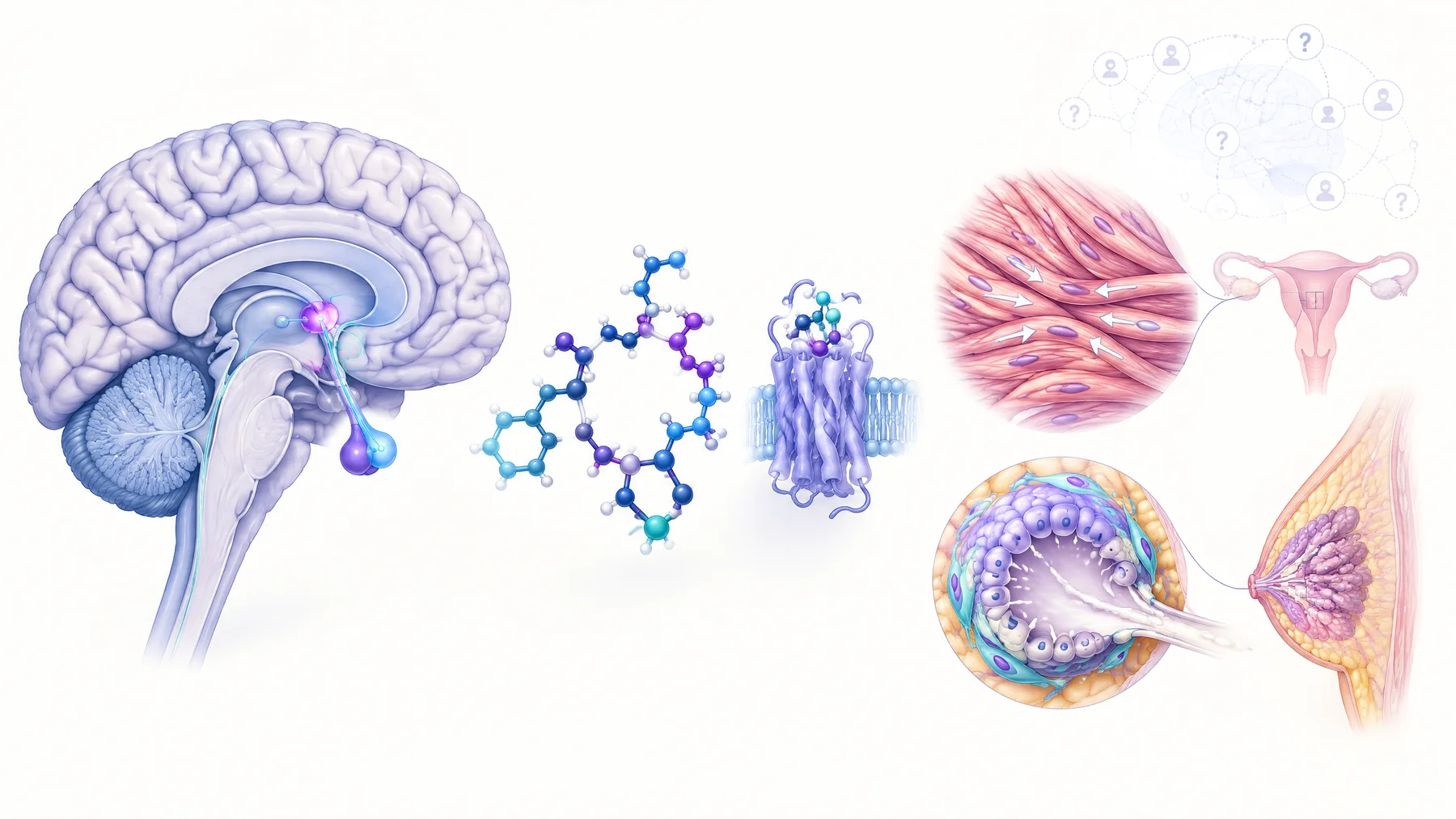
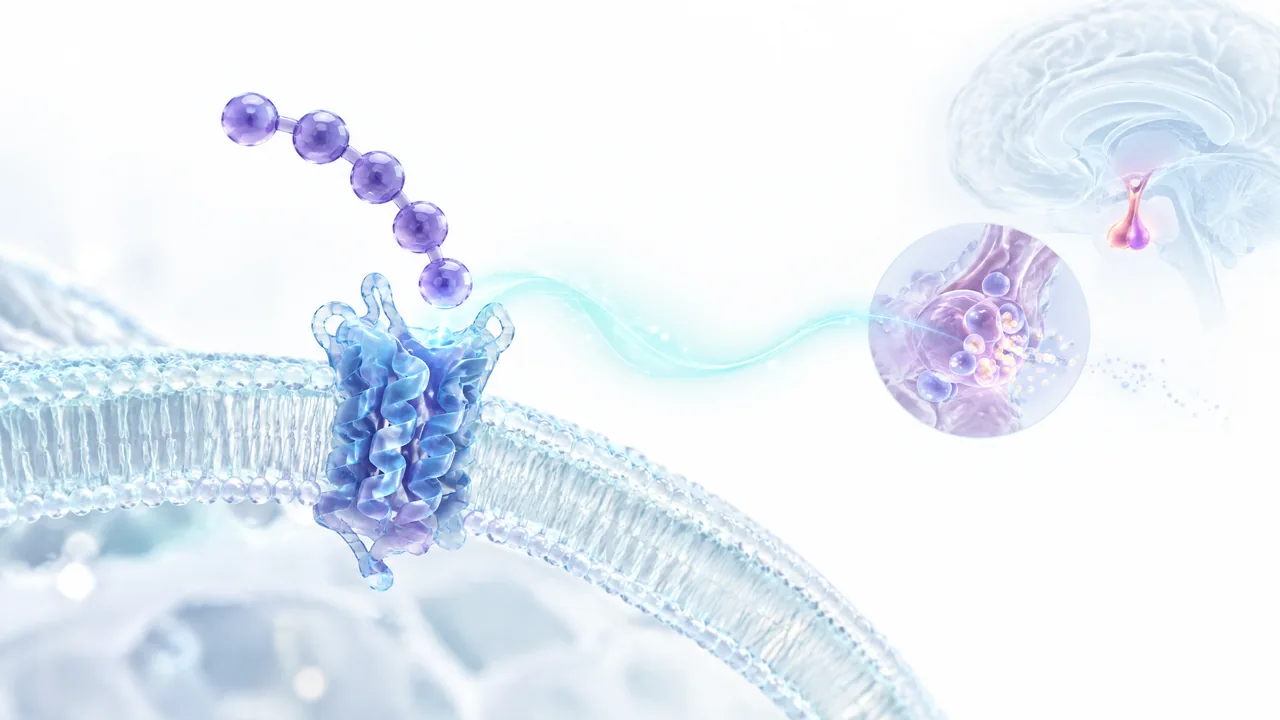
Ipamorelin is a synthetic pentapeptide: the original report gives the sequence Aib-His-D-2-Nal-D-Phe-Lys-NH2. It was developed as a growth-hormone secretagogue, meaning a compound intended to prompt release of endogenous growth hormone (GH). It is therefore different from administering recombinant GH, and it should not be described as a vitamin, a cosmetic topical or a generic ‘peptide blend’. [1]
The appropriate evidence label is **investigational human candidate**. Published work includes human PK/PD research and Phase II postoperative-ileus studies, but these do not amount to an approved medicine indication or a validated consumer protocol. In particular, a supplier’s lyophilised or ‘research use only’ vial is not the same thing as a regulator-reviewed formulation with a product information document. [2] [3] [9] [10]
Molecular pathway: what the original pharmacology established
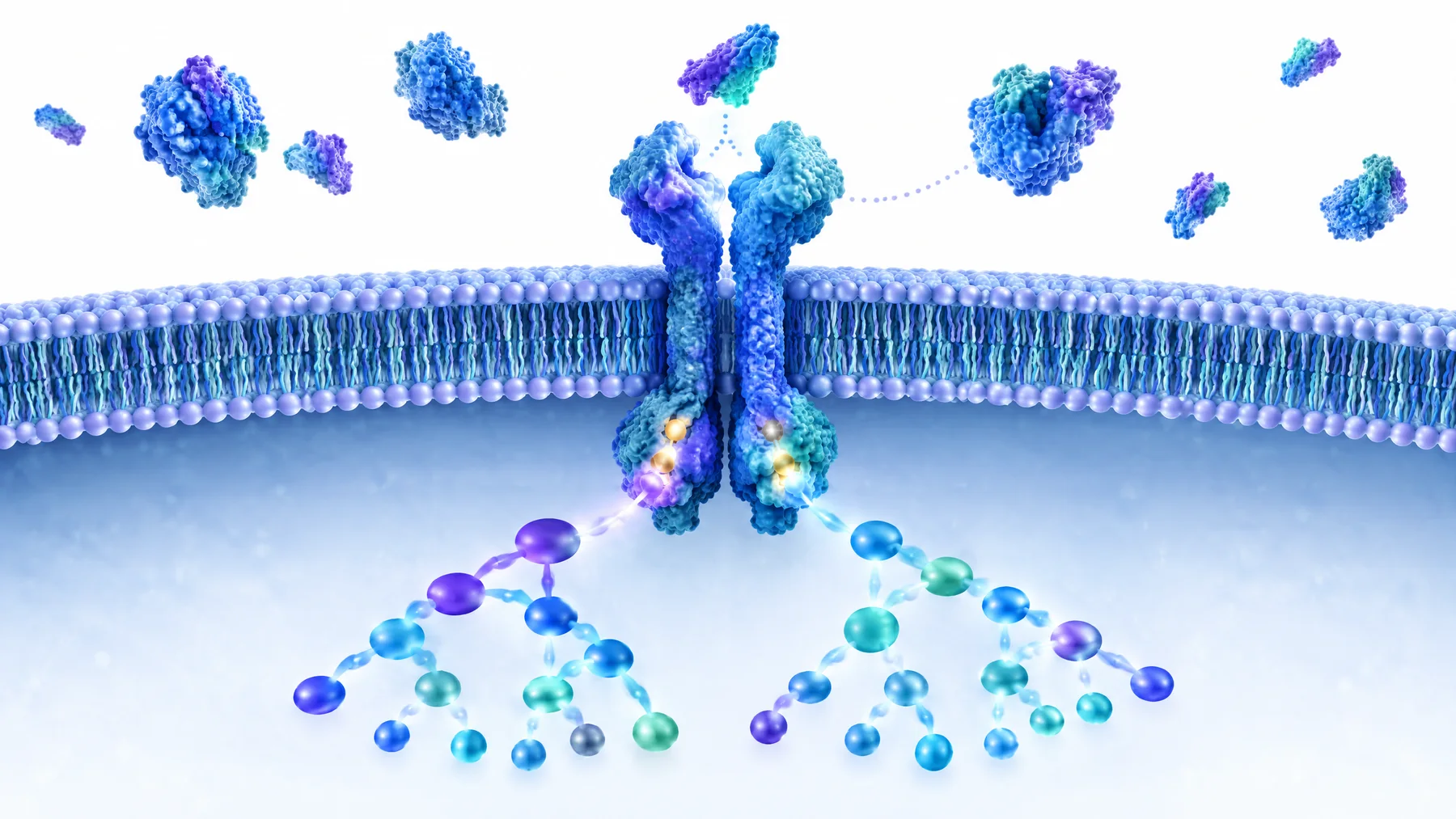
In primary rat pituitary cells, ipamorelin stimulated GH release. Antagonist experiments in the same research programme supported a GHRP-like receptor pathway rather than the GHRH receptor pathway. In anaesthetised rats and conscious swine, the investigators also measured GH release after ipamorelin. These are direct pharmacology findings in specified experimental systems. [1]
The same swine experiments found that ipamorelin did not raise ACTH or cortisol significantly above the response seen with GHRH, unlike GHRP-2 and GHRP-6 in that study. This is a comparative animal endocrine observation, not proof that ipamorelin is free of cortisol-related, hormonal or other risks in people, especially with repeated exposure or unverified products. [1]
What model-specific animal studies found
A postoperative-ileus experiment used adult male Sprague-Dawley rats subjected to laparotomy and bowel manipulation. A single intravenous study administration of ipamorelin improved gastric emptying and small-intestinal transit in that surgical rodent model; isolated gastric tissue also provided contractility-related observations. This does not establish treatment of postoperative ileus, constipation or gastroparesis in humans. [4]
Skeletal findings likewise need their model attached. In adult female rats treated for 12 weeks, ipamorelin increased measured bone mineral content and bone dimensions, while volumetric bone mineral density was unchanged. A separate 15-day study in adult female rats found dose-related increases in longitudinal bone-growth rate and body-weight gain. Neither experiment establishes a treatment for osteoporosis, adult height, fracture healing or paediatric growth disorders. [5] [6]
Claims that GH secretagogues necessarily cause fat loss are also not supported by the cited animal record. In GH-deficient and GH-intact mouse models, ipamorelin increased relative fat-pad weight; the study also reported greater food intake and leptin in GH-intact mice. This cannot predict an individual human outcome, but it is an important counterweight to simple ‘fat-burning’ marketing. [7]
Human evidence: endocrine response is not clinical benefit
A 1999 PK/PD study enrolled eight healthy male participants at each of five 15-minute intravenous infusion rates. Measured ipamorelin exposure was dose-proportional, and GH showed one release episode, peaking at about 0.67 hours before declining to negligible concentrations. The study characterises short-term physiology in healthy men; it did not test muscle gain, fat loss, sleep, ageing, injury recovery or long-term safety. [2]
The clearest published patient efficacy test was a multicentre, double-blind, placebo-controlled Phase II proof-of-concept trial in adults undergoing small or large bowel resection. Among 114 analysed participants, median time from first study treatment to a tolerated standard solid meal was 25.3 hours with ipamorelin and 32.6 hours with placebo, a difference that was not statistically significant (p=0.15); the authors found no significant difference in key or secondary efficacy analyses. The trial was small and included a broad range of underlying conditions. [3]
A separate completed Phase II registry record after open bowel resection lists 320 actual participants but shows no posted results. A completed listing is evidence that a trial occurred, not evidence that the investigational treatment worked. The absence of publicly posted results also prevents it from supplying a usable efficacy estimate or a comprehensive safety assessment. [11]
Risks and uncertainty: interpret the gaps correctly
Short studies can report tolerability without answering long-term safety. In the 117-person bowel-resection study, treatment-emergent adverse events were common in both postoperative groups (87.5% with ipamorelin and 94.8% with placebo), and the authors considered the study treatment well tolerated. Those figures cannot be transferred to healthy people, chronic use, other routes or products obtained outside a trial. [3]
The product-quality question is separate from the molecule’s pharmacology. The TGA warns that unapproved peptide products have not been assessed for safety, quality or effectiveness and may have uncertain manufacture, sterility, contents, labelling, dose and adverse effects. It reports serious reactions and quality problems across unapproved peptide products as a category; that does not prove ipamorelin caused each report, but it does make a supplier label poor evidence of safety. [10]
Australian regulatory context: scheduling is not approval
The current Australian Poisons Standard lists ipamorelin in Schedule 4 and Appendix D, clause 5. Schedule 4 is the prescription-only category, while Appendix D adds controls on possession or supply. This classification concerns the degree of control recommended over availability; it does not mean an ipamorelin product has been evaluated and approved for a clinical indication. [8]
The ARTG is the TGA’s public database for therapeutic goods that can be legally supplied in Australia. No approved ipamorelin medicine or ARTG product entry was identified in this review. The TGA also stresses that a ‘research use only’ disclaimer does not change regulatory status, permit importation or remove supply and advertising obligations. Access pathways and state or territory controls can be fact-specific, so this is not legal advice. [9] [10]
Comparison with related growth-hormone substances
Ipamorelin belongs to the growth-hormone-secretagogue side of this field. It should not be conflated with GH itself, with GHRH analogues such as CJC-1295 or tesamorelin, or with other ghrelin-receptor agonists. Related biology does not make their sequences, formulations, persistence, approved indications, risks or evidence interchangeable. [1] [2] [12]
Combination claims need an even higher evidence bar. The cited studies evaluated ipamorelin as a defined single investigational agent, not in a commercial ‘stack’ with another peptide or hormone-active substance. Combining research products does not create a validated combined protocol and adds uncertainty about interactions, labelling and adverse effects. [2] [3] [10]
How to read an ipamorelin claim
Start with the model. A pituitary-cell assay shows a cellular response; a rat bowel-manipulation experiment shows a surgical-model result; and a healthy-volunteer PK/PD study shows acute hormone measurements. None of those is automatically evidence for a different population or a consumer-facing outcome such as better body composition, wellbeing, sleep or recovery. [1] [2] [4]
Then look for the outcome and comparator. The bowel-resection trial measured time to a tolerated meal against placebo and did not reach statistical significance on its primary outcome. That result is more informative than a testimonial, but it also does not answer whether ipamorelin benefits unrelated conditions. Finally, distinguish an official ARTG entry from a supplier certificate or product name: only the former identifies an Australian therapeutic-good record. [3] [9]
Questions readers ask
Is ipamorelin an approved medicine in Australia?
No approved ipamorelin medicine or ARTG product entry was identified in this review. Ipamorelin’s Schedule 4 and Appendix D listing is a control classification, not evidence of ARTG inclusion or an approved indication. [8] [9]
Is ipamorelin actually a peptide?
Yes. The foundational pharmacology paper identifies it as a synthetic pentapeptide with the sequence Aib-His-D-2-Nal-D-Phe-Lys-NH2. It is not recombinant growth hormone and should not be confused with a non-peptide small-molecule secretagogue. [1]
Does ipamorelin have proven benefits for muscle, fat loss, recovery or anti-ageing?
No. The human studies cited here measured short-term GH pharmacodynamics in healthy men or postoperative gastrointestinal recovery. The published Phase II surgical study did not find a significant efficacy advantage over placebo, and animal body-composition findings cannot establish a human fat-loss or recovery benefit. [2] [3] [7]
Can study dosing be used as a personal ipamorelin schedule?
No. A study-specific infusion procedure is not a general regimen. The reviewed research does not establish an approved formulation, a universal route, dilution, storage method, dose, treatment interval, combination protocol or long-term safety plan for consumer or supplier vials. [2] [3] [10]
Is ipamorelin prohibited in sport?
For athletes governed by the WADA Prohibited List, ipamorelin is named among growth-hormone secretagogues and their mimetics in S2.2.4, a category prohibited at all times. Anti-doping status does not establish medical approval or clinical benefit. [12]
What remains uncertain
The direct human evidence is limited: one small healthy-male PK/PD study measured acute GH responses, while the published Phase II patient study was a small, heterogeneous postoperative cohort with no significant efficacy finding. These studies do not establish long-term safety or benefits for common online claims.
Animal findings came from specific rat and mouse surgical, skeletal or metabolic models. They cannot establish clinical outcomes in people, predict an individual response or justify transfer of a study procedure into a general administration schedule.
No approved Australian ipamorelin product was identified. Consequently, this record provides no universal dose, route, dilution, storage, treatment interval or blend protocol; an unapproved supplier vial cannot be assumed to match a defined investigational formulation.
Regulatory and anti-doping requirements can change and may be supplemented by state or territory rules and sport-specific policies. Readers should check current official sources for a particular product or circumstance.
References and further reading
- [1] Ipamorelin, the first selective growth hormone secretagogue. Primary rat pituitary-cell assays, pharmacological antagonist profiling, pentobarbital-anaesthetised rat studies and conscious-swine endocrine experiments comparing ipamorelin with GHRP-6, GHRP-2 and GHRH.
- [2] Pharmacokinetic-pharmacodynamic modeling of ipamorelin, a growth hormone releasing peptide, in human volunteers. Dose-escalation PK/PD study in healthy male volunteers: five 15-minute intravenous infusion rates, eight participants per rate, with plasma ipamorelin and GH measurement.
- [3] Prospective, randomized, controlled, proof-of-concept study of the Ghrelin mimetic ipamorelin for the management of postoperative ileus in bowel resection patients. Multicentre, double-blind, placebo-controlled proof-of-concept trial in adults undergoing open or laparoscopic small or large bowel resection; 117 enrolled and 114 analysed for safety and modified intention-to-treat populations.
- [4] Efficacy of ipamorelin, a ghrelin mimetic, on gastric dysmotility in a rodent model of postoperative ileus. Adult male Sprague-Dawley rat postoperative-ileus model induced by laparotomy and bowel manipulation, with radiolabelled gastric-emptying/intestinal-transit measures and isolated gastric-muscle experiments.
- [5] Ipamorelin, a new growth-hormone-releasing peptide, induces longitudinal bone growth in rats. Fifteen-day dose-ranging study in adult female rats, with longitudinal tibial growth-rate, body-weight, endocrine and bone-marker measurements.
- [6] The GH secretagogues ipamorelin and GH-releasing peptide-6 increase bone mineral content in adult female rats. Twelve-week continuous subcutaneous osmotic-minipump treatment of 13-week-old female Sprague-Dawley rats, with serial DXA plus pQCT, Archimedes-principle and ash-weight analyses after euthanasia.
- [7] Growth hormone (GH)-independent stimulation of adiposity by GH secretagogues. Twice-daily ipamorelin or GH treatment in GH-deficient and GH-intact mouse genotypes, with body-fat, fat-pad, food-intake and leptin measures.
- [8] Therapeutic Goods (Poisons Standard—February 2026) Instrument 2026. Current Poisons Standard instrument listing medicines and poisons by schedule and appendix controls; not a clinical study.
- [9] About the Australian Register of Therapeutic Goods (ARTG). TGA explanation of the public product register, its information fields and pathways for goods not included in it; not a clinical study.
- [10] Understanding your responsibilities when importing, compounding and supplying unapproved peptide products. TGA regulatory and public-health advisory on unapproved peptide products; not a clinical study.
- [11] Safety and Efficacy of Ipamorelin Compared to Placebo for the Recovery of Gastrointestinal Function (NCT01280344). Completed Phase II, randomised, quadruple-masked, placebo-controlled parallel trial after open partial bowel resection; actual enrolment 320; record last updated 2017.
- [12] 2026 Prohibited List: International Standard. World Anti-Doping Agency international prohibited-substance list for 2026; not a clinical study.