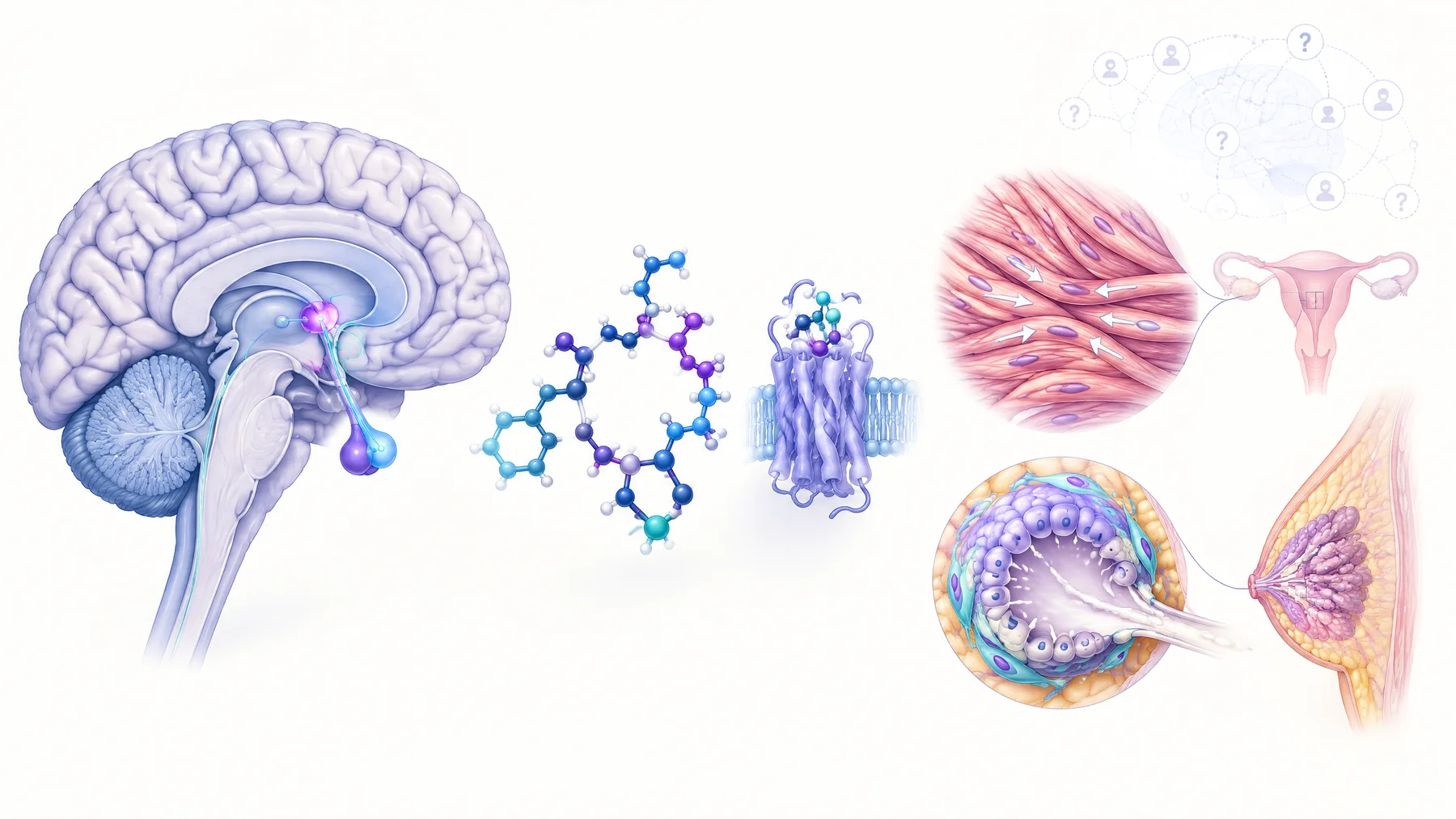

What is Crystagen (glutamyl-aspartyl-proline; EDP)?
A named short-peptide product family associated with the synthetic tripeptide glutamyl-aspartyl-proline (H-Glu-Asp-Pro-OH; EDP). It is a peptide, not a hormone or a small molecule. The evidence record is formulation-dependent: a patent specifies pure EDP, while a Russian capsule listing describes a multi-ingredient food-supplement product containing an AC-6 peptide complex.
Crystagen is best treated as an investigational short-peptide topic rather than an established immune medicine. Its defined research identity is EDP (Glu-Asp-Pro), but products sold under the name are not automatically chemically or clinically interchangeable. A small ex-vivo study and an aging-spleen report provide hypothesis-generating immune observations; neither establishes infection prevention, immune restoration, healthy ageing benefit, a safe self-administration regimen, or Australian approval.
Identity: a peptide name with formulation traps
The most specific primary record located is a US patent for the tripeptide H-Glu-Asp-Pro-OH: glutamyl-aspartyl-proline, commonly abbreviated EDP. The patent gives a defined three-amino-acid sequence and molecular mass (359.33 for the non-ion-pair form). That makes EDP a synthetic short peptide—not a glycoprotein hormone, a coenzyme, or a small molecule. The patent is evidence of the claimed substance and experimental programme, not evidence that the substance is an approved medicine or that its therapeutic claims have been independently confirmed. [1]
The brand name needs careful handling. A Russian retail instruction identifies “Кристаген” capsules as a biologically active food supplement with no international non-proprietary name; it lists an AC-6 peptide complex made from proline, glutamic acid and aspartic acid plus excipients. That listing is not a regulatory medicine label and does not demonstrate that a capsule, a patent-grade EDP preparation, or a vial sold for laboratory research has the same identity, purity, dose uniformity, bioavailability or clinical evidence. The EDP sequence should also not be conflated with KED (Lys-Glu-Asp): changing sequence order changes the peptide being discussed. [1] [5]
What the evidence base can—and cannot—support
The direct evidence found is narrow. One peer-reviewed study reports an aging-spleen observation for Crystagen among several short peptides, and one small ex-vivo study incubated healthy-donor blood mononuclear cells with a product described as a synthetic thymic peptide complex. These are useful leads for biological plausibility, but they are not clinical trials of a defined EDP medicine for infections, autoimmune disease, cancer, fatigue or healthy ageing. [2] [3]
A useful evidence hierarchy is: defined chemical identity first; then cell or tissue findings; then replicated animal work with clinically meaningful endpoints; then adequately designed human trials; then regulator assessment and a product information document. Crystagen does not reach the last two stages in the records reviewed here. Marketing language about “immune balance” should therefore not be read as a demonstrated patient outcome. [1] [2] [3] [6] [7]
Molecular pathway: an open question, not a settled mechanism
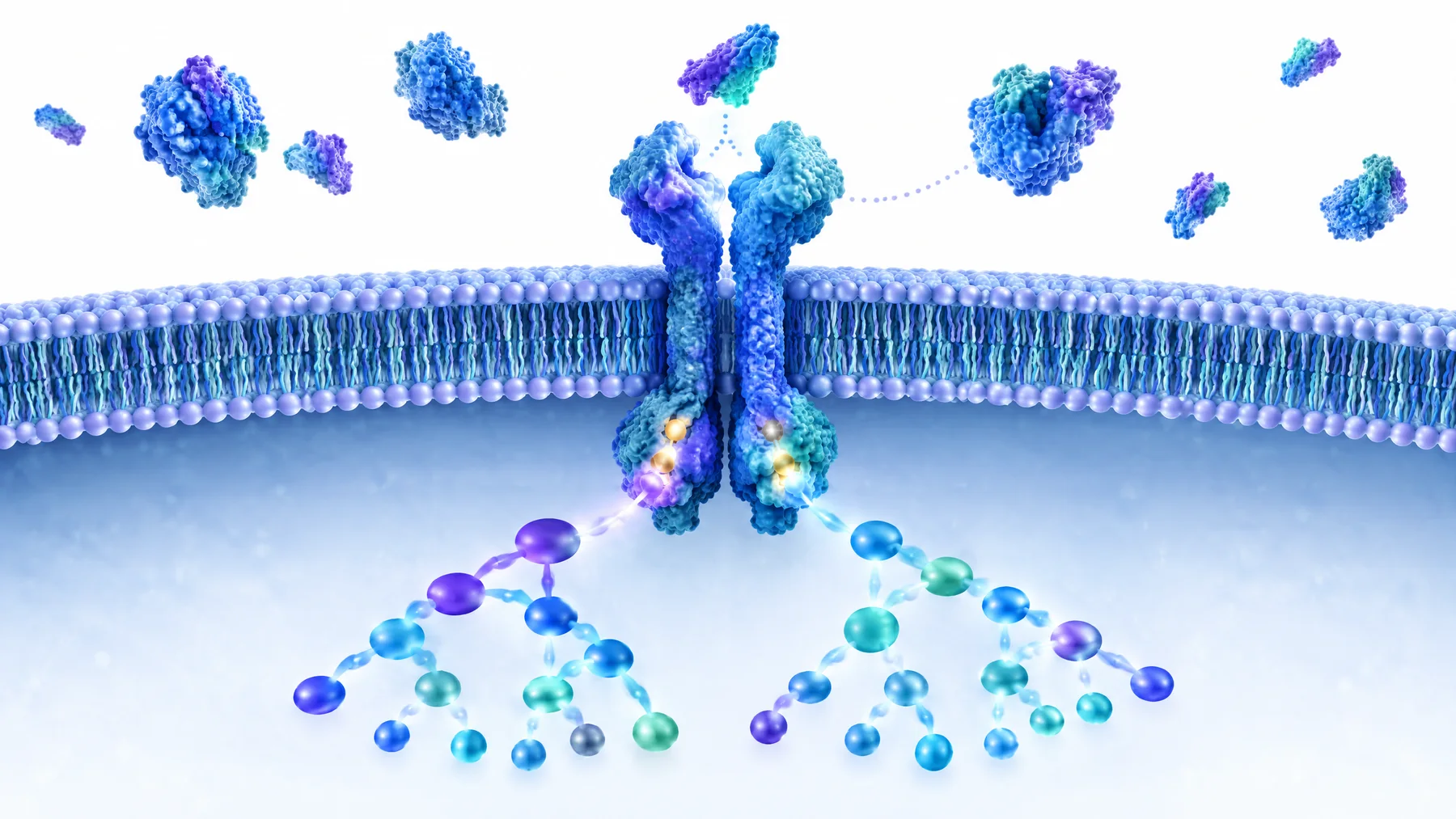
No validated Crystagen/EDP receptor, target-engagement biomarker, human pharmacokinetic profile, or causal molecular pathway was identified in the primary sources reviewed. The patent proposes effects on lymphocyte proliferation, differentiation and molecular-genetic indices, but those are inventor claims supported by its own examples rather than an independently replicated mechanism. It would be inaccurate to present chromatin or gene-regulation language as an established EDP mechanism in people. [1]
This distinction matters because a frequently cited study of “short peptides” in leukocytes from adults aged 75–88 tested Vilon, Epithalon, Livagen, Prostamax and Cortagen—not Crystagen/EDP. Its chromatin findings cannot be transferred to Crystagen merely because all are short peptides. Likewise, different formulations named Crystagen may be peptide complexes rather than a verified pure EDP preparation. [4] [1] [5]
Model-specific findings: modest signals with important boundaries
In a 2016 ex-vivo experiment, investigators collected blood from 15 relatively healthy volunteers (mean age 41 years; 73% male), cultured isolated mononuclear cells for 24 hours, and added peptide preparations at 0.4 micrograms/mL. The product called Crystagen was described as a synthetic thymic peptide complex. In cell lysates, its condition was associated with a 92.27% increase in IL-18 versus saline control (p=0.004); changes in the culture supernatant were less pronounced and no Crystagen-specific significant supernatant result was reported. This is a cell-culture cytokine result, not a finding about immune protection, symptom relief or safety in treated people. [2]
The 2014 peer-reviewed aging-spleen report compared Crystagen with Vilon, Thymogen and R-1. Its abstract says Crystagen activated the B-cell arm of the immune system but did not affect cellular renewal in the aging spleen. The publicly accessible abstract does not provide enough methodological detail to verify the species, exposure conditions, effect size, endpoints or risk of bias. The correct reading is therefore a limited, model-bound observation—not proof of general immune enhancement. [3]
Human evidence: a patent example is not a clinical evidence programme
The patent describes, rather than peer-reviews, a human example involving 38 older adults in an intervention group and 32 controls, aged 62–83 years, who had been exposed to long-term low-dose ionising radiation. It reports changes in lymphocyte subsets, CD4/CD8 ratio, immunoglobulins and asthenic symptoms after the intervention alongside conventional treatment. The report does not establish random allocation, blinding, preregistration, independent oversight, validated patient-centred outcomes, complete adverse-event reporting or replication. Its findings are consequently hypothesis-generating only. [1]
No Crystagen-specific, peer-reviewed randomised trial with a clearly defined product and outcomes such as infection incidence, hospitalisation, quality of life or survival was located in this review. A broad review of peptide bioregulation discusses multiple peptide preparations and long-term clinical applications, but it is not a substitute for a Crystagen-specific controlled trial. It should not be used to create a dosing schedule or to claim a proven benefit for a particular condition. [8] [1]
Risks and uncertainty
A lack of a documented adverse-event signal is not a finding of safety. The direct human information located is a patent narrative, while the ex-vivo study measured a cytokine in cells from only 15 volunteers. It cannot determine effects on pregnancy, breastfeeding, autoimmune disease, transplant medicine, cancer care, drug interactions, infection outcomes, allergy, injection reactions or long-term risk. Immune-directed products should not be assumed benign because they are short peptides. [1] [2]
There is also a quality problem hidden by the single name “Crystagen.” A food-supplement capsule, a research-supply vial and a hypothetical pharmaceutical EDP composition have different regulatory and manufacturing contexts. Claims based on one should not be assigned to another. No universal route, dilution, storage method, combination protocol or self-administration schedule can be inferred from the literature reviewed. [1] [5] [7]
Australian regulatory context
The Therapeutic Goods Administration (TGA) describes the Australian Register of Therapeutic Goods (ARTG) as the public database for therapeutic goods that can be legally supplied in Australia. A public-register search during this review did not identify an ARTG entry under the name “Crystagen.” This is a limited name-search finding, not proof that no product could ever be accessed through a lawful exception or under another name; it does mean the article should not call Crystagen an Australian-approved medicine without an identifiable ARTG entry and product information. [6]
The TGA states that, in general, goods must be in the ARTG before lawful supply, import or export, and calls goods not included in the ARTG “unapproved therapeutic goods.” Certain practitioner-led access pathways can apply in particular circumstances, but the TGA has not evaluated unapproved goods for quality, safety, efficacy or performance. A research-only supplier vial is therefore not an approved formulation, and its availability online is not evidence of clinical suitability. [7]
Practical reading of Crystagen claims
When assessing a Crystagen claim, first ask what was actually tested: pure EDP, a proprietary peptide complex, or an unspecified product. Next ask whether the model was cultured cells, aging spleen tissue, animals or people; whether there was a concurrent control; and whether the endpoint mattered to patients. A rise in IL-18 inside cultured donor cells and a statement about B-cell activity in an aging-spleen model are not equivalents of fewer infections or improved immune health. [1] [2] [3]
The most defensible conclusion is deliberately narrow: Crystagen/EDP is a real short-peptide research identity with limited experimental immune-related observations. It remains investigational for human therapeutic use in this evidence record. It is not appropriate to extrapolate a research observation into a universal wellness claim, treatment recommendation, or protocol—especially when product identity and regulatory status are uncertain. [1] [2] [3] [6] [7]
Questions readers ask
Is Crystagen actually a peptide?
Yes, in the most specific source located, Crystagen refers to the synthetic tripeptide glutamyl-aspartyl-proline (EDP; H-Glu-Asp-Pro-OH). However, commercial products using the name may be peptide complexes or food supplements rather than a verified pure EDP pharmaceutical product. [1] [5]
Is Crystagen an approved medicine in Australia?
No ARTG entry under “Crystagen” was identified in this review. The ARTG is the TGA public register for therapeutic goods that can be legally supplied in Australia. Do not describe it as Australian-approved unless a specific ARTG entry and its associated product information can be identified. [6]
What human evidence exists?
A patent describes a small, non-randomised older-adult example in people exposed to low-dose radiation, but this is not equivalent to a peer-reviewed controlled clinical trial. No robust Crystagen-specific randomised human efficacy evidence was located. [1]
Does the evidence show Crystagen prevents infections or restores immunity?
No. The direct records are an ex-vivo cytokine experiment and an aging-spleen report with model-bound immune observations. They do not demonstrate prevention of infections, treatment of immune disorders, or a clinically meaningful outcome in people. [2] [3]
What remains uncertain
Crystagen-specific primary evidence located was sparse, regionally concentrated and heterogeneous in product identity: pure EDP in a patent, a synthetic peptide complex in the ex-vivo study, and a food-supplement peptide complex in the capsule instruction. [1] [2] [5]
The accessible 2014 spleen-study abstract does not disclose enough methods to verify species, exposure, sample size, effect size or bias safeguards; its conclusion should remain model-bound. [3]
The only located human-specific EDP account was embedded in a patent and lacked the features needed to establish clinical efficacy or safety; no Crystagen-specific randomised trial was identified in this review. [1]
ARTG absence was assessed by name search and should not be treated as exhaustive proof about every possible synonym, exemption, access pathway or future listing. [6] [7]
References and further reading
- [1] Peptide substance revealing an immunogeroprotective effect, pharmaceutical composition on its base and the method of its application. US patent specification for H-Glu-Asp-Pro-OH; includes described synthesis, explant/cell experiments, toxicity work and a non-randomised human example.
- [2] Влияние природных и синтетических пептидов на продукцию цитокинов клетками периферической крови (Effect of natural and synthetic peptides on cytokine production by peripheral-blood cells). Ex-vivo, 24-hour culture experiment using mononuclear cells from 15 relatively healthy volunteers; multiple peptide products were compared with saline control.
- [3] Age-related molecular aspects of immunomodulating activity of peptides in the spleen. Comparative aging-spleen study of Vilon, Thymogen, Crystagen and R-1; only the abstract and bibliographic record were publicly accessible in this review.
- [4] Effects of short peptides on lymphocyte chromatin in senile subjects. Leukocyte study in people aged 75–88 years testing Vilon, Epithalon, Livagen, Prostamax and Cortagen.
- [5] Инструкция Кристаген капсулы 0,215г (Crystagen 0.215 g capsule instruction). Russian retail listing/instruction; no clinical study design.
- [6] About the Australian Register of Therapeutic Goods (ARTG). TGA public-register guidance, not a clinical study.
- [7] Access an unapproved therapeutic good (health practitioners). TGA access-pathway guidance, not a clinical study.
- [8] Peptide bioregulation of aging: results and prospects. Review of authors' long-term peptide-bioregulator research across several preparations and models.