
What is Cortagen (AEDP; Ala-Glu-Asp-Pro)?
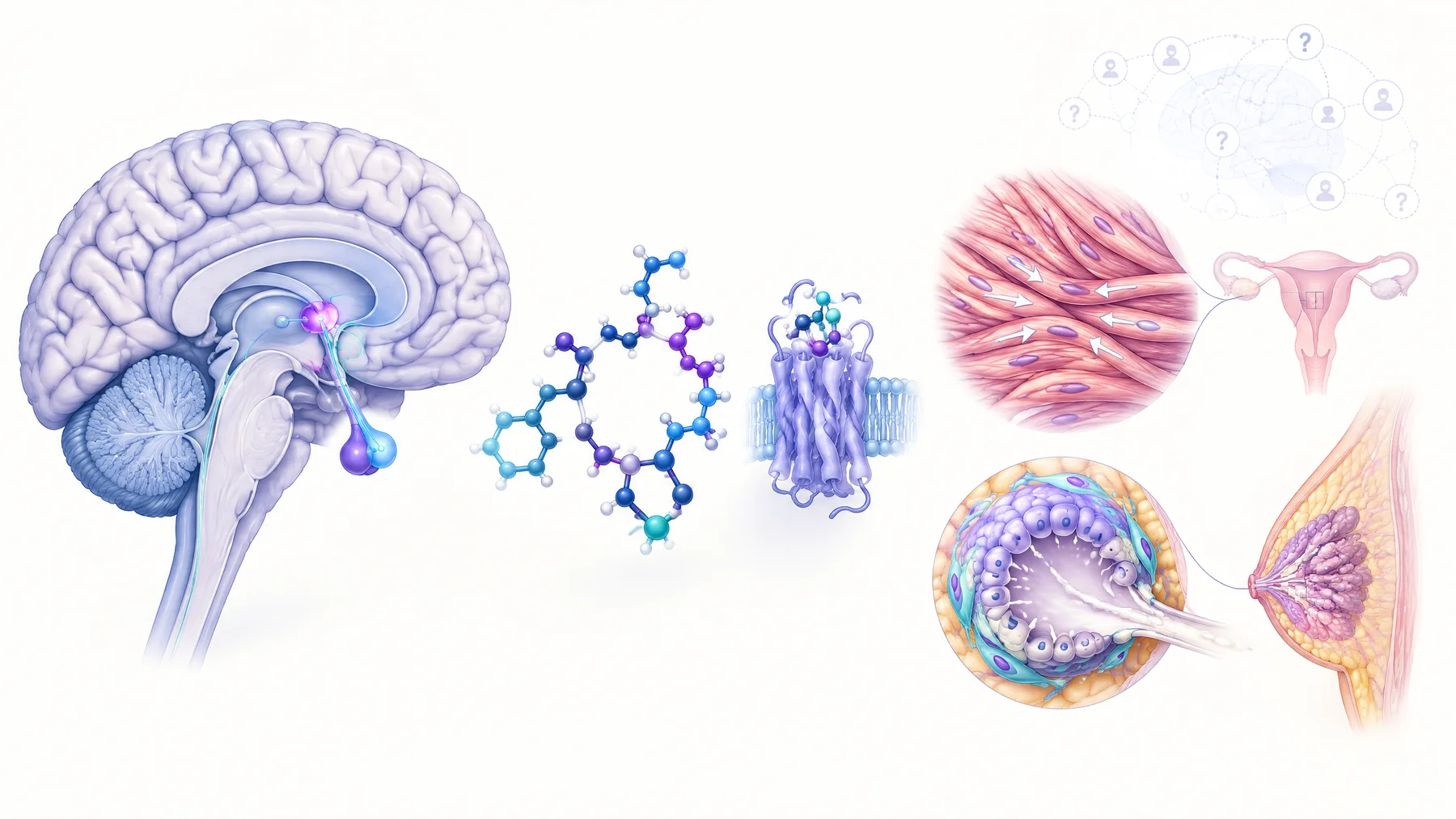
Synthetic tetrapeptide (four amino acids), also called alanyl-glutamyl-aspartylproline or AEDP; it is a research-stage peptide, not a hormone, a small molecule, or a mixture. Published papers describe Cortagen as a synthetic analogue derived from amino-acid analysis of the brain-cortex peptide preparation Cortexin. Cortexin itself is a polypeptide extract, so it should not be treated as interchangeable with the single defined tetrapeptide Cortagen.
Cortagen is the defined four-amino-acid peptide AEDP, not an approved Australian medicine or a validated ‘brain injection’ protocol. The directly checked literature reports rat sciatic-nerve regeneration measures, mouse cardiac transcript changes, and behavioural effects in mice; these results are model-specific and do not establish a clinical benefit in people.
What Cortagen is — and what it is not
Cortagen is the synthetic tetrapeptide Ala-Glu-Asp-Pro (AEDP). A tetrapeptide is a short chain of four amino acids. It is not a glycoprotein hormone, not a small molecule, and not a multi-ingredient blend. In the research papers, Cortagen was developed as a defined synthetic analogue associated with Cortexin, a separate polypeptide extract obtained from brain cortex. That distinction matters: findings for a complex extract cannot automatically be assigned to its proposed tetrapeptide analogue, or vice versa. [2] [3]
The public evidence supports describing Cortagen as a preclinical research substance. It does not support calling it an established medicine for cognition, ageing, nerve repair, stroke, anxiety, depression, or neuroprotection. Product vials marketed as ‘research use only’ are not approved formulations and do not supply a clinically validated identity, purity standard, indication, route, storage instruction, or dosing protocol. [1] [2] [3] [5]
What the molecular-pathway evidence actually shows
The clearest molecular experiment was not in the brain. In female six-month-old CBA mice given Cortagen injections for five consecutive days, investigators used cDNA microarrays to examine 15,247 cardiac transcripts. They reported significant expression changes in 234 clones corresponding to 110 known genes, with the largest reported up- and down-regulation of +5.42-fold and −2.86-fold. This is an observation of altered heart-tissue transcript abundance under that experiment, not proof that Cortagen reaches a human brain, repairs nerves, or produces a therapeutic outcome. [2]
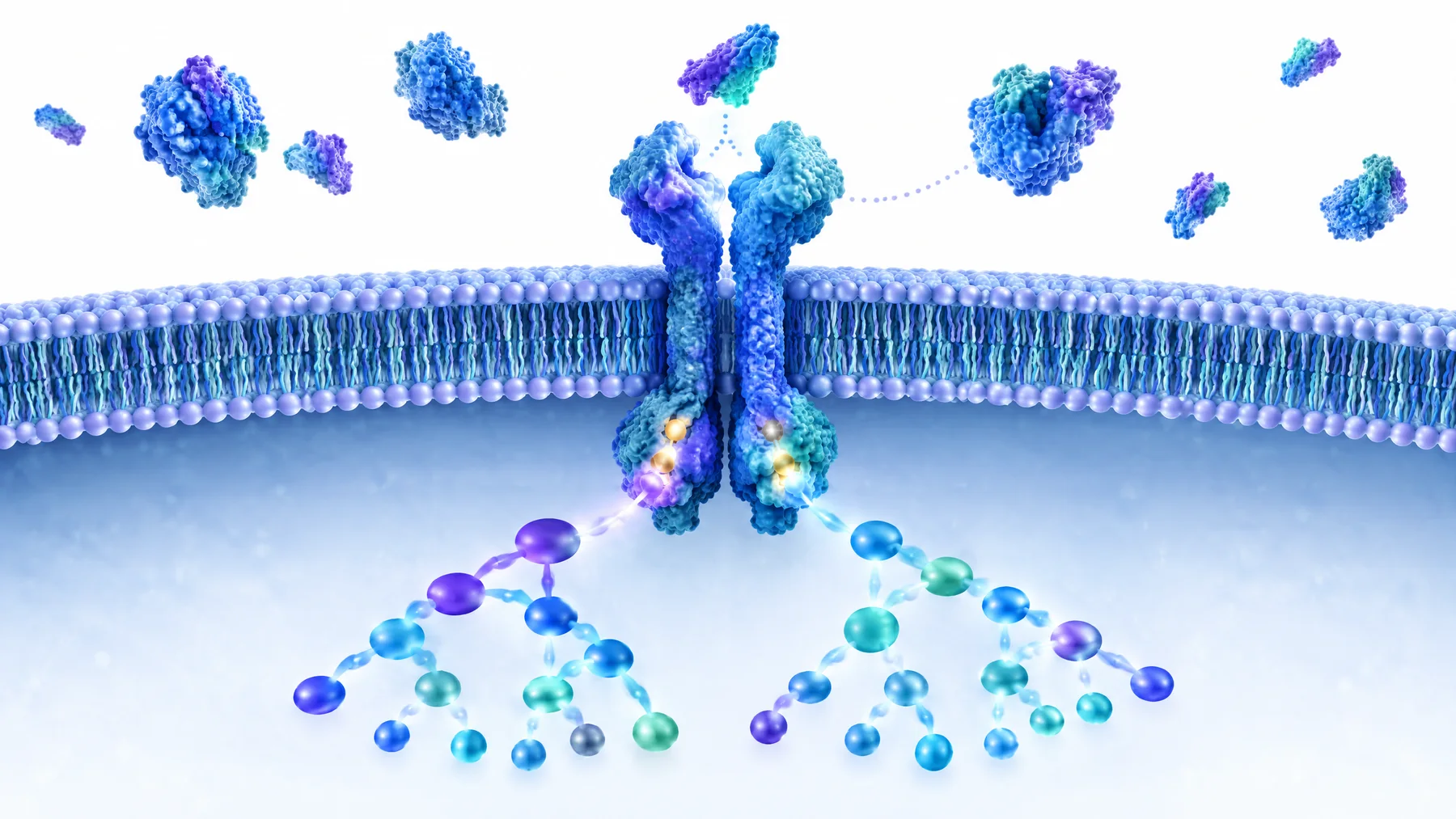
No directly checked source identified a specific human receptor, binding affinity, pharmacokinetic profile, blood–brain-barrier exposure, or causal target-to-clinical-outcome pathway for AEDP. ‘Gene regulation’ is therefore a description of a measured experimental association, not a settled mechanism of action. The behavioural paper also refers to neurite-growth observations and possible neurotrophic-factor involvement, but frames that association as presumptive rather than demonstrating a receptor-mediated chain. [2] [3]
Rat sciatic-nerve experiment: a narrow injury model
A 2000 primary study used Wistar rats after sciatic-nerve transection and suturing. Its abstract reports that intramuscular Cortagen at 10 micrograms/kg for 10 days increased the growth rate of regenerating nerve fibres by 27% and conduction velocity by 40%. These are experimental physiological outcomes after a surgically repaired peripheral-nerve injury in rats. [1]
Those figures should not be converted into a human administration schedule or a promise of recovery. The abstract does not establish human efficacy, comparative effectiveness against modern nerve-repair care, long-term functional outcomes, or a human safety margin. The related 2002 report is also indexed as a Wistar-rat injured-sciatic-nerve study, but PubMed provides no abstract, so it cannot responsibly be used to make detailed efficacy claims here. [1] [7]
Mouse behaviour study: stimulation is not a psychiatric treatment
In a separate study, male outbred CD-1 mice received intraperitoneal Cortagen before locomotor-habituation and elevated-plus-maze tests. The authors reported that 0.03 mg/kg increased locomotion in both acute and repeated testing. Some lower and higher dose groups spent less time in the white compartment of a two-sided activity box, which the investigators interpreted as anxiety-like behaviour; after repeated treatment, plus-maze results were mixed and included a reduced open-arm time in the 0.01 mg/kg group. [3]
This study does not demonstrate an antidepressant, anxiolytic, cognitive-enhancing, or ‘no side effects’ effect in humans. It is a behavioural assay in mice, not a clinical trial. It also used eight animals per group in the plotted Cortagen locomotor comparisons and treated p values between 0.05 and 0.10 as a ‘significant tendency’, both of which warrant caution when interpreting small behavioural differences. [3]
Human evidence and safety: neither is established
One mouse-heart paper states that Cortagen had shown a therapeutic effect in humans after peripheral-nerve trauma, but that statement is background context, not a reported human trial: the paper presents mouse microarray methods and does not give the human study design, participant number, comparator, outcomes, adverse events, or publication citation needed to assess such a claim. It therefore cannot substantiate a human efficacy conclusion. [2]
A search of ClinicalTrials.gov for ‘Cortagen’ did not identify a Cortagen trial; the displayed result was an unrelated nutrition study. Registry absence is not proof that no study has ever occurred anywhere, but together with the directly checked publications it leaves no verified human trial evidence for dosing, benefits, contraindications, interactions, pregnancy safety, immune reactions, or long-term harms. Do not infer safety from the peptide’s short length or from animal work. [1] [2] [3] [6]
Australian regulatory context
No Cortagen medicine entry was identified in the public Australian Register of Therapeutic Goods (ARTG) name search reviewed for this article. The ARTG is the TGA resource for searching medicines, biologicals and devices that can be supplied in Australia; a public-register search is a time-specific check rather than a substitute for regulatory or clinical advice. [4]
In Australia, therapeutic goods not included in the ARTG have not been assessed by the TGA for safety, quality or effectiveness. The TGA describes limited pathways through which specified unapproved goods may sometimes be accessed, including clinical-trial, Special Access Scheme and Authorised Prescriber pathways. Those pathways do not make an unapproved substance an approved medicine and do not validate online ‘research’ vials for self-administration. [5]
Cortagen compared with related names
Cortagen and Cortexin are related in the historical development described by the authors, but they are different materials: Cortagen is one synthetic sequence, AEDP, while Cortexin is a polypeptide extract. The mouse behavioural study tested both, and their effects were not identical across doses and tests. A label or discussion that moves from evidence about Cortexin to claims about Cortagen is making a substitution that the experiments do not justify. [2] [3]
Cortagen should also not be confused with Epitalon/Epithalon, the different tetrapeptide Ala-Glu-Asp-Gly (AEDG). The mouse-heart microarray paper compared Cortagen with other synthetic peptides, including Epitalon, and reported both common and specific expression-profile effects. Similar naming and short-peptide status do not establish shared indications, safety or administration. [2]
How to read Cortagen claims carefully
Start by asking which material and model were studied. The strongest directly checked outcomes are a rat peripheral-nerve repair experiment, mouse cardiac transcript profiling and mouse behavioural assays. None is a trial in people with cognitive decline, traumatic nerve injury, stroke, mood disorder or healthy ageing. A result in a heart microarray is not evidence of a brain-specific mechanism, and increased locomotion is not the same outcome as improved wellbeing or cognition. [1] [2] [3]
The literature located is limited in size and largely older. Details essential for clinical translation — independently replicated efficacy, human pharmacology, product-quality controls, dose-ranging, adverse-event surveillance and clinically meaningful outcomes — were not established by the sources reviewed. For that reason, articles or suppliers that offer universal reconstitution, storage or injection schedules go beyond the verified evidence base. [1] [2] [3] [5] [6]
Questions readers ask
Is Cortagen actually a peptide?
Yes. Cortagen is the synthetic tetrapeptide Ala-Glu-Asp-Pro (AEDP): a defined chain of four amino acids. It is distinct from Cortexin, a polypeptide extract, and from the different tetrapeptide Epitalon (AEDG). [2] [3]
Is Cortagen an approved medicine in Australia?
No Cortagen medicine entry was identified in the public ARTG name search reviewed for this article. The TGA states that goods not included in the ARTG have not been assessed by it for safety, quality or effectiveness; limited unapproved-goods pathways are not product approval. [4] [5]
Does Cortagen repair nerves in people?
That has not been established. A directly checked primary report found faster regeneration measures in a surgically injured rat sciatic nerve, while the human-recovery statement in a later mouse-heart paper lacks the human-study details needed for appraisal. These sources do not demonstrate a benefit in people. [1] [2]
Do animal-study doses provide a Cortagen dosing or injection protocol?
No. Animal-study exposures are model-specific experimental methods, not human prescribing instructions. There is no verified human dose-finding, formulation, route, dilution, storage, safety-monitoring or efficacy dataset in the sources reviewed. [1] [2] [3] [6]
Can research-vial labelling be treated as pharmaceutical quality?
No. A research-only supplier vial is not an ARTG-approved formulation and does not replace the quality, safety and effectiveness assessment associated with an approved medicine. The evidence reviewed also does not validate self-administration of unapproved Cortagen products. [4] [5]
What remains uncertain
The directly checked evidence consists mainly of older animal, behavioural and tissue-transcript experiments; it does not establish clinical efficacy, dose selection or safety in people. [1] [2] [3] [6]
The rat nerve report is available here only as a short abstract, without the full methodological detail needed to judge randomisation, sample size, blinding, attrition or durability of effect. [1]
The mouse behavioural article used small plotted groups and counted p values from 0.05 to 0.10 as ‘significant tendencies’; its findings should not be overread as evidence for human mood or cognitive treatment. [3]
The 2004 paper’s human-recovery statement is not accompanied by the clinical-trial information needed for independent appraisal; it is therefore not treated as human efficacy evidence. [2]
ARTG and clinical-trial-registry searches are time-specific and cannot prove global non-existence of all products or studies, but no verified approved Australian Cortagen medicine or relevant registered human trial was identified in the reviewed searches. [4] [6]
References and further reading
- [1] Effect of tetrapeptide cortagen on regeneration of sciatic nerve. Wistar-rat sciatic-nerve transection and suturing model; experimental intramuscular Cortagen exposure for 10 days; regeneration and nerve-conduction outcomes.
- [2] Elucidation of the effect of brain cortex tetrapeptide Cortagen on gene expression in mouse heart by microarray. Female six-month-old CBA mice given Cortagen injections for five days; cDNA microarray analysis of 15,247 transcripts in heart tissue.
- [3] Modulatory Effects of Cortexin and Cortagen on Locomotor Activity and Anxiety-Related Behavior in Mice. Male CD-1 mice; intraperitoneal Cortagen or Cortexin; locomotor-habituation and elevated-plus-maze behavioural assays, acute and five-day repeated exposure.
- [4] Australian Register of Therapeutic Goods (ARTG). TGA public search resource for medicines, medical devices and biologicals that can be supplied within Australia.
- [5] Unapproved therapeutic goods. TGA explanation of status and legal access pathways for therapeutic goods not included in the ARTG.
- [6] ClinicalTrials.gov search: Cortagen. Public registry term search reviewed on 3 October 2026.
- [7] The delayed effect of cortagen on the restoration of injured nerve function. Indexed as a Wistar-rat sciatic-neuropathy/nerve-regeneration study; PubMed record provides no abstract.