
What is Cardiogen (AEDR tetrapeptide)?
Synthetic tetrapeptide / preclinical research substance H-Ala-Glu-Asp-Arg-OH (AEDR) It is not an approved cardiac medicine identified in the Australian records reviewed, and it is not CardioGen-82. CardioGen-82 is a rubidium-82 generator used to make a radioactive PET imaging agent, not an AEDR peptide.
Cardiogen is the name commonly used for the synthetic four-amino-acid peptide AEDR. The evidence located is experimental rather than clinical: one rat myocardial explant study reported greater cell proliferation and lower p53 immunostaining, while other studies measured protein-expression or binding effects in non-cardiac cell and biochemical systems. These observations do not establish a human heart-treatment benefit, a receptor target, an administration regimen or long-term safety. For an Australian audience, the practical distinction is between a research substance and a regulator-assessed medicine: the TGA says products outside the ARTG have not been assessed by it for safety, quality or effectiveness.
1. Identity: a very short synthetic peptide, not a heart medicine by default
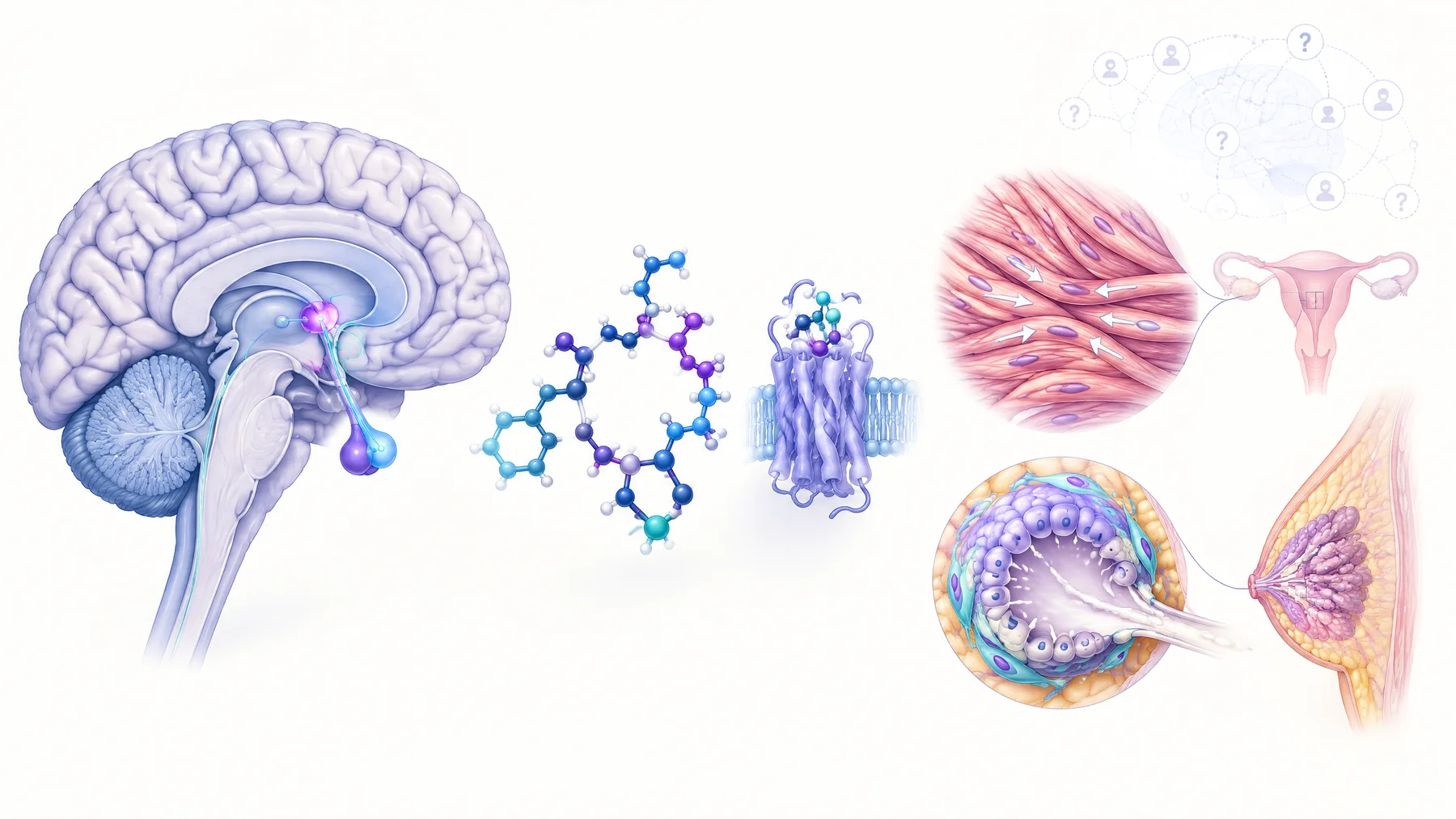
Cardiogen refers in the experimental literature to H-Ala-Glu-Asp-Arg-OH, abbreviated AEDR: a **synthetic tetrapeptide** made of alanine, glutamic acid, aspartic acid and arginine. “Tetrapeptide” describes molecular length only. It does not identify a proven receptor, demonstrate that the peptide reaches heart tissue in people, or confer medicine status. The primary papers found use the chemical name AEDR or “cardiogen” in cell, tissue-culture and rodent experiments. [1] [2] [5]
Naming matters. **CardioGen-82** is a different, FDA-labelled radioactive generator that produces rubidium Rb-82 chloride for PET myocardial-perfusion imaging in adults; it is not AEDR and it is not a regenerative peptide treatment. A research or online-supplier vial labelled “Cardiogen” should therefore not be treated as equivalent to CardioGen-82, or to a regulator-approved formulation. [11]
2. Evidence snapshot: what has actually been studied
The most directly cardiac experiment located was a 2009 organotypic myocardial-tissue-culture study. It exposed explants from **3- and 24-month-old rats** to cardiogen at 10⁻¹² M and compared proliferation and apoptosis-related measures with those of amino-acid exposures. The abstract reports a strong proliferative effect in explants from both ages and lower p53 protein expression by immunohistochemistry after cardiogen exposure. This is an ex vivo rat tissue result—not a study of injected animals, infarct recovery, ejection fraction, exercise tolerance or survival. [1]
A separate study used **cultured mouse embryonic fibroblasts**, not cardiomyocytes. AEDR was reported to increase expression of actin, tubulin and vimentin by two- to five-fold and lamin A/C by two- to three-fold. The authors proposed that these protein changes could underlie prior cardioprotective claims, but the experiment itself did not measure cardiac function or demonstrate cardioprotection in an animal or person. [2]
Taken together, these are leads for replication and mechanism research. They are not the evidentiary sequence usually needed to establish a cardiac therapy: reproducible pharmacology, exposure and toxicology data, well-controlled animal disease studies, then appropriately designed human trials with meaningful outcomes. The located papers do not fill those gaps. [1] [2] [6] [10]
3. Molecular pathway: measured interactions versus proposed explanations
The rat explant study links AEDR exposure with lower p53 immunohistochemical expression and more proliferation in its culture model. Because p53 participates in cellular stress and apoptosis signalling, the authors interpreted the finding as consistent with less apoptosis. It does **not** show that AEDR safely suppresses p53 in a living human heart; p53 biology is context-dependent, and the study did not establish a human pharmacodynamic marker or clinical endpoint. [1]
One biochemical study included AEDR among several short peptides and used fluorescence quenching to examine binding with FITC-labelled **wheat** histones and histone–oligonucleotide complexes. Binding varied with peptide, histone and DNA/oligonucleotide context. That supports a biochemical interaction under the assay conditions, not a demonstrated AEDR chromatin pathway in human cardiac cells. The paper presents epigenetic regulation as a suggestion, rather than a verified therapeutic mechanism. [5]
A broader short-peptide study found that 2–4-residue test peptides altered endonuclease hydrolysis of λ-phage DNA in vitro according to DNA methylation status, and proposed DNA binding as an explanation. It is useful background for why DNA/chromatin hypotheses are discussed around this research area, but it should not be used to claim a confirmed AEDR receptor, human gene programme or cardiac-remodelling pathway. [4]
4. Model-specific findings: do not merge results across tissues
The myocardial result belongs specifically to rat myocardial **explants**. The mouse-fibroblast protein-expression result belongs to an embryonic fibroblast culture. Neither can be silently relabelled as evidence of adult human cardiomyocyte regeneration. Model, species, cell type, exposure conditions and outcome all matter when judging whether an observation travels beyond the original experiment. [1] [2]
A study of ageing cultures of **human prostate fibroblasts** tested cardiogen alongside peptides T-32 and T-38. Confocal microscopy showed that the tested peptides enhanced expression of CXCL12, WEDC1 and ghrelin markers whose synthesis had fallen in senescent cultures; T-38 was reported as the most active of the three. These were cells derived from human tissue, not people receiving treatment, and the tissue was prostate rather than heart. [3]
In another context, cardiogen injections were studied in senescent rats bearing transplanted M-1 sarcoma. The authors reported dose-dependent inhibition of tumour growth with haemorrhagic necrosis and increased tumour-cell apoptosis, proposing a mechanism through the tumour vascular network. This does not support cardiogen for cancer or heart disease; it instead illustrates that proliferation and apoptosis findings can vary sharply with biological context. [6]
5. Human evidence: human cells are not human clinical evidence
The human-derived prostate-fibroblast paper is sometimes easy to overread. Its “human” component is an in vitro culture model, so it supplies no information on clinical benefit, adverse events, absorption, distribution, metabolism, excretion, interactions or appropriate administration in people. [3]
An exact search of the ClinicalTrials.gov API for **AEDR** returned an empty study list when checked for this review. Searches using “Cardiogen” are prone to false matches, including the CARDIOGEN acronym for a genistein heart-failure study and the unrelated CardioGen-82 diagnostic product. Registry searching is necessarily incomplete, but this result reinforces that an unambiguous registered human AEDR programme was not identified here. [10] [11]
Accordingly, there is no evidence-grounded basis in the sources reviewed for a human efficacy claim in heart failure, coronary disease, post-infarct repair, arrhythmia, endothelial health or “anti-ageing”. There is also no validated human administration schedule, route, dilution method or storage instruction to infer from these experiments. [1] [2] [3] [10]
6. Risks and uncertainty: absence of a side-effect list is not reassurance
The located AEDR papers are not a clinical safety package. They do not provide a robust human adverse-event profile, contraindications, interaction studies, pregnancy data, immunogenicity assessment, pharmacokinetics or long-term follow-up. A supplier’s nominal vial strength is not a substitute for those data, nor does it validate identity, sterility, impurities or biological activity in a person. [1] [2] [3] [6]
This uncertainty has special weight for a substance marketed with cardiac language. Cardiovascular symptoms can reflect urgent illness, and replacing evidence-based assessment or prescribed therapy with an untested peptide could cause harm through delay alone. The responsible interpretation is not that AEDR is proven dangerous or safe; it is that its human benefit–risk balance remains undetermined in the evidence identified. [1] [10]
7. Australian regulatory context
The TGA describes the ARTG as the public database of therapeutic goods that can be legally supplied in Australia. Its unapproved-goods guidance says products not included on the ARTG have not been assessed by the TGA for safety, quality or effectiveness, although defined practitioner, clinical-trial and other access pathways can exist in particular circumstances. These pathways do not turn a research claim into an approval. [7] [8]
No TGA-approved AEDR/Cardiogen product label or Australian clinical indication was identified in the regulator sources reviewed for this article. Readers considering any named product should verify the exact formulation and sponsor in the current ARTG rather than rely on a product name or social-media claim. The TGA warns that many online peptide products are unapproved, may be incorrectly labelled, and may pose quality and safety risks, particularly where vial contents, manufacture and sterility are uncertain. [7] [9]
8. A practical way to read Cardiogen claims
First ask **which substance** is meant: AEDR, the unrelated CardioGen-82 imaging generator, or a commercial mixture using a similar name. Second ask **which model** produced the quoted result: rat heart explant, mouse fibroblast, human-derived prostate cells, wheat-histone assay or tumour-bearing rat. A positive result in one is not evidence of benefit in another. [1] [2] [3] [5] [6] [11]
Then look for the outcome that matters. A change in proliferation, p53 staining, protein expression or fluorescence binding can be scientifically interesting, but it is not the same as improved symptoms, cardiac imaging, hospitalisation or survival in people. For AEDR, the appropriate bottom line is **preclinical hypothesis**, not established cardiovascular treatment. [1] [2] [5] [10]
Questions readers ask
Is Cardiogen actually a peptide?
Yes—when the name refers to AEDR, it denotes the synthetic tetrapeptide H-Ala-Glu-Asp-Arg-OH. It should not be confused with CardioGen-82, a rubidium-82 PET-imaging generator rather than a peptide. [1] [2] [11]
Is AEDR/Cardiogen an approved medicine in Australia?
No TGA-approved AEDR/Cardiogen product label or Australian clinical indication was identified in the official sources reviewed. The TGA says the ARTG is the database of therapeutic goods that can be legally supplied and that products outside it have not been assessed by the TGA for safety, quality or effectiveness. Check the current ARTG for any exact product and formulation. [7] [8] [9]
Does the rat heart-tissue study prove cardiac repair in people?
No. It was organotypic myocardial tissue culture from young and old rats, exposed to 10⁻¹² M cardiogen. The reported proliferation and p53-staining findings do not measure human cardiac recovery, pumping function or clinical outcomes. [1]
Are there evidence-based AEDR dosing or injection instructions?
Not in the evidence located. The studies reviewed do not establish human pharmacokinetics, safety or a validated clinical administration regimen; laboratory concentrations or animal injections are not prescribing instructions. [1] [2] [3] [6] [10]
Why are gene-expression or epigenetic claims described as uncertain?
AEDR was included in in vitro fluorescence-binding experiments with wheat histones and oligonucleotide complexes, and related short-peptide experiments explored DNA interactions. Those assays do not demonstrate a validated chromatin mechanism or therapeutic gene regulation in human heart tissue. [4] [5]
What remains uncertain
This is a limited-evidence record. The direct AEDR literature located is small, model-specific and largely represented by abstracts or primary-study records; it does not permit reliable conclusions about efficacy or safety in people. [1] [2] [3] [5] [6]
The exact-term ClinicalTrials.gov result is useful but cannot exclude unregistered studies, studies indexed under another synonym or studies registered in other jurisdictions. It should not be presented as proof that no human work has ever occurred. [10]
ARTG status is product- and formulation-specific and can change. This article did not identify an AEDR/Cardiogen approval in the official material reviewed; readers must check the current ARTG for any exact product rather than infer status from a research vial or a similar name. [7] [8] [9]
No dosing, route, reconstitution, storage or combination protocol is supplied because the sources reviewed do not validate human use. Combining unapproved substances would add uncertainty rather than create an evidence-based protocol. [1] [2] [3] [6] [8]
References and further reading
- [1] The effect of the amino acids and cardiogen on the development of myocard tissue culture from young and old rats. Organotypic myocardial explant tissue culture from 3- and 24-month-old rats; cardiogen at 10⁻¹² M; proliferation and p53 immunohistochemistry assessed.
- [2] Tetrapeptide H-Ala-Glu-Asp-Arg-OH stimulates expression of cytoskeletal and nuclear matrix proteins. Cultured mouse embryonic fibroblast experiment measuring cytoskeletal and nuclear-matrix protein expression after AEDR exposure.
- [3] Peptidergic regulation of the expression of signal factors of fibroblast differentiation in the human prostate gland in cell aging. Ageing cultures of human prostate fibroblasts treated with T-32, T-38 and cardiogen; confocal microscopy of differentiation-related markers.
- [4] Site-specific binding of short peptides with DNA modulated eukaryotic endonuclease activity. In vitro short-peptide experiments measuring endonuclease hydrolysis of λ-phage DNA, oligonucleotide binding and histone modulation.
- [5] Interaction of short peptides with FITC-labeled wheat histones and their complexes with deoxyribooligonucleotides. In vitro fluorescence-modulation assays of several short peptides, including AEDR, with labelled wheat histones and histone–oligonucleotide/DNA complexes.
- [6] Tumor-modifying effect of cardiogen peptide on M-1 sarcoma in senescent rats. Senescent rats with transplanted M-1 sarcoma; cardiogen injections; tumour growth, apoptosis and morphology assessed.
- [7] About the Australian Register of Therapeutic Goods (ARTG). TGA regulatory information page.
- [8] Unapproved therapeutic goods. TGA regulatory guidance page.
- [9] TGA strengthens compliance focus on unapproved peptide products as part of evolving risk response. TGA compliance and consumer-safety communication (10 June 2026).
- [10] ClinicalTrials.gov API exact-term query: AEDR. Exact-term registry query; returned an empty studies array when checked for this review.
- [11] CardioGen-82 (rubidium Rb 82 generator) prescribing information. FDA prescribing information for a radiopharmaceutical generator.