What is AICAR (acadesine; AICA-riboside)?
AICAR is **not a peptide**. It is the small-molecule ribonucleoside 5-aminoimidazole-4-carboxamide 1-beta-D-ribofuranoside, also called acadesine or AICA-riboside (PubChem CID 17513; formula C9H14N4O5). It is a purine-nucleoside analogue that can be converted inside cells to AICAR ribotide, commonly called ZMP. The evidence base includes cell, animal and human research, including peri-operative cardiac trials, but it does not establish AICAR as a general-purpose exercise, metabolic, or longevity treatment.
AICAR/acadesine is a nucleoside analogue often described as an AMPK activator, but that shorthand is incomplete. In a controlled study of 29 healthy men, it increased skeletal-muscle tracer glucose uptake while measured AMPK activity/phosphorylation was unchanged; therefore the study did not prove that AMPK activation caused the human effect. In sedentary C57BL/6J mice, four weeks of AICAR increased treadmill endurance by 44%, an animal finding that cannot be translated into a human performance claim. Early CABG trials and a pooled analysis looked promising, but the later 3,080-participant, phase 3 RED-CABG trial was stopped for futility and found no reduction in its 28-day composite outcome. AICAR is on WADA's Prohibited List as an AMPK activator/metabolic modulator.
1. Identity: AICAR is a nucleoside analogue, not a peptide
AICAR is an abbreviation for 5-aminoimidazole-4-carboxamide 1-beta-D-ribofuranoside. Acadesine and AICA-riboside are names for the same compound. Its structure is a small ribonucleoside analogue, not a chain of amino acids; it should therefore not be grouped with therapeutic peptides, peptide hormones, or peptide injections. [1]
The name can be confusing because intracellular AICAR ribotide/ZMP is a phosphorylated metabolite, whereas AICAR/acadesine is the riboside administered in the research discussed here. Keeping those names separate matters when reading laboratory assays, pharmacology papers, and anti-doping literature. [1] [11]
2. Molecular pathway: useful model, incomplete shortcut
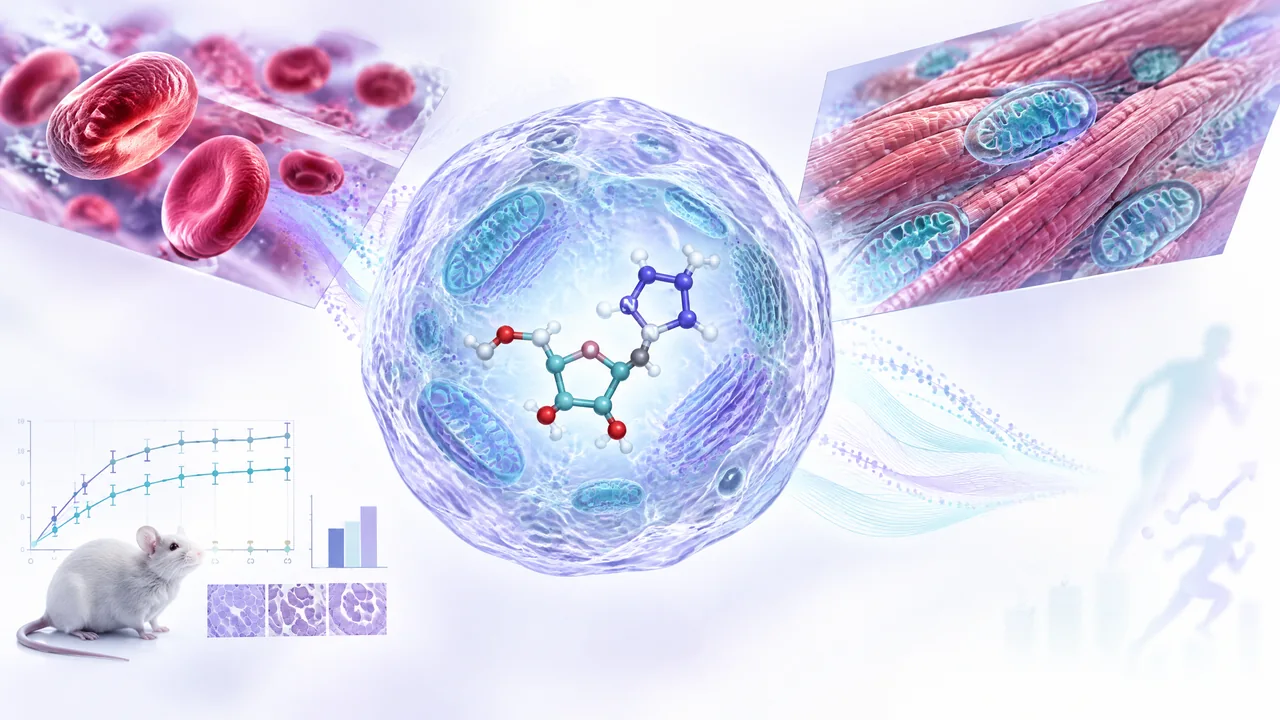
AICAR can enter red blood cells and be phosphorylated to AICAR ribotide. In an anti-doping research programme, in-vitro whole-blood work found rapid erythrocyte uptake and conversion, and the phosphorylated metabolite remained elevated in erythrocytes longer than the riboside. That is direct evidence for handling in that experimental system, not evidence that every downstream effect in every tissue is AMPK-mediated. [11]
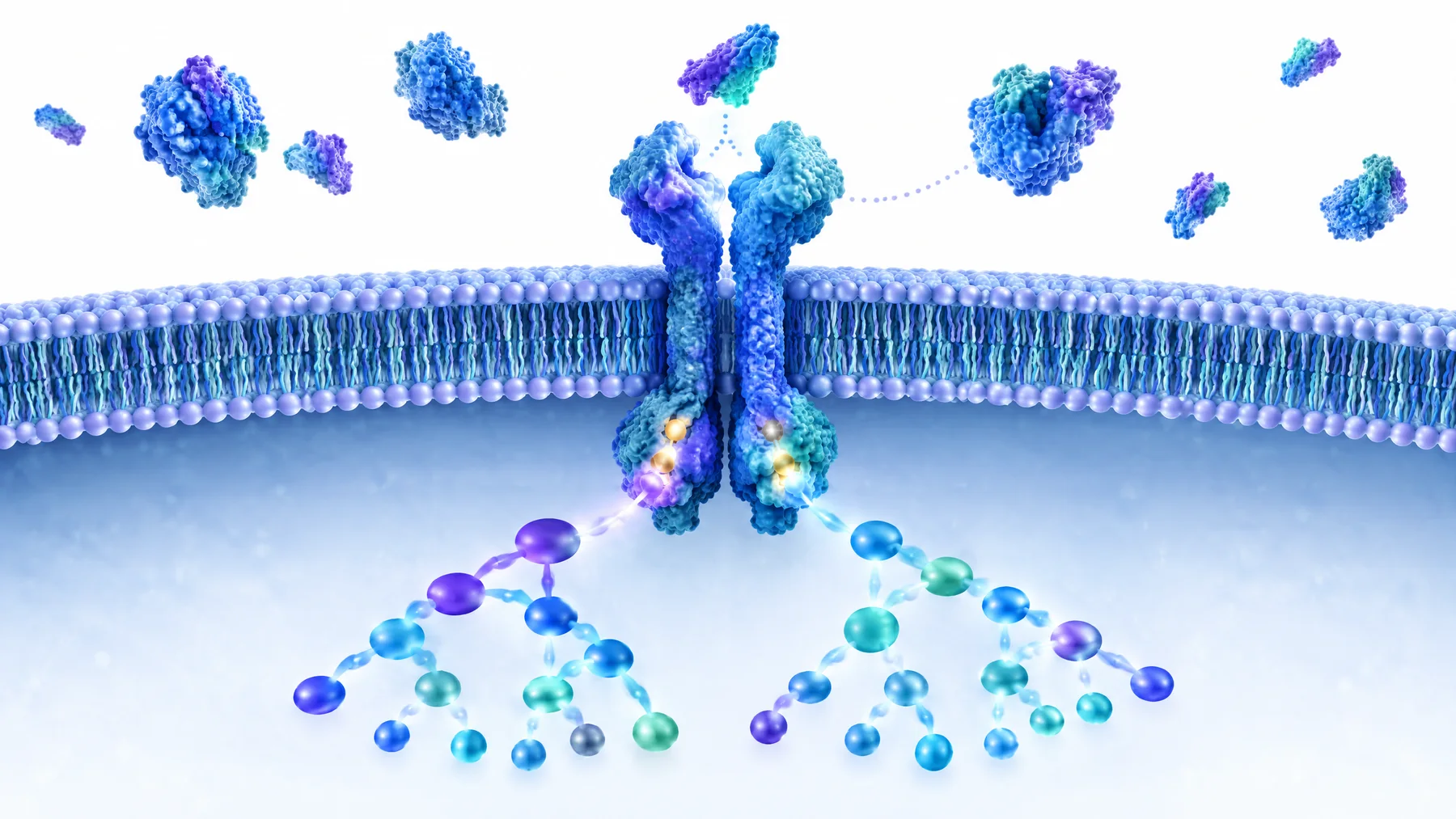
ZMP is commonly treated as an AMP mimic and AICAR is widely used as an AMPK-pathway tool. However, the human muscle experiment provides an important corrective: after AICAR, muscle glucose-tracer uptake rose, while AMPK alpha-1/alpha-2 activity and AMPK phosphorylation were not changed at the reported time points. A pathway label is not proof of a single causal mechanism in people. [1] [2]
For readers, the practical lesson is to distinguish a biochemical premise (cellular conversion to ZMP), a measured molecular marker, and a clinical outcome. These are different levels of evidence; movement at one level does not automatically predict benefit or safety at another. [2] [6]
3. The widely cited endurance finding was in a specific mouse model
The influential 2008 Cell study used sedentary C57BL/6J mice in a treadmill-running experiment. Four weeks of AICAR treatment increased running endurance by 44% and was accompanied by changes in metabolic-gene expression and markers reported in quadriceps muscle. This is the origin of much of the ‘exercise mimetic’ description. [3]
That result is model-specific: it concerned mice, a defined treatment period, a laboratory treadmill end point, and controlled experimental conditions. It did not test ordinary human training outcomes, healthy ageing, body composition, or long-term safety in people. Nor does it show that an unregulated product would contain the studied compound at the studied quality. [3] [9]
The same paper examined interactions between AMPK signalling and PPAR-delta biology. It should not be read as validation of combining AICAR with other metabolic agents: co-administration in a mechanistic mouse experiment is not a validated human combined protocol. [3]
4. What the human studies actually found
In a controlled clinical study, Cuthbertson and colleagues studied 29 healthy men (mean age 26 years). After three hours, AICAR increased skeletal-muscle 2-deoxyglucose uptake about 2.1-fold; whole-body glucose disposal during a clamp increased by 7%. The authors described the whole-body effect as minor. These short-term metabolic measurements are not evidence of diabetes treatment, weight loss, athletic performance, or durable health benefit. [2]
AICAR was also investigated around coronary artery bypass grafting (CABG), a very different setting from fitness or supplementation. An early double-blind multicentre trial randomised 116 surgical patients and found mild, clinically uncomplicated rises in uric acid at the high dose; several ischaemia measures were numerically different but not statistically significant. [4]
A 1997 individual-patient meta-analysis of five earlier placebo-controlled CABG trials (4,043 evaluable patients) reported lower peri-operative myocardial infarction and early cardiac death with acadesine, while stroke was not significantly reduced. This was a surgical, peri-operative evidence signal, not a general outpatient indication. [5]
The subsequent RED-CABG phase 3 trial provides the more decisive counterweight. In intermediate- to high-risk, on-pump CABG patients at 300 sites in seven countries, it stopped after 3,080 of 7,500 planned participants because of a prespecified futility analysis. The primary 28-day composite occurred in 5.0% of placebo recipients and 5.1% of acadesine recipients (odds ratio 1.01, 95% CI 0.73–1.41), with no difference in key secondary end points. [6] [7]
5. Risks and uncertainty: historical trial safety is not a blank cheque
In the early CABG research, transient serum uric-acid increases were the notable difference from placebo; the 1997 pooled analysis likewise reported transient higher uric acid. The RED-CABG eligibility criteria excluded people with gout or uric-acid kidney stones, illustrating that these issues were considered relevant in that highly monitored surgical programme. [4] [5] [7]
Those observations cannot be turned into a self-treatment safety profile. The available human studies were short-term or peri-operative, enrolled specific populations, and used study-grade product with clinical monitoring. They do not validate routine administration, dosing, dilution, storage, route, cycling, or use with other substances. [2] [4] [6]
Claims that AICAR reliably ‘activates AMPK’, burns fat, replaces exercise, or improves endurance in humans overstate the evidence. Human muscle glucose uptake, a mouse treadmill result, and a negative late surgical trial are different outcomes in different populations. [2] [3] [6]
6. Australian regulatory context and sport
For Australia, the Australian Register of Therapeutic Goods (ARTG) is the public register to search by product name, sponsor, or ARTG number; it supplies formulation and sponsor details where a therapeutic good is entered. This record found no established Australian approved AICAR/acadesine formulation and should not treat a supplier listing as proof of ARTG registration. Readers should verify any current claim directly in the ARTG. [8]
The TGA states that therapeutic goods not included in the ARTG are ‘unapproved’ and have not been assessed by the TGA for safety, quality and effectiveness. The Special Access Scheme is a clinician-led route for specified individual circumstances; it is not a consumer approval pathway and does not convert a research product into an approved medicine. [9]
Competitive athletes must also consider anti-doping rules. WADA lists AICAR under S4.4.1 metabolic modulators as an activator of AMP-activated protein kinase, prohibited at all times. WADA’s research record says AICAR has been banned since 2009 and describes blood-cell testing work developed to help identify illicit use. [10] [11]
7. Comparison: research reagent versus approved formulation
The key comparison is not between brands of AICAR but between evidence contexts. The published studies involved defined investigational preparations, documented eligibility criteria, comparators, end points, and monitoring. A research-use-only vial is not an approved formulation and does not itself supply equivalent identity, sterility, quality, efficacy, or safety evidence. [4] [6] [9]
AICAR also differs fundamentally from peptide hormones and from a medicine with an approved Product Information document. It is a small nucleoside analogue, and the final large cardiac trial did not establish the proposed peri-operative clinical benefit. Labels such as ‘AMPK activator’ or ‘exercise mimetic’ describe research framing rather than an approved Australian therapeutic indication. [1] [3] [6] [8]
8. How to read AICAR studies without overreaching
Start with the model. A mouse endurance experiment supports a mouse endurance finding; a tracer study in 29 healthy men supports an acute, measured muscle-uptake observation; a CABG trial informs a monitored cardiac-surgery population. None of these is a shortcut to a personal regimen. [2] [3] [6]
Then look for replication at the outcome level. The contrast between the earlier pooled CABG signal and the later negative, stopped-for-futility RED-CABG trial shows why an encouraging meta-analysis or mechanism should not be presented as settled clinical efficacy. The fairest conclusion is that AICAR has substantial research history but no validated general-use protocol or established Australian approved use. [5] [6] [8] [9]
Questions readers ask
Is AICAR a peptide?
No. AICAR/acadesine is a small purine-nucleoside analogue (AICA-riboside), not a peptide or protein hormone. [1]
Is AICAR an approved medicine in Australia?
This record did not identify an established ARTG formulation for AICAR/acadesine. ARTG status should be checked directly because the ARTG is the official Australian product register; goods outside it are generally unapproved and have not been assessed by the TGA for safety, quality and effectiveness. [8] [9]
Does AICAR improve human endurance?
A 44% endurance increase was reported in sedentary C57BL/6J mice after four weeks, not in a human endurance trial. That result does not establish a human performance benefit. [3]
What has been measured in humans?
In 29 healthy men, AICAR acutely increased skeletal-muscle tracer glucose uptake and produced a small increase in whole-body glucose disposal. A later large CABG trial did not reduce its 28-day composite of death, nonfatal stroke, or severe left-ventricular dysfunction. [2] [6]
Is AICAR allowed in sport?
WADA lists AICAR as an AMPK activator in the S4.4.1 metabolic-modulator category, prohibited at all times. Athletes should obtain current advice from their relevant anti-doping organisation rather than rely on marketing claims. [10]
What remains uncertain
The record has strong primary evidence for a mouse treadmill model, one small acute human metabolic study, and historical CABG trials, but these are not interchangeable. The definitive later CABG phase 3 result was negative for its primary composite and does not answer performance, diabetes-treatment, body-composition, ageing, or long-term outpatient safety questions. Mechanistic claims are constrained by tissue and timing: in the human muscle study, glucose-tracer uptake increased without measured AMPK activation at the sampled time points. No human administration schedule, route, dilution, storage instruction, or combination protocol is provided because the cited research does not validate one for general use. Australian ARTG availability is dynamic; this record did not identify an established AICAR/acadesine ARTG formulation and directs readers to the official ARTG for a live check.
References and further reading
- [1] Acadesine. Curated compound identity and cross-reference record
- [2] 5-aminoimidazole-4-carboxamide 1-beta-D-ribofuranoside acutely stimulates skeletal muscle 2-deoxyglucose uptake in healthy men. Controlled metabolic study in 29 healthy men using muscle 2-deoxyglucose uptake measures and euglycaemic-hyperinsulinaemic clamp
- [3] AMPK and PPARdelta agonists are exercise mimetics. C57BL/6J mouse treadmill, muscle molecular-marker and gene-expression experiments
- [4] An initial multicenter, randomized controlled trial on the safety and efficacy of acadesine in patients undergoing coronary artery bypass graft surgery. Double-blind multicentre randomised CABG trial, 116 patients, placebo and two acadesine regimens
- [5] Effects of acadesine on myocardial infarction, stroke, and death following surgery. A meta-analysis of the 5 international randomized trials. Individual patient data from five randomised, placebo-controlled, double-blind CABG trials; 4,043 evaluable patients
- [6] Effect of adenosine-regulating agent acadesine on morbidity and mortality associated with coronary artery bypass grafting: the RED-CABG randomized controlled trial. Randomised, double-blind, placebo-controlled, parallel-group CABG trial at 300 sites in seven countries; stopped after 3,080 randomised participants
- [7] The Effect Of Acadesine On Reducing Cardiovascular and Cerebrovascular Adverse Events In Coronary Artery Bypass Graft (CABG) Surgery (RED-CABG). Registered phase 3 randomised, quadruple-masked CABG trial; actual enrolment 3,080; terminated
- [8] Australian Register of Therapeutic Goods (ARTG). Public therapeutic-goods register and search guidance
- [9] Access to unapproved therapeutic goods for individual patients (Special Access Scheme). Regulatory guidance
- [10] The Prohibited List. Current anti-doping prohibited-substances standard
- [11] AICAR: Determination of AICAR-ribotide in red blood cells as long term marker for an illicit AICAR application. Analytical-method and in-vitro erythrocyte work, with reference-population testing