
Skip to content
Dosage guide · 10 mg vial

PNC-27 Dosage Protocol

p53-derived chimeric research peptide

The reference protocol charts 100 mcg once daily for weeks 1–2, rising to 500 mcg once daily in weeks 13–16. With 2 mL bacteriostatic water, Peak's 10 mg vial is 5 mg/mL, so the 100 mcg starting amount is 2 U-100 units. This is not a validated human cancer regimen.

How oftenOnce daily
Starting dose100 mcg
Start = units2 units
Mix2 mL BAC water

Reviewed 25 Oct 2026 · Education only, not medical advice
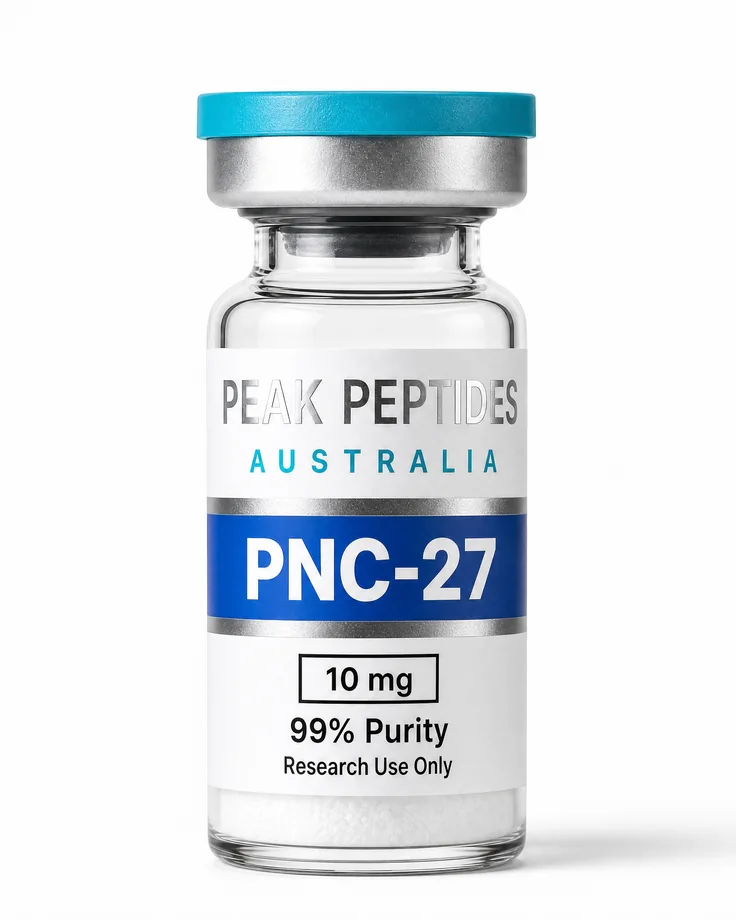
Peak Peptides Australia PNC-27 10 mg vial

PNC-27 10 mg vial

View on Peak

Exact Peak Peptides Australia product photo

01 · DOSAGE CHART

PNC-27 dosage chart

Daily reference schedule · 10 mg vial + 2 mL BAC water

BAC water added
Concentration5 mg/mL
1 unit (U-100)50 mcg= 0.01 mL
How oftenOnce dailySubcutaneous injection

Peak's 10 mg page shows a 2 mL nominal-concentration example, so this default gives 5 mg/mL and 100 mcg = 2 units.

PNC-27 dosage chart for a 10 mg vial mixed with 2 mL of bacteriostatic water
WeekDaily doseSyringe units
Weeks 1–2Start100 mcg2 units0.02 mL
Weeks 3–4200 mcg4 units0.04 mL
Weeks 5–8300 mcg6 units0.06 mL
Weeks 9–12400 mcg8 units0.08 mL
Weeks 13–16Max500 mcg10 units0.1 mL

Once daily · consistent timing · source-listed subcutaneous route

This source-listed schedule ends at week 16.

The source chart is for a 30 mg vial; Peak's 10 mg vial changes concentration and U-100 volume, not the listed mcg amounts.

No authoritative human dose or cancer-use regimen exists.

PNC-27 has no authorised or clinically established human dose and is not a cancer treatment. Education only, not medical advice. Dose amounts adapted from PNC-27 (30 mg Vial) Dosage Protocol (PeptideDosages.com); units are recalculated for the vial and mix selected above.

02 · HOW TO MIX

Mixing a 10 mg vial with 2 mL of BAC water

Using a 1 mL (100-unit) insulin syringe, 2 full draws of bacteriostatic water gives 5 mg/mL.
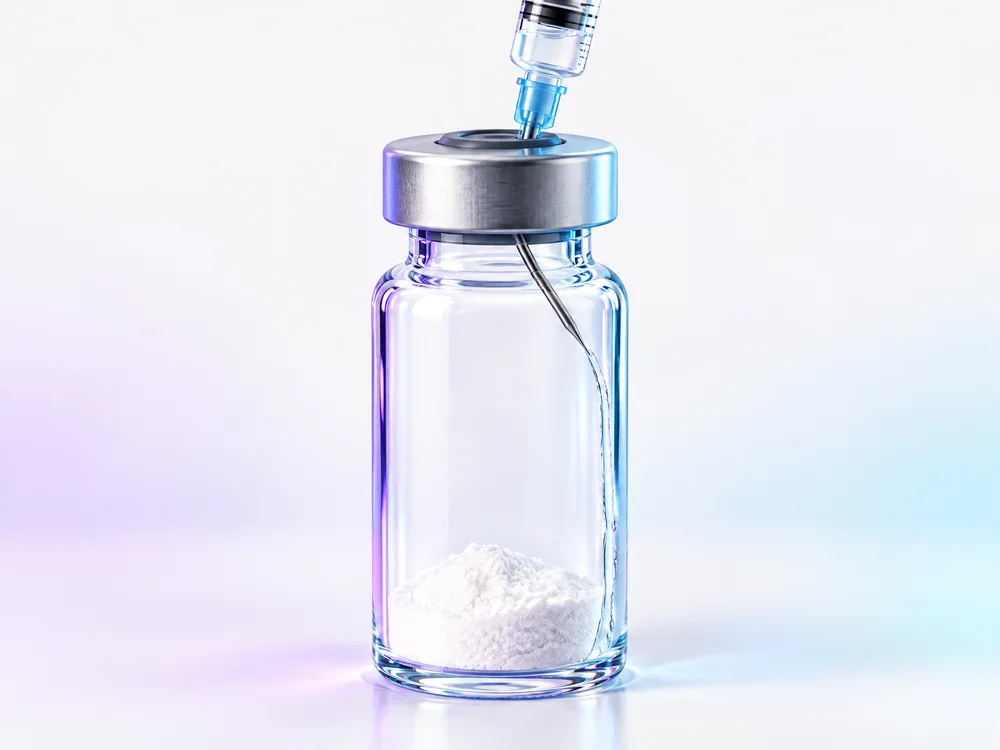
  1. Bacteriostatic water running slowly down the inside wall of a peptide vial1

    Add the water slowly

    Wipe both rubber stoppers with an alcohol swab and let them dry. Draw 2 mL of bacteriostatic water and let it run slowly down the inside of the vial wall — not straight onto the powder.
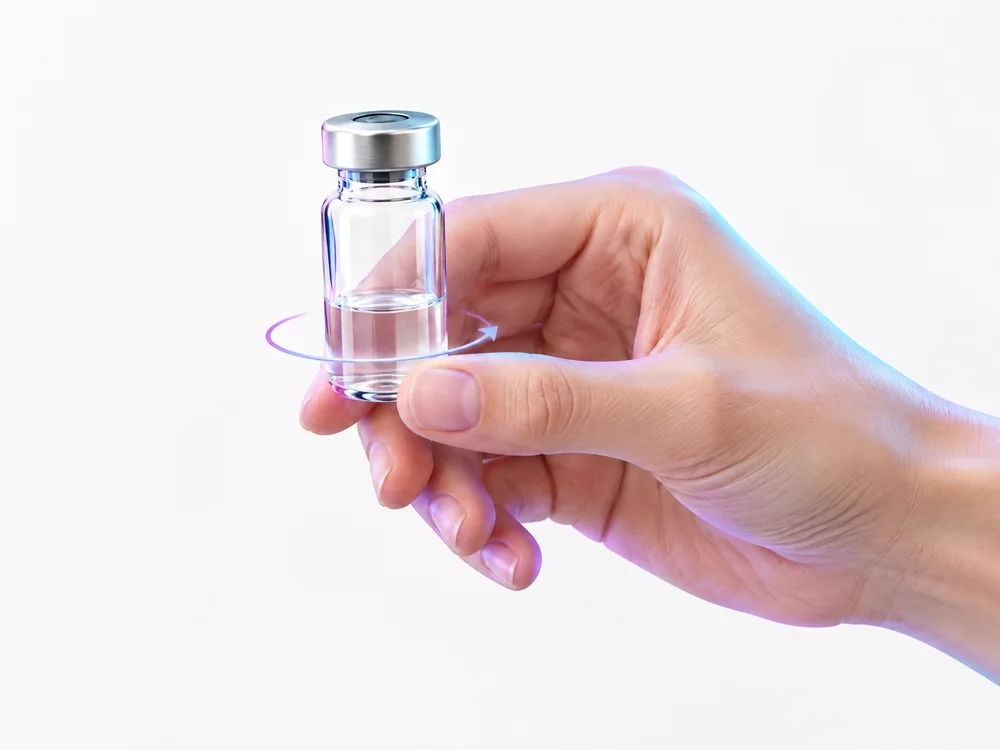
  2. Hand gently swirling an upright vial in a small circle2

    Swirl gently

    Swirl or roll the vial gently until the powder has dissolved. Give it a few minutes to settle if needed.
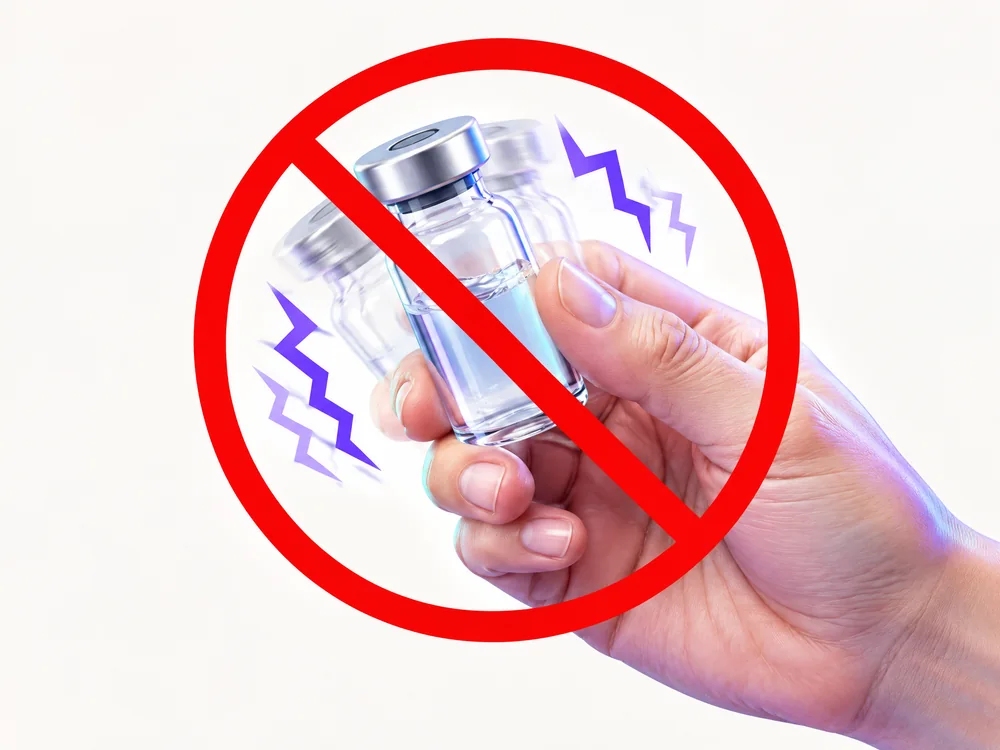
  3. A vial being shaken with a red cross through it3

    Don't shake it

    Shaking can damage the peptide and cause foaming. Gentle swirling only.
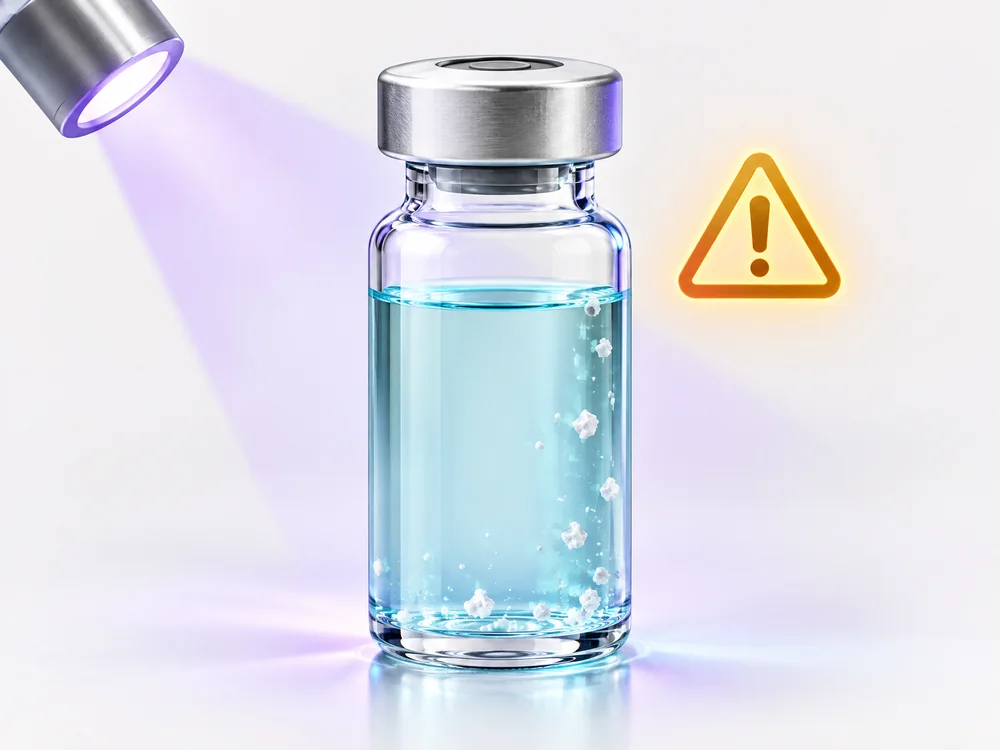
  4. Close-up of a vial with small undissolved particles and a caution symbol4

    Check it's fully clear

    Only use it once it is fully clear with no particles. Label the vial with the date and 5 mg/mL, then store it in the fridge at 2–8 °C.

Full illustrated reconstitution guide
03 · SUPPLIES NEEDED

What you'll need

Counts follow the dosage chart above at the highest amount in each step, using a 10 mg vial mixed with 2 mL.

Length of protocol
2PNC-27 10 mg vials12.6 mg needed in total
581 mL insulin syringesU-100, 27–31G · one per draw + one per vial mixed
1BAC water 10 mL bottle4 mL used for mixing
116Alcohol swabsSkin + stopper, every time

Plus an approved sharps container. Syringes and swabs are sold by Australian pharmacies — Peak Peptides and Pure Performance supply the bacteriostatic water.

04 · CALCULATOR

Check a different amount

Enter your vial, water and dose to see the matching syringe units.

Concentration Calculator
mg
2 mL
mcg

Concentration

5.00 mg/mL

(5000 mcg/mL)

Calculated Liquid Volume

0.020 mL

Equivalent U-100 volume scale position

2markings (not biological IU)
01020304050607080901002 marks

Illustration of a U-100 volume scale, not preparation or injection guidance

05 · PROTOCOL DETAILS

About PNC-27

Protocol overview

Starting dose
100 mcg once daily for weeks 1–2
How it increases
200 mcg in weeks 3–4, then 300, 400 and 500 mcg in four-week steps
Frequency
Once daily
When to take it
Any consistent time; no clinical timing has been established
Chart length
16 weeks on the reference schedule, not a validated human regimen
Default mix
2 mL bacteriostatic water → 5 mg/mL

Storage

Before mixing
Peak says to keep sealed lyophilised material dry at 2–8 °C and protected from light; −20 °C is its stated long-term option.
After mixing
Peak says to keep material mixed with BAC water upright at 2–8 °C, away from light, and use it within about 28 days.
Never
Do not freeze mixed material or use it if it has persistent cloudiness, particles, unexpected colour or leakage.

How it works

PNC-27 is a chimeric peptide containing a p53-derived segment joined to a membrane-residency sequence. It is a laboratory research construct, not the full p53 protein.

In cultured cancer-cell models, researchers reported that PNC-27 associated with membrane HDM-2 or MDM2 and was followed by membrane-pore formation and cell lysis. These are preclinical observations and do not show that it treats cancer in people.

Illustrated mechanism explainer

What the research shows

  • A ClinicalTrials.gov API search for PNC-27 returned 0 registered records, so no registered human clinical study was identified.
  • In a cell-culture paper, LDH assays exposed cancer-cell lines to PNC-27 for 30 minutes across 10 μg/mL to 1 mg/mL, with n=3–5 experiments; the authors reported dose-related killing in cancer models and no effect on AG13145 primary human fibroblasts.
  • A 2014 K562 leukaemia-cell paper reported nearly 100% cell killing with LDH release, while its murine lymphocyte control was unaffected; this was a laboratory cell model, not a human result.
  • A 2015 ex vivo report tested freshly isolated primary cells from 2 epithelial ovarian cancers and described dose-dependent growth inhibition and cytotoxicity in those cultures only.
  • FDA has not evaluated or approved PNC-27 as safe and effective for any disease, including cancer, and warned cancer patients not to use marketed PNC-27 products as treatment.
  • The ARTG is the TGA's public reference database for therapeutic goods supplied in Australia; no PNC-27 entry was identified in a search of that database.

Reported side effects

  • There is no established human safety profile, safe route, dose or adverse-event rate for PNC-27; a ClinicalTrials.gov search returned 0 registered records.
  • FDA reported bacterial contamination in PNC-27 solution samples marketed for cancer use: Variovorax paradoxus in January 2017 and Ralstonia insidiosa in a further sample reported in March 2017.
  • FDA warned that contaminated products can cause serious, potentially life-threatening infections, particularly in people with weakened immune systems.
  • Cell and ex vivo experiments cannot establish human toxicity, interactions, allergy risk or long-term effects.

Important notes

  • PNC-27 is not a TGA- or FDA-approved cancer treatment and is not a substitute for evidence-based cancer care.
  • Do not self-treat cancer with PNC-27 or delay, stop or replace oncology care; anyone with cancer must remain under their oncologist's care.
  • The 100–500 mcg chart is copied from an educational reference site, not from a human clinical protocol, and Peak lists its 10 mg material for in-vitro research only.
  • Under WADA S0, unapproved pharmacological substances are prohibited at all times; athletes should confirm PNC-27's status with their anti-doping organisation.
  • Never use a mixed vial that is cloudy or has particles in it.

Injection basics

  • Use a new sterile 1 mL (100-unit) U-100 insulin syringe, 27–31G, every time — never reuse or share.
  • Wipe the vial stopper and the skin with an alcohol swab and let both dry first.
  • Inject under the skin (subcutaneously) of the abdomen, thigh or upper arm, and rotate sites.
  • Put used syringes straight into an approved sharps container — the NDSS lists Australian disposal options.

Guidance: World Health Organization · National Diabetes Services Scheme (NDSS)

06 · QUICK ANSWERS

PNC-27 questions

How many units is 100 mcg of PNC-27?

With the default 2 mL in a 10 mg vial, the concentration is 5 mg/mL. A 100 mcg amount is 2 U-100 units, which is 0.02 mL. This is concentration arithmetic, not a validated human dose.

How much BAC water does the PNC-27 10 mg chart use?

The default calculator setting uses 2 mL, giving 5 mg/mL. At that concentration, 10 U-100 units equals 0.10 mL and contains 500 mcg. Peak displays 2 mL as a nominal maths example, not a product-specific human-use instruction.

How long does a 10 mg PNC-27 vial last?

At the chart's 100 mcg once-daily amount, 10 mg contains 100 daily amounts. At 500 mcg once daily, it contains 20 daily amounts. Those figures only divide the nominal 10 mg vial content by the displayed amount.

How many 10 mg vials are needed for the full chart?

The displayed schedule totals 12.6 mg by week 8, 23.8 mg by week 12 and 37.8 mg by week 16. Rounded up, that is 2, 3 and 4 nominal 10 mg vials respectively.

07 · SOURCES

References

Related dosage guides

All dosages