Skip to content
Dosage guide · 70 mg blend

Glow Stack Dosage Protocol

GHK-Cu + BPC-157 + TB-500 · 70 mg research blend

The reference protocol uses 2,330 mcg (2.33 mg) of total blend subcutaneously once daily for 4 weeks. It then describes a 2–4 week rest. With 3 mL of bacteriostatic water, 70 mg is 23.33 mg/mL, so 2,330 mcg is about 10 units (0.10 mL) on a U-100 syringe.

How oftenOnce daily
Starting dose2.33 mg
Start = units10 units
Mix3 mL BAC water

Reviewed 25 Oct 2026 · Education only, not medical advice

Glow Stack 70 mg blend vial

Not currently stocked by Peak Peptides Australia

No product photo — this strength isn't stocked by Peak

01 · DOSAGE CHART

Glow Stack dosage chart

Four-week daily approach · 70 mg blend + 3 mL BAC water

BAC water added
Concentration23.33 mg/mL totalUnequal blend — see split below
1 unit (U-100)233.3 mcg total= 0.01 mL
How oftenOnce dailySubcutaneous injection

3 mL is the reconstitution volume used by the matched 70 mg reference protocol, giving 23.33 mg/mL.

Glow Stack dosage chart for a 70 mg blend vial mixed with 3 mL of bacteriostatic water
WeekTotal blend doseSyringe units
Weeks 1–4Start2.33 mg1.66 mg GHK-Cu + 332.9 mcg BPC-157 + 332.9 mcg TB-50010 units0.1 mL

Once daily · consistent time · subcutaneous injection

The reference schedule keeps the same total-blend amount each day for 4 weeks.

It describes 2–4 weeks off after the four-week course; the rest interval is not a dosing row.

At the labelled shares, 2,330 mcg total contains about 1,664 mcg GHK-Cu and 333 mcg each of BPC-157 and TB-500.

Community-reported amount — this unapproved three-component blend has no clinically established subcutaneous dose. Education only, not medical advice. Dose amounts adapted from GLOW 70 mg blend dosage protocol (PeptideDosages.com); units are recalculated for the vial and mix selected above.

02 · HOW TO MIX

Mixing a 70 mg blend vial with 3 mL of BAC water

Using a 1 mL (100-unit) insulin syringe, 3 full draws of bacteriostatic water gives 23.33 mg/mL in total.
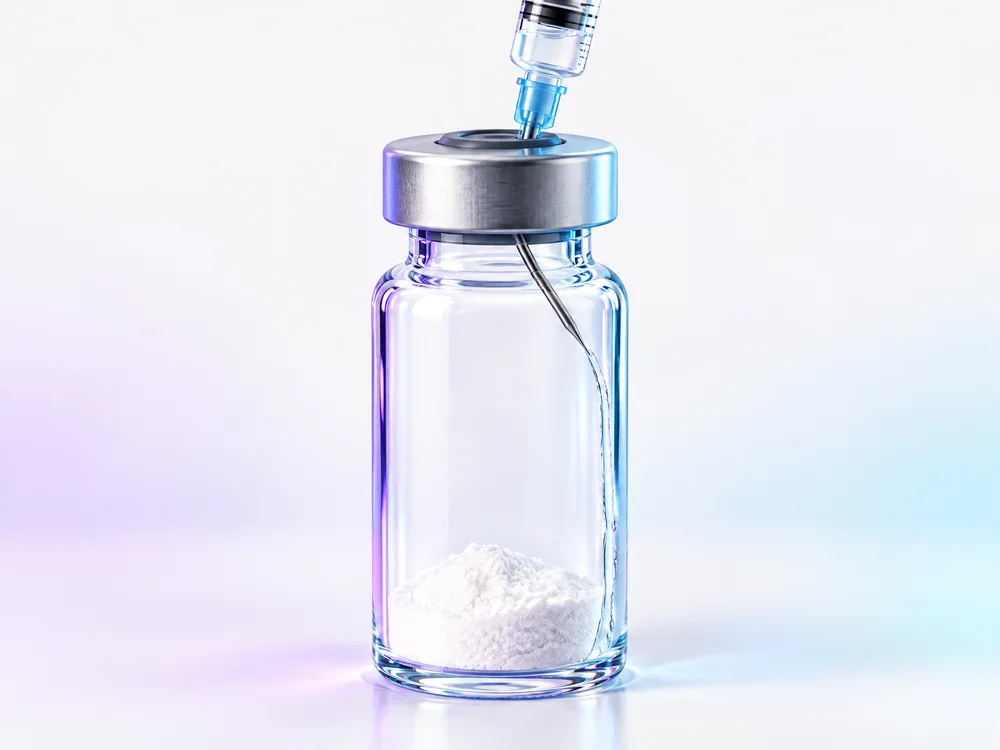
  1. Bacteriostatic water running slowly down the inside wall of a peptide vial1

    Add the water slowly

    Wipe both rubber stoppers with an alcohol swab and let them dry. Draw 3 mL of bacteriostatic water and let it run slowly down the inside of the vial wall — not straight onto the powder.
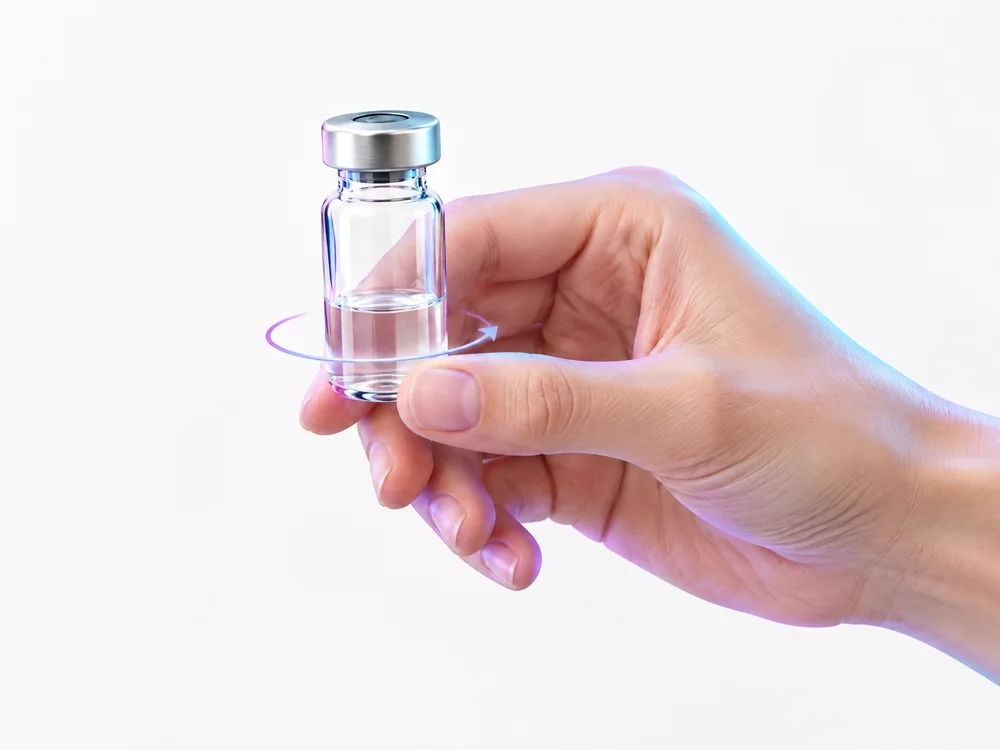
  2. Hand gently swirling an upright vial in a small circle2

    Swirl gently

    Swirl or roll the vial gently until the powder has dissolved. Give it a few minutes to settle if needed.
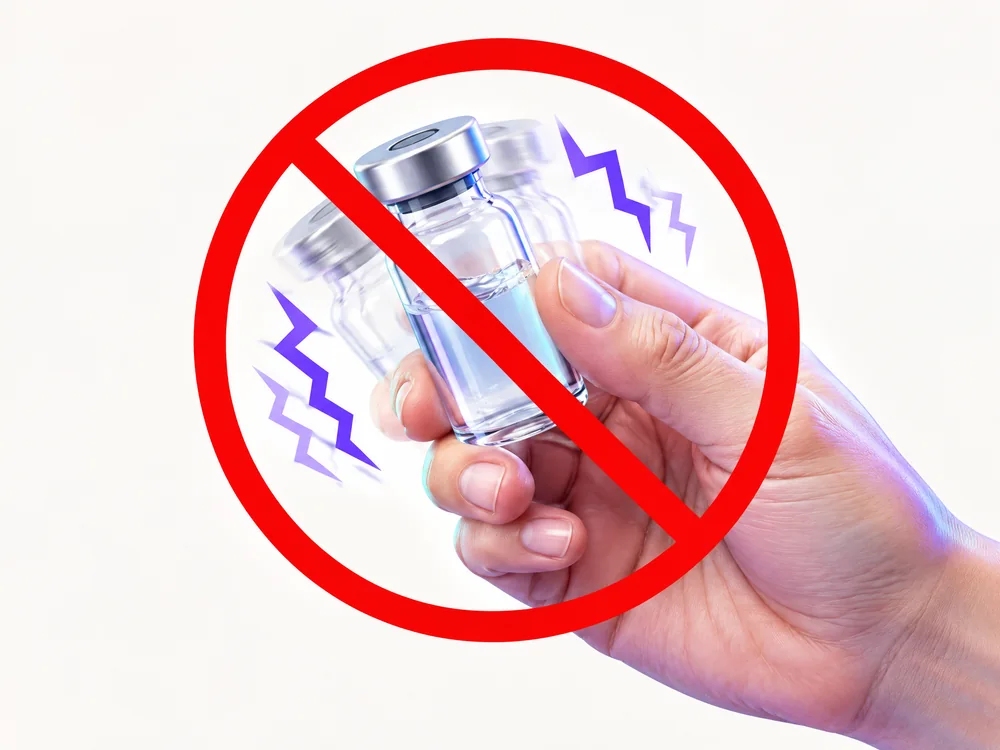
  3. A vial being shaken with a red cross through it3

    Don't shake it

    Shaking can damage the peptide and cause foaming. Gentle swirling only.
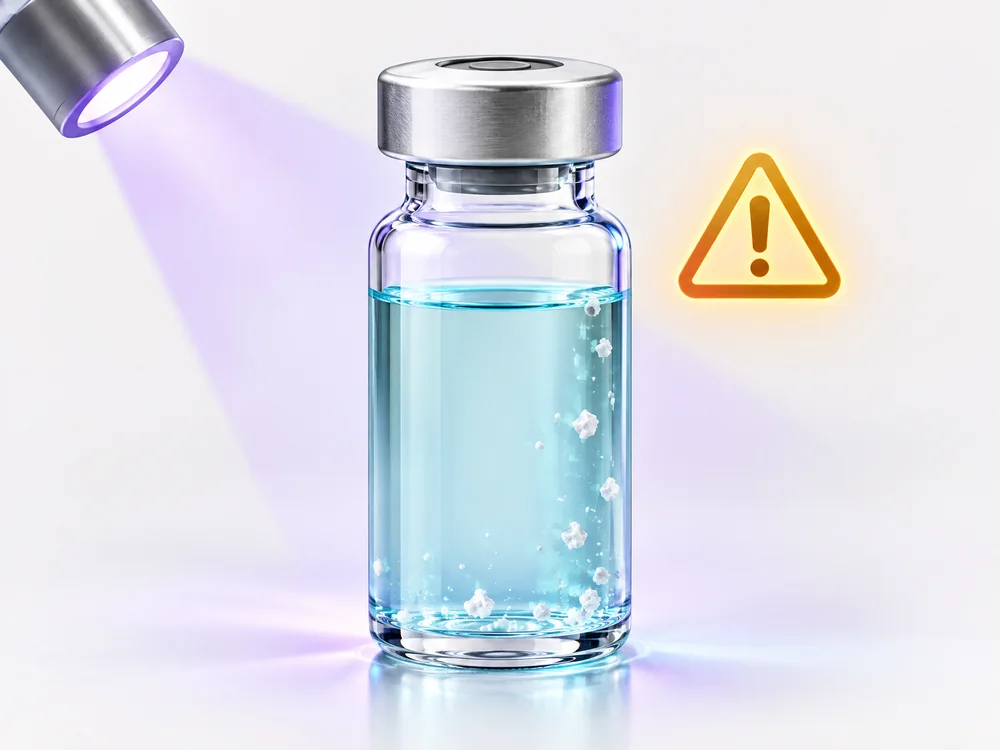
  4. Close-up of a vial with small undissolved particles and a caution symbol4

    Check it's fully clear

    Only use it once it is fully clear with no particles. Label the vial with the date and 23.33 mg/mL, then store it in the fridge at 2–8 °C.

Full illustrated reconstitution guide
03 · SUPPLIES NEEDED

What you'll need

Counts follow the dosage chart above at the highest amount in each step, using a 70 mg blend vial mixed with 3 mL.

Length of protocol
1Glow Stack 70 mg blend vial65.24 mg needed in total
291 mL insulin syringesU-100, 27–31G · one per draw + one per vial mixed
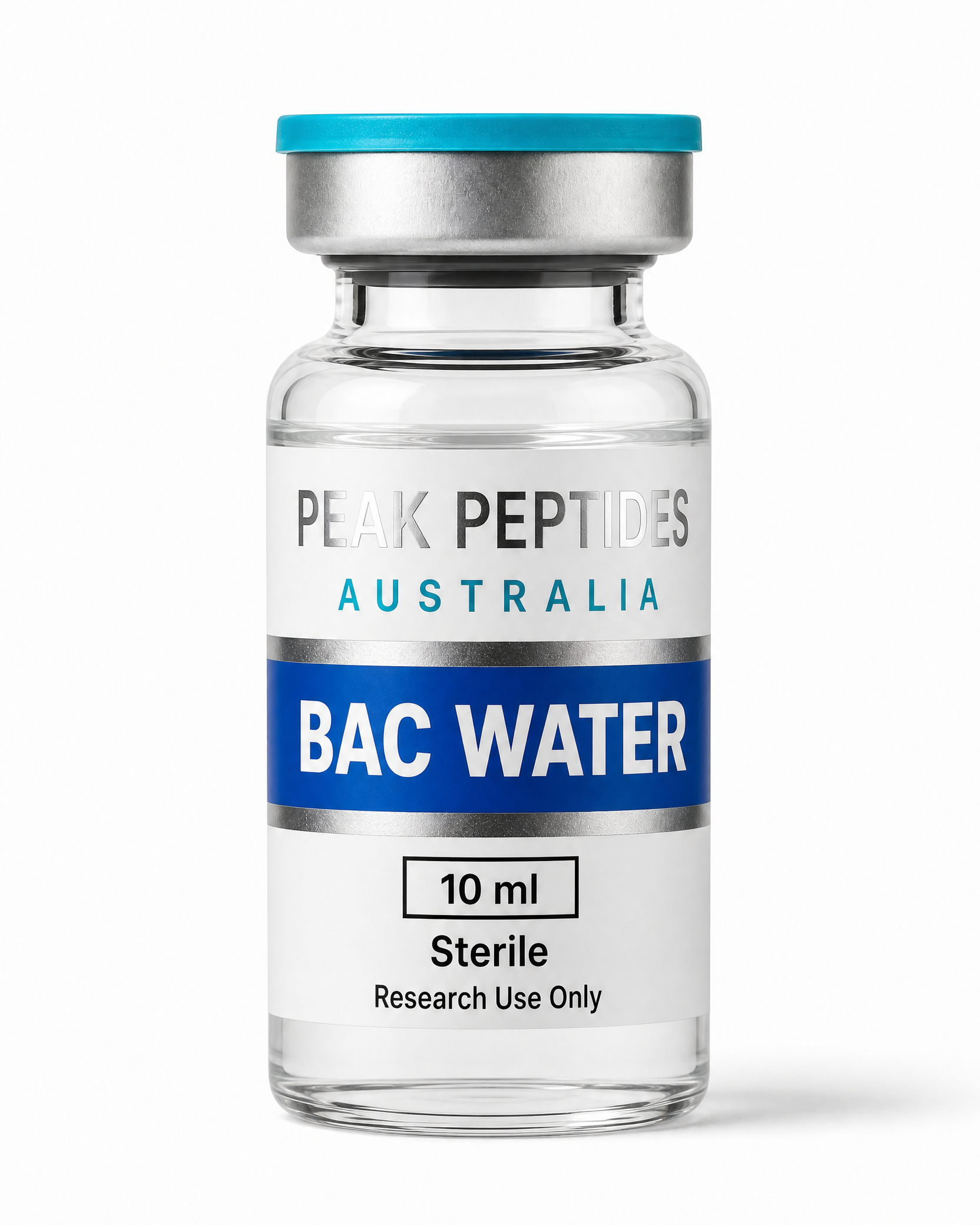
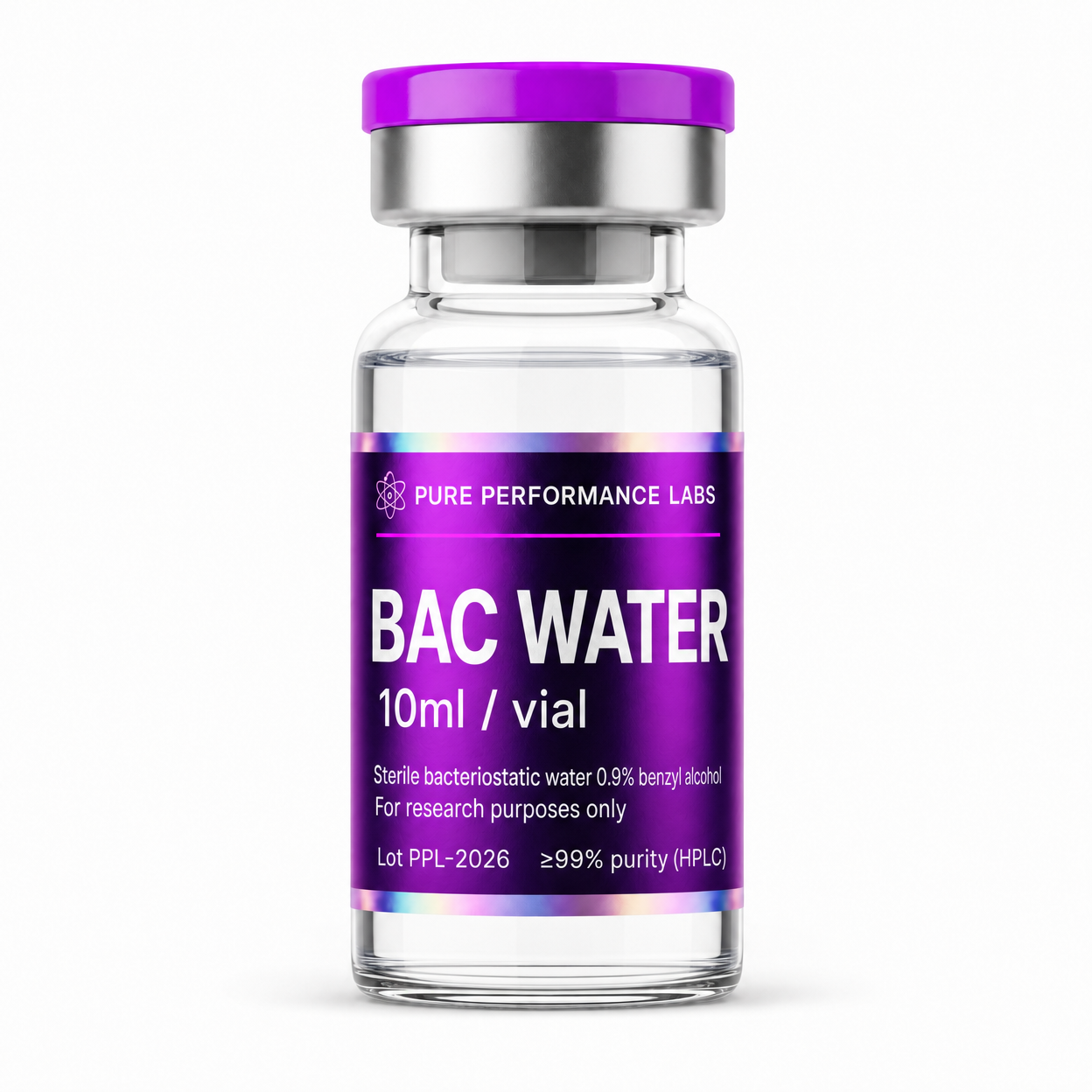
1BAC water 10 mL bottle3 mL used for mixing
58Alcohol swabsSkin + stopper, every time

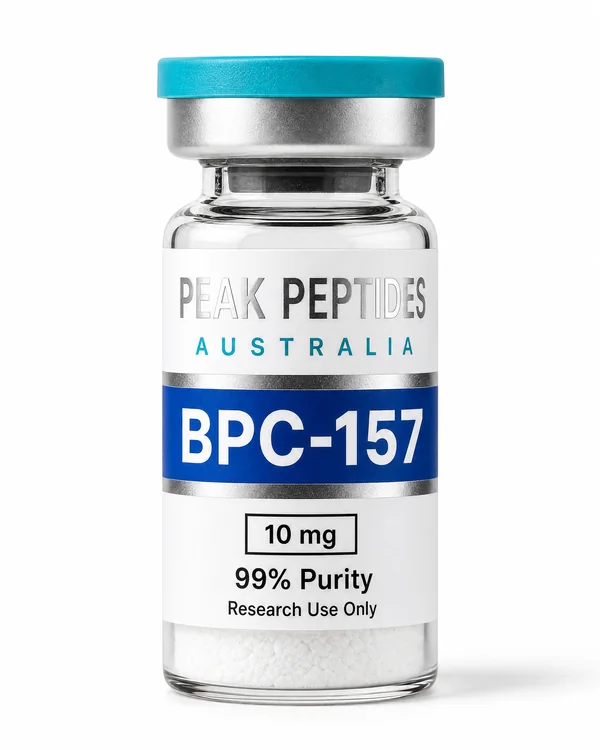
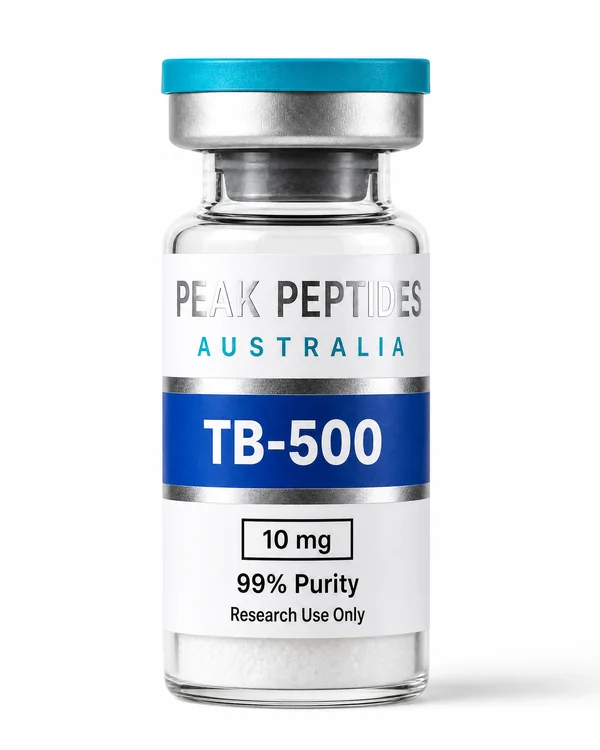
Plus an approved sharps container. Syringes and swabs are sold by Australian pharmacies — Peak Peptides and Pure Performance supply the bacteriostatic water.

04 · CALCULATOR

Check a different amount

Enter the total blend amount; the split between peptides follows the blend ratio shown in the chart.

Concentration Calculator
mg
3 mL
mg

Concentration

23.33 mg/mL

(23333 mcg/mL)

Calculated Liquid Volume

0.100 mL

Equivalent U-100 volume scale position

10markings (not biological IU)
010203040506070809010010 marks

Illustration of a U-100 volume scale, not preparation or injection guidance

05 · PROTOCOL DETAILS

About Glow Stack

Protocol overview

Starting dose
2,330 mcg total blend once daily
How it changes
No increase in the matched four-week reference schedule
Frequency
Once daily
When to take it
At a consistent daily time in the reference schedule
Cycle length
4 weeks, then a reference-described 2–4 week rest
Common mix
3 mL bacteriostatic water → 23.33 mg/mL

Storage

Before mixing
The reference source says lyophilised vials should be kept at −20 °C or below, dry and protected from light; follow the exact product label.
After mixing
Refrigerate at 2–8 °C and protect from light. Use only an exact-blend use-by period supported by stability and microbiological evidence.
Never
Do not freeze the reconstituted solution or use it if it is discoloured, cloudy or has particles.

How it works

Glow Stack is labelled as a fixed blend of the copper tripeptide GHK-Cu, BPC-157 and TB-500. Its label shares are 50/70 GHK-Cu and 10/70 each BPC-157 and TB-500; evidence for one ingredient cannot establish that the combination works or is compatible after mixing.

GHK-Cu has been examined mainly in topical skin and laboratory research. BPC-157 has predominantly animal and laboratory evidence. Thymosin beta-4, the parent peptide associated with TB-500, binds actin and is thought to support cell migration; this does not establish effects for this injected blend.

Illustrated mechanism explainer

What the research shows

  • The TGA names BPC-157, GHK-Cu and TB-500 as examples of unapproved peptide products. It says unapproved products have not been evaluated by the TGA for safety, quality or effectiveness.
  • A GHK-Cu review reported a 12-week facial-cream study in 71 women and a 12-week eye-cream study in 41 women. These were topical cosmetic findings, not evidence for a subcutaneous 70 mg blend.
  • A 2025 BPC-157 systematic review included 36 studies: 35 preclinical studies and one clinical report. In the reported knee-pain series, 7 of 12 people described relief lasting more than 6 months after an intra-articular injection; this does not test the Glow schedule.
  • A BPC-157 intravenous pilot involved two adults who received 10 mg on day 1 and 20 mg on day 2. It reported no measured biomarker changes or side effects, but its size and route cannot establish safety for this blend.
  • In a topical thymosin beta-4 venous-ulcer trial, 73 people were randomised across eight European sites. The publication reported that 0.03% topical treatment may accelerate healing and that about 25% achieved complete healing within three months; it was not an injectable TB-500 or blend trial.

Reported side effects

  • There is no clinical safety assessment for this exact three-component blend, its 70 mg strength or this subcutaneous schedule.
  • The TGA warns that unapproved injectable peptides may have inaccurate labelling, unknown sterility or ingredients, and risks including contamination, infection and local tissue damage. It has received reports of severe allergic reactions and systemic inflammatory response syndrome with unapproved peptides.
  • FDA reviewers concluded that clinical safety information for BPC-157 is insufficient to characterise its safety profile. They identified potential immunogenicity risks from peptide-related impurities and aggregates, particularly with subcutaneous or nasal administration.
  • The 73-person thymosin beta-4 ulcer trial found topical doses had a safety profile comparable to placebo. That topical result does not show that injected TB-500 or Glow Stack is tolerated.

Important notes

  • Not approved for human therapeutic use in Australia: the TGA specifically identifies BPC-157, GHK-Cu and TB-500 as examples of unapproved peptide products.
  • Prohibited in sport at all times: WADA lists BPC-157 under S0 and thymosin-beta-4 and its derivatives, including TB-500, under S2.
  • There is no product-specific compatibility, sterility or stability information in the supplied Glow Stack record. A 3 mL mix is taken from the reference protocol, not a manufacturer instruction for this vial.
  • Product labels may be inaccurate or misleading, and the TGA says unapproved peptide products may have unknown ingredients, sterility and quality.
  • Never use a mixed vial that is cloudy or has particles in it.

Injection basics

  • Use a new sterile 1 mL (100-unit) U-100 insulin syringe, 27–31G, every time — never reuse or share.
  • Wipe the vial stopper and the skin with an alcohol swab and let both dry first.
  • Inject under the skin (subcutaneously) of the abdomen, thigh or upper arm, and rotate sites.
  • Put used syringes straight into an approved sharps container — the NDSS lists Australian disposal options.

Guidance: World Health Organization · National Diabetes Services Scheme (NDSS)

06 · QUICK ANSWERS

Glow Stack questions

How many units is 2,330 mcg of Glow Stack?

With 3 mL in a 70 mg vial, the total-blend concentration is 23.33 mg/mL. A 2,330 mcg (2.33 mg) draw is 9.99 units, conventionally about 10 units or 0.0999 mL on a U-100 syringe.

How much bacteriostatic water does the Glow Stack chart use?

The matched 70 mg reference chart uses 3 mL. That makes 23.33 mg/mL, so 10 units is about 2.33 mg total blend and 0.10 mL. The source does not replace product-specific compatibility or stability data.

How long does a 70 mg Glow Stack vial last?

At 2.33 mg total blend once daily, a 70 mg vial provides about 30.04 daily draws mathematically. One 28-day chart course uses 65.24 mg and leaves about 4.76 mg, assuming the labelled vial content and no preparation loss.

What is in a 2,330 mcg Glow Stack draw?

Using the label shares, 2,330 mcg total contains about 1,664.29 mcg GHK-Cu, 332.86 mcg BPC-157 and 332.86 mcg TB-500. These are calculated label proportions, not established doses for the individual components.

07 · SOURCES

References

Related dosage guides

All dosages